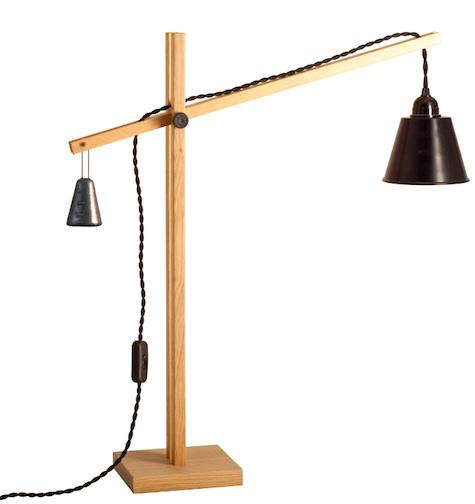
Some lamps politely illuminate a room. Steuart Padwick’s lighting designs appear to have more ambitious plans. They stretch, balance, pivot, and quietly introduce themselves as pieces of furniture rather than anonymous electrical appliances. Even when switched off, they remain expressive objects with recognizable silhouettes, tactile materials, and just enough British wit to prevent minimalism from becoming painfully serious.
Best known for his work across furniture, lighting, products, and large public installations, Padwick developed a design language rooted in usefulness, craftsmanship, sculptural form, and visual warmth. His celebrated Sticks desk and floor lamps demonstrate that philosophy particularly well. Their counterbalanced wooden arms turn a familiar task light into a surprisingly animated domestic companion.
This closer look at Steuart Padwick lighting explores the designer’s background, the engineering and appeal of the Sticks collection, the influence of British furniture-making, and practical ways to use this distinctive style of lighting in contemporary interiors.
Who Was Steuart Padwick?
Steuart Padwick was a British furniture, lighting, product, and installation designer whose career connected traditional workshop skills with accessible contemporary design. He trained at Parnham College, the influential furniture-making school founded by cabinetmaker John Makepeace, and began his professional life as a designer-maker.
That foundation mattered. Padwick did not approach an object as a shape waiting to be decorated. He understood how materials behave, how joints carry weight, how a surface feels under the hand, and how a product must survive repeated use after its glamorous photography session is over.
His professional path included work associated with Terence Conran and Benchmark Furniture, a British manufacturer known for solid wood, skilled craftsmanship, and long-lasting construction. Padwick later established his own design brand in 2009, creating pieces for direct sale as well as larger retailers, including MADE.com.
His stated ambition was to produce furniture and products for daily life, with pleasure coming from both appearance and use. That sounds simple, but it eliminates quite a lot of bad design. A beautiful lamp that cannot aim light properly is essentially a glowing sculpture with employment problems. A practical lamp that resembles office equipment from a submarine is not much better. Padwick consistently looked for the enjoyable territory between those extremes.
The Sticks Lamps: A Study in Balance
The Sticks desk lamp and Sticks floor lamp became defining examples of Steuart Padwick lighting. Their most memorable feature is an elongated wooden arm supported by a weighted pivot system. Instead of concealing the mechanics inside a bulky housing, the design allows the balancing act to become part of the lamp’s identity.
The user can reposition the arm to provide focused task lighting or softer background illumination. The motion feels intuitive because the counterweight does much of the work. Move the shade toward a book, drawing board, or keyboard, and the structure responds without requiring a complicated collection of knobs, springs, and mysterious screws destined to loosen at 2 a.m.
Why the Counterbalanced Arm Matters
A counterbalanced lamp distributes weight around a pivot point, allowing a long arm to move while remaining stable. In practical terms, this creates generous reach without demanding a massive base. In visual terms, it produces tension: one side holds the light source, while the other appears to pull the structure back into equilibrium.
This balance gives the Sticks lamp a sense of movement even when it is stationary. The arm may hover over a desk, lean into a reading chair, or extend across a console. It looks alert rather than rigid, as though it is waiting for its next assignment.
Wood Instead of Anonymous Metal
Many adjustable lamps rely on steel tubes, aluminum joints, exposed springs, or molded plastic. Padwick’s use of wood brings the visual language closer to furniture. The lamp can relate naturally to a dining table, desk, cabinet, or timber floor rather than appearing as a piece of technical equipment dropped into the room by mistake.
Wood also makes the scale feel less intimidating. A tall floor lamp with an extended arm can occupy considerable visual space. Natural grain, softened edges, and familiar joinery reduce that bulk, making the object feel warmer and more domestic.
Award Recognition Without Design-Theater Drama
The Sticks lights received recognition in the 2010 British design-award season, including runner-up status in an Elle Decoration British design category. The attention was understandable. The design solved a practical problem, displayed its engineering honestly, and offered a silhouette that could be identified without a logo the size of a dinner plate.
Awards are not proof that an object will work in every home, of course. Interior design history contains plenty of prize-winning chairs that punish anyone reckless enough to sit in them. The stronger evidence in the case of Sticks is that its memorable appearance comes directly from its function. The proportions, pivot, counterweight, and long arm are not decorative extras; they are the design.
What Makes Steuart Padwick Lighting Feel British?
“British design” covers everything from restrained modernism to floral excess, so it is not a single visual recipe. Padwick’s work belongs to a particularly appealing strand of British product design: practical, materially aware, slightly eccentric, and unwilling to confuse luxury with unnecessary decoration.
Craftsmanship Is Visible
The structure explains how the object is made and how it operates. Wood looks like wood. A pivot looks like a pivot. Weight and balance are acknowledged instead of disguised beneath decorative shells.
Humor Is Present but Controlled
Padwick’s pieces often contain an element of personality, whether through unusual legs, tilted forms, surprising scale, or vivid accents. The joke is rarely loud. It is closer to a raised eyebrow than a comedy routine.
Minimalism Remains Warm
The forms are generally clean, but they do not feel clinical. Timber, rounded transitions, tactile surfaces, and playful proportions keep the work approachable. This is minimalism that permits books, coffee cups, and ordinary human behavior.
How to Style a Steuart Padwick Lamp
Because a Padwick lamp functions as both illumination and furniture, placement deserves more thought than simply locating the nearest outlet. The lamp’s profile, movement, and reach should become part of the room’s composition.
In a Home Office
A Sticks desk light is particularly effective on a substantial writing desk where its arm has enough room to extend. Position it opposite your dominant hand to reduce shadows across notebooks and documents. The wooden construction works beautifully with oak, walnut, painted cabinetry, leather desk accessories, and matte metal hardware.
A visually active lamp also helps a home office look intentional. This is useful when the “office” is actually one wall of a bedroom and the filing department is a basket under the bed.
Beside a Reading Chair
The floor version can replace a conventional shaded floor lamp beside an armchair or sofa. Its adjustable reach makes it suitable for reading, sewing, sketching, and other close tasks. Leave enough clearance for the arm to move freely without colliding with shelves, curtains, or an unsuspecting houseplant.
In a Modern Rustic Interior
The combination of clean geometry and natural wood makes this lighting style ideal for modern rustic rooms. Pair it with limewashed walls, woven wool, linen upholstery, handmade ceramics, and simple cabinetry. The lamp introduces a technical element without disturbing the relaxed material palette.
Against a Minimal Background
A pale wall allows the long outline of the lamp to read clearly. In a minimal room, its counterbalanced arm creates enough visual interest to reduce the need for additional decoration. One intelligent object can often do more than six small accessories lined up like nervous contestants at an audition.
With Midcentury Furniture
Padwick lighting can sit comfortably near midcentury-inspired furniture because both styles favor honest construction, slender profiles, and functional clarity. Avoid creating a showroom time capsule, however. Mix periods and materials so the room feels collected rather than issued with a museum admission ticket.
Choosing the Right Bulb and Light Quality
The sculptural form may attract attention first, but light quality determines whether the lamp is pleasant to use. For a reading or desk area, look for a warm-white LED bulb that provides clear illumination without making wood, skin, and textiles appear gray. A color temperature around 2700K creates a relaxed residential atmosphere, while approximately 3000K can feel slightly crisper for focused work.
Brightness should match the task and the distance between the shade and work surface. A bulb that is too dim defeats the lamp’s purpose; one that is excessively bright can create glare, especially when the shade is moved near eye level. Dimmable bulbs are helpful when the fixture and electrical components support them.
Bulb shape also matters in an exposed or compact shade. Check the original fitting, maximum wattage, physical dimensions, and ventilation requirements. Owners of older examples should have wiring and sockets inspected by a qualified professional, particularly when the lamp’s service history is unknown.
What Padwick’s Lighting Teaches Us About Better Design
Let Function Generate the Form
The recognizable shape of the Sticks lamp is created by the need for reach, movement, and balance. Nothing feels pasted on simply to create a marketable feature. Designers and homeowners can apply the same principle elsewhere: understand what an object must do before deciding how it should pose for photographs.
Do Not Hide Every Mechanism
Visible engineering can make a product easier to understand and more satisfying to use. Hinges, pivots, braces, and weights become attractive when they are resolved carefully. Concealing everything is not automatically sophisticated; sometimes it merely makes repairs more annoying.
Use Familiar Materials in Unfamiliar Ways
Wood is familiar in chairs and tables but less expected in a long, adjustable task lamp. That shift gives the design novelty without relying on strange shapes for their own sake.
Create Objects Worth Keeping
Distinctive lighting is less likely to be treated as disposable decoration. A lamp with strong construction, repairable components, and an enduring form can remain useful through several interior changes. It may move from office to living room, from one house to another, and eventually become the object family members politely argue over.
From Domestic Lamps to Illuminated Public Art
Padwick’s later career expanded dramatically beyond household products. His large public sculptures used scale, color, light, and human forms to encourage conversations about mental health, hope, and collective responsibility.
Head Above Water, installed on London’s South Bank during the 2018 London Design Festival, took the form of a monumental head rising above the River Thames. Interactive illumination changed in response to public input about emotional well-being, turning light into a visible expression of collective mood.
The project demonstrated continuity with his domestic lighting. In both cases, illumination was not an afterthought added to a finished shape. It was essential to how the object communicated. A task lamp used light to support work and reading; a public sculpture used it to make an internal, difficult-to-describe subject visible across a city landscape.
Padwick also designed the Hope Sculpture project associated with Glasgow and the legacy of COP26. Made with reclaimed, recycled, and lower-carbon materials, its towering figures and elevated child symbolized optimism and responsibility toward future generations.
These installations reveal the emotional range behind his quieter furniture and lighting. The same designer who balanced a wooden lamp arm over a desk could use an illuminated head or monumental figure to address anxiety, environmental responsibility, and public hope. The scale changed, but the commitment to understandable forms remained.
Buying or Collecting Steuart Padwick Lighting
Original Steuart Padwick lamps may appear through design dealers, vintage marketplaces, auctions, and private sellers. Availability varies, and discontinued models should be evaluated as collectible functional objects rather than ordinary used lamps.
Start by confirming the model, dimensions, materials, manufacturer, and any labels or documentation. Ask for photographs of the pivot, counterweight, shade, base, cable, plug, and socket. A wide photograph may look lovely while quietly avoiding the joint that has been repaired with optimism and household glue.
Inspect wooden parts for cracks, significant warping, water damage, or poorly matched refinishing. Minor wear can be acceptable and may even add character, but structural damage near a pivot deserves careful assessment. Confirm that the arm holds its position throughout the intended range of movement.
Electrical safety is equally important. Wiring standards and plugs differ between the UK and the United States, and older components may require professional replacement. Rewiring should preserve the design while bringing the lamp into compliance with local requirements.
Finally, measure the intended location. Sculptural floor lamps often look modest in isolated product photography and surprisingly enthusiastic once they arrive in a small apartment.
A Practical Experience: Living With Padwick-Style Lighting
Imagine bringing a counterbalanced wooden floor lamp into an ordinary living room for the first time. During the day, before the bulb is switched on, the lamp behaves like a piece of sculpture. Its long arm draws a diagonal line through the room, linking a reading chair to the open space above it. Unlike a conventional lamp with a vertical pole and fabric shade, it changes the architecture around the furniture.
The first useful discovery is reach. A traditional floor lamp usually demands that the chair move toward the light. An adjustable design reverses that relationship: the illumination comes to the reader. The arm can hover over a newspaper, lower toward a novel, or retreat when guests arrive. That flexibility becomes especially valuable in a room where the same chair is used for reading, conversation, and the occasional afternoon nap disguised as “thinking.”
The second experience is tactile. Moving a wooden arm feels different from adjusting a thin metal stem. The material has visual weight and warmth, so the action resembles repositioning furniture rather than operating equipment. When the counterbalance is properly calibrated, the movement feels controlled but not stiff. There is a small moment of satisfaction each time the arm settles into place.
At night, the personality changes again. The structure becomes less prominent while the pool of light defines a smaller, more intimate room within the larger one. The chair, side table, book, and lamp form a private zone. This is where well-designed task lighting proves its value: it does not need to flood every corner. It illuminates the activity and allows the rest of the room to become quieter.
A desk version creates a similar effect in a workspace. During focused tasks, the arm can be lowered to brighten papers or a keyboard. During a video call, it can be redirected toward a wall to produce softer reflected light. After work, it can move away from the center of the desk, leaving the surface visually calmer.
There are adjustments to make. The extended arm needs clear space. Placement near a busy walkway may invite collisions, while a shade positioned too high can expose the bulb and cause glare. The cable also deserves attention because a sculptural lamp looks considerably less elegant when its cord performs an uncontrolled expedition across the floor.
Over several days, however, the lamp begins to influence habits. A comfortable reading corner is used more frequently because the light is already in the right place. The desk feels less temporary because it has a proper task lamp. The room gains a focal point that remains useful rather than becoming another decorative object requiring dusting and emotional justification.
That may be the most convincing experience offered by Steuart Padwick’s approach. The lamp does not ask users to admire design from a safe distance. It invites movement, adjustment, and repeated contact. Its sculptural qualities become clearer through use, not despite it. Good lighting changes what can be seen; good design can also change how a space is occupied.
Conclusion
Steuart Padwick lighting represents a particularly human form of modern British design. It is functional without becoming anonymous, sculptural without becoming impractical, and playful without turning into a novelty. The Sticks lamps capture these qualities through natural wood, visible balance, adjustable reach, and an unmistakable silhouette.
Padwick’s wider body of work, from furniture created for everyday homes to illuminated public sculptures addressing mental health and environmental hope, shows how practical design can carry emotional meaning. His lamps remind us that useful objects do not have to disappear into the background. They can support daily routines while bringing intelligence, warmth, and a quiet joke into the room.
For anyone drawn to adjustable wooden lighting, British craftsmanship, warm minimalism, or collectible contemporary design, Steuart Padwick’s work remains an illuminating exampleboth literally and otherwise.