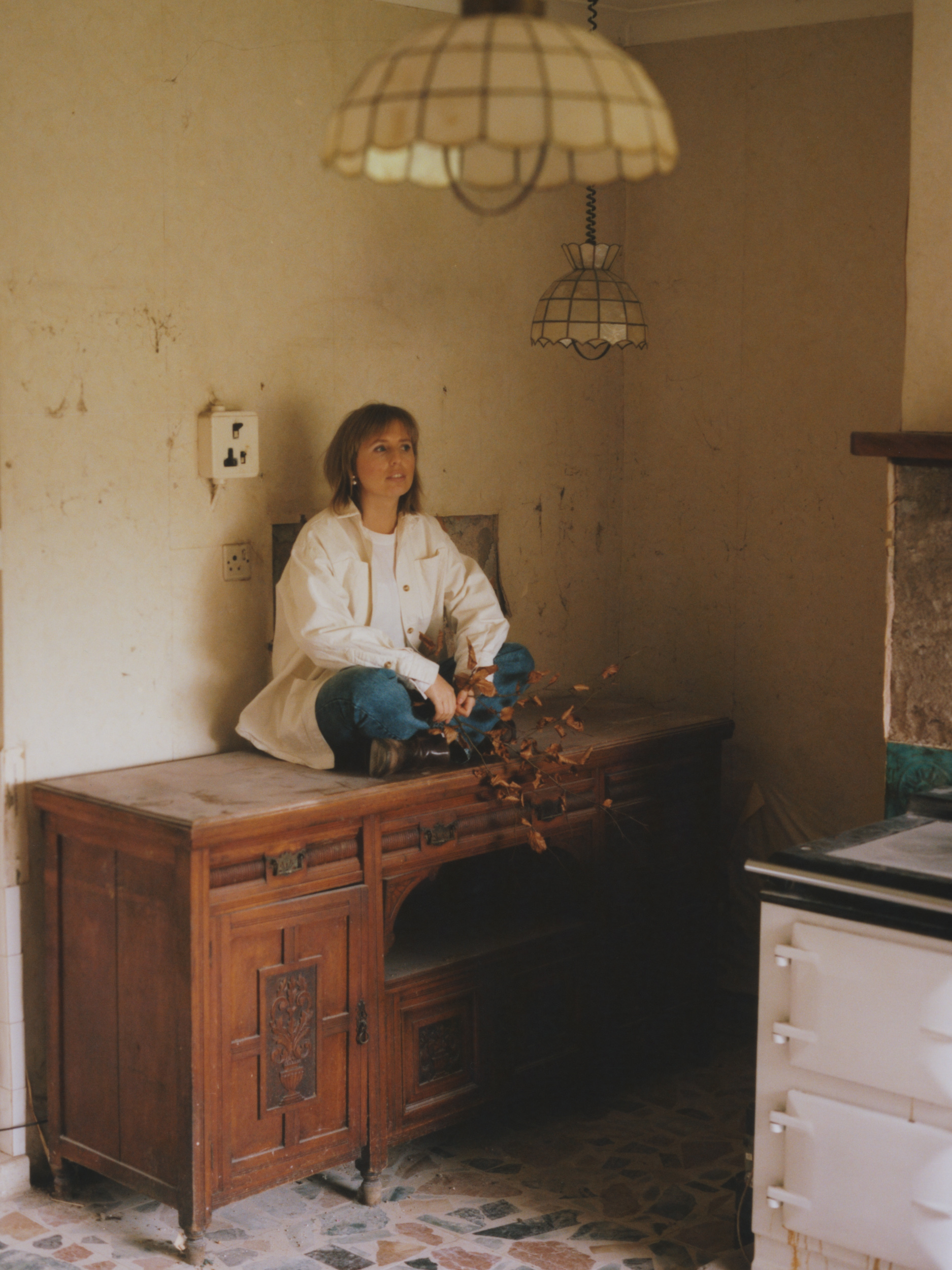
Some studios announce themselves with neon signs, espresso machines, and the kind of spotless white walls that make you afraid to breathe. A botanical artist’s farmhouse atelier in the UK does the opposite. It whispers. It creaks. It smells faintly of old stone, paper, ink, damp earth, and leaves that were definitely not invited indoors but came anyway because the artist had a plan.
This studio visit takes us into the world of a contemporary botanical artist working close to the British landscape, where brambles, birch leaves, wind-bent branches, and seasonal shadows become more than pretty references. They become a way of seeing. Inspired by the practice of Bath and Somerset-based artist Lucy Augé, this article explores how a farmhouse atelier can become both workspace and field station: part art studio, part plant observatory, part quiet rebellion against the frantic pace of modern life.
Botanical art has always lived between beauty and evidence. It must charm the eye, yes, but it also asks the hand to slow down and look properly. In a farmhouse studio, that dual purpose feels especially natural. The building is not just a backdrop. It is a collaborator, with stone walls that hold the coolness of morning, windows that filter shifting light, and tables that tolerate an alarming number of cuttings, sketches, brushes, test papers, and cups of tea.
The Farmhouse Atelier: Where the Landscape Comes Indoors
A farmhouse atelier in the UK carries a particular kind of romance, but it is not the glossy, over-styled romance of staged country living. The real charm is practical. A botanical artist needs immediate access to nature, not a vague inspirational poster that says “bloom.” The countryside around Bath and Somerset offers hedgerows, gardens, old trees, fields, lanes, and seasonal weather dramatic enough to make even a nettle feel theatrical.
In this kind of studio, the artist can step outside, gather a branch, return with a fistful of leaves, and begin work while the specimen still has its posture. That matters. A leaf is not a chair. It does not sit politely for four hours. It wilts, curls, fades, collapses, and generally behaves like a diva with excellent bone structure. Painting from life means racing gently against time, observing not only the shape of a plant but also its changing energy.
The farmhouse setting also adds texture to the creative process. Old stone walls, simple floors, unfinished surfaces, and soft natural light create a calm environment where delicate work can happen without feeling precious. The atelier is not trying to compete with the art. Instead, it gives the work room to breathe. It says: here is a table, here is a window, here is the weather, now please stop scrolling and draw the branch.
Meet the Botanical Artist: Observation as a Daily Practice
The artist at the center of this studio-visit inspiration, Lucy Augé, is known for work rooted in seasonal change, close observation, and a restrained visual language. Her practice includes sumi ink, graphite, etching, and charred materials, often used to capture the brief, almost slippery moments in nature: an unfolding branch, a shadow crossing paper, a leaf caught between growth and decay.
What makes this approach compelling is not simply that the subjects are botanical. Plenty of people draw flowers. Some of us draw flowers that look suspiciously like confused fried eggs. The deeper point is that botanical art asks for attention. The artist must notice how a stem bends, how a vein divides, how leaves overlap, how a seed head carries both structure and fragility. These are small things, but small things are where the whole show is hiding.
Augé’s work also reflects a modern shift in botanical art. It is not limited to strict scientific illustration, though it respects that tradition. Instead, it moves into atmosphere, abstraction, and emotional record. A branch can be accurate and still feel like weather. A leaf can be drawn with care and still suggest memory. A farmhouse atelier supports that balance because it is close to both the subject and the mood of the subject.
Why Botanical Art Still Matters in a Camera-Saturated World
In the age of high-resolution photography, it is fair to ask why botanical artists still matter. The short answer: because cameras are brilliant, but they are also literal. A camera records what is in front of it. A botanical artist studies what matters. The artist can emphasize diagnostic details, isolate structures, combine stages of a plant’s life cycle, and reveal features that might be hidden, tiny, or visually overwhelmed in a photograph.
Historically, botanical illustration helped identify plants for medicine, food, taxonomy, exploration, and scientific record. It offered a way to distinguish the helpful from the harmful, the known from the newly discovered, the ordinary from the rare. Today, botanical art continues to support education, conservation awareness, and appreciation of biodiversity. It also gives contemporary viewers something many of us badly need: permission to look slowly.
That slowness is not nostalgic fluff. It is a method. The act of drawing a plant can reveal relationships that a quick glance misses: the arrangement of reproductive parts, the rhythm of leaf growth, the architecture of a stem, the strange confidence of a bud. Botanical art turns “that’s pretty” into “what is it doing, and how is it built?” That is a powerful upgrade. It is the difference between waving at nature through a window and actually opening the door.
Inside the Studio: Materials with Memory
A botanical artist’s farmhouse atelier is usually full of materials that look quiet but carry serious intent. There may be specialist papers, vintage papers, Japanese papers, graphite, ink, etching tools, boards, brushes, blades, clips, jars, and shelves of work in progress. Nothing here is random, even if the table occasionally looks like a small storm passed through an art supply shop.
Materials matter because botanical art depends on longevity. Many artists choose archival papers and stable pigments so the work can last for generations. This is especially meaningful in botanical practice, where the subject itself may be fleeting. The leaf wilts, the flower drops, the shadow changes, but the drawing remains. Good materials become a promise: this moment will not disappear quite so easily.
Sumi ink, graphite, and etching each bring a different mood to botanical subjects. Sumi ink can feel immediate and atmospheric, capable of holding both discipline and looseness. Graphite allows quiet tonal range and precise observation. Etching introduces pressure, process, and repetition, turning botanical forms into marks that feel both ancient and alive. Charred or elemental materials can echo the cycles of growth, decay, and regeneration that botanical artists often study.
The Beauty of Working from Life
Working from life is romantic until the specimen starts misbehaving. A cut branch may twist as it dries. A flower may open too quickly. A leaf may droop in a way that feels personally disrespectful. Yet these challenges are also the point. Plants are not static objects; they are living systems. Even when cut, they continue changing. The artist must decide what to hold, what to let shift, and what to translate.
In a farmhouse atelier, the distance between gathering and drawing is short. The artist can respond to the season in real time. Spring may bring tender growth and pale blossoms. Summer offers density, abundance, and insect-nibbled evidence. Autumn brings pigment changes, seed heads, and stems that look like calligraphy. Winter reveals structure: bare branches, silhouettes, pods, and the architectural bones of the garden.
This seasonal rhythm protects the work from becoming generic. A botanical artist is not painting “a leaf” in the abstract. She is painting this leaf, from this lane, in this week’s light, after this rain. Specificity gives the work its pulse. It also gives the viewer a sense of place, even when the finished piece is spare or abstract.
Farmhouse Design Lessons from a Botanical Atelier
For readers interested in interiors, a botanical artist’s farmhouse studio offers design lessons that are refreshingly human. First, let the room serve the work. Good studio design is not about looking perfect on social media. It is about making the next action easier: reaching the ink, turning the paper, pinning the cutting, stepping back, washing the brush, finding the tea before it becomes a tragic cold puddle.
Second, natural light is the quiet hero. Botanical work benefits from steady, honest illumination. A window facing soft light can be more valuable than any decorative statement piece. The best studio rooms often feel simple because the complexity is already on the table: veined leaves, thin stems, shadows, fibers, wet ink, and the artist’s decisions.
Third, storage should be generous but not fussy. Flat files, open shelving, labeled boxes, baskets, jars, and trays all help keep materials visible without letting chaos win the championship belt. A farmhouse atelier can tolerate rustic imperfection, but the artwork still needs protection from damp, dust, and accidental elbow disasters.
The Emotional Pull of the British Countryside
The UK countryside has long fed artistic imagination, but botanical art engages it at a particularly intimate scale. Instead of painting the whole valley, the artist may focus on one bramble. Instead of dramatizing a stormy sky, she may study the way wind has shaped a branch. This is landscape reduced to encounter.
Somerset and Bath are especially rich settings for this kind of practice. The area’s gardens, lanes, and old stone architecture create a layered visual world: cultivated and wild, refined and unruly, historic and constantly changing. A farmhouse studio within that landscape becomes a listening post. The artist does not need to chase spectacle. The spectacle is already happening in the hedge.
There is also a subtle sustainability lesson here. Botanical art encourages attention to what is local, seasonal, and already present. It does not demand exotic abundance. A fallen leaf can be enough. A twig can be enough. A shadow can be enough. This is excellent news for anyone whose garden currently consists of three determined weeds and a pot of basil with self-esteem issues.
From Scientific Record to Contemporary Art
Botanical art has evolved from a primarily documentary practice into a broad contemporary field. At one end are scientific botanical illustrations designed to support taxonomy and plant identification. At the other are expressive botanical artworks that use plant forms to explore time, memory, fragility, climate, and place. The most interesting work often lives somewhere in the middle.
That middle ground is where a farmhouse atelier feels so appropriate. It supports accuracy because the artist is close to living specimens. It supports expression because the setting itself carries mood. The old walls, imperfect surfaces, changing light, and surrounding countryside all become part of the visual vocabulary.
In contemporary botanical art, the plant is not merely decorative. It can be a witness. It can record season, weather, loss, resilience, and human attention. A carefully observed branch may say more about time than a clock ever could. And unlike a clock, it will not make that horrible ticking sound while you are trying to concentrate.
How to Create Your Own Botanical-Inspired Workspace
Start with a looking table
You do not need an old stone farmhouse to borrow the spirit of one. Begin with a table near natural light. Keep it clear enough for paper, a specimen, and tools. Add a small vase or jar for cuttings. The goal is not to build a museum; it is to create a place where observation can happen easily.
Use simple, honest materials
Choose paper, pencils, ink, brushes, and storage that feel good in the hand. Botanical practice rewards materials that invite patience. Even a basic sketchbook can become a field archive if you use it consistently.
Bring the outside in, carefully
Gather fallen leaves, seed pods, herbs, or small cuttings from your garden or neighborhood, making sure you do not damage protected plants or private property. A single stem can provide enough information for an hour of drawing. Also, check for bugs. Nothing says “creative awakening” like an unexpected beetle crossing your page like it owns the place.
Let the seasons guide the work
Instead of forcing a grand project, follow what appears. Draw the first bud of spring, the overblown rose of summer, the crisp leaf of autumn, or the bare twig of winter. Over time, your studio becomes a calendar made of marks.
Experiences and Reflections: What a Botanical Farmhouse Atelier Teaches
The most memorable thing about visiting a botanical artist’s farmhouse atelier is not only what you see, but how your own pace changes. At first, you notice the obvious details: the old walls, the beautiful papers, the jars of brushes, the cuttings waiting like tiny green models before a very serious portrait session. Then, after a few minutes, quieter things begin to appear. A leaf on the table has two greens, not one. The stem is not straight; it is making a decision. The shadow under a branch has its own delicate shape.
That is the real experience of this kind of studio: it trains your attention. You begin to understand why an artist might spend hours with a single branch. The subject is not small once you truly look at it. It is full of structure, movement, history, and attitude. Some leaves are shy. Some are flamboyant. Some look like they have survived a difficult conversation with the wind and would rather not discuss it.
A farmhouse atelier also changes how you think about productivity. In many modern workspaces, productivity means speed: more emails, more tabs, more output, more caffeine, more pretending that multitasking is not just panic wearing a blazer. Botanical art suggests another model. Productivity can mean depth. It can mean returning to the same subject until it reveals something. It can mean making fewer things with greater attention.
There is comfort in the physicality of the space too. The studio table holds the evidence of work. Paper absorbs pressure. Ink behaves beautifully one minute and like a tiny black thunderstorm the next. A cutting dries. A pencil dulls. The artist adjusts. This is a refreshing reminder that creativity is not a clean, frictionless beam of inspiration descending from the heavens. It is a practice made of looking, choosing, failing slightly, correcting, and continuing.
For anyone who loves interiors, the farmhouse atelier offers another lesson: atmosphere comes from use. The room feels beautiful because it is active. It has a reason to exist. Its charm is not purchased in one dramatic shopping trip but built through repeated gestures: gathering, sorting, pinning, sketching, washing, drying, storing, returning. That is why the best studios often feel alive even when empty. They are full of unfinished conversations between the artist and the world outside.
The experience also makes nature feel less like scenery and more like a neighbor. After leaving such a studio, you may find yourself looking differently at the walk home. The hedge is no longer a green blur. It is a community of forms. The weeds at the edge of the path suddenly seem suspiciously elegant. Even the fallen leaves near the curb begin auditioning for attention. This is the quiet magic of botanical art: it does not simply produce beautiful images. It improves the viewer’s eyesight, and possibly their manners toward plants.
In the end, a botanical artist’s farmhouse atelier in the UK is more than a picturesque room. It is a philosophy of work. Stay close to the source. Use materials that honor the subject. Let the season interrupt you. Look again. Then look one more time, because the leaf has probably changed while you were busy congratulating yourself for noticing it.
Conclusion
A studio visit to a botanical artist’s farmhouse atelier reveals a rare and useful truth: creativity does not always need noise, novelty, or dramatic reinvention. Sometimes it needs a quiet room, a window, a table, good paper, a living subject, and enough patience to let the smallest details become visible.
Inspired by Lucy Augé’s nature-rooted practice and the long tradition of botanical art, this kind of workspace shows how art, science, interiors, and landscape can meet without jostling for attention. The farmhouse studio is rustic but disciplined, romantic but practical, humble but deeply refined. It reminds us that botanical art is not merely about plants. It is about presence. It is about learning how to see the world before it changes, wilts, blooms, or blows away.