Some days, adulthood feels less like a carefully planned journey and more like opening the refrigerator five times because you are convinced a better snack might magically appear.
That wonderfully messy side of everyday life is exactly where Emma, the artist behind Getting Out Of My Hometown, finds her comedy. Her relatable comics turn overthinking, awkward conversations, therapy, self-doubt, procrastination, social exhaustion, work stress, and other tiny personal disasters into punchlines that make readers think, “Wait. Who gave this woman permission to document my life?”
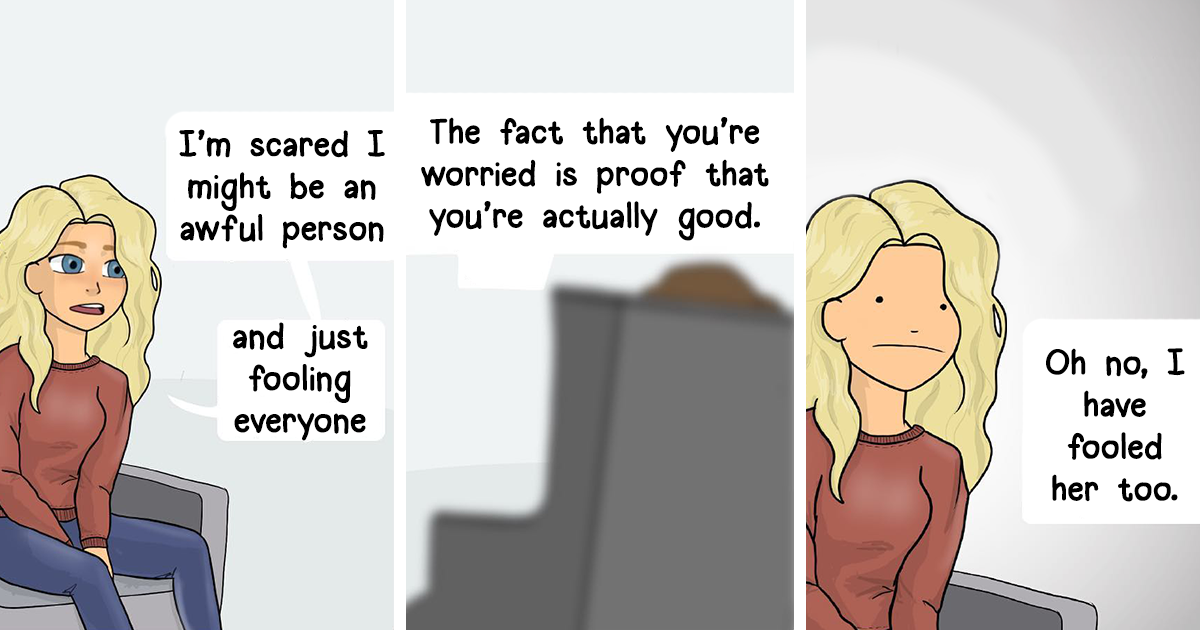
A widely shared collection of 35 of Emma’s comics demonstrates why slice-of-life webcomics remain so irresistible. The situations may look small from the outside, but emotionally they can feel enormous when you are the person living through them. A compliment becomes a five-minute psychological investigation. One unfinished task becomes evidence that your entire life is collapsing. Going to bed early somehow becomes watching random videos after midnight while promising yourself, “Just one more.”
The humor works because the struggles underneath it are recognizable. Stress, inadequate sleep, workplace pressure, procrastination, social uncertainty, perfectionism, and endless decision-making are ordinary parts of modern life. Emma simply holds up a cartoon mirrorand thankfully, the mirror has jokes.
Meet Emma and “Getting Out Of My Hometown”
Emma is the creator of the webcomic Getting Out Of My Hometown, an autobiographical-style comic series built around the weirdness of navigating adult life. Her work frequently explores mental health, therapy, relationships, social discomfort, self-worth, and those strange internal conversations that would sound completely ridiculous if we ever said all of them aloud.
The appeal is not complicated. Emma does not present herself as an all-knowing cartoon philosopher standing on a mountain with the secret to happiness. She is usually right down in the emotional mud with everybody else.
That makes her comics feel less like lectures and more like messages from a funny friend who texts, “I did something embarrassing today,” followed by a story so familiar that you immediately feel better about your own questionable decisions.
The artwork also benefits from the simplicity associated with successful webcomics. Readers do not need seventeen pages of backstory before reaching the joke. A facial expression, a few lines of dialogue, and a recognizable situation are often enough. The real special effect is recognition.
Why Relatable Comics About Daily Life Hit So Hard
They Turn Private Thoughts Into Shared Jokes
Most people have thoughts they assume are uniquely embarrassing. Maybe you replay a conversation from three years ago while brushing your teeth. Maybe somebody says, “You too,” after you tell them happy birthday, and you spend the next hour wondering whether you should legally change your identity.
Then a comic describes nearly the same experience.
Suddenly, your supposedly unique weirdness has company.
This is one of the strongest ingredients in relatable humor: recognition comes before the punchline. Readers laugh because the comic has identified an experience they know intimately but rarely discuss.
They Make Small Problems Feel Safe Enough to Laugh At
Research and guidance from major health organizations consistently recognize stress as a meaningful part of daily life. Work, finances, responsibilities, relationships, sleep, and uncertainty can all contribute to feeling overwhelmed.
A comic obviously cannot erase those pressures. What humor can do is temporarily change the angle from which we view them. The overdue laundry is still overdue, but now it is also the villain in a surprisingly entertaining domestic drama.
Laughter is not a substitute for solving serious problems or seeking professional care when necessary. It is simply one useful human response to the fact that life occasionally behaves like a badly organized group project.
35 Daily Struggles That Make These Comics So Relatable
Emma’s collection and wider comic style revolve around many familiar emotional beats. Here are 35 reasons readers can recognize themselves in this world without needing superhero powers, enchanted swords, or even matching socks.
- Overthinking a normal conversation. Someone says “Okay,” and your brain immediately establishes a federal investigation into what kind of “Okay” it was.
- Rehearsing future conversations. You prepare fifteen brilliant responses, only for the actual discussion to begin with something you never anticipated.
- Remembering old embarrassment at bedtime. Your brain could replay a wonderful childhood memory. Naturally, it chooses that awkward thing you said in 2014.
- Wanting social interaction and solitude simultaneously. You want invitations. You also want everyone to cancel without being angry.
- Taking compliments suspiciously. Instead of accepting “You look great,” the internal committee meets to investigate the speaker’s possible motives.
- Trying to become a morning person. Nighttime You creates ambitious plans that Morning You receives as an act of personal betrayal.
- Going to bed early and failing spectacularly. One innocent phone check somehow becomes a digital expedition through videos you never planned to watch.
- Being tired after doing almost nothing. Apparently, worrying about twelve hypothetical situations counts as an extracurricular activity.
- Procrastinating on a simple task. The task requires seven minutes. Avoiding it somehow becomes a three-day multimedia production.
- Cleaning before doing important work. Suddenly, reorganizing a drawer becomes more urgent than the deadline approaching at alarming speed.
- Making unrealistic to-do lists. The list assumes you are a highly trained productivity machine instead of somebody who gets distracted while looking for a pen.
- Feeling accomplished after one tiny task. You answer one email and mentally request the remainder of the afternoon off.
- Getting overwhelmed by too many choices. Streaming services offer thousands of options, so naturally you spend 40 minutes choosing and watch nothing.
- Ordering the same food again. Adventure sounds exciting until the menu arrives and your trusted order starts whispering your name.
- Having a complicated relationship with exercise. Buying workout clothes provides approximately 83% of the emotional satisfaction of exercising with considerably less sweating.
- Negotiating with yourself about chores. “I’ll wash the dishes after this episode” is one of civilization’s oldest and least successful treaties.
- Waiting until laundry becomes an emergency. Eventually your wardrobe stops being fashion and becomes a strategic search for anything technically clean.
- Ignoring notifications and thinking about them constantly. You do not answer the message, but you absolutely spend two hours feeling guilty about not answering it.
- Writing and deleting texts repeatedly. Three sentences somehow require the diplomatic precision of an international peace agreement.
- Wondering whether you overshared. The conversation ends. The psychological postgame analysis begins immediately.
- Practicing boundaries and then feeling guilty. Saying “no” takes three seconds. Convincing yourself that saying no was allowed takes significantly longer.
- Making progress in therapy. Personal growth is rewarding, although occasionally inconvenient when you realize your therapist was right about something.
- Knowing your unhealthy pattern while repeating it. Self-awareness is powerful, but unfortunately it does not arrive with an automatic software update.
- Comparing yourself with other people. Somebody posts a promotion, vacation, perfect kitchen, and marathon medal while you are celebrating remembering to buy toothpaste.
- Trying to appear confident. Outside: calm professional adult. Inside: several raccoons attempting to operate office equipment.
- Making one mistake at work. The mistake is minor. Your imagination has already prepared a dramatic resignation speech and relocated you to another state.
- Surviving unnecessary meetings. Nothing tests spiritual endurance quite like realizing the entire conversation could have been an email.
- Wanting productivity and comfort at once. Your ambition wants achievement. Your blanket has prepared a compelling counterproposal.
- Buying things for your “future self.” Future You apparently cooks elaborate meals, journals daily, exercises at sunrise, and owns extremely organized storage containers.
- Feeling personally attacked by your bank balance. Looking at recent transactions becomes an archaeological investigation titled, “Where Did All My Money Go?”
- Starting a healthy routine on Monday. Monday has carried an unreasonable amount of responsibility for humanity’s self-improvement projects.
- Experiencing decision fatigue. After making choices all day, deciding what to eat for dinner begins to resemble advanced mathematics.
- Needing a vacation after a vacation. Travel is relaxing except for packing, airports, schedules, expenses, crowds, unpacking, and approximately everything surrounding the relaxing part.
- Realizing nobody fully understands adulthood. Eventually you discover that many adults are simply making reasonable guesses while carrying reusable grocery bags.
- Laughing because the alternative is screaming. Sometimes humor is the small emotional escape hatch that makes an ordinary frustrating day easier to carry.
The Psychology Behind “That Is Literally Me” Humor
Recognition Creates an Instant Connection
Relatable comics depend on specificity. Saying “life is stressful” is true but not especially funny. Showing someone mentally composing a 900-word explanation because a friend replied with a period instead of an exclamation point is much more vivid.
The more specific the behavior, the more readers can recognize the emotional pattern behind it.
Classic American newspaper strips understood this long before social media existed. Successful comics have repeatedly focused on universal experiences such as family, work, eating, sleeping, relationships, boredom, disappointment, and the everyday gap between what people intend to do and what actually happens.
Modern webcomics simply transport that tradition into a world of smartphones, online dating, group chats, therapy language, remote work, streaming platforms, social media, and digital procrastination.
Simple Art Leaves Room for the Reader
Relatable webcomics do not necessarily need elaborate backgrounds or cinematic artwork. In fact, a simple visual style can strengthen the joke because readers immediately focus on emotion, timing, and dialogue.
A strategically exhausted facial expression can communicate an entire Monday morning.
This economy is especially effective online, where people encounter comics while scrolling quickly. A good strip can establish a problem, create recognition, and deliver a punchline within seconds.
Mental Health Humor Works Best When It Laughs With People
One reason Emma’s work connects with readers is that the comedy tends to come from experiencing anxiety, self-doubt, therapy, awkwardness, and emotional contradictions rather than ridiculing people for having them.
That difference matters.
There is a major gap between saying, “Look how ridiculous people with problems are,” and saying, “Look how ridiculous this situation becomes when your brain refuses to cooperate.”
The second approach invites readers into the joke.
It can also normalize conversations around therapy and emotional wellbeing without turning comics into medical advice. A character can make progress and still struggle. Someone can understand a pattern intellectually and still fall into it again. Personal growth rarely moves in a perfectly straight line.
Sometimes growth resembles two steps forward, one step backward, and fifteen minutes wondering why you walked into the kitchen.
Why These Comics Belong to the Internet Age
Webcomics are unusually well suited to contemporary attention habits. They are visual, quick to understand, easy to share, and capable of communicating surprisingly complicated emotions using only a handful of panels.
Social platforms also allow artists to turn personal observations into community experiences. Readers tag friends. Friends respond, “This is you.” The tagged person replies, “Excuse me, this is clearly YOU.” Civilization advances another inch.
But there is something deeper happening underneath the tagging.
Every share effectively says, “I recognize this feeling, and I think you might recognize it too.”
That is why relatable comics can travel so far beyond the artist’s original experience. The details may belong to Emma, but the emotional machineryembarrassment, insecurity, exhaustion, hope, avoidance, self-consciousnessis widely understood.
What Makes Emma’s Comedy Memorable?
The strongest jokes usually contain some combination of honesty, exaggeration, timing, and vulnerability. Emma’s comic persona does not need to win every situation. Frequently, losing the tiny battle is the joke.
She can know what a healthy response should be while wanting to do the opposite. She can recognize that she is overthinking while continuing to overthink. She can make progress while still feeling confused.
In other words, she behaves suspiciously like an actual person.
That imperfection makes the humor warmer. Readers are not being shown an idealized lifestyle and instructed to catch up. They are being invited to laugh at the awkward middle ground where most people actually live.
Conclusion: Daily Struggles Make Surprisingly Good Comics
Getting Out Of My Hometown succeeds because Emma understands an important rule of relatable comedy: ordinary life does not need to be extraordinary to be interesting.
The material is already everywhere.
It is hiding in the unanswered email, the 1 a.m. scrolling session, the unnecessary apology, the intimidating pile of laundry, the compliment you cannot accept normally, the work meeting that refuses to end, and the enthusiastic self-improvement plan abandoned somewhere around Tuesday afternoon.
The 35 hilariously relatable comics highlighted in this collection turn those small experiences into something communal. Instead of silently assuming everyone else has adulthood figured out, readers get a reminder that plenty of people are improvising.
And apparently, improvising can be extremely funny.
Extended Experience: When a Relatable Comic Accidentally Describes Your Entire Day
There is a particular experience that happens when you discover a truly relatable comic. You are casually scrolling, expecting perhaps a cat video or an advertisement for something you discussed aloud exactly once, when suddenly a cartoon stranger reenacts an event from your own life with disturbing accuracy.
You stop scrolling.
First comes recognition. Then laughter. Then mild suspicion.
“Has this artist been watching me?”
Consider a completely ordinary weekday. You wake up after pressing snooze enough times to turn a six-minute feature into a lifestyle. Last night, you sincerely believed Morning You would exercise. Morning You reviews the proposal and rejects it unanimously.
You check your phone “for one minute.” Several minutes disappear under circumstances that will probably never be fully understood.
Eventually you begin working. There are four important tasks. Naturally, you become intensely interested in cleaning your desktop, adjusting your chair, checking the weather in a city you are not visiting, and researching whether coffee technically counts as breakfast.
Then somebody sends a message: “Can we talk later?”
Five harmless words.
Your rational mind knows this could mean virtually anything. Your irrational mind has already concluded that you are being fired, sued, abandoned, audited, and possibly expelled from a country you have never visited.
You reply, “Sure!”
The exclamation point is essential because you are obviously relaxed.
Later, the mysterious conversation turns out to be about lunch.
This is exactly the emotional territory where relatable comics thrive. Nothing objectively dramatic happened. There was no villain. No building exploded. Nobody discovered an ancient curse.
The entire plot occurred inside your head.
By evening, you decide tomorrow will be different. You will become organized. You create a magnificent schedule containing exercise, focused work, meal preparation, reading, meditation, cleaning, budgeting, and perhaps learning conversational Italian.
You feel productive simply looking at the schedule.
Then you reward yourself with a little entertainment.
At 12:47 a.m., you are watching a video explaining how medieval castles handled sewage.
You do not remember making this decision.
This is why Emma’s comics and similar slice-of-life cartoons are so enjoyable. They reveal that the gap between our ideal selves and our actual behavior is not necessarily evidence that we have failed spectacularly at being adults. Sometimes it is simply comedy material.
Of course, humor should not be used to dismiss genuine anxiety, depression, chronic stress, sleep difficulties, or other serious problems. Those deserve appropriate attention. But laughing at the ordinary contradictions surrounding them can provide a little emotional distance.
A relatable comic does not magically complete your work, answer your texts, fix your sleep schedule, or remove the mysterious chair in your bedroom that has gradually become a clothing storage facility.
What it can do is make you feel seen.
For a moment, the struggle changes from “Why am I the only person who does this?” to “Apparently we are all members of a very large and badly organized club.”
That small shift explains why readers keep sharing everyday-life comics. We laugh at someone else’s illustrated disaster because somewhere beneath the joke is recognition.
Life remains complicated. The laundry remains undefeated. Monday continues arriving every seven days despite repeated complaints.
But at least somebody made a comic about it.
Note: This article provides original editorial commentary and thematic discussion inspired by Emma’s “Getting Out Of My Hometown” comics; it does not reproduce the original comic artwork or dialogue.