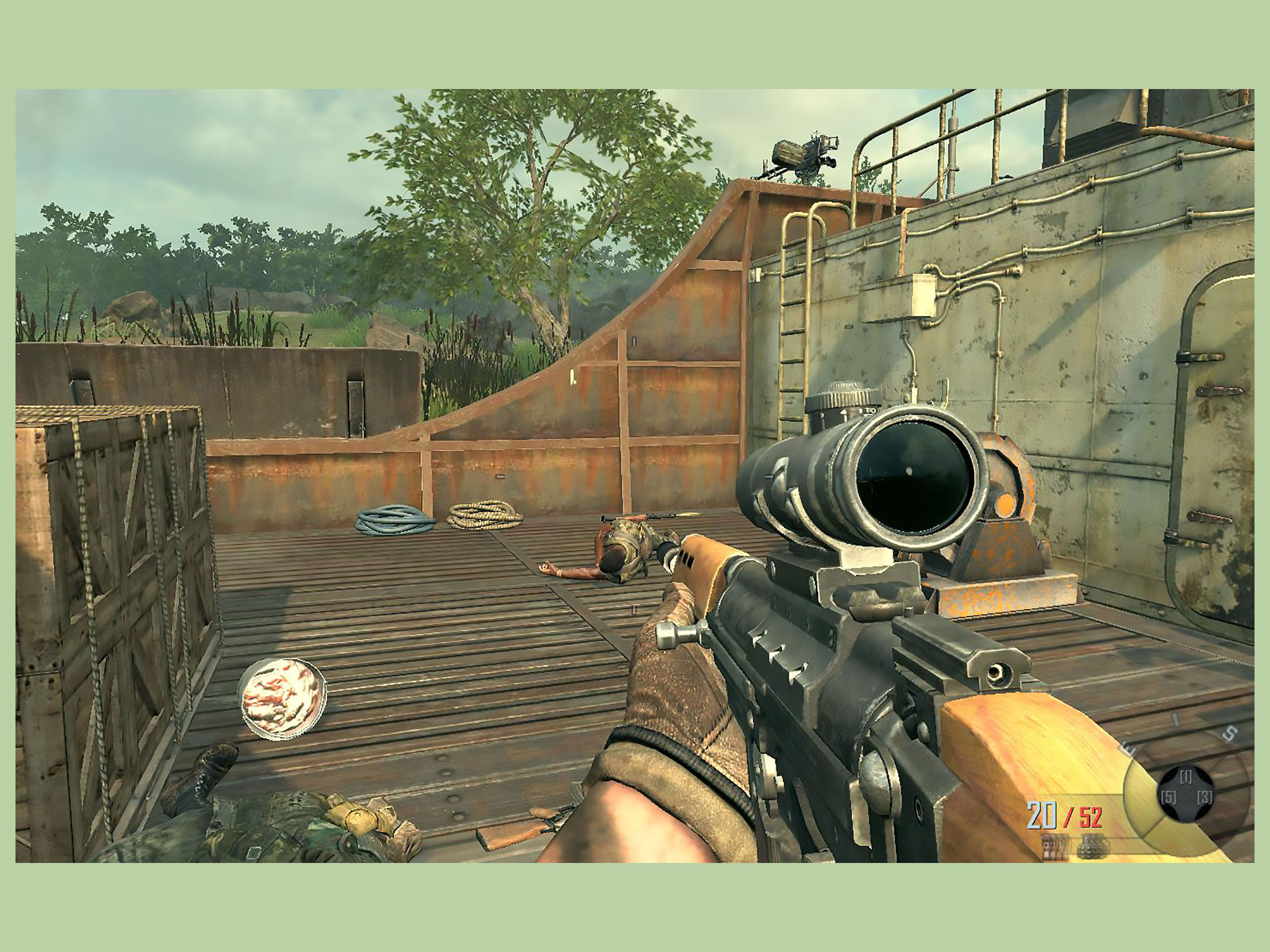
Call of Duty can make improvement feel wonderfully simple and deeply confusing at the same time. You point a weapon at an opponent, pull the trigger, and somehow the other player wins despite appearing to have the reaction time of a sleepy houseplant. Then the killcam reveals that your crosshair was inspecting a nearby doorway while your opponent was already aiming at your chest.
The good news is that getting better at Call of Duty does not require superhuman reflexes, an expensive controller, or twelve uninterrupted hours per day. Strong players tend to win through repeatable fundamentals: comfortable controls, disciplined aiming, intelligent movement, map awareness, and decisions made before the gunfight begins.
The exact weapons, movement systems, perks, and maps change between Call of Duty releases. The fundamentals do not. Whether you play traditional multiplayer, Ranked Play, Resurgence, or Warzone, the following three methods can help you improve your aim, survive longer, win more engagements, and become a more useful teammate.
1. Build Reliable Aim and Movement Mechanics
The first way to get better at Call of Duty is to make your mechanical skills dependable. You do not need perfect accuracy. You need controls and habits that produce reasonably accurate shots under pressure.
Find a Sensitivity You Can Actually Control
Many beginners use a high sensitivity because turning quickly feels impressive. Unfortunately, spinning like a ceiling fan is not helpful when your crosshair repeatedly flies past the target. Official Call of Duty control guides emphasize that sensitivity should balance fine aiming with the ability to react and turn. The ideal setting is personal, but it should allow you to track a moving enemy without constantly correcting an overshoot.
Start with a moderate sensitivity. Enter a private match or training area and aim at a fixed object. Strafe from side to side while keeping your crosshair centered on it. Next, practice turning between two objects positioned at different angles. Lower your sensitivity if you repeatedly pass the target. Raise it slightly if you cannot comfortably turn toward threats behind you.
Do not change your sensitivity after every bad match. A new setting often feels awkward simply because it is unfamiliar. Keep it for several sessions before deciding whether it works. Consistency helps your hands learn how much movement is needed for a specific turn.
Improve Crosshair Placement
Crosshair placement is one of the fastest ways to improve at Call of Duty because it reduces the distance your aim must travel. Keep your crosshair near the height at which an enemy’s upper chest is likely to appear. When approaching a doorway, staircase, window, or corner, aim at the probable threat instead of staring at the floor.
Pre-aiming means aiming down sights before entering a likely engagement. Call of Duty’s own terminology guides describe it as preparing your weapon while rounding a corner so that you are ready for immediate contact. It is especially useful near objectives, narrow lanes, buildings, and other predictable combat areas.
Pre-aiming every corner can make you painfully slow, however. Use it when evidence suggests an enemy may be nearby: gunfire, footsteps, a teammate’s death marker, an objective warning, or unusual movement on the minimap. Otherwise, move normally and raise your weapon as you approach danger.
Train Tracking, Target Switching, and Recoil Control
Call of Duty gunfights require several aiming abilities. Tracking helps you keep the crosshair on a moving opponent. Target switching helps you move quickly between multiple enemies. Recoil control keeps sustained fire from climbing away from the target. Aim-training resources recommend practicing these skills through short, repeatable routines rather than jumping randomly between exercises.
A practical warm-up can take 10 to 15 minutes:
- Spend three minutes tracking moving targets.
- Spend three minutes switching between targets.
- Spend three minutes firing controlled bursts at different distances.
- Finish with a short private match against bots or training targets.
You can perform this routine in an external aim trainer or within the game. Official Call of Duty guides regularly direct new and returning players toward training courses and private matches for learning movement and combat fundamentals.
Use Movement to Support Your Aim
Advanced movement looks exciting, but movement should help you win the gunfight rather than turn every doorway into an interpretive dance performance. Sliding, diving, strafing, jumping, and dropping prone can make you harder to hit, but many movement actions can also affect accuracy, aim-down-sights timing, or visibility. Official movement guides specifically warn that some evasive techniques involve accuracy trade-offs.
Begin with controlled strafing. Move sideways during a fight while making small aim corrections. This is easier to control than jumping repeatedly and still forces your opponent to track you. PlayStation’s Call of Duty guidance has also recommended strafing and occasional drop shots as ways to become a more difficult target.
Use aggressive movement when crossing dangerous spaces, escaping fire, or surprising an opponent. Avoid sliding automatically into every fight. If you slide directly past an enemy and need two business days to turn around, the maneuver has not achieved its strategic purpose.
Optimize Visibility and Responsiveness
Your settings should make opponents easy to see and your controls easy to use. Consider disabling motion blur, reducing distracting camera movement, and choosing a field of view that provides useful peripheral vision without making distant enemies uncomfortably small. A wider field of view can reveal more of the scene, but comfort and target visibility matter more than copying a professional player’s number.
Keyboard players should place important actions where they can be reached without awkward hand movement. Controller players can review button layouts, stick dead zones, trigger behavior, and automatic movement options. Hardware guides for Call of Duty similarly recommend optimizing keybinds and movement settings around the player’s comfort rather than treating default controls as sacred law.
Performance matters too. Stable frame rates and lower system latency make input feel more responsive. On supported PC hardware, technologies such as NVIDIA Reflex can reduce system latency, while lowering demanding visual settings may improve responsiveness in GPU-heavy situations. A stable wired connection can also reduce the reliability problems associated with wireless packet loss and inconsistent latency.
2. Learn Maps, Spawns, and Game Modes
Better aim helps you win a fair gunfight. Better information helps you avoid fair gunfights entirely. The second way to improve at Call of Duty is to understand where opponents are likely to appear, which areas are dangerous, and how the objective influences player movement.
Use the Minimap as a Prediction Tool
Do not look at the minimap only when a red indicator appears. Friendly positions are equally useful. When teammates occupy one side of the map, opponents are more likely to be located in unprotected areas or approaching from another lane. Official map guides repeatedly recommend using the minimap and friendly positions to judge safe routes, crossfire areas, and immediate threats.
Check the minimap whenever you reload, respawn, capture an objective, or move between areas. These brief glances gradually create a mental picture of the match. You will begin to anticipate contact instead of discovering enemies through the traditional method of being shot in the back.
Understand Spawn Flow
You do not need to memorize every exact spawn point. Start by learning the major spawn areas and the conditions that cause teams to move. Spawns often shift when players push deeply into enemy territory, control important sections of the map, or influence objective locations.
Watch where your teammates respawn. If several teammates suddenly appear behind you, the enemy may now be concentrated on the opposite side. If your team pushes too far forward, prepare for opponents to spawn elsewhere. This is not magical foresight; it is simply reading how players are distributed around the map.
After dying, ask where the opponent came from and why that route was available. Perhaps your team abandoned a lane. Perhaps you stood in an exposed area. Perhaps the enemy used a route you had not noticed. Each death can reveal something about the map, provided you resist the natural temptation to blame the universe, the servers, and a suspiciously talented twelve-year-old.
Learn Maps Through Objective Modes
Objective modes are excellent for learning predictable traffic patterns. Domination flags, Hardpoints, control zones, and other objectives encourage players to move through specific lanes. Official Call of Duty map guidance recommends objective modes as a way to learn layouts, while Hardpoint guides note that objectives rotate through predictable locations.
In Hardpoint, learn the next objective location and rotate before the current point expires. Arriving early lets you choose cover, establish favorable angles, and force the enemy to attack you. In Domination, avoid capturing every flag without considering spawn control. Holding two flags with stable map control is often safer than chasing the third flag and scattering everyone across the neighborhood.
Objective play also teaches timing. You learn when opponents are likely to rush, when they may use equipment, and which routes become important during a rotation. Even players who prefer Team Deathmatch can benefit because the map knowledge transfers to other playlists.
Choose Positions That Limit Enemy Options
Good positioning reduces the number of directions from which you can be attacked. Use walls, vehicles, counters, windows, and elevation to protect part of your body. Avoid standing in the middle of open spaces unless you enjoy providing the enemy team with a complimentary shooting exercise.
When holding an angle, consider what happens after your first elimination. Gunfire, death markers, and team communication may reveal your position. Reposition when possible instead of peeking the same opening repeatedly. Official PlayStation guidance has similarly recommended moving after an elimination because opponents may quickly focus on your location.
Head glitches, narrow sightlines, and elevated positions can be strong, but no position is invincible. Ask whether you have an escape route, whether teammates can support you, and whether your chosen angle actually helps the objective.
Communicate Useful Information
A useful callout is short and specific: enemy location, number of opponents, movement direction, or damage status. “Two near the north stairs” is more helpful than a five-act dramatic monologue about how unfairly you were eliminated.
Use pings when voice communication is unavailable. Pay attention to teammate arrows, objective markers, and callouts before committing to a fight. Official mode guides encourage players to follow voice communication, pings, and teammate positions when deciding which objective or route to support.
3. Practice Deliberately and Review Your Mistakes
The third way to get better at Call of Duty is to stop treating every match as an isolated test of talent. Improvement comes faster when each session has a purpose.
Practice One Skill at a Time
Choose one focus before playing. You might work on crosshair placement, avoiding unnecessary reloads, rotating early, checking the minimap, or staying near cover. Trying to repair every weakness at once usually leads to remembering none of them once the first grenade arrives.
A focused session could look like this:
- Warm up for 10 minutes.
- Play three matches while concentrating on one skill.
- Review the deaths that relate to that skill.
- Play two final matches and apply one correction.
Consistency matters more than marathon sessions. Regular practice using similar exercises makes progress easier to measure, while constantly changing drills can hide whether you are actually improving.
Master a Small Weapon Pool
Constantly changing weapons makes it difficult to develop reliable recoil control and engagement timing. Begin with one dependable assault rifle or similar medium-range weapon, one close-range option, and perhaps one specialized weapon for larger maps.
Learn each weapon’s comfortable range, recoil direction, magazine capacity, reload timing, and aim-down-sights speed. Build attachments around a clear purpose. A close-range class may favor faster handling and mobility, while a long-range setup may prioritize recoil control, range, and visual clarity. Weapon guides commonly recommend balancing recoil reduction with handling speed instead of blindly maximizing one statistic.
A copied professional loadout can be a useful starting point, but it is not automatically ideal for you. Competitive players may control recoil that feels uncomfortable to a beginner. Test attachments in a firing range or private match, then adjust them according to the distances you encounter most often.
Review Why You Died
Do not merely ask, “How did that player kill me?” Ask, “What made that death possible?”
Most deaths can be placed into a few categories:
- Your crosshair was not prepared for the threat.
- You entered a fight without enough information.
- You challenged from an exposed or predictable position.
- You fought outside your weapon’s effective range.
- You reloaded, sprinted, or used equipment at the wrong moment.
- You remained in place after revealing your location.
- You attacked alone when teammates were available.
Killcams are not perfect analytical instruments, but they can expose repeated habits. Record a full match occasionally and review several deaths together. Patterns become easier to recognize when you are no longer distracted by the live match.
For example, you might discover that poor aim is not the main problem. Perhaps you repeatedly sprint around corners, forcing yourself to raise the weapon after the opponent has already fired. The solution is not another hour of target practice. It is slowing down near likely threats.
Track Useful Progress
Kill-to-death ratio can be informative, but it should not be your only measure. Track whether your accuracy is improving, whether you are dealing more damage, whether you are contributing to objectives, and whether preventable deaths are becoming less common.
Winning an objective match with fewer kills may represent better play than earning a high kill count while ignoring the objective. Likewise, a negative match against strong opponents can still be useful if you practiced a difficult skill and learned which decisions failed.
Use small performance goals. Try to avoid dying while reloading. Rotate earlier in Hardpoint. Check the minimap after every teammate death. Win one more gunfight per match by staying near cover. These goals create visible progress even when matchmaking produces difficult lobbies.
Protect Your Focus
Call of Duty can become frustrating quickly because engagements happen rapidly and mistakes are punished immediately. After several poor matches, players often become more aggressive, take worse routes, and challenge opponents without information. This is commonly known as playing while tilted, although “temporarily donating scorestreaks to strangers” is also accurate.
Take a brief break when your decisions become careless. Stretch, drink water, and return with a specific objective. Improvement requires attention, and repeatedly queueing while angry mainly trains angry decision-making.
A Realistic Player Experience: What Improvement Usually Feels Like
Imagine a player named Jordan who has played Call of Duty casually for several months. Jordan can occasionally produce a brilliant match, but most sessions are inconsistent. One game ends with 28 eliminations; the next ends with Jordan wondering whether the controller has developed personal enemies.
Jordan initially assumes aim is the entire problem. The sensitivity is set extremely high because a popular content creator uses a similar number. During close-range fights, Jordan turns quickly but regularly moves the crosshair past the enemy. At long range, small adjustments feel nearly impossible.
The first change is surprisingly boring: Jordan lowers the sensitivity and practices tracking targets for 10 minutes before playing. The early results are not spectacular. Turning feels slower, and the first few matches are awkward. After several sessions, however, Jordan begins landing more follow-up shots. Enemies who previously escaped with a sliver of health now lose the fight.
The next discovery comes from reviewing deaths. Jordan notices that many opponents are already aiming when the gunfight begins. The problem is not reaction speed. Jordan is sprinting through doorways and staring toward the center of the room instead of the most likely enemy position.
For an entire evening, Jordan focuses only on crosshair placement. The goal is not to earn a huge kill count. The goal is to keep the crosshair at upper-chest height and pre-aim dangerous entrances. The session feels slower, but the killcams begin to look different. Jordan is no longer surprised by every opponent. More fights begin with both players ready, and several begin with Jordan firing first.
Map awareness is the next step. Jordan starts checking the minimap after respawning and whenever a teammate dies nearby. Friendly positions reveal which lanes are controlled and which areas are open. Instead of running directly toward the latest gunfire, Jordan takes a route that provides cover and a clearer angle.
In Hardpoint, Jordan previously rushed the current objective until the final second. After learning the rotation order, Jordan begins moving to the next point early. This produces fewer chaotic entries and more defensible positions. Jordan’s elimination total does not increase dramatically, but objective time and match wins improve.
Not every session goes well. Some nights bring difficult opponents, poor timing, and the mysterious phenomenon in which every enemy grenade seems to have Jordan’s home address. The difference is that bad matches no longer feel meaningless. Jordan can identify whether the problem was positioning, impatience, missed shots, or a failure to support teammates.
After several weeks, the improvement is noticeable but not cinematic. Jordan has not transformed into a professional player who wins every gunfight. Instead, the number of avoidable mistakes has decreased. The crosshair is usually closer to the threat. Reloads happen behind cover. Early rotations create easier engagements. Aggressive movement is used intentionally rather than automatically.
This is what genuine improvement often looks like. It is not a secret setting that instantly doubles your accuracy. It is the gradual replacement of unpredictable habits with repeatable ones. Mechanical skill improves, but the larger change is that the player enters more fights with an advantage.
Conclusion
To get better at Call of Duty, build dependable aim and movement, learn how maps and objectives shape enemy behavior, and practice with a specific purpose. Start with comfortable settings and strong crosshair placement. Use the minimap to predict threats, learn common routes, and position yourself near cover. After each session, review a few deaths and identify one habit to improve.
You will still lose gunfights. You will still encounter opponents who appear to know your location before you do. The goal is not perfection. The goal is to make fewer preventable mistakes and create more engagements in which your preparation, position, and information give you the advantage.
Work on one skill consistently, and your results will eventually become less dependent on luck. Your aim will feel calmer, your movement will become more purposeful, and your teammates may finally stop watching you reload in the middle of an open street.