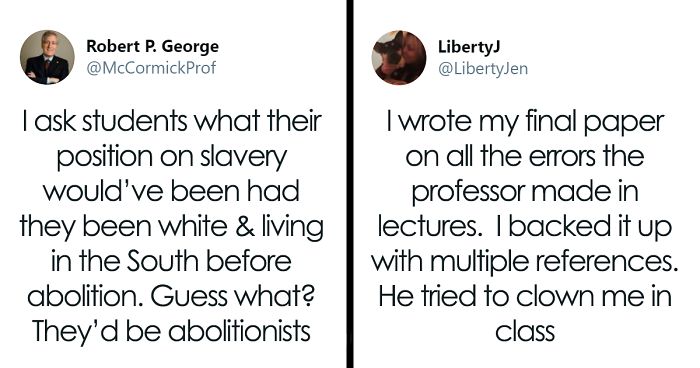
Would you have opposed slavery if you had been born white in the antebellum South? It sounds like a question with an easy answer from the comfort of a modern classroom, a laptop, and a coffee order that took longer to make than it should have. Most of us want to say yes. Of course we would have spoken out. Of course we would have helped people escape. Of course we would have been on the right side of history.
But that is exactly why the question is worth asking. It is not a quiz about whether modern people possess decent values. It is a test of whether we understand how power, money, fear, family pressure, religion, law, and social approval can make injustice feel ordinary. The most thoughtful student responses do not turn the past into a superhero movie where everyone gets a cape and a moral soundtrack. Instead, they recognize that slavery was a system built to reward white complicity, punish dissent, and deny the humanity of enslaved people.
Why This Question Makes People Squirm
There is a reason this classroom prompt can make a room go quiet. It forces students to move beyond the comfortable idea that bad people in the past were obviously bad, while good people would naturally have known better. History is rarely that tidy. People do not wake up in the morning, stretch, make biscuits, and announce, “Today I will enthusiastically support a cruel economic system.” More often, they inherit a world, absorb its assumptions, protect their interests, and find ways to avoid looking too closely at the people harmed by it.
In the American South before the Civil War, slavery was not simply a private arrangement between an enslaver and an enslaved person. It was upheld through laws, courts, churches, local economies, political power, violence, and social expectations. Slaveholding households represented a minority of white Southern families, but the system influenced far more people than the ownership statistics alone suggest. In 1860, roughly one-fourth of white Southern families owned at least one enslaved person, while many others still benefited from or supported the racial hierarchy slavery created.
That distinction matters. A person did not need to own human beings to defend the system that kept other white people socially and politically dominant. White laborers, merchants, ministers, politicians, and neighbors could all be connected to slavery through trade, local status, family ties, or fear of what freedom for Black Americans might mean for the existing order. Slavery was not just a plantation problem. It was a regional system with tentacles, paperwork, propaganda, and an alarming ability to make cruelty sound like tradition.
The Honest Answer: You Cannot Know for Certain
The most responsible answer to the professor’s question is not, “I definitely would have been an abolitionist.” It is, “I hope I would have been brave enough to resist, but I cannot assume I would have escaped the pressures of my time.” That is not moral cowardice. It is historical humility.
People are shaped by the world around them. A white Southerner born into a slaveholding family might have been taught from childhood that slavery was normal, legal, biblical, necessary for the economy, or even supposedly beneficial to enslaved people. Pro-slavery advocates used religious arguments, legal arguments, economic arguments, and deeply racist claims to defend the institution. They were not short on excuses; they had an entire warehouse of them.
Even people who disliked slavery often stopped short of demanding immediate emancipation or full equality. Abraham Lincoln, for example, began his political career opposing the expansion of slavery rather than publicly advocating immediate emancipation everywhere. His views evolved during the crisis of war, illustrating that moral and political change can be slow, incomplete, and shaped by circumstances.
Thomas Jefferson offers another uncomfortable example. He criticized slavery and supported some limits on the slave trade, yet he owned hundreds of people during his lifetime and profited from a system that treated human beings as property. At Monticello, enslaved people could be bought, sold, leased, mortgaged, or transferred through inheritance.
That contradiction is not a side note. It is the lesson. A person can speak eloquently about liberty while participating in oppression. A person can believe they are decent while benefiting from an indecent system. Moral self-confidence is cheap. Moral action costs something.
What Resistance Actually Looked Like
Any discussion of slavery must center the people who endured it and resisted it. Enslaved African Americans were never passive victims waiting for white Americans to discover their conscience. They resisted in ways large and small: slowing work, breaking tools, feigning illness, protecting family members, preserving culture, learning to read, running away, organizing escape routes, rebelling, petitioning, worshipping, and building communities under impossible conditions.
Escape was one of the most visible forms of resistance, but it was also dangerous. The Library of Congress notes that thousands of enslaved people fled each year, often with help from free Black communities, nearby enslaved people, and some white allies. By 1860, an estimated 400,000 people had escaped slavery.
Enslaved people also used stories, speeches, newspapers, faith, family networks, and political organizing to challenge slavery. Frederick Douglass transformed his life story into a powerful argument against the institution, forcing white audiences to confront the gap between American ideals and American reality.
That is why the best student answers do not make white people the heroes of a slavery discussion. A white Southerner who opposed slavery could have mattered. A neighbor who refused to participate, hid information, helped someone escape, voted against pro-slavery politicians, or challenged racist lies could have made a difference. But the central story remains the courage, intelligence, endurance, and leadership of Black Americans fighting for their own freedom.
What Could a White Southerner Have Done?
The options available to a white Southerner varied by wealth, gender, location, family background, and willingness to accept danger. There was no universal script. Still, historical examples show that resistance was possible, even when it was unpopular and risky.
Refuse to Own, Buy, Sell, or Hire Enslaved People
The most immediate action would have been refusing direct participation in human bondage. That might sound obvious, but in a society where enslaved labor was tied to land, wealth, inheritance, and social status, such a choice could have come with financial consequences. Refusal alone would not dismantle slavery, but it would reject the idea that prosperity required treating people as property.
Challenge the Stories That Made Slavery Seem Normal
Slavery survived partly because people repeated myths about it. Some claimed enslaved people were content. Some argued slavery was ordained by religion. Some said abolition would cause chaos. Those arguments were not harmless opinions; they were tools of oppression. Speaking against them at home, in church, in public meetings, or in print could be dangerous, but silence helped the myths travel farther.
Support Antislavery Organizing
Abolitionists used speeches, petitions, newspapers, meetings, lectures, and political campaigns to challenge slavery. Black and white abolitionists formed a relatively small but influential force that helped shift public debate and pressure the nation toward change.
Some white Southerners opposed secession or supported the Union, especially in regions where slaveholding was less concentrated. Their motives varied, and not every Unionist supported racial equality. Still, their existence proves that Southern white opinion was never completely uniform.
Help People Seek Freedom, Without Romanticizing the Risk
Helping an enslaved person escape was not a casual act of rebellion. It could bring legal penalties, violence, social isolation, or financial ruin. The Fugitive Slave Act and local enforcement systems made assistance dangerous, especially for Black Americans and abolitionists. A person considering such action would need courage, secrecy, trusted networks, and a willingness to put someone else’s freedom ahead of personal comfort.
That is the part students often understand once they sit with the question long enough: bravery is not a personality trait you order online with two-day shipping. It is a choice made under pressure, often when the consequences are real and unpleasant.
Why “I Would Have Been Different” Is Not Enough
Many students probably begin with a sincere declaration: “I would have opposed slavery.” That instinct is morally encouraging, but it becomes meaningful only when followed by harder questions.
- Would I have opposed slavery if my family profited from it?
- Would I have spoken up if my church defended it?
- Would I have helped someone escape if I could lose my job, property, safety, or reputation?
- Would I have believed Black people when the law, newspapers, and neighbors told me not to?
- Would I have accepted equality, not merely the end of slavery in the abstract?
Those questions are not designed to make people feel guilty for being born later. They are designed to make history useful. The danger is not that students will realize they might have failed. The danger is that they will assume they could never fail because they have modern values and a very confident social-media bio.
History teaches that people can become accustomed to injustice when it is wrapped in law, tradition, economic interest, and group identity. It also teaches that change often begins when ordinary people refuse to treat the unacceptable as normal.
Students “Delivered” When They Chose Complexity Over Performance
The strongest responses to this thought experiment are not the loudest ones. They are the ones that recognize the moral trap built into the question. A thoughtful student might say, “I want to believe I would have been an abolitionist, but I would need to examine how much I benefit from systems around me now.” Another might say, “The people with the greatest claim to heroism were the enslaved people resisting every day.”
That answer is not evasive. It is mature. It acknowledges that historical empathy does not mean excusing injustice. It means understanding the forces that made injustice durable so we can recognize similar patterns in the present.
Students can also notice that the question is about more than individual goodness. Slavery was protected by institutions. It took legal change, military conflict, abolitionist organizing, Black resistance, political struggle, and extraordinary sacrifice to end legal slavery in the United States. The Emancipation Proclamation and the Thirteenth Amendment were major milestones, but freedom and equality remained fiercely contested after the Civil War.
After emancipation, many Southern governments enacted Black Codes designed to restrict the freedom and labor options of newly freed Black Americans. The end of legal slavery did not automatically end racial exploitation or racial violence.
That reality changes the conversation. It is not enough to say, “I would have wanted slavery to end.” The deeper question is whether someone would have supported the full rights, safety, land, education, family stability, political power, and human dignity of formerly enslaved people afterward. Ending one injustice without confronting the system that replaces it is how history changes its outfit but keeps its bad habits.
Experiences That Make This Question Feel Less Distant
One of the most powerful ways to understand this topic is to move beyond a textbook timeline and encounter the human scale of slavery. Visiting a historic site, reading a first-person narrative, studying a family record, or examining a newspaper advertisement for a person being sold can puncture the safe distance that history sometimes creates. Dates matter, but names matter too. A date can feel like a fact. A name feels like a person.
For many students, the first difficult experience comes from realizing that slavery was not confined to a few enormous plantations with grand columns and dramatic movie lighting. Enslaved people lived and worked in cities, farms, workshops, households, ports, mines, and construction sites. Families could be separated by sale, inheritance, debt, or relocation. The domestic slave trade tore hundreds of thousands of people away from communities in the Upper South and sent them to the expanding cotton regions of the Deep South.
Another important experience is reading the words of formerly enslaved people. Their accounts often reveal something that broad summaries can miss: slavery invaded ordinary life. It determined where people could travel, whom they could marry, whether they could learn to read, whether they could keep their children close, and whether their labor belonged to them. It also reveals resistance that did not always look like a dramatic escape scene. Sometimes resistance meant holding onto a family story, teaching a child, protecting a loved one, creating music, finding faith, or refusing to surrender an inner sense of self.
Classroom discussions can become more meaningful when students compare public myths with primary sources. For example, a student may have heard that enslaved people were loyal or content. Then they encounter advertisements offering rewards for people who escaped, records of anti-literacy laws, accounts of rebellions, or testimony about family separation. Suddenly, the myth begins to look less like history and more like a public-relations campaign for cruelty.
There is also a revealing experience in studying people who opposed slavery but did not go far enough. Some politicians objected to slavery’s expansion while avoiding demands for full equality. Some white abolitionists fought slavery but still held racist assumptions. Some religious leaders preached liberty while their institutions benefited from bondage. These contradictions can be frustrating, but they are valuable because they show that moral progress is rarely pure, linear, or complete.
A student might leave such a lesson feeling unsettled. That is not necessarily a failure of teaching. A little historical discomfort can be productive. It asks us to notice the difference between admiring justice in theory and supporting it when it costs us something. It asks us to question the systems that feel normal simply because we grew up inside them.
Public-history experiences can make this even clearer. Museums, archives, historic homes, and memorial sites increasingly work to name the people who were enslaved rather than treating them as background scenery. That shift matters. When visitors learn that a historic estate was maintained by specific women, men, and children with families, skills, hopes, and acts of resistance, the building stops being merely “beautiful.” It becomes evidence of labor, coercion, and survival.
Students can carry that lesson into the present without forcing simplistic comparisons. The point is not to declare that every modern problem is identical to slavery. It is to learn how injustice works: it can become profitable, respectable, legal, and familiar. It can be defended by people who consider themselves moral. It can persist because those who benefit from it tell themselves they are powerless to change it.
The most useful personal takeaway is not, “I would definitely have been brave.” It is, “What am I doing now when I see unfairness?” Do we listen to people whose experiences differ from ours? Do we question stereotypes when they are repeated casually? Do we support policies that expand dignity and opportunity? Do we remain quiet when speaking up would be awkward?
That is where the old classroom question becomes a modern challenge. Nobody gets to travel back in time and prove their moral courage. But everyone gets opportunities in the present to practice it. The choices may not come with horses, secret maps, or a dramatic thunderstorm. They may come as a conversation, a vote, a workplace decision, a classroom disagreement, or a moment when someone else needs support.
Conclusion: The Question Is Really About Us
“What would you have done?” is not an invitation to collect imaginary hero points. It is an invitation to understand how ordinary people can become entangled in injusticeand how they can choose to resist it.
The honest answer is uncertain. A white Southerner living under slavery might have opposed it, ignored it, benefited from it, rationalized it, or risked everything to challenge it. History gives us examples of every possibility. What it does not allow is the comforting fiction that resistance was easy or that slavery survived only because of a few cartoonishly evil villains.
The students who truly deliver are the ones who refuse easy answers. They recognize that enslaved people led the fight for freedom, that white allies had choices but faced real risks, and that moral courage is not proven by claiming it after the fact. It is proven by what people do when the world around them insists that injustice is simply the way things are.