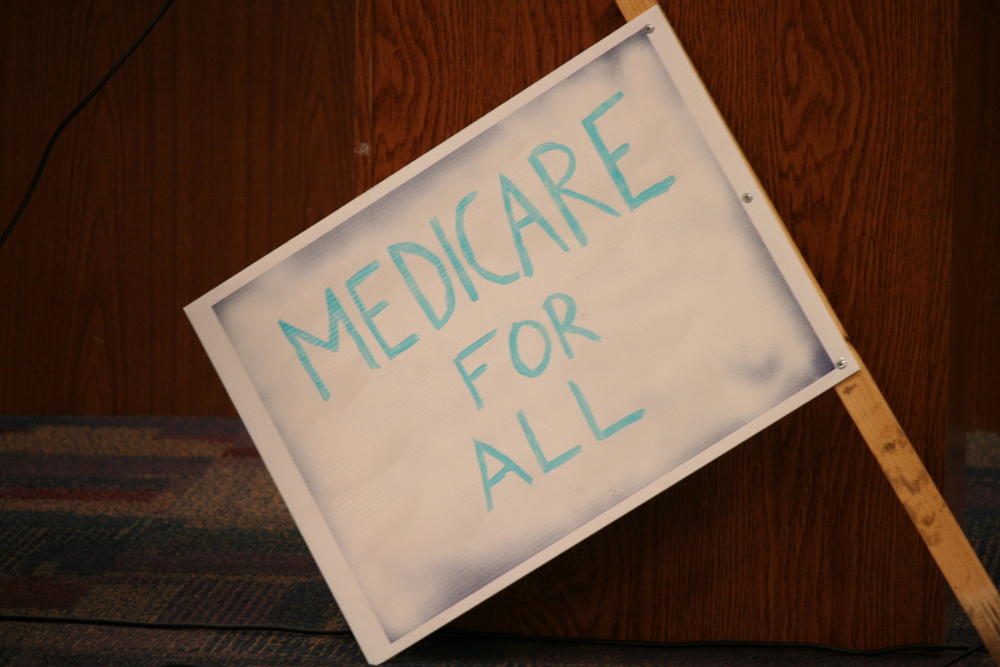
Political slogans do not usually die in a dramatic movie scene. They fade out the way party trends usually do: with fewer cheers, fewer champions, fewer campaign ads, and a lot more awkward throat-clearing. That is where Medicare for All seems to be now. Not dead as a moral dream. Not dead as a critique of America’s expensive, messy, paperwork-loving health system. But dead, or at least heavily sedated, as the Democratic Party’s big electoral sales pitch.
That distinction matters. Democratic voters still want government to do more on health care. They still hate sky-high premiums, deductibles, surprise bills, pharmacy prices, and the delightful experience of receiving a medical statement that reads like a ransom note. But wanting more government action is not the same as wanting a full single-payer transformation right now. And that gap is exactly why the old slogan has lost altitude.
If you want the blunt version, here it is: Democratic voters are still buying health reform, but they are not consistently buying the most disruptive version of it. They want relief. They want lower costs. They want coverage to feel less fragile. They want Medicare, Medicaid, and the Affordable Care Act defended rather than treated like props in a graduate seminar. What they do not seem eager to do is gamble their existing coverage, or their party’s electoral message, on a sweeping plan that is easy to caricature and hard to explain in under 30 seconds.
First, let’s define what “dead” really means
To say Medicare for All is dead is not to say universal health care is unpopular. That would be too neat, too smug, and too wrong. Universal coverage remains emotionally powerful because millions of Americans experience health care as a financial stress test with fluorescent lighting. The deeper desire behind Medicare for All has not disappeared. People still want security. They still want fairness. They still want a system where getting sick does not feel like opening a second mortgage.
What has weakened is the specific political package. Medicare for All asks voters to imagine a future system that may be more universal, more efficient, and more humane, while also asking them to accept a large transition, major government redesign, possible tax increases, and a fight over private insurance that opponents can weaponize in five seconds flat. In politics, that is a lot of ask and not enough elevator pitch.
So the better argument is this: Medicare for All is not dead as an aspiration. It is dead as the unifying Democratic campaign message because too many Democratic voters either prefer a mixed model, fear the disruption, or simply rank other health priorities above it.
Democratic voters still want government in the game
This is the part many hot takes miss. Democratic voters have not suddenly become libertarians with organic tote bags. They still believe government should make sure people have health coverage. They still lean toward public solutions much more than Republicans do. And when they look at health care, they usually see a market that behaves like a very expensive raccoon: chaotic, persistent, and always somehow in the trash.
But inside the Democratic coalition, there is a meaningful split over how to get to universal coverage. Some voters prefer a single national plan run by the government. Others want a public-private hybrid. Others want to expand the Affordable Care Act, add stronger subsidies, lower the Medicare age, negotiate more drug prices, and call it a day before anyone starts redesigning the entire American insurance universe.
That split is not a side note. It is the whole story. You can have broad support for government responsibility and still not have a clear majority for abolishing or replacing private insurance. In fact, that is pretty much the Democratic health care dilemma in one sentence.
Why the slogan keeps hitting speed bumps
1. People are scared of losing what they already have
Even voters who dislike the current system may still be nervous about losing their employer-sponsored plan, their doctor network, or the small comforts of familiarity. Americans complain about health insurance with Olympic-level stamina, but many also cling to what they know. Reformers often underestimate how powerful that instinct is.
That is why attacks on Medicare for All have so often focused on eliminating private insurance. For many voters, that phrase lands like this: “We know you hate your insurer, but would you like to replace it with a giant unknown program during a polarized political era?” That is not a clean layup. That is a half-court shot with two defenders hanging on your elbows.
2. Cost anxiety changes what voters want to hear
When voters say health care is a top issue, they often mean the monthly pain first. Premiums. Copays. Insulin. Out-of-pocket caps. Prescription drugs. Medical debt. They do not necessarily mean they want a constitutional showdown over the future of all insurance in America. They want a bill to go down, not a white paper to go viral.
That is one reason affordability-focused reforms keep outperforming grander ideological messaging. A proposal like capping insulin costs is instantly understandable. A proposal like expanding drug-price negotiation sounds practical. A proposal like extending Affordable Care Act subsidies feels direct. Medicare for All, by contrast, invites a ten-minute explanation, a tax debate, three scare ads, and one uncle at Thanksgiving saying, “So… who pays for it?”
3. The transition is politically terrifying
Big structural reform sounds glorious until someone has to explain the transition. What happens to private plans? What happens to unions that negotiated strong benefits? What happens to hospitals that depend on current reimbursement systems? What happens to state-federal arrangements? What happens if the rollout is messy?
After years of political trench warfare around the Affordable Care Act, many Democratic voters seem to prefer upgrades to the existing system over detonating it and hoping a more elegant system rises from the smoke.
Democratic voters are buying health care action, just not necessarily this label
If you want to understand why Medicare for All lost its central place in Democratic politics, look at what voters have been prioritizing. Health care affordability remains a major issue. So does the future of Medicare. So do drug prices. So does access to abortion. So does keeping existing coverage from becoming more expensive or disappearing altogether.
That matters because campaigns chase what voters rank as urgent. And lately, the urgency has sounded less like “replace the system in one historic blow” and more like “please make this less expensive before my next premium notice ruins breakfast.” That is not cowardice. That is lived experience talking.
This is also why many of the most popular Democratic health policies are incremental, not revolutionary. Capping insulin. Expanding negotiation over drug prices. Protecting Medicare. Preserving Medicaid. Defending the ACA. Extending subsidies. These are reforms voters can picture using, not just applauding.
The 2024 election offered a giant, blinking warning sign
One of the most instructive lessons from the 2024 election was that voters who were deeply worried about health care costs did not automatically line up behind the Democratic ticket. That sounds counterintuitive until you remember how elections work. Voters can agree with Democrats on health care in theory and still vote based on inflation, partisan identity, distrust of institutions, cultural issues, or a general sense that everything costs too much and someone should be blamed.
In other words, health care pain does not automatically translate into single-payer politics. Sometimes it translates into anger. Sometimes it translates into support for smaller fixes. Sometimes it gets crowded out by abortion, democracy, immigration, or the economy. Sometimes it becomes a vague demand for “do something” rather than a specific endorsement of a giant rewrite.
That is why Democratic strategists increasingly talk about pocketbook issues, drug prices, premiums, and coverage stability instead of making Medicare for All the star of the show. They are reading the room. And the room is saying, “Yes, health care matters. Also, could you explain this in a way that does not make me think my plan disappears next Tuesday?”
What Democrats are actually fighting for now
Look at the real policy battlefield and the shift becomes obvious. Democrats in recent fights have focused on preserving and expanding Affordable Care Act subsidies, defending Medicaid, and cutting prescription drug costs. Those are not side quests. They are the main quest now.
That choice is revealing. A party tells you what it thinks is viable by what it spends time protecting. And lately, Democrats have been trying to keep coverage affordable for marketplace enrollees, preserve the gains of the ACA, and sell targeted cost reductions with broad appeal. That is not the behavior of a party preparing to march in lockstep toward single-payer. That is the behavior of a party that thinks voters want security without a full-system leap.
It is also the behavior of a party that knows the Affordable Care Act is no longer the wounded symbol it once was. For many Democrats, the ACA has become less “compromise we tolerated” and more “baseline we defend.” Once that happens, the political appetite for replacing it entirely gets weaker.
Why incrementalism keeps beating idealism inside the coalition
It is easier to explain
“We capped insulin.” Easy. “We negotiated drug prices.” Easy. “We kept your premium from doubling.” Extremely easy. “We are replacing the private insurance system with a national plan that may require new taxes but could reduce overall costs depending on the transition details.” Slightly tougher yard sign.
It feels less risky to middle-of-the-road Democrats
The Democratic coalition is not made up only of movement progressives. It includes moderates, older voters, college-educated suburbanites, union households, younger cultural liberals, Black voters, Latino voters, and independents who drift in and out depending on the election. That is a coalition with real ideological diversity. Medicare for All fires up one part of it. Affordability-first reform tends to calm more of it.
It matches how Americans usually reform big programs
American social policy often changes in layers, not lightning bolts. Medicare itself was expanded over time. Medicaid evolved over time. The ACA built on old structures rather than vaporizing them. That does not make sweeping reform impossible, but it does mean the political system has a habit of choosing ladders over catapults.
Could Medicare for All come back?
Absolutely. Political ideas have a strange habit of being declared dead right before they start dating history again. If health care costs keep rising, if employer coverage becomes less stable, if reformers produce a more phased and politically digestible path, or if a future Democratic coalition becomes more uniformly progressive, the idea could return with fresh packaging.
But that is the key phrase: fresh packaging. The old version, the old branding, and the old assumption that Democratic voters will rally around a one-size-fits-all single-payer message seem far weaker than they did a few years ago. Right now, the energy in Democratic politics is around affordability and protection, not system replacement.
So no, universal coverage is not dead. The hunger for it is very much alive. What looks dead is the belief that Democratic voters are eager to make Medicare for All the party’s central campaign banner in the near term.
Experiences from the ground: what this debate actually feels like for voters
To really understand why Democratic voters are not fully buying Medicare for All as a political message, you have to leave the slogan and enter the kitchen table. This is where the issue changes shape. Out in real life, people do not talk like policy papers. They talk like people who are tired, busy, underinsured, overbilled, and one bad envelope away from a terrible week.
Think about the middle-aged parent with employer coverage who still feels financially exposed. On paper, that person is insured. In practice, they are doing little mental math exercises every time a child gets sick. Urgent care or pediatrician? Fill the prescription now or after payday? Use the in-network lab or risk a mystery bill? When that voter hears “Medicare for All,” the emotional response may be hopeful for one second and nervous the next. Hopeful because the current system is ridiculous. Nervous because changing jobs, schools, rent, and grocery prices is already enough instability for one decade.
Now think about the self-employed voter or gig worker. This person may like the moral logic of universal coverage even more because the current system punishes independence. Their plan on the individual market might be expensive, narrow, and full of deductible booby traps. But even here, support for full single-payer is not always automatic. Why? Because they are used to reading the fine print. They have learned the hard way that every big promise comes with asterisk-shaped weather. They may want stronger subsidies, better public options, lower drug prices, and less paperwork before they commit emotionally to a total rebuild.
Then there is the younger Democratic voter, especially after the post-Roe landscape changed the emotional hierarchy of issues. For many younger voters, health care is still crucial, but it is no longer floating alone. It sits beside abortion rights, rent, student debt, wages, and general economic dread. That voter may support universal coverage in a survey and still rank three other issues higher when choosing where to put their energy. That is not hypocrisy. It is triage.
Older Democrats often process the issue differently. Many like Medicare because it is familiar, visible, and legible. They have seen it work. They know people who rely on it. They do not need a TED Talk to understand the appeal. But familiarity cuts both ways. Older voters may support expanding public programs while remaining wary of national restructuring that sounds administratively huge. They know enough about government to support it and enough about bureaucracy to side-eye it. Very American behavior, honestly.
Union households add another layer. A lot of progressive activists assume workers will happily trade negotiated benefits for a universal plan if the policy case is strong enough. Sometimes that is true. Sometimes it is not. If a family spent years bargaining for good coverage, they may be understandably suspicious of anyone saying, “Relax, the replacement will be better.” Maybe it will. But “trust me” is not a benefit package.
And then there is the emotional exhaustion factor. Many Democratic voters simply seem to want a health care politics that feels winnable. They want to hear that insulin will cost less, that Medicare can negotiate more drug prices, that subsidies will continue, that Medicaid will survive cuts, that abortion access will be protected where possible, and that their monthly bills might become less absurd. These voters are not rejecting justice. They are reacting to the difference between a movement slogan and a governing strategy. The slogan says, “Transform everything.” The governing strategy says, “Keep people covered and make life cheaper now.” In an era defined by cost anxiety, that second message is easier to buy.
Conclusion
Medicare for All did not collapse because Democratic voters suddenly stopped caring about health care. It lost political force because Democratic voters care in a more complicated way than the slogan allows. They want government protection, but many want it through a blended system. They want universal goals, but they prefer practical steps. They want fairness, but they also want stability. They want transformation in principle and predictability in practice.
That is why the phrase feels weaker now. It asks voters to leap when many are looking for a handrail. The Democratic base still wants health care reform. It still wants government action. It still sees the system as too expensive, too confusing, and too cruel. But the coalition increasingly seems to prefer fixes that cut costs, defend existing programs, and build outward from what people already know.
So the headline is provocative, but the reality is subtler. Medicare for All is dead only if you mean it as the Democratic Party’s all-purpose rallying cry. As a critique of the current system, it is alive. As a moral challenge to American inequality, it is alive. As a demand that health care stop behaving like a luxury product with paperwork, it is definitely alive. But as the one banner Democratic voters are eager to march behind right now? That looks a lot less alive than its supporters would like to admit.