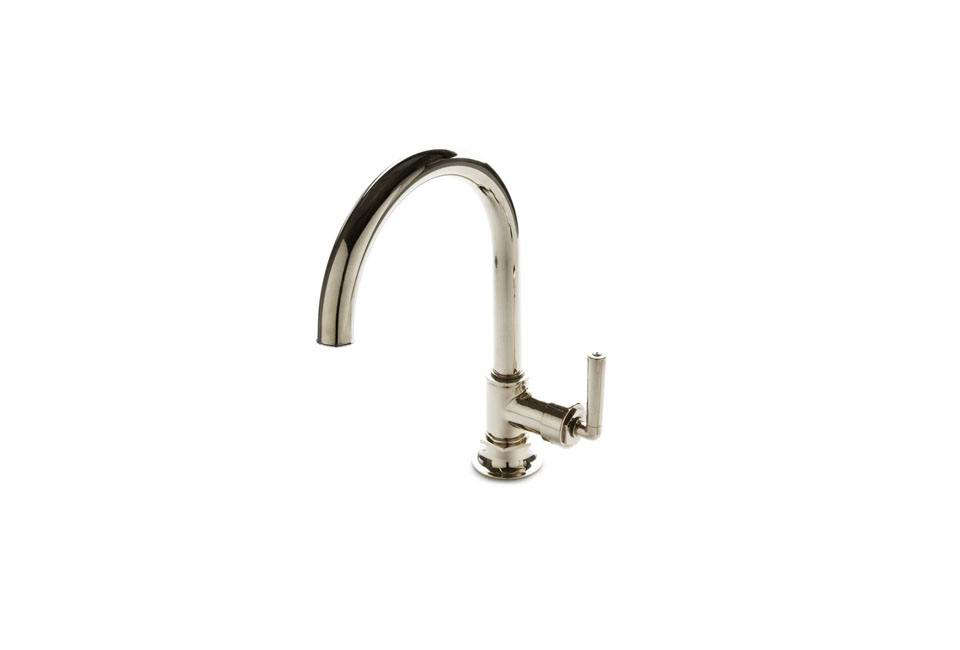
The Henry One Hole Gooseneck Kitchen Faucet is the kind of kitchen fixture that quietly walks into the room, straightens its collar, and makes the sink area look more expensive. It is not trying to be loud. It is not wearing flashing lights or singing a smart-home jingle. Instead, it leans on classic proportions, a tall gooseneck profile, brass construction, and a single-hole layout that feels clean, elegant, and very intentionally designed.
For homeowners, designers, remodelers, and anyone who has ever wrestled a stockpot under a faucet that was clearly designed by someone who eats only toast, a gooseneck kitchen faucet can be a small daily luxury. The Henry faucet style is especially interesting because it sits between traditional and modern design. It has enough character for a classic kitchen, enough restraint for a contemporary kitchen, and enough practical height to keep your pasta pot from feeling like it needs yoga lessons.
This in-depth guide explores what makes the Henry one hole gooseneck kitchen faucet appealing, how it compares with other single-hole kitchen faucets, what to know before installation, how to choose finishes, and what real-life ownership can feel like after the honeymoon phase ends and the sink is full of dishes again.
What Is the Henry One Hole Gooseneck Kitchen Faucet?
The Henry One Hole Gooseneck Kitchen Faucet is commonly associated with the Waterworks Henry collection, a luxury fixture line known for blending industrial references with refined, architectural styling. The design typically features a tall pillar-like body, a curved gooseneck spout, and a metal lever handle. Some Henry kitchen faucet models include a side hand spray, while related Henry integrated pull-spray versions use a pull-down spray head built into the spout.
The phrase “one hole” matters more than it sounds. It means the faucet installs through a single opening in the countertop or sink deck. That creates a cleaner look, reduces clutter around the sink, and makes wiping the counter easier. If you cook often, you already know that crumbs have a suspicious talent for hiding around extra faucet bases. A one-hole faucet gives them fewer hiding places. Tiny victory, big satisfaction.
Why the Gooseneck Shape Works So Well
A gooseneck kitchen faucet has a high, curved spout that rises above the sink before bending downward. This shape is popular because it gives more clearance for large cookware, pitchers, vases, cutting boards, and the occasional oversized salad spinner that seems to multiply in cabinets overnight.
More Room for Large Pots and Pans
The biggest everyday advantage is clearance. A high-arc kitchen faucet makes it easier to fill tall pots without tilting them awkwardly. It also gives you more working space when washing roasting pans, Dutch ovens, baking sheets, and mixing bowls. In a busy kitchen, that extra vertical space feels like upgrading from economy seating to business class.
A Strong Visual Focal Point
The Henry faucet’s gooseneck silhouette also creates a natural focal point. In a kitchen with marble, quartz, soapstone, butcher block, or stainless steel counters, the faucet becomes a design anchor. It draws the eye without overpowering the room. That is especially useful in kitchens where the sink sits on an island and can be seen from the dining or living area.
Better Reach Around the Sink
Depending on the exact model, a Henry gooseneck faucet may include a side spray or integrated pull spray. Both options improve flexibility. A side spray is excellent for rinsing vegetables, cleaning sink corners, and chasing down that one stubborn grain of rice. An integrated pull-down spray, meanwhile, gives a streamlined look and keeps the spray function inside the main faucet body.
Key Features That Make the Henry Faucet Stand Out
The Henry One Hole Gooseneck Kitchen Faucet is not a bargain-bin fixture, and it does not pretend to be. Its appeal comes from design quality, substantial materials, and the kind of detailing that matters in high-end kitchen renovations.
Single-Hole Installation
A single-hole kitchen faucet is ideal for a clean and modern sink deck. It works beautifully with new countertops because the fabricator only needs to create one faucet opening. For remodels, it can also work on sinks with multiple existing holes if a deck plate or separate accessories are used to cover unused openings, though the final look depends on the sink and countertop layout.
Brass Components
Brass is widely valued in quality faucets because it is durable, weighty, and well suited to plumbing fixtures. The Henry faucet’s use of brass components supports its luxury positioning. When you handle a solid-feeling faucet, you notice it immediately. It does not wiggle like a nervous intern. It feels planted.
Metal Lever Handle
The tapered metal lever handle is one of the design details that gives the faucet its personality. A single lever allows convenient control of water temperature and flow with one hand. That is useful when the other hand is covered in flour, tomato sauce, or mysterious refrigerator leftovers you should have thrown away three days ago.
Hand Spray or Pull-Spray Options
Some Henry one-hole gooseneck configurations include a separate hand spray. Related Henry integrated pull-spray faucets offer a spray head that pulls down from the spout and can switch between an aerated stream and a stronger spray or jet function. The best choice depends on how you use your kitchen. Traditionalists may like the separate side spray. Minimalists may prefer the integrated pull-down version because it keeps the sink deck visually quieter.
Premium Finish Choices
Henry kitchen faucets are often available in finishes such as chrome, nickel, brass, and dark nickel, with additional specialty finishes appearing on related models. Finish choice can dramatically change the mood of the faucet. Chrome feels bright and crisp. Nickel feels warmer and softer. Brass adds heritage and drama. Dark nickel brings a tailored, moody confidence, like a tuxedo for your sink.
Design Style: Classic, Modern, or Transitional?
One reason the Henry faucet is so versatile is that it does not fit into only one design box. It has traditional inspiration, industrial confidence, and modern simplicity. That makes it especially useful in transitional kitchens, where the goal is often to combine classic materials with contemporary usability.
In a Traditional Kitchen
Pair the Henry faucet with inset cabinets, marble countertops, a farmhouse sink, and unlacquered or warm brass hardware for a kitchen that feels established and elegant. The gooseneck form works well with Shaker cabinetry, paneled appliances, and classic backsplash tile.
In a Modern Kitchen
Choose chrome, nickel, or dark nickel for a more contemporary space. Against flat-panel cabinets, slab counters, and minimal hardware, the Henry faucet adds just enough detail to keep the room from looking sterile. It is like adding a tailored jacket to jeans: still relaxed, but suddenly much sharper.
In an Industrial Kitchen
The Henry design also suits kitchens with exposed shelving, metal accents, concrete counters, black-framed windows, or restaurant-inspired ranges. Its industrial references feel intentional without going full “converted warehouse where nobody owns curtains.”
How It Compares With Other Kitchen Faucets
The kitchen faucet market is crowded. You can find budget faucets under $100, solid midrange faucets from major brands, and luxury fixtures that cost more than some people’s first car. The Henry One Hole Gooseneck Kitchen Faucet belongs in the premium category, so it should be evaluated differently from a basic builder-grade faucet.
Compared With Budget Faucets
Budget faucets can be perfectly serviceable, especially in rental properties, laundry rooms, or quick refresh projects. However, they may use lighter materials, simpler finishes, and less refined internal parts. The Henry faucet is about long-term design value, tactile quality, and a premium look. You buy it because you want the faucet to be part of the kitchen’s architecture, not just a water dispenser with ambition.
Compared With Smart Faucets
Smart and touchless faucets offer motion sensors, voice control, measured dispensing, and other conveniences. They are great for some households, especially busy cooks who handle raw meat or sticky dough. The Henry faucet takes a more timeless approach. It avoids technology that may feel dated later and instead focuses on lasting design, solid materials, and mechanical simplicity.
Compared With Commercial-Style Spring Faucets
Commercial-style spring faucets are popular for bold kitchens and heavy-duty cleaning. They look energetic and restaurant-like. The Henry gooseneck faucet is more refined. It still offers useful height and spray functionality, depending on the model, but it does so with a more polished silhouette. Think less “busy prep kitchen” and more “beautiful home kitchen where someone definitely owns linen napkins.”
Flow Rate and Water Efficiency
Flow rate is measured in gallons per minute, often shortened to GPM. Many kitchen faucets in the United States fall around 1.5 to 2.2 GPM depending on model, regulations, and location. Some Henry faucet specifications list a standard flow rate of 2.2 GPM, while California-compliant versions may be limited to 1.8 GPM.
For everyday use, the difference between 1.8 and 2.2 GPM may be noticeable when filling very large pots, but spray design and water pressure also affect performance. A well-designed spray pattern can make a lower-flow faucet feel effective. Before purchasing, check the exact model number, local requirements, and available flow options.
Installation Considerations Before You Buy
Before ordering a Henry one hole gooseneck kitchen faucet, measure first and celebrate later. Luxury fixtures are wonderful, but countertops are not very forgiving when holes are drilled in the wrong place. They do not say, “No worries, try again.” They say, “That will be expensive.”
Check the Number of Sink Holes
If you are installing on a new countertop, a single-hole layout is straightforward. If you are replacing an old faucet, count the existing holes. A previous three-hole faucet may leave extra openings. You may be able to cover them with accessories such as a soap dispenser, filtered water tap, air switch, or deck plate, depending on the layout.
Measure Cabinet and Window Clearance
A gooseneck faucet is tall. That is the point. But if your sink sits beneath a low window ledge, shelf, or cabinet, measure the vertical clearance carefully. Also confirm that the handle has room to move without hitting the backsplash.
Consider Sink Depth
High-arc faucets can splash more in shallow sinks, especially when water hits a flat plate or spoon at just the wrong angle. A deeper sink pairs well with a tall gooseneck faucet because it helps contain splashing. If your sink is shallow, choose spray settings thoughtfully and maybe do not blast a soup spoon like you are pressure-washing a driveway.
Plan for the Spray System
If you choose a Henry model with a side spray, make sure there is a second hole or space for that spray. If you choose an integrated pull-spray version, check the space under the sink for hose movement and counterweight clearance. Garbage disposals, water filters, cleaning supplies, and the mysterious bag of plastic bags can all interfere with smooth hose retraction.
Best Finishes for Different Kitchen Styles
Finish selection is partly practical and partly emotional. Some people choose chrome because it is easy to coordinate. Others choose brass because it makes their heart do a tiny renovation dance. Both approaches are valid.
Chrome
Chrome is bright, reflective, and classic. It works well in modern, vintage, and transitional kitchens. It can show water spots and fingerprints, but it is also easy to clean and widely compatible with other fixtures.
Nickel
Nickel is slightly warmer and softer than chrome. It pairs beautifully with marble, white cabinetry, cream tones, warm woods, and polished interiors. Nickel often feels luxurious without being flashy.
Brass
Brass brings warmth and character. It is especially handsome in traditional, European-inspired, cottage, and luxury kitchens. Depending on the exact finish, brass may age or patina over time, which some homeowners adore and others call “Why does my faucet have a personality?”
Dark Nickel
Dark nickel adds contrast without the starkness of matte black. It pairs nicely with stone counters, dark cabinetry, walnut, charcoal tile, and kitchens that want drama without shouting.
Cleaning and Maintenance Tips
A premium kitchen faucet deserves gentle care. Fortunately, faucet maintenance is not complicated. The goal is to protect the finish, keep the aerator clear, and avoid harsh cleaners that can dull or damage the surface.
Wipe It Daily
Use a soft cloth to wipe water droplets after heavy use. This helps reduce mineral spots, especially in areas with hard water. It takes about ten seconds, which is less time than it takes to wonder why nobody else in the house wipes the faucet.
Avoid Abrasive Cleaners
Skip steel wool, harsh powders, bleach-heavy products, and aggressive scrubbing pads. A mild soap and water solution is usually enough. For specialty finishes, follow the manufacturer’s care instructions exactly.
Clean the Aerator
If water flow becomes uneven, the aerator may have mineral buildup. Removing and rinsing it can restore performance. In hard-water areas, occasional soaking in a manufacturer-approved cleaning solution may help, but always confirm what is safe for the finish.
Check Under-Sink Connections
After installation, inspect supply lines and connections for leaks. Do this again after a few days of use. A small drip under the sink can cause cabinet damage if ignored. Plumbing leaks are sneaky little goblins; catch them early.
Who Should Choose the Henry One Hole Gooseneck Kitchen Faucet?
The Henry faucet is best for homeowners who care about design as much as function. It suits remodels where the faucet is not an afterthought but part of the overall kitchen composition.
Choose this faucet if you want a high-end fixture, appreciate brass construction, prefer a single-hole layout, and like a style that bridges classic and modern design. It is also a strong choice for kitchens with premium counters, custom cabinets, designer lighting, and carefully selected hardware.
You may want a different faucet if you need a low-cost replacement, require touchless features, have very limited overhead clearance, or prefer an ultra-minimal faucet with almost no traditional detailing.
Practical Buying Checklist
Before purchasing the Henry One Hole Gooseneck Kitchen Faucet, review this simple checklist:
- Confirm the exact product model and configuration.
- Check whether it uses a side spray or integrated pull spray.
- Verify the required number of holes.
- Measure faucet height, reach, and handle clearance.
- Confirm flow rate and local water regulations.
- Choose a finish that coordinates with cabinet hardware and appliances.
- Review warranty, lead-free certification, and installation documents.
- Plan professional installation if countertop drilling or plumbing changes are needed.
Real-Life Experience With a Henry One Hole Gooseneck Kitchen Faucet
Living with a faucet like the Henry one hole gooseneck is different from simply admiring it in a showroom. In a showroom, everything is perfect. The countertop is spotless, the lighting is flattering, and nobody has just poured oatmeal into the sink. Real kitchens are more demanding. They ask whether the faucet can handle morning coffee, pasta night, Thanksgiving prep, muddy flower stems, and a sink full of plates after “just a small dinner.”
The first thing most people notice is the height. A tall gooseneck faucet changes how the sink feels. Filling a stockpot becomes easier. Washing a large cutting board is less awkward. Rinsing a colander of greens feels more graceful, or at least less like a wrestling match. If the faucet includes a side spray or pull-down spray head, cleanup becomes much more controlled. You can direct water into corners, rinse the sink walls, and clean around the drain without performing strange wrist gymnastics.
The single-hole design also makes the counter easier to maintain. Around older multi-piece faucets, grime often collects at the base of handles and sprayers. With a one-hole faucet, there is less hardware sitting on the deck, so wiping the area takes less effort. That sounds minor until you clean the kitchen every night and realize that “minor” is exactly where daily happiness hides.
Finish choice affects the ownership experience. Chrome is bright and forgiving in many kitchens, but it may show fingerprints quickly. Nickel tends to feel softer and warmer, which many homeowners love next to marble or pale quartz. Brass can be gorgeous, especially if the rest of the kitchen has warm metal accents. However, owners should understand whether the brass finish is intended to patina or stay more consistent. A living finish is charming if you expect it and alarming if you do not. Nobody wants to discover “character” by accident.
One practical lesson is that sink depth matters. A high-arc faucet over a shallow sink can splash if the water stream hits dishes at the wrong angle. This is not necessarily a flaw in the faucet; it is a relationship issue between faucet height, sink depth, water pressure, and dish placement. A deeper sink usually makes the experience smoother. If your sink is shallow, adjusting the flow and using the spray thoughtfully can reduce splash drama.
Another ownership detail is under-sink organization. If using an integrated pull-spray model, the hose needs open space to move. Too many cleaning bottles, disposal parts, filter cartridges, or storage bins can block the counterweight. When the hose does not retract smoothly, the faucet gets blamed, but the real villain may be a giant jug of dish soap sitting exactly where the weight wants to travel.
Over time, the Henry faucet’s biggest pleasure is not one dramatic feature. It is the combination of beauty and routine usefulness. You touch the lever dozens of times a day. You see the faucet every time you walk into the kitchen. A well-made, well-proportioned fixture quietly improves those moments. It will not cook dinner, unfortunately. It will not convince anyone else to load the dishwasher properly. But it can make the hardest-working area of the kitchen feel considered, polished, and genuinely enjoyable.
Conclusion
The Henry One Hole Gooseneck Kitchen Faucet is a premium choice for homeowners who want elegance, function, and long-term design value in one hardworking fixture. Its single-hole installation keeps the sink deck clean. Its gooseneck shape provides useful clearance. Its brass components and refined handle design give it a substantial, luxury feel. Whether paired with marble counters and classic cabinetry or used as a warm focal point in a modern kitchen, the Henry faucet brings presence without unnecessary noise.
It is not the cheapest kitchen faucet, and it is not the gadget-heavy choice for people who want every smart feature possible. Its strength is timeless design. For the right kitchen, that is more than enough. After all, trends come and go, but a beautiful faucet that makes washing a giant pasta pot easier? That is the kind of domestic peace worth celebrating.
Note: This article is written for web publishing in standard American English and is based on real product characteristics, kitchen faucet buying guidance, installation considerations, and common homeowner experience.