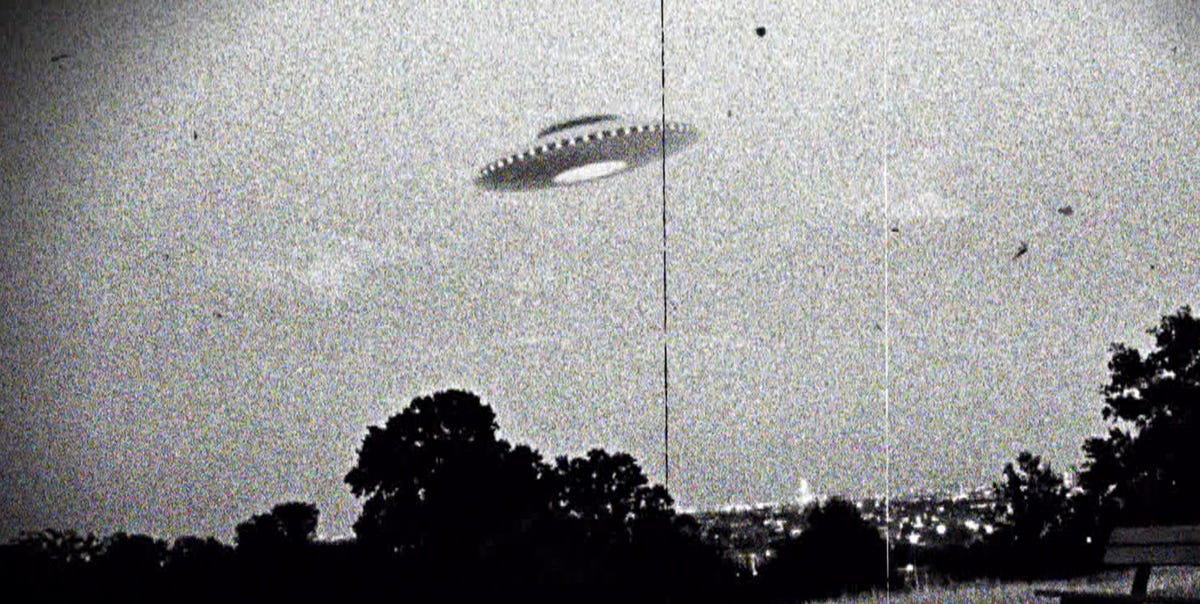
For decades, UFOs lived in the same cultural attic as Bigfoot, Area 51 jokes, and that one uncle who insists the government has a freezer full of alien leftovers. Then something unusual happened: serious people in serious rooms started talking about them seriously. During Donald Trump’s presidency, reports of strange aerial objects seen by U.S. Navy pilots became a national security topic. Senators received classified briefings. The Pentagon acknowledged videos. Congress held hearings. NASA studied the issue. Suddenly, “Are UFOs real?” was no longer just a late-night radio questionit was a policy question.
But here is the catch, and it is a big one: “UFO” does not automatically mean “alien spacecraft.” It means “unidentified flying object.” Today, the preferred government term is UAP, or unidentified anomalous phenomena, because the mystery may involve objects in the air, near space, or even strange sensor readings. In plain English, it means: “We saw something, and we are not totally sure what it was.” That is interesting. It is not the same as “E.T. forgot to file a flight plan.”
Why Trump and Senators Were Briefed on UFO Sightings
The modern UFO conversation gained momentum after military pilots reported encounters with objects that seemed to move in unusual ways. Some incidents involved Navy aircraft, radar systems, infrared cameras, and restricted training areas. These were not random backyard sightings after too much barbecue. They came from trained personnel operating advanced equipment in sensitive airspace.
In 2019, President Donald Trump said in an interview that he had received a brief meeting about UFO reports. He did not claim aliens were visiting Earth, and he sounded skeptical about the extraterrestrial explanation. Around the same period, several U.S. senators were reportedly given classified briefings about Navy encounters with unidentified aerial phenomena. Senator Mark Warner’s office framed the issue as an aviation safety and national security concern: if pilots are encountering unexplained interference in the sky, officials need to understand what it is.
That shift matters. For years, UFO reports were treated like a punchline. By 2019, the question had changed from “Do you believe in little green men?” to “Are unknown objects entering military airspace, and what should the government do about it?” That is less Hollywood, more homeland securitywith fewer lasers, unfortunately.
From UFOs to UAPs: Why the Name Changed
The word “UFO” carries decades of baggage. Say it at a dinner party and half the table imagines flying saucers; the other half quietly checks whether dessert is ready. “UAP” was adopted partly to reduce stigma and partly to describe the issue more accurately. Some reports may involve objects. Others may involve unusual lights, radar returns, sensor glitches, atmospheric effects, drones, balloons, satellites, or classified technology.
The name change does not make the mystery disappear. It simply encourages better reporting. Military pilots and service members are more likely to report a strange object if they do not fear being labeled as someone who sleeps in a tinfoil helmet. Better reporting leads to better data, and better data is the only way to separate real anomalies from optical illusions, equipment problems, and airborne trash with excellent public relations.
What Navy Pilots Actually Reported
Some of the most famous modern UFO cases involve Navy videos often referred to by names like “Tic Tac,” “Gimbal,” and “GoFast.” These videos show objects that pilots and sensors could not immediately identify. The footage is grainy, dramatic, and extremely good at making the internet lose its composure.
The 2004 “Tic Tac” incident, reported by Navy pilots near the USS Nimitz, remains one of the most discussed cases. Pilots described a white, oblong object that appeared to move in ways they considered unusual. Later incidents off the East Coast involved objects reported during training missions. In some cases, pilots said they saw objects repeatedly over days or weeks.
Still, video alone rarely answers the whole question. A blurry object on a screen can look extraordinary without being extraordinary. Distance, camera angle, speed, lens effects, infrared imaging, radar interpretation, and missing context can all turn ordinary things into mysteries. That does not mean the pilots were wrong to report them. It means the public should be careful before jumping from “unidentified” to “interstellar Uber.”
Are UFOs Real? Yes, But That Answer Needs a Seatbelt
Yes, UFOs are real in the literal sense that people, including military personnel, have reported seeing objects or phenomena they could not identify at the time. Government agencies have acknowledged that some reports remain unresolved. That part is real.
But if the question is “Are UFOs alien spacecraft?” the honest answer is different: there is no publicly verified evidence proving that UAP are extraterrestrial vehicles. Official reports from U.S. defense and intelligence agencies have repeatedly stated that they have not confirmed alien technology, alien bodies, or a secret reverse-engineering program involving off-world craft.
That distinction is the heart of the whole debate. “Unidentified” means the available information is incomplete. It does not mean the most exciting explanation is automatically correct. A mystery is not a conclusion. It is an invitation to investigate.
What Official UAP Reports Have Found
The U.S. government has released several important public reports on unidentified anomalous phenomena. The 2021 intelligence assessment reviewed 144 UAP reports and found that most could not be fully explained with the limited data available. Only one was confidently identified in that early assessment. The report did not claim alien visitation; instead, it highlighted data gaps, flight safety concerns, and the need for standardized reporting.
Later reports expanded the number of cases. Some sightings were attributed to balloons, drones, airborne clutter, birds, satellites, weather events, or sensor-related issues. Others remained unresolved because investigators did not have enough reliable data. The key phrase here is “not enough reliable data.” It is not as exciting as “alien mothership,” but it is far more useful.
NASA’s 2023 independent UAP study also found no conclusive evidence that UAP have an extraterrestrial origin. NASA emphasized that the subject should be studied with better data, calibrated instruments, and scientific transparency. In other words, NASA did not say, “Nothing to see here.” It said, “Bring better evidence.” That is very NASA: calm, technical, and unlikely to be impressed by a shaky phone video filmed behind a gas station.
The Pentagon’s All-domain Anomaly Resolution Office, known as AARO, has also reviewed historical claims about secret government UFO programs. Its public historical report found no verified evidence that the U.S. government or private companies possessed extraterrestrial technology. That does not end public debate, but it does set a high bar for anyone making extraordinary claims.
Why Lawmakers Care Even Without Aliens
Congressional interest in UFO sightings is not only about aliens. In fact, aliens may be the least practical part of the conversation. Lawmakers care because UAP reports touch several serious issues.
1. Aviation Safety
If pilots are seeing unknown objects in training ranges or restricted airspace, that is a safety problem. A drone does not need to be from another galaxy to damage a jet engine. Unknown objects near military aircraft can create collision risks and disrupt training.
2. National Security
Some unidentified objects could be foreign surveillance platforms, advanced drones, or experimental technology. If a rival nation can place objects near U.S. military assets without being identified, officials need to know. Nobody wants national defense to operate on the strategy of “maybe it was a balloon, maybe it was Zorblax from Neptune.”
3. Government Transparency
The U.S. government has a long history of secrecy around military technology, intelligence collection, and aerospace programs. That secrecy can be necessary, but it also fuels suspicion. Congressional hearings and public reports are partly an attempt to rebuild trust by showing that the issue is being studied rather than ignored.
4. Better Data Collection
Many UAP cases remain unresolved because the evidence is incomplete. A pilot may see something briefly. A sensor may capture a partial track. A video may lack distance or speed data. Without full context, investigators are left with a cosmic version of “enhance the image,” which works beautifully on television and terribly in real life.
The Most Common Explanations for UFO Sightings
Many UFO sightings eventually receive ordinary explanations. “Ordinary” does not mean “boring”; it means reality is often sneaky. A balloon at high altitude can look strange. A drone can move in unexpected ways. A satellite can flash brightly. A bird can confuse a sensor. Atmospheric effects can distort light. A camera can create illusions that feel impossible to the viewer.
Military exercises and classified aircraft can also create confusion. During the Cold War, some sightings were later linked to secret U.S. aircraft programs. People looking up at the sky saw something they could not identify, and in that moment, they were correct: it was unidentified to them. Only later did the explanation become clear.
This is why serious UAP research requires patience. Investigators need location, time, weather conditions, sensor data, radar tracks, visual confirmation, camera specifications, and chain of custody for evidence. Without those details, a mysterious object remains mysteriousbut not necessarily meaningful.
Could Some UAP Be Advanced Technology?
Yes, some UAP could involve advanced human-made technology. That possibility is one reason the Pentagon and Congress take the issue seriously. Drones, surveillance platforms, electronic warfare systems, and experimental aircraft are all plausible explanations for some reports. The sky is increasingly crowded, and not everything in it announces itself politely.
However, “advanced technology” does not automatically mean alien technology. It could be American, foreign, commercial, experimental, or misidentified. In national security terms, the most urgent question is not “Did aliens arrive?” but “Is something operating in sensitive airspace that we cannot identify?”
What About Whistleblower Claims?
Recent congressional hearings included dramatic claims from former officials and witnesses who alleged that the U.S. government has hidden information about crashed craft, non-human materials, or secret recovery programs. These claims attracted massive attention because they sound like the opening scene of a summer blockbuster.
But public claims are not the same as public proof. Some witnesses said they were reporting information from other sources rather than direct firsthand access to physical evidence. The Pentagon has denied that it has verified secret programs involving alien technology. For the public, the fair position is cautious curiosity: take claims seriously enough to investigate, but not so seriously that evidence becomes optional.
In science, the bigger the claim, the stronger the evidence must be. A strange video may justify investigation. A claim of recovered alien craft requires physical evidence, documentation, expert analysis, and independent verification. “Trust me, bro” is not a research method, even when the bro has a security clearance.
Why the UFO Debate Is So Emotionally Powerful
UFO stories sit at the intersection of wonder, fear, distrust, and hope. They make people ask huge questions: Are we alone? What does the government know? Could technology exist beyond our understanding? Why are all alien spacecraft apparently allergic to high-resolution cameras?
The topic also thrives because it has just enough official mystery to stay alive. When agencies say some cases remain unexplained, believers hear possibility. Skeptics hear missing data. Conspiracy theorists hear a cover-up warming up backstage. Everyone gets something to work with.
Popular culture adds fuel. Movies, television, books, podcasts, and online communities have turned UFOs into a mythology. That mythology can inspire curiosity, but it can also blur the line between evidence and entertainment. A healthy approach keeps both feet on the ground while still looking up.
How to Think Clearly About UFO Evidence
The best way to approach UFO sightings is with a balanced method. Do not laugh every case out of the room, and do not crown every dot in the sky as ambassador of Planet Zorg. Ask practical questions: Who observed it? What instruments recorded it? Was the data calibrated? Could weather, drones, aircraft, birds, balloons, satellites, or sensor artifacts explain it? Is there more than one independent source of evidence?
Strong evidence usually has multiple forms of confirmation. For example, a case would be more compelling if it included clear visual imagery, radar data, infrared data, known distance, known speed, environmental context, expert review, and preserved original files. The fewer pieces available, the more cautious the conclusion should be.
Experiences and Reflections: Watching the UFO Story Become Serious
Following the public UFO debate over the last several years feels like watching a campfire story walk into a Senate hearing wearing a tie. The same subject that once belonged mostly to late-night documentaries and roadside attractions is now discussed by pilots, lawmakers, scientists, intelligence officials, and defense analysts. That change alone is fascinating. It shows how a topic can move from cultural joke to institutional concern when credible witnesses and national security questions enter the room.
One striking experience is how quickly the conversation changes depending on the audience. Talk to aviation professionals, and the focus often becomes safety: unknown objects near aircraft are dangerous. Talk to defense experts, and the focus shifts to surveillance, airspace control, and sensor reliability. Talk to scientists, and they ask about data quality, repeatability, and measurement. Talk to the public, and someone will eventually mention Roswell within four minutes. This is not a criticism. It is simply the strange charm of the UFO topic: everyone brings a different flashlight into the same dark room.
The most useful lesson from the Trump-era briefings and later UAP investigations is that serious curiosity works better than instant belief or instant dismissal. Skepticism should not mean mockery. Belief should not mean abandoning standards. A Navy pilot reporting an unknown object deserves to be heard. A whistleblower making extraordinary claims deserves a proper investigation. A scientist asking for better evidence deserves applause, not eye rolls. The truth is not threatened by careful questions.
Another memorable part of the UAP debate is the gap between public excitement and official language. The public wants dramatic answers: aliens, secret bases, crashed saucers, cosmic visitors with terrible parking habits. Government reports usually offer phrases like “insufficient data,” “sensor ambiguity,” and “unresolved cases.” It is not exactly popcorn material, but it is how real investigation works. The world rarely hands us clean mysteries with perfect lighting and a soundtrack.
For website readers, the topic is especially powerful because it combines suspense with real civic questions. Are officials being transparent? Are pilots safe? Are military sensors reliable? Could foreign technology be involved? Could some unknown natural or technological phenomenon be waiting to be understood? These questions are more durable than any single viral video. They keep the conversation alive without requiring anyone to leap straight into science fiction.
The healthiest experience is to stay curious without letting curiosity become a shortcut around evidence. Look up, wonder, ask questions, read official reports, listen to witnesses, and keep your standards high. The universe is already astonishing. It does not need fake certainty to be interesting.
Conclusion: So, Are UFOs Real?
UFOs are real as reports, observations, and unresolved cases. UAP sightings have been taken seriously enough for presidential briefings, classified Senate discussions, Pentagon offices, NASA studies, and congressional hearings. That is significant. It means the subject is no longer automatically dismissed as fringe entertainment.
But real does not mean alien. The best public evidence shows that many sightings have ordinary explanations, some remain unresolved, and no official public investigation has confirmed extraterrestrial technology. The smart answer is not “UFOs are fake” or “aliens are definitely here.” The smart answer is: unidentified phenomena exist, they deserve rigorous investigation, and extraordinary conclusions require extraordinary evidence.
In the end, the UFO story is less about flying saucers and more about how humans handle mystery. We want answers. We love wonder. We distrust silence. We also live in a world full of drones, satellites, classified aircraft, strange weather, flawed sensors, and people with smartphones ready to film anything except a stable horizontal video. The truth may be out there, but it still needs a good data package.
Editorial note: This article synthesizes publicly available information from U.S. government reports, defense briefings, NASA’s UAP study, congressional hearings, and major American news coverage. It is written for web publication and avoids unsupported claims, copied text, and unnecessary citation artifacts.