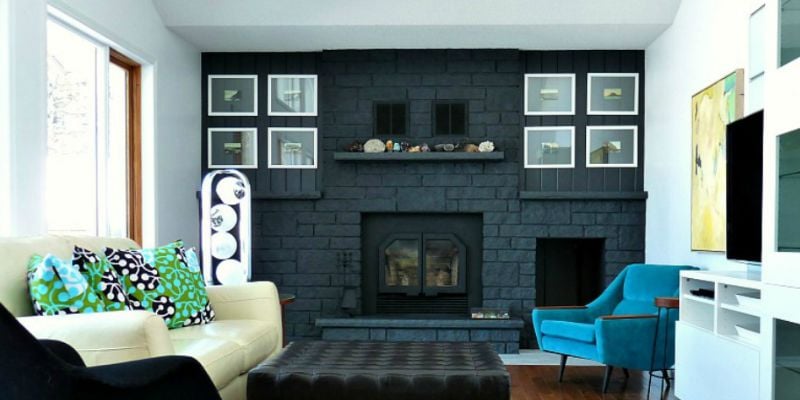
Black has a reputation for being the intimidating guest at the decorating party. White walks in carrying fresh flowers.ing, and somehow becomes the most interesting person in the room.
Fortunately, decorating with black does not require turning your home into a gothic castle or painting every surface the color of midnight. Used thoughtfully, black can make a room feel sophisticated, cozy, modern, traditional, dramatic, or surprisingly calm. It can sharpen a pale color palette, highlight architectural details, provide contrast, and give ordinary furniture considerably more confidence.
The real secret is understanding that black is not simply one color. Warm blacks may lean brown or charcoal, while cooler versions can carry blue, green, or violet undertones. Lighting, surrounding colors, surface texture, and paint sheen all affect how a dark shade appears. That is why a black that looks elegant on a tiny paint chip can behave very differently on a 12-foot wall.
Whether you are ready for a fully color-drenched room or simply want to introduce a few dark accents, these 13 ideas show how to use black home decor without making your house feel gloomy.
Why Decorating With Black Works So Well
Black creates contrast, and contrast gives a room definition. A pale sofa becomes more noticeable against a dark wall. Warm wood appears richer beside a black cabinet. Artwork can look more vivid when displayed against charcoal or near-black paint. Even a simple white room can feel more intentional when black appears repeatedly in window frames, lighting, hardware, or furniture.
Dark colors can also create a sense of intimacy. Instead of always trying to make every room look enormous, homeowners are increasingly comfortable allowing certain spaces to feel enveloping and cozy. A bedroom, library, powder room, media room, or dining room may benefit from that mood.
The goal is balance. Black works best when it has something to play against: natural wood, warm metal, soft fabric, bright artwork, greenery, pale stone, or carefully planned lighting.
13 Ways to Use Black and Dark Colors in Your Home
1. Start With Small Black Accents
If painting an entire room black makes you clutch your white paint can for emotional support, begin with accessories. A few strategically placed dark elements can dramatically improve a room’s structure without requiring a major commitment.
Try black picture frames, a table lamp, candlesticks, planters, cabinet pulls, or a narrow side table. The trick is repetition. One isolated black object can look accidental, while several black details distributed around a room create a visual rhythm.
For example, a cream living room might include a black floor lamp, black-framed artwork, and a coffee table with a dark metal base. Those pieces quietly connect different parts of the space.
This approach is especially useful in neutral interiors. Beige, ivory, greige, and pale gray can sometimes blur together. A few black accents add punctuation. Think of them as the commas and periods preventing your decorating sentence from becoming one endless beige paragraph.
2. Create a Black Accent Wall
A black accent wall is one of the easiest ways to experiment with dark interior design. It creates a focal point while leaving the rest of the room lighter.
Choose a wall that already deserves attention. The wall behind a bed, fireplace, sofa, built-in bookcase, or dining table is usually a stronger candidate than a random wall selected simply because you had leftover paint.
Consider what will sit against the dark background. Light upholstery, wood furniture, brass lighting, colorful art, and woven materials all stand out beautifully. In a bedroom, a black wall behind an upholstered headboard can create depth without overwhelming the entire room.
Do not forget texture. A black-painted paneled wall, limewashed surface, brick fireplace, or textured wallpaper will react to light differently throughout the day, making the color feel layered rather than flat.
3. Paint the Trim or Interior Doors Black
Walls are not the only surfaces allowed to have fun. Black trim and doors can introduce drama while preserving lighter walls.
Dark window frames create a crisp border around an outdoor view. Black baseboards can give a room a tailored finish. A dark interior door can become an architectural feature instead of something you barely notice.
This strategy works particularly well in homes with substantial moldings, but simple trim can benefit too. Pair black trim with warm white walls for strong contrast, or use it with muted green, taupe, dusty blue, or soft gray for a less graphic effect.
For consistency, repeat the dark color elsewhere through hardware, lighting, furniture legs, or artwork. The room will feel coordinated rather than as though the doors independently joined a heavy-metal band.
4. Use Black Kitchen Cabinets for Instant Drama
Black kitchen cabinets can look sleek, traditional, industrial, or luxurious depending on the surrounding materials. Matte black cabinetry with pale oak feels modern and organic. Black Shaker cabinets with brass hardware can lean classic. Pairing dark cabinetry with dramatic stone creates a more glamorous effect.
You do not necessarily need an all-black kitchen. Try black lower cabinets with lighter uppers, a dark island in an otherwise bright room, or black cabinetry in a pantry or beverage station.
Lighting becomes especially important when large amounts of dark cabinetry are involved. Use a combination of ambient lighting, task lighting, and decorative fixtures. Reflective surfaces, pale countertops, warm metal, glass, and natural wood can keep the space from feeling visually heavy.
Also consider practicality. Dark finishes can show dust, fingerprints, and water marks more readily than expected. The good news is that nobody invites guests over to inspect cabinet doors with a flashlight. Choose a durable finish and keep a microfiber cloth nearby.
5. Make a Small Room Deliberately Moody
One of the most persistent decorating assumptions is that every small room must be painted white. Light colors can certainly create an airy effect, but a tiny room does not automatically become a ballroom because you chose eggshell white.
Sometimes it is better to embrace intimacy.
Powder rooms, reading nooks, small offices, entryways, and compact guest rooms can handle dark colors remarkably well when the design is intentional. Deep charcoal, black-green, inky navy, or black-brown can turn an ordinary little space into a memorable destination.
In a powder room, pair dark walls with a statement mirror, warm sconces, and an interesting sink or vanity. Because the room is small, even expensive-looking wallpaper or decorative lighting may require relatively little material.
Rather than asking, “How do I make this room look huge?” ask, “How do I make this room feel fantastic?” The second question is often much more useful.
6. Try Color Drenching With a Dark Shade
Color drenching means using the same or closely related color across multiple surfaces, such as walls, trim, doors, and sometimes the ceiling. With black or another deep shade, the result can feel immersive and surprisingly cohesive.
Painting walls black while leaving every piece of trim bright white creates strong boundaries. Painting those boundaries dark as well can allow the architecture to read as one continuous envelope.
To prevent a color-drenched space from becoming visually flat, vary the sheen or texture. You might use a lower-sheen finish on walls and a slightly more reflective finish on trim. Then introduce linen, wool, velvet, leather, aged wood, or woven fibers.
This technique is particularly effective in libraries, bedrooms, offices, and dining rooms where atmosphere matters as much as apparent size.
7. Balance Black With Warm Wood
Few combinations are as dependable as black and natural wood. Black brings definition; wood brings warmth and variation.
Against dark walls, oak can appear lighter and more energetic, while walnut creates a rich tonal look. Reclaimed wood adds rustic character, and pale ash can soften a contemporary black interior.
Use wood through flooring, furniture, ceiling beams, picture frames, shelves, baskets, or kitchen cabinetry. You do not need every wood tone to match perfectly. In fact, a thoughtful mix often feels more natural than a room where every table appears to have been cloned from the same tree.
For a balanced living room, imagine charcoal walls, a warm leather chair, an oak coffee table, cream upholstery, and black metal lighting. The result is dark but not cold.
8. Layer Black With Soft Textures
Dark rooms need texture because texture gives the eye something to explore. A room filled with smooth black surfaces can feel severe. Add velvet, boucle, linen, wool, leather, woven shades, thick rugs, or natural fibers, and the mood changes immediately.
In a black bedroom, crisp white sheets alone may create a dramatic hotel-like contrast. Add a quilted coverlet, upholstered headboard, thick curtains, and a textured area rug, and the room becomes far more inviting.
This principle also applies when black appears only in furniture. A large black sofa can feel visually heavy when surrounded by equally dark, hard surfaces. Add a textured rug, warm pillows, a wood side table, and soft window treatments to create balance.
The darker the palette, the more important subtle differences in material become.
9. Pair Black With Metallic Finishes
Black and metal are longtime friends, although the personality of the room changes depending on the finish.
Brass and aged gold can add warmth and elegance. Chrome and polished nickel create sharper, cooler contrast. Bronze feels understated, while blackened steel supports an industrial or contemporary look.
You do not need to match every metal finish. A carefully mixed combination can look collected and sophisticated. The key is repetition. If brass appears in a light fixture, repeat it in a small accessory, frame, faucet, or cabinet detail.
A black dining room with a sculptural brass chandelier can feel glamorous. A black bathroom with warm metal fixtures and natural stone can feel luxurious without requiring a chandelier large enough to make showering an extreme sport.
10. Use Black to Highlight Artwork and Collections
A dark wall can act almost like a gallery backdrop. Colorful paintings, pale ceramics, sculptural objects, and photography often appear more vivid against black or charcoal.
For gallery walls, you can choose contrasting light frames, dark frames for a quieter effect, or a mixture of finishes. Large artwork tends to feel especially dramatic because the dark wall visually recedes while the art comes forward.
Black built-in bookshelves offer another opportunity. Paint the shelves and surrounding wall in the same dark shade, then display books, ceramics, small paintings, and personal objects. The contents become the stars.
Leave some breathing room. Filling every inch of a dark shelf can make it feel chaotic. Negative space allows individual objects to stand out.
11. Bring Black Into the Bathroom
A bathroom is a great place to experiment with dark color decor. Try a black vanity, charcoal walls, dark tile, a black-framed shower enclosure, or a dramatic ceiling.
Balance is particularly important in a space where grooming happens. Good lighting near the mirror is practical, not merely decorative. Layered illumination also helps reveal texture and prevents the room from feeling dim.
Black pairs beautifully with white tile, marble, warm wood, terracotta, concrete, and metallic fixtures. A simple bathroom can gain instant character from black walls and a warm wood vanity. Conversely, an all-white bathroom can feel sharper with black faucets, a dark mirror frame, and black lighting.
Before committing to very dark surfaces throughout the room, consider maintenance. Water spots and soap residue have no respect for your design vision.
12. Introduce Dark Furniture Before Painting the Walls
Paint is not the only route to a moody interior. A black dining table, charcoal sofa, ebony cabinet, dark bed frame, or set of black chairs can anchor a room while keeping the walls light.
This is a smart choice for renters or anyone who changes color preferences frequently. Large furniture creates enough visual weight to establish a darker palette without altering the architecture.
Keep contrast in mind. A black dining table on a dark floor may disappear unless you introduce a lighter rug, different wood tone, or contrasting chairs. A charcoal sofa against a charcoal wall can work beautifully, but varied textures and values will keep the arrangement from becoming one large sofa-shaped shadow.
Dark furniture also works well in colorful rooms because black can help calm and connect multiple hues.
13. Go Beyond Pure Black
Sometimes the best black is not technically black.
Very dark navy, charcoal gray, espresso brown, forest green, and deep plum can provide much of the drama of black while introducing subtle color. These near-black shades often shift beautifully as daylight changes.
Undertones matter. A blue-black may look crisp beside cool marble but less comfortable with certain warm beige finishes. A brown-black can feel rich beside wood and leather. A green-black may complement botanical colors and natural materials.
Always test large samples in the actual room. Look at them during the morning, afternoon, and evening and under your artificial lighting. A color sample seen under the fluorescent lights of a store is not a legally binding contract with your living room.
How to Keep a Dark Room From Feeling Flat
The most successful dark interiors rely on layering. Instead of using one identical black everywhere, combine subtle variations in value, texture, and finish.
A room might include matte charcoal walls, a glossy black side table, warm black metal frames, dark brown wood, and a nearly black patterned rug. To the casual observer, the palette feels dark and cohesive. Up close, however, the differences create richness.
Lighting is equally important. Combine general overhead light with floor lamps, table lamps, sconces, or task lighting. Warm pools of illumination make a dark room feel intentional and atmospheric rather than underlit.
Finally, include something organic. Plants, wood, stone, flowers, woven materials, or even a bowl of fruit can soften a highly controlled black interior. Yes, a bowl of lemons may occasionally be asked to carry an unreasonable amount of decorative responsibility.
Common Mistakes When Decorating With Black
One common mistake is choosing black paint from a tiny sample without testing it at home. Another is adding so many pale accessories that the room becomes a frantic black-and-white checkerboard.
A dark room also needs intentional lighting. One ceiling fixture is rarely enough to create a comfortable evening atmosphere. Spread light sources around the room at different heights.
Finally, do not assume every black element must match exactly. A room often feels more sophisticated when charcoal, soft black, dark brown, and near-black finishes coexist. Coordination is useful. Perfect uniformity can look forced.
My Experience With Decorating Using Black and Dark Colors
One of the most useful lessons I have learned from experimenting with dark interiors is that black usually looks more frightening before you use it than after. A paint chip can seem almost comically intense when held against a white wall. Once the color covers a complete surface and furniture returns to the room, however, the effect changes. The wall stops looking like a black rectangle and starts behaving like a background.
My favorite way to begin is with one clearly defined feature. In a bedroom, that may be the wall behind the bed. In a living room, it could be a fireplace or built-in shelving. Starting with an architectural focal point makes the dark color feel purposeful from the beginning.
I have also found that lighting can completely change my opinion of a black paint. A shade that looks soft and smoky in daylight may appear much cooler under an LED bulb at night. That experience taught me to stop choosing paint in a hurry. Now, large samples stay in place long enough to see several lighting conditions. It is not the most exciting stage of decorating, but repainting an entire room because your elegant charcoal mysteriously turns navy every evening is even less exciting.
Another practical lesson is that dark colors do not eliminate the need for contrast; they simply change how contrast works. When a room feels too heavy, I do not immediately add bright white everywhere. Sometimes a medium oak table, caramel leather chair, muted rug, or antique brass lamp creates enough separation while preserving the moody atmosphere.
Texture has been equally important. A dark room filled with flat surfaces can look unfinished even when the furniture is expensive. Introducing linen curtains, an old wood cabinet, woven baskets, a wool rug, and a few handmade objects creates more visual depth than adding another decorative color.
I also prefer repeating black in several locations rather than placing one dramatic object in isolation. For instance, a black-framed mirror feels more integrated when the room also contains a dark lamp base and a small amount of black in the rug. The repetition does not need to be obvious. In fact, the best connections are often the ones you notice only after spending time in the room.
Perhaps the biggest change in my approach has been abandoning the idea that every room must look as large and bright as possible. Some rooms are better when they feel enclosed. A dining room can become more intimate after dark. A bedroom can feel restful when the walls visually recede. A small office can become focused and cocoon-like instead of pretending to be an open-plan loft.
That does not mean black is always the answer. Some rooms genuinely benefit from lighter colors, especially when the goal is maximum brightness. The important lesson is to design for the feeling you actually want rather than following a universal rule.
My best results with black have come from using it confidently but not carelessly. I test the color, consider the lighting, introduce warm materials, vary textures, and give important objects room to breathe. When those elements work together, black rarely feels depressing. Instead, it provides a calm, strong foundation for everything else in the room.
Conclusion: Let Black Be Bold, Not Overbearing
Decorating with black is less about following a trend and more about learning how contrast, light, material, and proportion work together. You can introduce dark colors through a picture frame or cover an entire room from baseboard to ceiling. Both approaches can succeed.
Start at the level that feels comfortable. Repeat black accents to connect a room. Pair dark surfaces with warm wood and tactile fabrics. Test paint before committing. Most importantly, choose the mood you want the room to create rather than following the old assumption that lighter is always better.
Black can be elegant without being formal, dramatic without being theatrical, and cozy without turning your living room into a cave. Used thoughtfully, it does something few colors accomplish so effortlessly: it makes almost everything around it look more intentional.
Note: Paint colors and dark finishes can change significantly with room orientation, natural light, artificial lighting, surrounding materials, and sheen. Test large samples in the actual space before making a final decision.