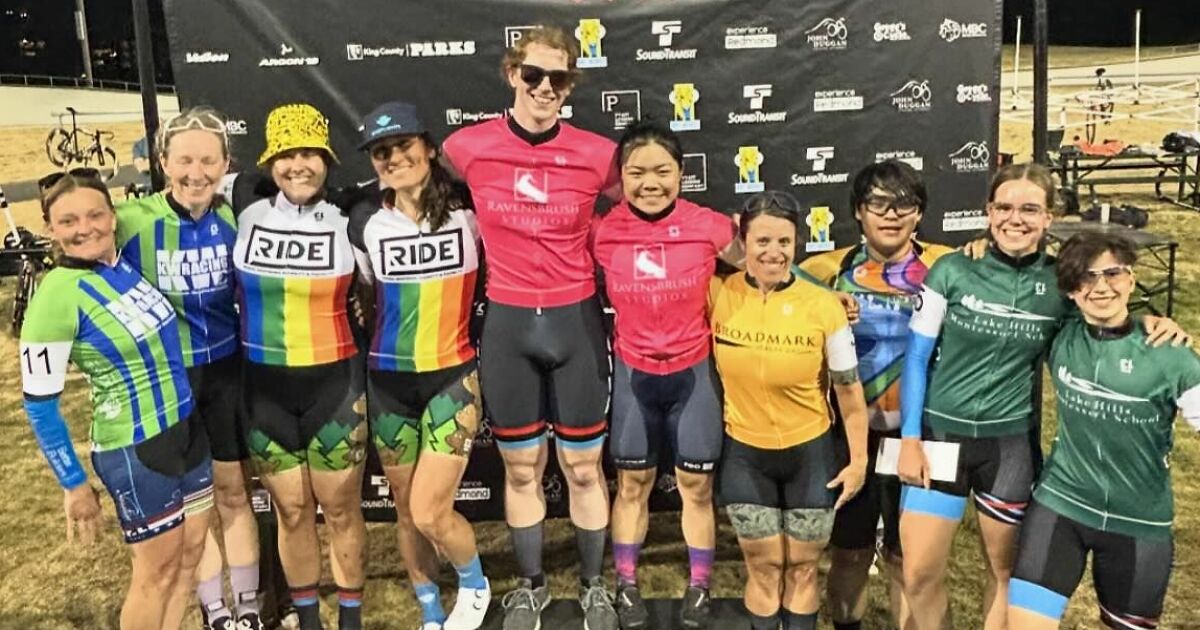
A podium photo can travel faster than a sprint finish, especially when the internet decides it has found the perfect fuel for a culture-war bonfire. In July 2024, a women’s Madison race at Washington’s Marymoor Grand Prix went viral after three transgender athletes appeared across the three medal-winning teams.
The internet quickly compressed a complicated local cycling event into a headline-friendly outrage machine: “transgender athletes took all three medals.” That phrasing made for a dramatic post, but it skipped important context. This was a two-person team event, meaning each podium position involved a pair of riders. Three transgender cyclists were part of three different medal-winning teams. No single athlete rode away with gold, silver, and bronze tucked into one jersey pocket like a cartoon villain escaping a bank vault.
Still, the image triggered a fierce debate about fairness in women’s cycling, transgender athlete participation, sporting rules, online harassment, and the difference between asking difficult questions and turning human beings into targets. The Marymoor Grand Prix story became less about a single race and more about how quickly social media can turn a local sporting result into a national shouting contest.
What Happened at the Marymoor Grand Prix?
The event that drew attention was an elite women’s Madison race at the Marymoor Grand Prix in Washington State. A Madison is not a standard one-rider race. It is a track cycling event in which two teammates rotate in and out, using hand slings and carefully timed exchanges while racing for points and position.
That detail matters because the viral “all three medals” language made the event sound as though three transgender cyclists swept a solo championship podium. The more accurate description is that each of the top three two-person teams included a transgender athlete. Six riders stood on the podium in total.
That is still a notable result, and it is understandable that it sparked debate. But it was not a UCI World Championship, an Olympic event, or a one-rider national title race. It was a regional velodrome competition with a specific race format, a specific field, and a specific set of participation rules in place at the time.
In internet terms, however, nuance is often treated like an optional accessory. People will spend 40 minutes arguing over a blurry screenshot but somehow cannot spare 40 seconds to learn what a Madison race is.
Why the Story Went Viral So Quickly
The Marymoor podium became viral because it landed directly in the middle of an already heated conversation about transgender athletes in women’s sports. By 2024, sports organizations around the world were revisiting eligibility rules, often reaching different conclusions depending on the sport, competition level, and governing body.
Cycling is particularly sensitive to the debate because performance can depend on aerobic capacity, power output, sprint speed, body size, tactical skill, technical handling, training access, coaching, equipment, and years of racing experience. It is not a sport where one measurement tells the whole story. A racer can have a powerful engine and still lose a race because they mistime an exchange, miss a wheel, burn too much energy too early, or discover that track cycling punishes overconfidence with the elegance of a brick wall.
Social media, however, prefers simple visual narratives. A podium photo is simple. A detailed explanation of local race categories, team events, federation policies, and athlete-specific eligibility is not. The result is that the photograph became a symbol before most people even knew what event they were discussing.
The Difference Between Debate and Trolling
It is possible to discuss fairness in women’s sports seriously. It is also possible to discuss transgender athlete policies without making every athlete the target of insults, mockery, invasive speculation, or threats.
Those are not the same activity.
A reasonable debate asks questions such as:
- What eligibility standards should apply in a particular sport?
- Should rules differ between recreational, regional, national, and international events?
- How should governing bodies balance fairness, inclusion, privacy, and safety?
- Should race organizers communicate participation policies more clearly before events?
- How should team formats and open categories be structured?
Trolling does something else. It reduces athletes to insults, spreads unverified claims, posts personal information, mocks bodies, and treats a stranger’s identity as entertainment. A disagreement about policy can be legitimate. A pile-on aimed at humiliating individual athletes is not a policy argument. It is just cruelty wearing a debate-team costume.
Why “All Three Medals” Is a Misleading Phrase
Headlines often become sharper as they travel across the internet. By the time a local competition reaches social media, words such as “regional,” “team,” “elite division,” and “under that event’s rules” may vanish completely.
The phrase “transgender athletes took all three medals” can be technically connected to the podium result, but it can also create a misleading impression. It suggests a complete solo sweep of a women’s championship by three transgender riders, when the actual event involved three separate teams in a Madison race.
Precision is not political correctness. Precision is just good reporting.
A responsible description would say that three transgender cyclists appeared on the podium as members of the first-, second-, and third-place teams in an elite women’s Madison event at the Marymoor Grand Prix. That version may be less explosive, but it is closer to reality. It also gives readers enough information to form an opinion without being handed a megaphone and a matchbook.
Women’s Cycling Rules Have Changed Since the 2024 Event
Another reason the Marymoor story needs context is that cycling policy has changed significantly since the race took place. Rules that applied in 2024 are not necessarily the rules that apply today.
The Union Cycliste Internationale, commonly known as the UCI, updated its rules in 2023 and barred transgender women who transitioned after male puberty from competing in women’s events on its international calendar. The policy change followed a broader review of eligibility standards across elite sport.
In the United States, USA Cycling adopted a new competition category policy effective September 15, 2025. The organization’s policy applies to USA Cycling-sanctioned competitive events, with certain international events governed separately under UCI regulations.
That means readers should be cautious about using one 2024 local result as proof of what happens in all cycling events today. Sports policies are not frozen in amber. They shift because governing bodies respond to legal guidance, athlete feedback, evolving science, public pressure, institutional priorities, and the occasional administrative headache that makes a team manager stare silently at a spreadsheet for 20 minutes.
Can One Podium Settle the Fairness Debate?
No. One podium cannot settle a complicated policy question.
A single race result does not prove that every transgender athlete has an unfair advantage. It also does not automatically erase the concerns of female athletes who want protected competition categories designed around sex-based eligibility. Both realities can exist in the same conversation.
Fairness in sport is rarely a one-variable equation. Athletes differ in genetics, training histories, facilities, coaching, financial support, nutrition, equipment, recovery, injury history, and access to competition. Cycling is full of people with different physical strengths. Some riders can climb like mountain goats with mortgages. Others can sprint like they were personally offended by the finish line.
But protected categories exist because sports organizations believe certain forms of classification help create meaningful competition. The central disagreement is over how those categories should be defined, especially in events that rely heavily on speed, strength, endurance, and power.
That debate belongs with sports governing bodies, athletes, medical experts, legal specialists, and organizers. It should not be settled by strangers making assumptions based on a photo, a body shape, or a comment thread moving at the speed of a downhill criterium.
The Real Cost of Viral Sports Outrage
When a sports story goes viral, the public often sees the headline first and the athlete last. The people involved become symbols, screenshots, memes, and targets for opinions from strangers who do not know the event, the rules, or the riders.
For transgender athletes, the consequences can include harassment, misgendering, threats, invasive questions about medical history, unwanted attention at races, and pressure from people who believe a private life should be publicly inspected because someone entered a competition.
For cisgender women athletes, online outrage can create a different kind of pressure. Some may feel that their concerns about fairness are dismissed before they are heard. Others may fear speaking publicly because they do not want to be labeled as hateful, even when they are asking for clearer policies or more transparency from organizers.
For race organizers, the challenge is equally awkward. They must create rules that are understandable, enforceable, respectful, and aligned with the policies of relevant governing bodies. They also have to manage public reaction after a race, which is difficult enough when people are arguing about photo finishes, never mind when the comment section has turned into a digital wrestling ring.
How Sports Fans Can Discuss the Topic More Responsibly
Start With the Actual Event
Before sharing a viral sports post, identify the race, category, date, rulebook, sanctioning body, and format. Was it a solo event or a team event? Was it local, national, or international? Were the athletes competing under rules in force at that time?
Do Not Treat Athletes Like Evidence Boards
Individual athletes are people, not props in a political argument. Avoid posting personal details, amateur medical speculation, or insults about appearance. A person’s body is not a comment-section poll.
Separate Rules From Personal Worth
Someone can support sex-based eligibility rules in women’s sports while still treating transgender people with dignity. Someone can support inclusion while still recognizing that competitive categories require thoughtful design. The debate becomes more useful when people stop pretending that empathy and policy analysis are enemies.
Demand Clear Communication From Organizers
Sports organizations should publish clear eligibility policies, explain how they apply to specific events, and communicate changes early. Athletes deserve to understand the rules before they spend money on travel, equipment, registration, training, and that tiny jar of chain lube that somehow costs more than lunch.
What the Marymoor Story Really Teaches Us
The Marymoor Grand Prix controversy was not simply about a podium. It was about language, policy, identity, sportsmanship, and the internet’s talent for turning a complicated local event into a global referendum by lunchtime.
The key lesson is not that people must agree about transgender athlete participation. They probably will not. The key lesson is that disagreement should be informed, accurate, and humane.
Calling the event a complete “three-medal sweep” may generate clicks, but it does not explain the format, the rules, or the actual outcome. Turning athletes into targets may generate engagement, but it does not solve a single policy question. And shouting louder than everyone else does not make an argument more accurate. It just makes the comment section harder to read while eating breakfast.
Women’s cycling deserves thoughtful policy. Transgender athletes deserve dignity. Fans deserve accurate reporting. And the internet, frankly, could benefit from taking a deep breath before turning every podium photo into a civilization-ending crisis.
Experiences From a Viral Sports Debate: What It Feels Like When a Race Becomes a Culture-War Story
Editorial note: The scenarios below are representative experiences based on common patterns in viral sports debates and online harassment. They are not direct quotations from specific athletes.
Imagine being a cyclist who trained for months for a regional event. You spent early mornings riding in the dark, learned how to tape an uncomfortable saddle sore without telling your coworkers why you are walking like a malfunctioning robot, and practiced exchanges until your shoulders felt permanently surprised. Then you finish your race, stand on a podium, and wake up the next day to discover that strangers are analyzing your body, your identity, and your right to exist.
That is one side of the viral sports experience. For transgender athletes, the race may be only the beginning. A result that once meant pride, relief, exhaustion, or a personal milestone can become a magnet for online hostility. People who never watched the race may still feel entitled to comment on the athlete’s medical history, appearance, or motives. The athlete may receive messages that are cruel, invasive, and disconnected from the actual competition.
Now consider a cisgender woman competing in the same environment. She may have questions about fairness, eligibility, category definitions, or whether organizers explained the rules clearly enough. She may worry that raising those questions will bring criticism from people who assume every concern is rooted in hostility. She may also feel frustrated if the public debate ignores her training, her performance, or the specific circumstances of the race.
Then there are organizers, volunteers, coaches, and officials. Most local racing communities are not giant institutions with an army of public relations professionals waiting behind a curtain. They are often people who love cycling, run events with limited budgets, chase paperwork, arrange timing systems, deal with weather, and pray that nobody crashes in the final lap. Suddenly, after one viral photo, they may receive angry messages from people around the world who have never attended their venue or read their policies.
Fans also get swept up. Some want women’s sports categories protected and believe clear sex-based rules are necessary. Others want transgender people to have fair opportunities to participate and believe blanket exclusion causes harm. Many people hold views somewhere between those positions, but social media rarely rewards middle ground. Algorithms tend to hand out attention to the loudest, harshest, and most certain voices.
The result is a conversation where people stop listening. Athletes feel exposed. Fans feel manipulated. Organizers feel cornered. And a race that should have been about teamwork, speed, tactics, and the satisfying chaos of track cycling becomes a symbol for everything else.
A better experience begins with accurate reporting. Say what event happened. Explain the format. Describe the applicable rules. Avoid exaggerations. Do not confuse a regional race with a world championship. Do not pretend one result answers every question about gender, fairness, or sport.
Most importantly, remember that an athlete on a podium is still a person after the cameras stop flashing. The internet may see a viral image. The rider sees a life, a sport, a community, and a race that took far more effort than a comment section will ever understand.
Conclusion
The viral Marymoor Grand Prix podium became a flashpoint because it touched one of the most emotionally charged issues in modern sports. But the story is more complicated than the headline suggests. Three transgender athletes were members of three different medal-winning teams in a Madison event, not solo riders who each collected every medal in a women’s championship.
That distinction does not end the broader debate over transgender athletes in women’s cycling. It does, however, make the debate more honest. Clear rules, respectful dialogue, accurate reporting, and athlete privacy are all essential when sports policy collides with social media outrage.
The best response to a viral podium photo is not instant outrage or blind applause. It is curiosity, context, and the basic decency to remember that athletes are more than the arguments strangers build around them.