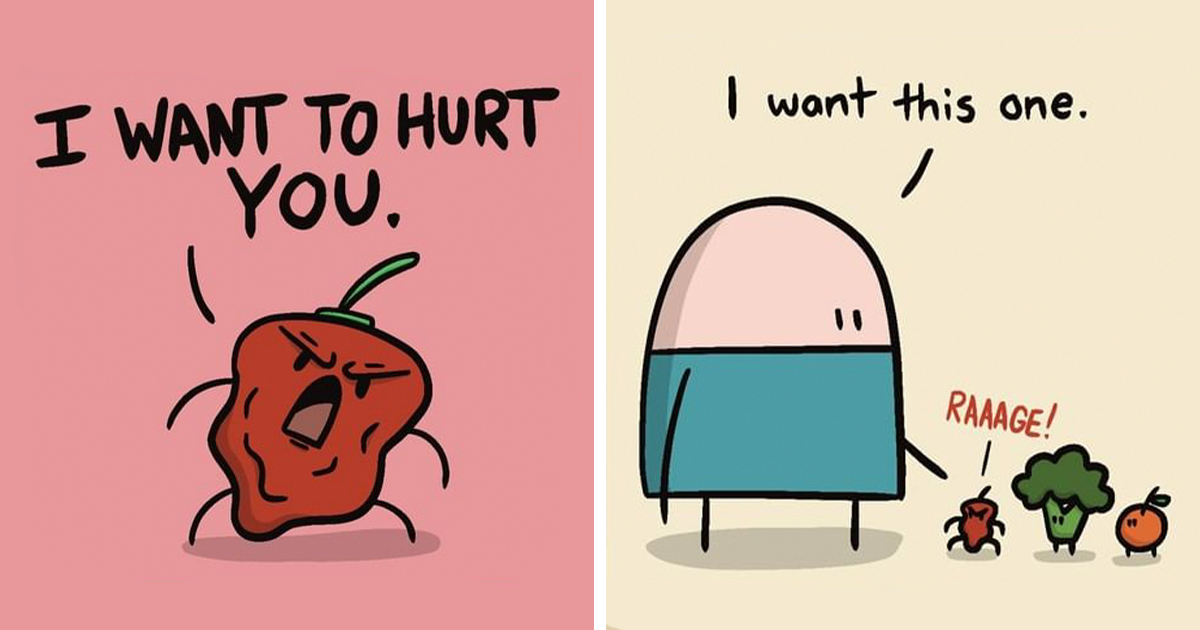
Some comics are long, dramatic, and emotionally devastating. Others need only a few panels to sneak up behind your brain, tap it politely on the shoulder, and yell, “Plot twist!” Trying Times Comics, created by Leighton Luckey, belongs firmly in the second camp. These short and funny comics are quick to read, easy to love, and strangely gifted at making everyday situations feel like tiny comedy ambushes.
The charm of 40 Short And Funny Comics With Twisted Endings By Trying Times Comics is not just that the jokes are surprising. It is that they often begin with something familiar: a relationship moment, a nerdy reference, a pet, a game, a social situation, or one of those daily frustrations that makes you stare at the wall and wonder whether the toaster is judging you. Then, just when the reader thinks the punchline is headed in one direction, the comic swerves into another lane entirely.
That is the magic of Trying Times Comics. It understands that modern humor does not always need a huge setup. Sometimes all it takes is a simple drawing, a small misunderstanding, and one perfectly timed final panel.
Who Is Behind Trying Times Comics?
Trying Times Comics is the work of illustrator and comic creator Leighton Luckey. The series became especially recognizable online during the pandemic period, when many artists were using webcomics as a way to stay creative, connected, and slightly less likely to start arguing with houseplants. Luckey’s comics grew from that atmosphere: isolated days, internet culture, personal conversations, hobbies, relationships, and the weird little emotional potholes of daily life.
The creator has described the comic’s world as one built around nerd life, relationships, and “trying times,” which is a wonderfully accurate label. These comics are not trying to be polished superhero epics with 47 alternate timelines and a villain named Lord Exposition. They are small, fast, joke-first cartoons that thrive on relatability.
Many strips draw from the creator’s own interests, including games, pop culture, pets, friendships, marriage, and those random thoughts that appear at 1:12 a.m. when you should absolutely be asleep. The humor often lands because it feels personal without being too specific. Readers can see themselves in the awkward conversations, silly anxieties, and absurd logic that runs through the strips.
Why Short Comics With Twisted Endings Work So Well
Short comics are basically the espresso shots of storytelling. They are compact, strong, and capable of making your face do something unexpected. A good four-panel comic has almost no room for waste. The first panel sets the situation, the second builds expectation, the third nudges the reader toward a predictable ending, and the fourth happily kicks that prediction into a decorative bush.
Trying Times Comics uses this structure beautifully. The drawings are simple, but that simplicity works in the comic’s favor. Because the art is clean and accessible, the reader focuses on the joke, the timing, and the emotional flip. The punchline does not get buried under visual noise. It walks in wearing a tiny hat and steals the room.
The Setup Feels Normal
A typical Trying Times comic may begin with something completely ordinary: a couple having a conversation, a character facing a small inconvenience, a pet doing something suspiciously intelligent, or a nerdy scenario involving games or fantasy logic. The opening is calm enough that readers lower their guard.
The Twist Changes the Meaning
Then comes the final beat. Sometimes it is dark humor. Sometimes it is absurd. Sometimes it is weirdly wholesome. And sometimes it makes you laugh first and then think, “Wait, should I be concerned?” That delayed reaction is part of the fun. The best twisted-ending comics are not just random; they reframe everything that came before.
The Joke Respects the Reader
Trying Times Comics rarely overexplains. It trusts readers to connect the dots, which makes the punchline feel earned. Nobody wants a comic to drag a joke into the town square and lecture it for six paragraphs. Luckey’s strips usually get in, make the joke, and get out before the awkward silence files taxes.
The Humor Style: Relatable, Nerdy, Dark, and Occasionally Too Accurate
The best way to describe Trying Times Comics is relatable absurdity. The strips often begin in the real world, but they are never afraid to bend reality for a joke. A conversation can become a miniature disaster. A cute setup can become a dark punchline. A nerdy reference can turn into a surprisingly sharp observation about people.
This blend is why the comics appeal to a broad online audience. Readers who enjoy slice-of-life humor get plenty of domestic and social situations. Fans of internet culture get references to gaming, fantasy, sci-fi, and pop culture. People who enjoy dark humor get those little “oh no” endings that make the laugh feel slightly illegal.
But the comic does not rely on darkness alone. Its strongest quality is balance. The twisted endings are funny because the strips usually start with warmth or familiarity. That contrast gives the punchline more force. A joke about a monster is one thing. A joke about a monster behaving like your roommate? That is premium nonsense.
What Makes These 40 Comics So Easy To Share?
Online comics need to survive a brutal environment. They compete with memes, videos, celebrity drama, news alerts, recipes, shopping carts, and that one friend who keeps sending voice notes instead of texts. To stand out, a comic must be instantly readable and emotionally quick.
Trying Times Comics is built for that environment. The panels are short. The characters are expressive. The captions and dialogue are not overloaded. The jokes make sense even when a reader is scrolling half-awake with one thumb and a cup of coffee that has already accepted its fate.
1. The Visual Style Is Simple but Memorable
Leighton Luckey has openly leaned into a simple drawing style, and that decision helps the comic. The characters do not need hyper-detailed shading or cinematic lighting to be funny. Their expressions, posture, and timing do the heavy lifting. In webcomics, clarity is not a shortcut; it is a superpower.
2. The Topics Are Familiar
Relationships, games, pets, awkward conversations, work stress, social habits, and personal interests all appear in the creative orbit of Trying Times Comics. These topics are broad enough to welcome many readers but specific enough to feel authentic.
3. The Endings Reward Attention
A twisted ending works best when the reader can look back and realize the clues were there. Trying Times Comics often gives readers that tiny reward. The punchline feels surprising, but not meaningless. It is the comic equivalent of opening a drawer and finding a raccoon wearing your reading glasses: unexpected, but somehow the clues were there.
Examples of Themes You Will Find in Trying Times Comics
Instead of retelling the comics panel by panel, which would spoil the fun, it is better to look at the themes that make the collection work. Across the 40 short and funny comics, the recurring ideas create a recognizable comic personality.
Nerd Culture and Gaming Humor
Trying Times Comics often speaks the language of people who have lost hours to video games, fantasy worlds, sci-fi shows, and overly complicated fictional universes. The jokes may involve game logic, fandom habits, character tropes, or the strange seriousness with which nerds discuss imaginary problems. And honestly, imaginary problems deserve respect. Some of them have dragons.
Relationship Comedy
Many strips find humor in couples, friends, and everyday conversations. These are the tiny moments where love and confusion share a bunk bed. A simple exchange can become funny because one person takes something too literally, misses the obvious, or accidentally reveals a truth nobody asked for.
Pets and Animal Absurdity
Animals are naturally good comic characters because they already behave like tiny chaos executives. Trying Times Comics uses pets and creatures as sources of sweetness, surprise, and occasional emotional betrayal. Anyone who has lived with a cat knows that “cute” and “villain origin story” can occupy the same sofa.
Dark Humor Without Losing the Smile
Some of the best Trying Times punchlines walk right up to the edge of dark comedy, wave politely, and jump. The trick is that the darkness is usually cartoonish rather than cruel. The tone stays playful, even when the ending takes a sharp turn.
The Art of the Twisted Ending
A twisted ending is more than a random surprise. If a comic ends with a piano falling from the sky for no reason, that is not a twist; that is a weather problem. A good twist grows from the setup. It changes how the reader understands the scene.
Trying Times Comics often uses misdirection. A character may appear to be discussing one thing, only for the final panel to reveal that the situation is much stranger. A familiar phrase may be interpreted literally. A cute scene may hide a darker implication. A nerdy reference may turn into a joke about real life. This is why the strips are fun to revisit: the ending makes the beginning funnier.
The comic also understands timing. In short-form humor, timing is everything. One extra line can ruin the rhythm. One missing pause can weaken the punchline. Trying Times Comics often lets the final panel carry the weight without unnecessary explanation. The silence after the joke becomes part of the joke.
Why Readers Connect With Trying Times Comics
Readers connect with Trying Times Comics because it feels like it was made by someone who notices the same weird details they do. The series does not pretend life is grand and elegant. It admits life is strange, funny, anxious, nerdy, affectionate, and occasionally shaped like a toaster fire.
There is also comfort in short comics. During stressful times, people often do not want a 700-page emotional saga. They want something quick that says, “Yes, the world is odd, but at least we can laugh at the oddness before it asks for rent.” Trying Times Comics delivers that kind of small relief.
The webcomic format makes the connection even stronger. Readers can comment, share, vote, and react immediately. A comic that makes someone laugh at lunch can travel across group chats before the sandwich is gone. That instant social life is one reason short funny comics remain so popular online.
Why the Simplicity Is a Strength
Some artists chase complexity. Trying Times Comics proves that simplicity can be just as effective. The clean style keeps the reader’s eye moving. The characters do not need elaborate backgrounds because the joke is the main event. The comic knows what it is doing and does not decorate the punchline with unnecessary furniture.
This is especially important for mobile readers. Most people discover webcomics on small screens, often while scrolling quickly. A comic with clear panels and readable expressions has a major advantage. Trying Times Comics feels made for that experience: quick, direct, and satisfying.
That does not mean the work is easy. Making something look simple can be harder than making it look complicated. A short comic has to compress character, situation, rhythm, and surprise into a tiny space. There is nowhere to hide a weak joke. The punchline must pay rent.
What Creators Can Learn From Trying Times Comics
Trying Times Comics offers several useful lessons for artists, bloggers, meme makers, and anyone trying to create funny content online.
Start With Real Life
The comic often draws from everyday experiences, hobbies, and conversations. That gives the humor a strong foundation. Even when the ending becomes absurd, the setup feels recognizable.
Let Limitations Help You
A simple style is not a weakness if it supports the joke. Creators do not need perfect anatomy, cinematic color, or a drawing tablet worth more than a used car. They need clarity, consistency, and a strong comic idea.
Keep the Ending Sharp
Short comics live or die by the last beat. The final panel should surprise the reader, deepen the joke, or flip the situation. If the ending feels obvious, the comic becomes forgettable. If the ending feels too random, the reader feels tricked. The sweet spot is surprise with logic.
My Experience Reading Short Funny Comics With Twisted Endings
Reading a batch of Trying Times Comics feels a little like opening a snack bag that says “just one more” in a legally binding tone. You plan to read a few. Then suddenly you are 27 comics deep, your coffee is cold, and you have developed strong opinions about a cartoon cat’s moral character.
What I enjoy most about comics like these is the rhythm. They respect the reader’s time. A short comic does not demand a whole afternoon, a character glossary, or a spiritual commitment. It gives you a setup, a turn, and a laugh. That compact form is perfect for busy readers, especially people who want a quick mental break between tasks. A good twisted-ending comic can reset your mood faster than pretending to understand a spreadsheet.
Trying Times Comics also captures the way humor works in real conversations. The funniest moments in life are not always neatly planned. They happen when someone says something too honestly, misunderstands a phrase, reacts too seriously, or takes a tiny situation to a ridiculous conclusion. The comics recreate that feeling. They are polished enough to work as jokes, but casual enough to feel like they came from an actual human brain rather than a corporate joke laboratory.
Another part of the experience is the surprise. With many online comics, you can predict the ending halfway through. That can still be pleasant, but it is not always memorable. Trying Times Comics keeps the reader slightly off-balance. You learn to expect a twist, but you do not always know what flavor of twist is coming. Will it be wholesome? Dark? Nerdy? Deeply silly? Emotionally suspicious? The uncertainty is part of the fun.
I also think these comics work well because they are not desperate to impress. They do not shout, “Look how clever this is!” They simply put the joke on the table and let it breathe. That confidence matters. Some humor tries too hard and ends up feeling like a man in a hot dog costume explaining taxes. Trying Times Comics usually avoids that trap. The jokes are weird, but they are not overcooked.
For readers, the best way to enjoy a collection like this is to slow down just enough to appreciate the final-panel flip. It is tempting to scroll quickly, but the craft is in the timing. Notice how the first panels guide your expectation. Notice how a small expression changes the joke. Notice how the simplest drawing can carry a surprisingly specific emotion. Then laugh, share it with a friend, and pretend you were doing “visual culture research” all along.
For creators, the experience is encouraging. Trying Times Comics shows that funny ideas matter more than perfect polish. If you have a notebook full of odd thoughts, awkward conversations, pet observations, or nerdy what-if scenarios, you may already have the raw material for comics. The challenge is learning how to shape those ideas into clean setups and satisfying twists. And if the first attempts are messy, congratulations: you have joined the ancient artistic tradition of making weird little things until one of them works.
Conclusion
40 Short And Funny Comics With Twisted Endings By Trying Times Comics is a perfect reminder that webcomics do not need to be large to leave a mark. Leighton Luckey’s series thrives on simple art, relatable setups, nerdy charm, and punchlines that turn ordinary moments into delightful little surprises. The comics are short enough for a quick break but clever enough to linger after the scroll continues.
In a crowded online world, Trying Times Comics stands out because it understands the value of timing, restraint, and a good final-panel betrayal. It is funny, strange, occasionally dark, and often more relatable than expected. In other words, it is exactly the kind of comic series the internet was built for: quick laughs, sharp twists, and just enough chaos to make the day feel less ordinary.
Note: This article is written as an original SEO-friendly feature based on publicly available information about Trying Times Comics, its creator Leighton Luckey, and the broader webcomic format. It avoids copied captions, source-code clutter, and unnecessary reference markers.