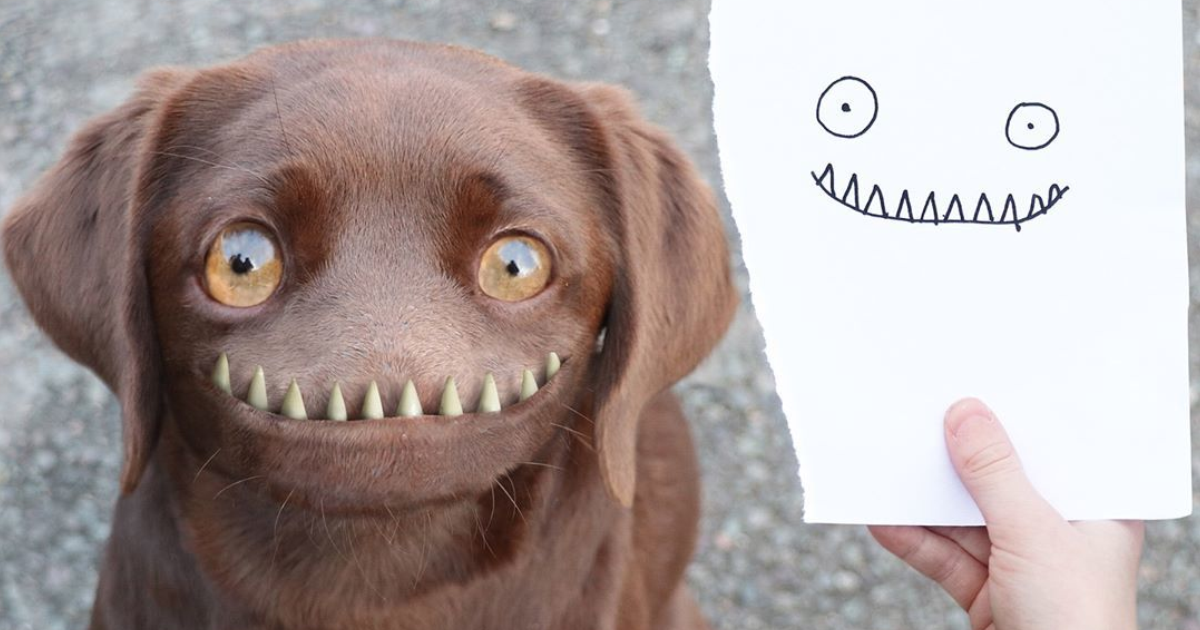
Most parents hang their kid’s artwork on the fridge and call it a day. Tom Curtis looked at his young son’s wonderfully lopsided animal drawings and thought, “What if this was real?” That simple question turned a stack of childhood sketches into one of the internet’s favorite ongoing art experiments. The result is equal parts adorable, bizarre, and “please do not let that bird near my front porch.”
The story behind Dad Turns His 6-Year-Old Son’s Drawings Into Reality works because it hits three sweet spots at once. It is funny. It is heartfelt. And it quietly reminds grown-ups that children do not create with the same rules adults use. A six-year-old does not worry about anatomy, proportion, or whether a rabbit should have the expression of an exhausted accountant. A child draws what feels right. Then a talented parent steps in and says, in effect, “Excellent. Let’s make your chaotic genius look real.”
That is exactly why this idea has such staying power online. It is not just a visual gag. It is a celebration of imagination, parenting, and the kind of collaboration that says, “Your ideas matter enough for me to build on them.” In an age of polished feeds and overdesigned everything, there is something refreshing about art that proudly keeps one foot in the land of crayons and glorious nonsense.
From Fridge Art to Internet Gold
The project most people know today began when Curtis started transforming his son Dom’s drawings into realistic-looking images. Instead of “fixing” the strange proportions, he honored them. If a dog had a face in the wrong place, the face stayed in the wrong place. If a bird looked like it had been assembled from spare parts during a thunderstorm, that bird got the full realistic treatment.
That decision is what makes the concept so brilliant. Plenty of adults can redraw a child’s work in a polished, professional style. That usually looks cute, but it also smooths out the weirdness. Curtis went the other direction. He preserved the original logic of the drawing and translated it into reality as faithfully as possible. The final images feel like something escaped from a parallel universe where kindergarten sketchbooks run the design department.
And somehow, that faithfulness is the whole joke. These creatures are hilarious not because a dad is making fun of a child’s work, but because he is taking it seriously. He is saying, “Yes, of course this elephant has a face that seems to be reconsidering every life choice. Let us honor the vision.” That playful respect changes the tone from mockery to collaboration, and that is why people keep coming back.
Why the Results Are So Funny, Charming, and Slightly Unsettling
The anatomy is pure six-year-old logic
Children draw what they know, what they notice, and what they find important. Sometimes that means giant eyes, because eyes feel important. Sometimes it means feet floating in the wrong direction, because honestly, feet are complicated and nobody needs that pressure at age six. When those choices are rendered realistically, the mismatch becomes comedy.
The images keep the innocence but add realism
A child’s sketch can feel harmless because it is made of marker lines and confidence. Turn the same creature into a realistic image, and suddenly it becomes a very persuasive argument for sleeping with the lights on. That tension is what makes viewers laugh. The source is innocent. The result looks weirdly plausible. Your brain cannot decide whether to clap, giggle, or slowly back away.
The project captures how kids actually think
Children are not bad artists. They are simply not trying to draw like adults. Their priorities are different. They chase expression before accuracy, energy before polish, and personality before realism. That is not a flaw. That is the magic. When a parent preserves that energy instead of ironing it flat, the final image feels alive in a way a technically perfect redraw never could.
What This Says About Children’s Creativity
Behind the laughs, there is a bigger reason this story resonates. Children’s drawings are often their first visible form of independent storytelling. Before they have the vocabulary to explain every feeling or idea, they can still put a creature, a face, or a wildly suspicious-looking horse on paper and say, “This is what I mean.” That matters.
Open-ended art gives children room to explore choices, test ideas, and express emotions without being pushed into a narrow “correct” outcome. That freedom is part of what makes drawing so powerful. It can support confidence, communication, focus, and creative problem-solving all at once. In plain English, a box of crayons can quietly do a lot of heavy lifting.
The father-son collaboration in this story also highlights something many parents miss: validation fuels creativity. When adults take a child’s idea seriously, children feel seen. They are more likely to keep making things, keep experimenting, and keep trusting their own imagination. The project does not just say, “Look what Dad can do with Photoshop.” It also says, “Look what happens when a parent treats a child’s sketch like it deserves a second life.”
That is a beautiful message, especially now. Kids grow up surrounded by polished cartoons, perfect filters, and endless digital content. A collaborative art project like this gently pushes back. It reminds families that original ideas do not have to be neat to be valuable. Sometimes the best creative spark arrives with seven wobbly legs and a smile in the wrong zip code.
Why Parents Love This Story So Much
Parents are not just reacting to the images. They are reacting to the relationship. The project reflects a version of parenting many people want more of: present, playful, and genuinely curious. Curtis did not simply praise the drawings and move on. He entered his child’s imaginative world and built something there with him.
That is powerful because parenting can become very practical, very quickly. Shoes. Lunches. Permission slips. Missing socks that appear to have joined a witness protection program. Stories like this cut through the routine and remind people that childhood is also made of odd little moments worth preserving. A scribble can become a shared joke. A weird monster can become a family memory. A drawing can become proof that someone paid attention.
There is also a deeper emotional layer. Parents know how quickly childhood changes. One day your kid is drawing a giraffe with the face of a disappointed uncle, and the next day they are too cool to show you anything unless it is on a group chat. Projects like this freeze a fleeting stage of life and turn it into something lasting. That is not just content. That is memory-making with a mischievous grin.
Lessons Every Family Can Borrow
Take the drawing seriously
You do not need advanced editing skills to borrow the heart of this idea. The first step is simple: treat the artwork like it matters. Ask what the creature is called. Ask why it has three tails. Ask whether it likes waffles or world domination. Children often reveal far more in those answers than adults expect.
Build on the idea instead of correcting it
Adults love improvement. Kids often need encouragement more than correction. Instead of saying, “That is not how a cat looks,” try, “Tell me about this cat.” That small shift keeps imagination open. It invites storytelling rather than shutting it down with a technical note from the realism police.
Collaborate in whatever medium you have
Not every parent is a digital artist, and that is completely fine. You can recreate the drawing with clay, cardboard, fabric, paint, or a homemade puppet. You can turn it into a bedtime story character. You can make a comic strip. You can bake a cookie version that looks delightfully wrong. The point is not perfection. The point is telling your child, “Your idea is worth building.”
Save the weird stuff
Parents often keep the cutest drawings and accidentally overlook the strangest ones. That is a mistake. The weird ones are gold. The oddly shaped ducks, the mystery beasts, the humans with one eyebrow and seven elbows, those are the pieces that usually carry the most personality. Save them. Future you will laugh, and future your child will probably be equal parts proud and horrified.
The Real Winner Is Not Photoshop
It is tempting to frame this story as a tale of digital skill, but that is only half true. Yes, the technical execution is impressive. But the real winner here is attention. Curtis paid attention to what his son made. He saw humor in it, possibility in it, and a whole project hidden inside it. Plenty of people have the software. Fewer people have the instinct to look at a child’s drawing and recognize a collaboration waiting to happen.
That is what lifts this story above a one-time viral gimmick. The images are funny, but the idea behind them is generous. It respects the child’s imagination while adding an adult layer of craft. It is silly in the best way, which is often another word for creative, brave, and unconcerned with looking cool.
And maybe that is why the concept feels so universal. Every family has some version of it. A made-up story at dinner. A mispronounced word that becomes household vocabulary. A drawing taped to a wall that somehow says more about your kid than a formal portrait ever could. When adults lean into those moments instead of rushing past them, ordinary family life becomes a lot more memorable.
Experiences That Make This Story Hit Even Harder
Anyone who has spent time around young children knows this kind of creativity does not arrive politely. It barges in. A child draws a dragon with roller skates, a fish with human teeth, or a dog that somehow looks like your neighbor and a potato at the same time. Then they hand it over with total confidence, as if the matter is settled and the Louvre should be calling any minute now. That confidence is part of the beauty. Kids do not begin with shame about making odd things. They begin with delight.
That is why parents often feel such a strong emotional pull when they see projects like this. They recognize the daily texture of it. The paper scattered across the table. The capless markers drying out at an alarming rate. The child who wants to explain every detail of a creature that appears to have been designed during a sugar rush. These are small scenes, but they become some of the most memorable parts of family life.
There is also something deeply satisfying about seeing a child react when an adult builds on their idea instead of brushing it aside. The moment changes. A drawing is no longer just a way to pass time before dinner. It becomes a collaboration. The child realizes that what came out of their imagination can go farther than the page. For many kids, that feeling is unforgettable. It tells them their ideas have weight. Their imagination can affect the world outside their own head.
Parents feel that shift too. A silly art project can suddenly become one of those moments that sticks for years. Not because it was expensive or elaborate, but because it captured attention and joy at the same time. Families do not always remember every toy that was bought or every perfectly planned outing. They do remember the afternoon when everyone laughed over a ridiculous monster with spaghetti legs and then tried to recreate it out of cardboard, markers, and determination.
There is another layer here that makes the story land so well: it gives adults permission to be playful again. Parenting is full of logistics, and creativity can get squeezed into the margins. But when a dad turns a child’s drawing into “reality,” he is doing more than making content. He is stepping back into imagination. He is joining the game. For a lot of adults, that feels like relief as much as fun.
Even outside parenting, the idea connects because it mirrors something universal. Most people want to be taken seriously by someone they love. Children are no different. When a parent says, through action, “I see what you made, and I think it is worth expanding,” that lands deeply. It builds confidence without sounding like a lecture. It says, “Your weird idea belongs here.”
And honestly, that may be the real secret behind why this topic keeps charming readers. Beneath the funny images and nightmare-ish chickens lies something warm and recognizable. A parent noticed. A child created. They met in the middle and made something memorable together. That is the kind of story people never get tired of, because it is not really about a drawing. It is about what happens when imagination gets company.
Conclusion
Dad Turns His 6-Year-Old Son’s Drawings Into Reality is more than a viral headline. It is a funny, slightly unhinged, and unexpectedly meaningful reminder that children’s art deserves more than a quick “good job” on the way to the next task. Tom Curtis’ project works because it does not flatten childhood imagination into something polished and predictable. It keeps the weirdness, celebrates the creativity, and turns family attention into art.
That is the clear winner here: not just the realism, not just the laughs, but the relationship. When adults take children’s ideas seriously, wonderful things happen. Sometimes those things are tender. Sometimes they are hilarious. Sometimes they look like a duck designed by a committee of raccoons. But they are memorable, and that is the point.
So yes, the pictures are funny. But the bigger takeaway is even better. Childhood imagination is not a rough draft waiting to be corrected. It is a world worth visiting. And every now and then, with enough creativity and a parent willing to play along, it can be brought to life in the most gloriously weird way possible.