There are two kinds of people at a flea market: the ones who see a rusty old fireman’s helmet and think, “That belongs in a garage,” and the ones who think, “That belongs on the face of a wasteland survivor who probably knows how to repair a motorcycle with a soup can.” I am proudly in the second group.
Upcycling a vintage fireman’s helmet into a post apocalyptic-looking mask is not just a craft project. It is a tiny act of rebellion against disposable culture, boring wall decor, and the suspiciously smooth plastic world of mass-produced costumes. A dented helmet already has history. It has scratches, weight, patina, and attitude. Add a mask silhouette, industrial details, dark weathering, and a few carefully chosen sci-fi elements, and suddenly it looks like it survived three sandstorms, a robot uprising, and at least one questionable campfire dinner.
This article explores the story, design thinking, safety considerations, and creative process behind turning a vintage firefighter helmet into a wearable-looking art mask. The finished piece is decorative, theatrical, and collectiblenot functional protective equipment. In other words: fantastic for photos, cosplay display, conversation, and making your bookshelf look like it has a backstory. Not fantastic for running into actual smoke, chemicals, fire, or collapsing buildings. Let us keep our apocalypse imaginary, please.
Why A Vintage Fireman’s Helmet Makes Such A Powerful Base
A fireman’s helmet already carries visual drama. The high crown, extended brim, front shield area, and rugged shape were designed for recognition and protection. Traditional American leather firefighting helmets became iconic in the 19th century, with the familiar long rear brim and raised comb associated with early New York helmet designs. That silhouette still reads instantly as brave, dangerous, and practical. It is one of those objects that looks heroic even when sitting on a dusty shelf next to a broken toaster.
That is exactly why it works so well for post apocalyptic mask art. Post apocalyptic design loves objects with previous lives: military gear, motorcycle parts, respirator shapes, industrial fasteners, cracked lenses, salvaged leather, aged metal, and anything that looks like it was repaired under pressure while someone yelled, “We move at dawn!” A vintage fire helmet already has the bones of survival gear. The trick is to respect its original identity while pushing it into a fictional future.
The Concept: Firefighter Meets Wasteland Scout
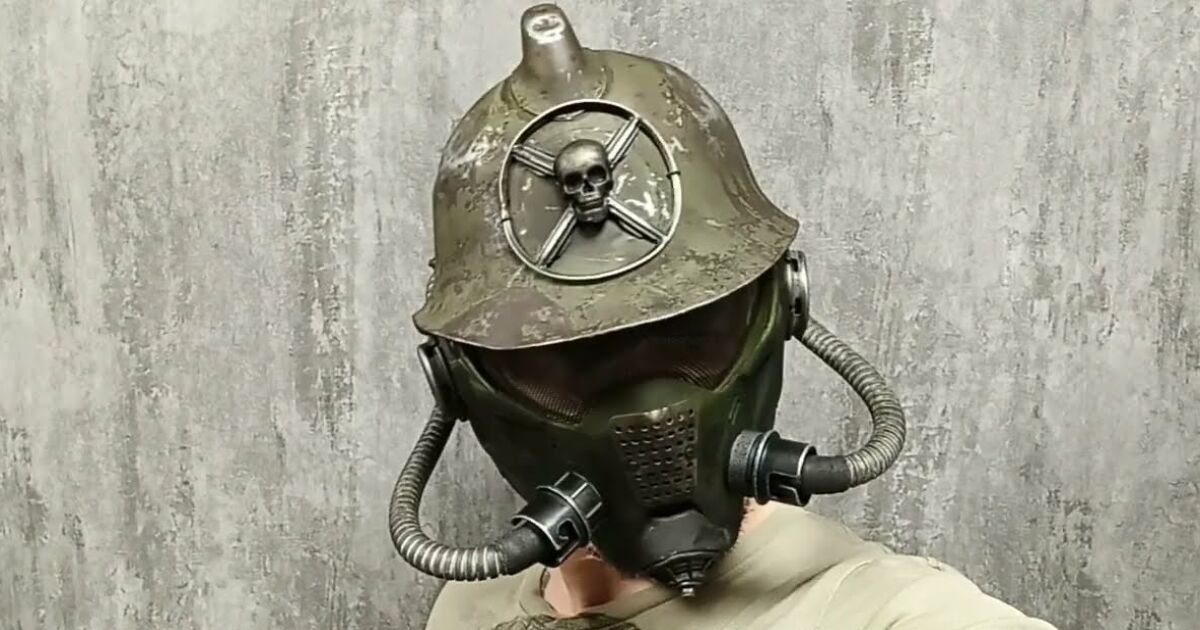
The central idea was simple: preserve the helmet’s recognizable firefighter DNA, then fuse it with a mask inspired by sci-fi armor, tactical visors, and post-apocalyptic costume design. Think less “clean superhero helmet” and more “last technician in a ruined city who still labels his tools.”
The best post apocalyptic props are not random piles of junk. They tell a story. Every bolt, scratch, strap, and darkened edge should suggest a reason. Maybe the wearer adapted old rescue gear after the city’s infrastructure collapsed. Maybe the front mask filters dust in a fictional desert wasteland. Maybe the visor protects against sparks from salvaged machinery. Maybe the helmet once belonged to a real emergency worker, and the new owner turned it into a symbol of survival. The stronger the story, the stronger the design.
Main Design Goals
The first goal was to keep the helmet recognizable. If the piece lost the fire helmet shape entirely, it would become just another sci-fi mask. The second goal was to add a face-covering structure that made the helmet feel more intimidating and complete. The third goal was weathering: rust tones, soot-like shadows, worn edges, scuffed surfaces, and layered grime. The final goal was balance. Post apocalyptic style can become messy very quickly. Add too many random hoses and it stops looking like a survivor’s mask and starts looking like a vacuum cleaner had a difficult childhood.
Upcycling Versus Restoration: Knowing The Difference
Restoration tries to bring an object closer to its original condition. Upcycling transforms an object into something new while keeping useful or meaningful parts of the old. This project sits firmly in the upcycling category. The point was not to make the vintage fireman’s helmet look parade-ready. The point was to turn its dents, age, and corrosion into character.
That said, upcycling vintage objects requires restraint. A helmet connected to a specific department, family, firefighter, or historical event deserves special care. If the piece is rare, documented, or emotionally significant, preservation may be better than modification. But if the helmet is damaged, incomplete, unsafe for use, or already destined for a forgotten corner, creative reuse can give it a second life.
Safety First: The Less Glamorous But Very Important Part
Before sanding, painting, cutting, or gluing any vintage object, it is worth pausing for a safety check. Old paint can contain hazardous materials. Rust dust, old adhesives, degraded liners, and unknown coatings can irritate the lungs or skin. If a helmet came from a working fire environment, it may also carry soot, oils, or residues that should not be casually inhaled. Nothing ruins a craft day faster than discovering your “authentic weathering” is actually a health hazard wearing a cute little patina hat.
For a decorative upcycled helmet mask, clean gently, work in a ventilated area, wear gloves, and avoid aggressive sanding unless you know what materials you are dealing with. If paint is flaking or suspiciously old, testing is smarter than guessing. A properly selected respirator can help during dusty or paint-related work, but a costume mask itself should never be treated as respiratory protection. Real respirators require correct filters, fit, and certification. A handmade post apocalyptic mask may look ready for toxic fog, but its true superpower is looking amazing in photographs.
Building The Post Apocalyptic Look
The visual language of a wasteland mask depends on contrast: old and new, utility and fantasy, damage and intention. The helmet provides the old-world foundation. The mask faceplate adds the future-warrior silhouette. The finish ties them together.
1. The Helmet Shell
The shell is the anchor. Dents and scratches should be cleaned, stabilized, and emphasized rather than erased. Small imperfections make the object feel lived-in. A too-perfect apocalypse prop is suspicious. Who polished it? Why? Is there a spa in the wasteland?
Keeping the brim and crown visible also preserves the helmet’s firefighter character. A strong crown line makes the final mask look protective. A rear brim gives the piece a silhouette that feels practical, as if it could shield the neck from falling ash or fictional acid rain.
2. The Face Mask
The face component is where the transformation becomes dramatic. A post apocalyptic mask usually benefits from strong geometry: cheek plates, angular eye areas, vent-like shapes, faux filters, and layered panels. The key word is “faux.” Decorative vents and filters can suggest survival gear without pretending to be real safety equipment.
For this kind of piece, the eye area matters most. Narrow, shadowed lenses create mystery. Clear lenses feel more human. Amber, smoked, or dark lenses lean more cinematic. The mask should look like it belongs under the helmet, not like it accidentally wandered in from another costume.
3. Straps, Rivets, And Hardware
Hardware gives the piece credibility. Rivets, screws, buckles, straps, washers, and brackets can make a handmade mask feel engineered. But hardware should appear intentional. A good rule: every visible piece should look like it is holding, reinforcing, adjusting, protecting, or repairing something.
Leather straps add warmth and age. Metal brackets add toughness. Rubber or plastic details add industrial flavor. A few mismatched parts are charming; too many make the design look like it lost a fight with a junk drawer.
Color Palette: Rust, Soot, Bone, And Burnt Metal
The most convincing post apocalyptic color palettes are usually restrained. Black, dark brown, oxidized red, gunmetal gray, faded brass, dirty tan, and dull silver all work well. Bright colors can still appear, but they should look worn, chipped, or symbolic. A firefighter helmet may include original red, yellow, black, or white tones, and preserving some of that original color can be powerful.
Weathering should happen in layers. Start with a base tone, then add shadows into creases, highlight raised edges, and create grime where hands, smoke, rain, or dust would naturally collect. Corners and exposed ridges get worn. Recesses get dark. Bolts collect rust. Leather gets dry-brushed. The goal is not to make everything dirty equally. Real objects age unevenly, because the universe is committed to asymmetry.
Storytelling Through Damage
Damage is design language. A scratch across the visor can suggest a narrow escape. A repaired cheek plate can suggest resourcefulness. Soot near the brim nods to the helmet’s firefighting past. A mismatched panel can imply field repair. The more specific the wear, the more believable the mask becomes.
One useful technique is to invent the object’s history before finishing it. Was it worn by a scout? A mechanic? A former rescue worker? A bunker guard? A courier crossing radioactive-looking deserts that are hopefully just theatrical sand? Once the character is clear, the details choose themselves. A scout needs visibility and light weight. A mechanic needs grime and tool marks. A guard needs intimidation. A courier needs patched straps and travel wear.
Why Upcycled Art Feels Different From Store-Bought Props
Mass-produced props can look impressive, but upcycled art has texture that factories struggle to fake. A vintage object carries real age. Even after modification, the viewer can sense that the piece had a previous life. That creates emotional tension: rescue gear becomes survival gear, public service becomes personal armor, history becomes fiction.
Upcycling also reduces waste by giving existing materials new value. Instead of buying every component new, the maker becomes a curator of leftovers, damaged objects, thrift-store oddities, and forgotten workshop pieces. The final mask becomes a small monument to creative reuse. Also, it gives you a socially acceptable reason to say, “No, I cannot throw that away; it might become a cheek plate.”
Display Ideas For A Vintage Fireman’s Helmet Mask
A piece like this deserves better than being tossed into a closet next to holiday decorations and one mysterious cable nobody recognizes. Display it on a stand, wall mount, mannequin head, or industrial shelf. Add subtle lighting from below or behind to emphasize the eye area. Keep the background simple so the silhouette can do the work.
For photography, use dramatic side lighting, concrete textures, smoke effects created safely, weathered fabric, old tools, or desert-like backgrounds. Avoid overloading the scene. The mask is already telling a story; the background should whisper, not grab a megaphone.
What This Project Teaches About Creativity
The best part of upcycling is that it changes how you see objects. A cracked helmet becomes a character. A bent bracket becomes armor. A scratched lens becomes cinematic. You begin to look at discarded things not as trash, but as unfinished sentences.
This vintage fireman’s helmet mask shows how powerful transformation can be when history and imagination meet. The helmet began as practical protective equipment. After its working life ended, it became raw material for art. The finished post apocalyptic mask does not erase the original purpose; it exaggerates it into myth.
Practical Tips For Anyone Inspired To Try A Similar Project
Choose The Right Base Object
Look for damaged, incomplete, or common vintage pieces rather than rare artifacts. A helmet with dents and surface wear can be perfect. A museum-worthy item with clear provenance should probably be preserved, not converted into wasteland couture.
Plan The Silhouette Before Adding Details
The overall shape matters more than tiny decorations. Sketch the helmet from the front and side. Decide how low the mask should sit, where the eyes belong, and how the faceplate connects visually to the helmet. If the silhouette works in shadow, the final piece will probably work in daylight.
Use Weathering With Logic
Think about where hands would touch, where water would run, where dust would settle, and where metal would scrape. Weathering looks best when it follows imaginary physics. Random rust spots are decoration. Logical rust spots are storytelling.
Keep It Decorative
A handmade mask can be beautiful, intimidating, and brilliantly crafted, but it is not a certified respirator, firefighter helmet, motorcycle helmet, or safety device. Treat it as art, costume, display, or photography gear. Real hazards deserve real protective equipment.
Conclusion: A Helmet With A Second Life
Turning a vintage fireman’s helmet into a post apocalyptic-looking mask is more than a cool DIY art project. It is a conversation between past and future, function and fantasy, rescue history and wasteland imagination. The original helmet brings weight, shape, and authenticity. The mask adds character, mystery, and cinematic attitude. Together, they create an object that feels like it has survived a story we have not heard yet.
That is the magic of upcycling. You do not simply decorate an old object; you listen to what it already says and then answer in a new language. In this case, the language includes rust, rivets, smoke shadows, sci-fi lines, and just enough drama to make people ask, “Where did you get that?” The best answer, of course, is: “I made it from something everyone else overlooked.”
Personal Experience: What It Feels Like To Make A Wasteland Mask From A Vintage Fireman’s Helmet
The first time you pick up a vintage fireman’s helmet for a project like this, you notice the weight before anything else. It does not feel like a cheap costume accessory. It feels like an object that has had a job. Even if it is rusty, dented, or missing parts, it has presence. That presence can be intimidating, because you are not starting with a blank canvas. You are starting with something that already has a voice, and that voice seems to say, “Please do not cover me in glitter.” Fair request.
My favorite part of the process is the moment when the helmet stops looking like a relic and starts looking like a character. At first, the added mask pieces may feel awkward. You hold them in place, step back, squint, move them three millimeters, squint again, and wonder if all artists secretly spend half their lives muttering at cardboard templates. Then one angle suddenly works. The brow line becomes fierce. The visor sits correctly. The front plate feels integrated. That is the moment the project wakes up.
Weathering is where patience pays off. It is tempting to add every effect at once: rust here, soot there, silver scratches everywhere, maybe a dramatic black wash because subtlety went out for snacks. But the best results come from slow layering. A little darkness under the brim. A dry highlight on raised edges. A faint rust tone around bolts. A worn patch where a hand might grab the side. Each layer makes the mask less like a painted object and more like something recovered from a collapsed workshop after the end credits.
There is also a surprisingly emotional side to this type of upcycled art. A fireman’s helmet symbolizes danger, courage, service, and protection. Turning it into a post apocalyptic mask changes the story but does not destroy it. Instead, it asks an interesting question: what happens to protective objects after their original world is gone? In a fictional wasteland, people would not have perfect new gear. They would adapt what survived. That idea makes every scratch meaningful.
The biggest lesson is that constraints make the piece better. You cannot force a vintage helmet to become anything. You have to work with its shape, damage, color, and mood. Sometimes a dent becomes the best feature. Sometimes an old crack tells you where to place a repair plate. Sometimes the original paint is more interesting than anything you could add. The project becomes a collaboration with time, which sounds poetic until you drop a washer under the table and spend ten minutes negotiating with dust bunnies.
In the end, the finished mask is satisfying because it feels earned. It is not perfect, and that is exactly the point. A post apocalyptic mask should not look like it came straight from a luxury boutique called “End Times & Co.” It should look repaired, adapted, and stubborn. It should feel like survival with style. Most of all, it should remind you that creativity often begins with one odd object, one ridiculous idea, and the dangerous sentence: “I bet I can turn this into something.”
Note: This article describes a decorative upcycling and art project. A handmade mask or modified vintage helmet should not be used as respiratory protection, firefighting equipment, impact protection, or safety gear.