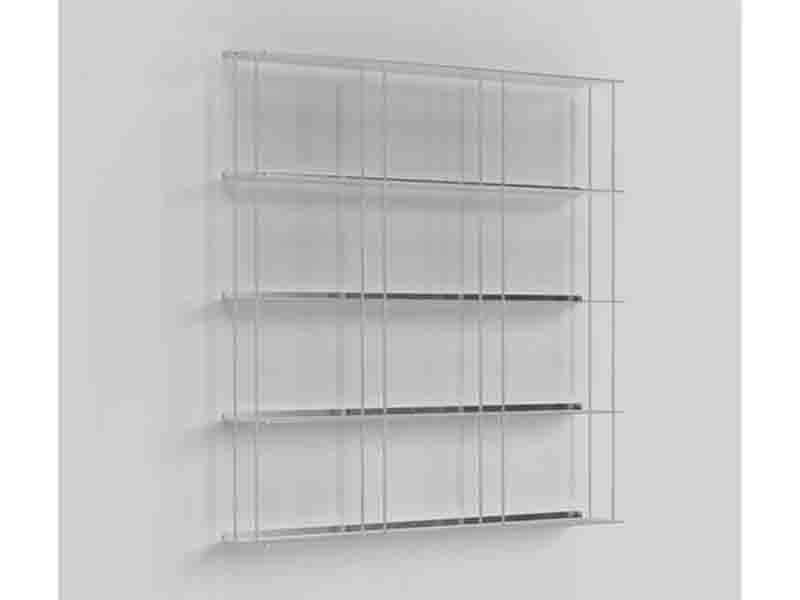
The Kriptonite Krossing Wall System is what happens when a bookcase goes to design school, loses unnecessary bulk, and comes back wearing tailored Italian aluminum. It is slim, modular, architectural, and just dramatic enough to make a blank wall feel like it has finally discovered its purpose in life.
At its core, Krossing is a wall-mounted shelving and bookcase system built from aluminum shelves and vertical tubes. That sounds simple because it is simplebut in the expensive, thoughtful, “why did nobody do this sooner?” kind of way. Instead of creating a heavy block of furniture that eats up floor space, the system turns the wall itself into storage. Books, bottles, ceramics, perfumes, framed photos, kitchen items, and small decorative objects can all live there without the room feeling swallowed by a bulky cabinet.
For small apartments, narrow hallways, home offices, studios, bedrooms, and design-conscious living rooms, the Krossing Wall System offers a clever answer to a familiar problem: we want storage, but we do not want our homes to look like a warehouse that recently discovered throw pillows.
What Is the Kriptonite Krossing Wall System?
The Kriptonite Krossing Wall System is a modular wall-mounted shelving system by Kriptonite, an Italian design brand known for aluminum furniture, modular bookcases, and space-saving interior solutions. Krossing is available in regular compositions as well as custom configurations, allowing homeowners and designers to adapt it to different wall sizes, room layouts, and storage needs.
The system is made with shelves and tubes, usually in natural, anodized, or painted aluminum finishes. Its fixed shallow depth makes it especially attractive for areas where a traditional freestanding bookcase would feel too deep, too heavy, or too eager to bruise your shin at 2 a.m.
A Minimalist Bookcase With Maximum Ambition
One of the smartest things about Krossing is that it does not fight for attention once it is filled. The structure is thin and understated, so the objects become the visual focus. Books create color. Ceramics add shape. Glassware catches light. The shelving quietly does its job, which is exactly what good storage should do. Nobody invites shelves over for dinner; they are there to hold the wine glasses.
This “disappearing” effect is one reason the Krossing wall bookcase works in minimalist interiors, industrial lofts, contemporary apartments, creative studios, and even kitchens. It can behave like a bookcase, a display wall, a bar shelf, a spice station, or a compact media storage zone depending on how it is configured.
Why the Krossing System Works So Well in Small Spaces
The modern home has a storage problem. We own books, gadgets, keepsakes, art objects, chargers, candles, coffee-table books, emergency candles, decorative bowls, and at least one mysterious cable nobody can identify but everyone is too afraid to throw away. Floor space, however, has not become more generous. This is where wall-mounted shelving earns its applause.
The Kriptonite Krossing Wall System uses vertical space instead of floor space. Because the shelves sit close to the wall, the system can provide meaningful storage without pushing far into the room. In small homes, even a few saved inches matter. A shallow shelving system can keep a room feeling open while still giving you a place to organize the beautiful, useful, and emotionally complicated objects of daily life.
Fixed 15 cm Depth: Small Number, Big Difference
The standard Krossing system is known for its fixed 15 cm shelf depth. In American terms, that is roughly 5.9 inches. That may sound narrow until you consider how many everyday items do not need deep shelves at all. Paperbacks, small art books, DVDs, CDs, perfume bottles, mugs, spice jars, glassware, framed photographs, and small collectibles all fit comfortably within shallow storage.
Deep shelves often become clutter caves. Items slide backward, disappear, and eventually develop their own zip code. A shallow system forces better editing. Everything remains visible, accessible, and easier to style. For anyone who has ever lost a notebook behind a stack of catalogs from 2017, this is a design mercy.
Materials and Finishes: Aluminum With a Design Spine
Krossing is primarily built from aluminum, which gives the system its clean profile and lightweight industrial character. Aluminum is a natural fit for modern furniture because it can be strong, slim, and visually precise. It does not need to shout. It simply shows up looking crisp.
Available finishes vary by configuration and retailer, but Krossing is commonly associated with options such as matte white, matte black, anodized aluminum, anthracite, textured gray, green, sand-toned finishes, and custom RAL colors. This range makes the system flexible enough for different design moods. White can almost disappear against a pale wall. Black creates a graphic line. Anodized aluminum leans industrial. A muted green or sand finish adds softness without turning the room into a color circus.
Why Aluminum Feels Right for Contemporary Interiors
Wooden bookcases can be beautiful, but they often bring visual weight. Krossing’s aluminum structure creates a lighter, more architectural look. It works especially well in rooms where the goal is to create storage without making the wall feel overbuilt. Think of it as shelving with the confidence of built-ins and the flexibility of modular furniture.
The result is a system that can feel refined in a living room, practical in a home office, stylish in a kitchen, and surprisingly elegant in a hallway. That is a rare storage resume. Most shelves are lucky if they survive the garage.
Regular vs. Custom Krossing Configurations
One of the best reasons to consider the Kriptonite Krossing Wall System is its modular nature. Regular configurations offer ready-made shapes such as square, rectangular, column, or wide wall compositions. These are helpful when you want a clean solution without designing every detail from scratch.
Custom Krossing configurations, on the other hand, allow the system to adapt to trickier spaces. Irregular walls, awkward corners, compact niches, and wide feature walls can all benefit from a more tailored layout. A custom system can be used to frame a doorway, fill a vertical slice beside a desk, stretch across a living room wall, or create an asymmetrical composition that looks intentional rather than “we measured this after coffee.”
Where the System Fits Best
In a living room, Krossing can become a floating library wall. In a kitchen, it can hold glassware, cookbooks, spices, and attractive pantry jars. In a bathroom, it can display perfumes, folded hand towels, candles, or small storage containers, assuming humidity and wall suitability are considered. In a hallway, it can turn dead wall space into a stylish landing strip for books, keys, plants, and small art pieces.
For a home office, Krossing works well above a desk, beside a workstation, or behind a reading chair. It keeps notebooks, reference books, framed prints, and small supplies within reach without requiring a heavy cabinet. For creative studios, it can display materials, samples, sketchbooks, and objects that spark ideas. In other words, it is storage that can also behave like inspiration.
How Much Can the Krossing Wall System Hold?
The technical information for Krossing indicates a load reference of around 5 kg per module, depending on configuration and installation. That does not mean every wall or every mounting situation is magically identical. Walls, anchors, fasteners, installation quality, and object distribution all matter. Shelving is not an area where optimism should replace hardware.
For American homeowners, the most important takeaway is simple: match the installation to the wall type and the load. Books are heavier than they look. A row of art books can humble a shelf faster than a toddler with a permanent marker. If you plan to store books, bottles, or dense items, professional installation or careful anchoring into appropriate structural support is strongly recommended.
Compatible Wall Types and Installation Considerations
Krossing technical information references compatibility with walls such as brick, plasterboard, and autoclaved aerated concrete. In U.S. homes, many interior walls are drywall over wood or metal studs, so the installation strategy may differ from a masonry wall. Whenever possible, shelves carrying significant weight should be attached to studs or supported with hardware rated for the wall material and expected load.
For drywall, heavy-duty anchors, toggle bolts, or stud-mounted fasteners may be required. For masonry, appropriate plugs and screws are necessary. For older plaster walls, installation can be more delicate. The glamorous part of shelving is the styling; the unglamorous part is making sure it does not fall off the wall during dinner. Both matter.
Design Benefits of the Kriptonite Krossing Wall System
The Krossing system is not just a place to put things. It changes how a room reads. Because it is wall-mounted and visually light, it can make a space feel taller, cleaner, and more organized. It encourages vertical composition, which is especially useful when the floor plan is tight.
Unlike closed cabinetry, open shelving creates rhythm. Horizontal lines stretch the wall. Objects add texture. Negative space gives the eye a place to rest. Used well, Krossing can make a room feel curated rather than crowded.
It Adds Storage Without Closing In the Room
Traditional bookcases can be lovely, but they often act like furniture walls. They occupy floor space, add depth, and can make narrow rooms feel even narrower. Krossing keeps storage near the wall plane, which helps preserve circulation. This is especially valuable in apartments, compact living rooms, and multipurpose rooms where one area must do the work of three.
It Turns Everyday Objects Into Decor
Open shelving rewards thoughtful objects. A stack of books, a sculptural vase, a small plant, a framed photo, or a row of glassware can all become part of the design. The system is especially good for people who enjoy seeing their things rather than hiding everything behind cabinet doors like the objects are in witness protection.
It Works With Multiple Interior Styles
Krossing can lean minimalist, industrial, Scandinavian, contemporary, urban, or eclectic depending on finish and styling. Pair matte white shelving with pale walls and ceramics for a calm look. Use black or anthracite for contrast. Choose aluminum for a sharper loft-like effect. Add warm wood boxes or natural objects to soften the metal structure.
Styling Ideas for a Krossing Wall Bookcase
The biggest mistake with open shelving is treating every inch like a storage emergency. Yes, Krossing can hold many objects, but the best results come from editing. Give the shelves breathing room. Storage should not look like it is gasping for air.
Use a 70/30 Rule
A practical approach is to fill about 70 percent of the system and leave around 30 percent as visual space. This does not need to be mathematically perfect. Nobody is coming over with a calculator, and if they are, hide the good snacks. The idea is to mix function with negative space so the wall feels designed rather than stuffed.
Group by Color or Category
Books can be arranged by subject, size, or color. Kitchen items can be grouped by material: glass with glass, ceramic with ceramic, metal with metal. In a bathroom, keep products in attractive containers and avoid displaying every tube, jar, and mystery serum. The Krossing system is elegant; it should not have to babysit visual chaos.
Mix Vertical and Horizontal Lines
Stack some books horizontally and place others upright. Add a small object on top of a horizontal stack. Use a vase or framed print to break up repetitive rows. This creates movement and prevents the shelf from looking like a retail inventory wall.
Add One Unexpected Object
A small sculpture, vintage camera, handmade bowl, or framed postcard can make the shelving feel personal. Krossing has a clean, modular personality, so a few warm or quirky objects help it feel lived-in. The goal is “designed home,” not “boutique where you are afraid to touch anything.”
Krossing in Different Rooms
Living Room
In the living room, a Krossing wall system can serve as a media-adjacent library, a display wall, or a slim alternative to a large entertainment unit. It works particularly well beside a sofa, around a reading chair, or on a long blank wall. For a balanced look, combine books with ceramics, framed art, and one or two plants.
Kitchen
In a kitchen, Krossing can hold cookbooks, spice jars, glassware, coffee supplies, and decorative containers. Because the shelves are shallow, items remain easy to grab. This is useful for daily objects that deserve visibility but not chaos. Keep the palette tightclear glass, white ceramics, wood accents, and a few metal pieces can look polished without trying too hard.
Home Office
For remote work, the system can turn a blank wall into a functional library. Store notebooks, binders, design samples, reference books, and small office tools in a clean layout. The wall-mounted design frees up floor area, which is helpful when your office is also your guest room, workout corner, and emotional support coffee station.
Bedroom
In a bedroom, Krossing can replace a bulky bookcase or act as a slim display above a dresser. Keep the styling softer here: books, framed photos, a small lamp nearby, personal objects, and calm colors. Avoid overloading the bedroom wall with too much visual activity unless your sleep style is “museum gift shop.”
Bathroom or Dressing Area
Used thoughtfully, Krossing can hold perfumes, grooming products, folded towels, or small baskets. However, moisture, ventilation, and product care matter. Aluminum can be practical, but wall condition and humidity should always be considered before installing any shelving in wet or damp spaces.
Who Should Consider the Kriptonite Krossing Wall System?
The Kriptonite Krossing Wall System is best for people who appreciate modern design, compact storage, and modular furniture. It is especially attractive for apartment dwellers, design enthusiasts, architects, interior designers, book lovers, collectors, and homeowners who want storage without visual heaviness.
It may not be the best choice for someone who wants to hide everything. If your storage style is “close the cabinet door and pretend the problem moved out,” open shelving may require a behavioral adjustment. Krossing rewards organization. It does not forgive chaos quite as generously as a deep cupboard.
Best For
- Small apartments and narrow rooms
- Modern living rooms and home offices
- Book lovers who need wall-mounted storage
- Design-forward kitchens and compact dining areas
- People who prefer modular furniture over permanent built-ins
- Homes where floor space is limited but wall space is available
Less Ideal For
- Very heavy storage without professional installation
- Renters who cannot drill into walls
- People who dislike visible storage
- Rooms with weak or unsuitable wall surfaces
- Collections that require deep shelving
Krossing vs. Traditional Bookcases
A traditional bookcase is easy: buy it, place it on the floor, fill it, occasionally dust it, and pretend the bottom shelf is not where forgotten paperbacks go to retire. Krossing is more architectural. It requires wall planning, careful installation, and a clearer idea of what you want the wall to become.
The trade-off is worth it for many homes. Traditional bookcases can be moved easily, but they consume floor space. Krossing requires installation, but it creates a lighter and more integrated effect. It is closer to a modular wall feature than a piece of furniture pushed against a wall.
The Design Difference
Traditional shelving often adds mass. Krossing adds line. Traditional shelving sits in the room. Krossing becomes part of the wall. Traditional bookcases can look cozy, especially in wood. Krossing looks sharper, slimmer, and more contemporary. Neither is universally better; they simply solve different design problems.
Buying and Planning Tips
Before choosing a Krossing configuration, measure carefully. Note the wall width, ceiling height, baseboards, outlets, switches, vents, windows, doors, and nearby furniture. Check whether the wall can support the intended load. Think about what you actually want to store, not just what looks good in product photos. Product photos never show tax folders, tangled cords, or the mug your cousin gave you that says “Boss Babe” in glitter.
Plan Around Objects, Not Just Dimensions
If the system will hold books, measure your tallest books and heaviest categories. If it will hold kitchen items, check the diameter and height of glasses, jars, and bottles. If it will display decor, decide where negative space should remain. The most successful Krossing installations feel intentional because the owner planned the contents and the structure together.
Choose a Finish That Supports the Room
For a subtle look, match the shelving finish to the wall or nearby trim. For a graphic feature, choose contrast. Matte black on a pale wall creates a strong architectural grid. White on white feels quiet and airy. Anodized aluminum works well with concrete, stainless steel, exposed brick, and modern office environments.
Consider Professional Installation
If you are installing a large Krossing composition or using it for heavy books, hiring a professional installer is usually smart. A well-installed wall system feels effortless. A poorly installed one creates suspense, and suspense belongs in thrillers, not above your sofa.
Care and Maintenance
Krossing’s aluminum construction makes everyday care relatively straightforward. Dust regularly with a soft cloth. For general cleaning, use a mild detergent with a damp cloth, then dry the surface. Avoid harsh chemicals or abrasive pads that could damage finishes. Some dealer care notes advise avoiding products containing acetone, vinegar, or ammonia on certain finishes, so always confirm care instructions for the exact model and finish you purchase.
From time to time, check that the shelving remains secure, especially if you change the load or move heavy items around. Wall-mounted furniture should be treated like a partnership: it holds your things, and you occasionally make sure it is still happy doing so.
Experiences and Practical Lessons From Living With a Krossing-Style Wall System
Living with a wall-mounted modular shelving system like the Kriptonite Krossing Wall System changes how you use a room. The first experience many people notice is psychological: the floor suddenly feels larger. Even when the actual square footage has not changed, removing bulky furniture from the floor can make a room feel more breathable. A narrow living room becomes easier to walk through. A home office feels less boxed in. A hallway that once looked like a forgotten passage becomes useful.
The second experience is behavioral. Open shelving gently pressures you to become more organized. This can be annoying at first, especially if your natural decorating style involves “temporary piles” that become permanent residents. But after a few weeks, the system can train better habits. You start grouping books more carefully. You choose nicer containers. You remove objects that do not deserve prime wall real estate. The shelf becomes a visible editor.
Another common lesson is that shallow storage is more useful than expected. Many people assume deep shelves are always better, but depth can create clutter. With a slim system, objects stay visible and reachable. You are less likely to forget what you own. In a kitchen, this means the coffee cups you use every morning are easy to grab. In a home office, notebooks and reference books remain close without turning the desk into a paper avalanche. In a living room, favorite books and objects become part of the atmosphere.
Styling also becomes easier over time. At first, many people overfill open shelving because empty space feels like wasted space. Eventually, they discover that emptiness is part of the design. A few gaps make the whole wall look calmer. A single vase can be more effective than six tiny objects arguing for attention. A horizontal stack of books can create a platform for a candle or small sculpture. Once you understand this rhythm, the system becomes fun to rearrange.
There are practical lessons too. Installation quality matters enormously. A beautiful shelving system only feels luxurious when it is level, secure, and suited to the wall. Before installation, it is worth locating studs, checking wall material, confirming fastener ratings, and deciding exactly what will be stored. Heavy books should be distributed thoughtfully rather than concentrated in one area. Bottles and glass objects should sit securely. If children or pets live in the home, placement and safety become even more important.
Another real-world experience is that Krossing-style shelving makes you more aware of color. Random objects can look messy quickly when displayed together. A consistent palette helps. In a living room, black-spined books, white ceramics, and warm wood accents can create a polished look. In a kitchen, clear jars and matching mugs reduce visual noise. In a bathroom, decanting products or using small trays can prevent the shelf from looking like a drugstore aisle having a stressful day.
Finally, the biggest benefit is flexibility. A Krossing wall can evolve. Today it may hold novels and art. Next year it may become a home-office wall. Later, it might display glassware, plants, travel objects, or children’s books. Unlike a built-in cabinet designed for one purpose, a modular wall system can adapt as life changes. That flexibility is not just practical; it is emotionally satisfying. Your home gets to change without requiring a full renovation, a contractor, or a dramatic speech about “starting fresh.”
Conclusion
The Kriptonite Krossing Wall System is a smart, elegant, and highly adaptable solution for modern storage. Its aluminum construction, slim 15 cm depth, modular structure, and clean visual language make it ideal for homes where space matters and style is not optional. It offers the storage capacity of a bookcase without the bulk of traditional furniture, turning walls into functional design features.
For small spaces, it can be transformative. For large walls, it can be architectural. For book lovers, it can be a compact library. For design fans, it can be a quiet statement piece. The key is planning: choose the right configuration, install it properly, edit what you display, and let the system breathe.
In a world full of furniture that tries too hard, Krossing succeeds by doing lessand doing it beautifully. It is not just a wall shelf. It is a disciplined, space-saving, Italian-designed answer to the eternal household question: “Where on earth do I put all this stuff?”
Note: This article is for editorial and informational purposes. Always verify current product dimensions, finishes, weight capacity, wall compatibility, pricing, and installation requirements with an authorized Kriptonite dealer or professional installer before purchasing or mounting the system.