Note: This article is for general education and responsible-gaming awareness only. Blackjack is an age-restricted casino game. Do not gamble if you are under the legal gambling age in your location, and never treat casino games as a way to make money.
What Does Surrender Mean in Blackjack?
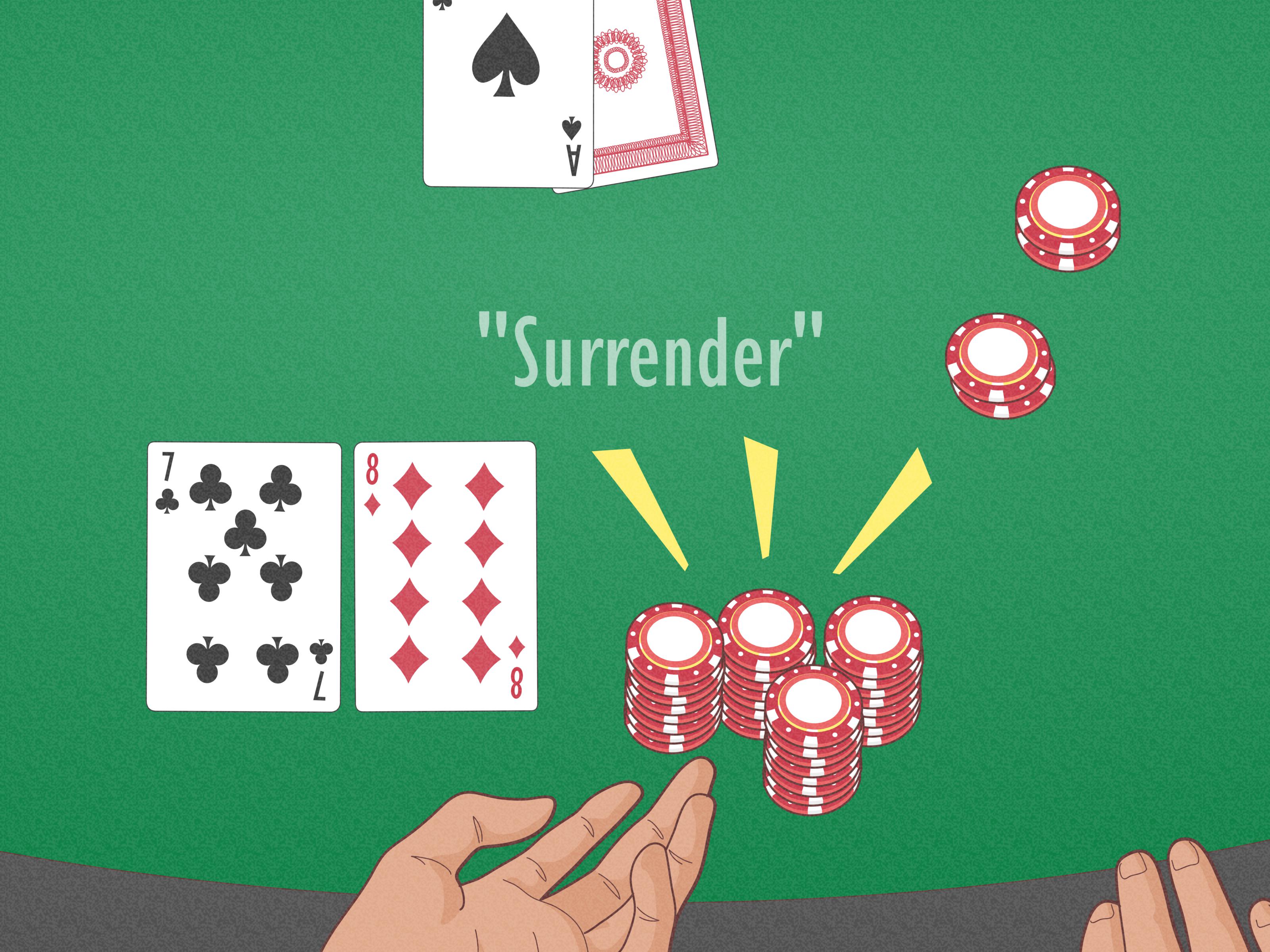
In blackjack, “surrender” is a rule that lets a player give up a hand after the first two cards are dealt and lose only half of the original bet instead of playing the hand to the end. Think of it as the casino version of saying, “Nope, this hand has bad vibes,” then backing away before things get uglier.
The surrender option is not available at every blackjack table. Some casinos offer it, some do not, and online or live-dealer versions may handle it differently. That is why beginners should always read the table rules before playing. Blackjack may look simple on the surface, but the fine print can change the entire experience.
Early Surrender vs. Late Surrender
Early Surrender
Early surrender allows a player to give up the hand before the dealer checks for blackjack. This version is much more favorable to players, which is exactly why it is rare. Casinos are not usually in the habit of handing out friendly math gifts with a bow on top.
Late Surrender
Late surrender is more common. With late surrender, the dealer first checks for blackjack when showing an ace or a ten-value card. If the dealer has blackjack, the player loses the full bet. If the dealer does not have blackjack, the player may then surrender and lose half the bet.
For beginners, the key takeaway is simple: early surrender happens before the dealer checks for blackjack, while late surrender happens after that check. The timing matters because it affects how much risk the player is still exposed to.
Why Blackjack Surrender Exists
Surrender exists because blackjack includes situations where a starting hand may be especially weak against the dealer’s visible card. Instead of forcing players to continue every difficult hand, the surrender rule creates an escape hatch. It does not make the hand profitable. It simply reduces the damage in certain situations.
That said, surrender should not be confused with a magic button. It is not a secret tunnel to guaranteed wins. It is a rule feature, not a superpower. Many beginners misunderstand surrender because losing half a bet can feel better than losing the whole thing. But feelings and math are not always best friends.
How Beginners Should Think About Surrender
New blackjack players should treat surrender as a rule to understand before sitting down, not as a shortcut to success. Blackjack decisions are affected by the number of decks, whether the dealer hits or stands on soft 17, whether doubling after splitting is allowed, and whether surrender is even offered.
Because these rules vary from table to table, beginners should avoid memorizing random advice from social media comments, casino floor whispers, or someone named “Lucky Mike” who claims he has not lost since 2009. A real understanding of blackjack starts with knowing the rules, the risks, and the limits of what strategy can actually do.
Common Beginner Mistakes With Blackjack Surrender
Assuming Every Table Offers Surrender
Not every blackjack game includes surrender. Some tables display the rule clearly, while others require players to ask the dealer. If surrender is not listed, do not assume it is available.
Using Surrender Emotionally
Beginners sometimes surrender because a hand “feels cursed.” Unfortunately, cards do not care about emotional weather reports. Surrender is a rule-based decision, not a mood ring.
Ignoring the Dealer’s Upcard
The dealer’s visible card is one of the most important pieces of information in blackjack. Any decision about surrender, hitting, standing, doubling, or splitting depends partly on what the dealer is showing.
Forgetting That Half a Loss Is Still a Loss
Surrender can reduce a loss, but it still means giving up half the bet. Players should never see surrender as “saving money” in the same way a coupon saves money. It is still part of a gambling game where the house has an edge.
Is Surrender Good for Players?
In general, player-friendly blackjack rules reduce the house edge, and surrender can be one of those rules when used correctly. However, blackjack is still a casino game. The house edge may be lower than in many other games, but it does not disappear simply because surrender is available.
For casual players, the healthiest way to view surrender is as a risk-management feature. It may reduce losses in some hands, but it does not turn blackjack into an income plan, a side hustle, or a financial strategy. If someone tells you otherwise, check whether they are also selling a “guaranteed system” from a suspiciously shiny landing page.
Responsible Blackjack Tips for Beginners
Anyone who is legally old enough to play blackjack should approach the game as entertainment, not investment. Set a fixed budget before playing, use only money you can afford to lose, and stop when that budget is gone. Chasing losses is one of the fastest ways for a fun night to turn into a financial faceplant.
It is also important to avoid alcohol-fueled decisions, emotional betting, and “just one more hand” thinking. Blackjack moves quickly, and fast games can make losses feel smaller than they really are. A few small bets can add up quickly when the table pace is moving like it drank three energy drinks.
Beginner-Friendly Explanation of a Blackjack Hand
A blackjack hand starts with the player receiving two cards and the dealer receiving two cards, usually one face up and one face down. The goal is to get closer to 21 than the dealer without going over. Number cards count as their number, face cards count as 10, and aces can count as 1 or 11.
After the first two cards, players may have several options depending on the table rules: hit, stand, double down, split, or surrender. Surrender, when available, must usually be chosen before taking any other action. Once a player hits or doubles, the surrender option is typically gone.
How Surrender Fits Into the Bigger Blackjack Picture
Surrender is only one small part of blackjack. Beginners often focus on dramatic moves, but the larger game is built around rule awareness, bankroll discipline, and understanding that every casino game includes risk.
Some rules are better for players than others. For example, blackjack games that pay 3:2 for a natural blackjack are generally more favorable than games that pay 6:5. Dealer rules, deck count, doubling rules, and splitting rules also matter. Surrender is one piece of the puzzle, not the whole casino buffet.
500-Word Experience Section: What Beginners Usually Learn About Surrender
The first time many beginners see the surrender option, they react with confusion. It feels strange to voluntarily lose half a bet. After all, most people sit down at a blackjack table hoping to win, not to politely donate 50 percent of their chips and call it a strategic retreat. But that is exactly why surrender is interesting: it teaches players that blackjack is not only about winning hands. It is also about managing bad situations.
A common beginner experience goes something like this. The player gets a weak hand, looks at the dealer’s strong upcard, and freezes. The dealer asks for a decision. The player looks at the cards again, as if the numbers might rearrange themselves out of sympathy. Someone nearby whispers, “You can surrender that.” Suddenly, a new rule appears, and the table feels less like a card game and more like a pop quiz with chips.
That moment can be useful because it reminds beginners to learn the rules before money is on the table. Blackjack is much easier to understand when you are not under pressure. Reading a table sign, practicing with free educational tools, and studying general rules can help players avoid feeling rushed. Nobody makes their clearest decisions while a dealer, three strangers, and a stack of chips are waiting.
Another lesson beginners learn is that surrender can feel emotionally satisfying even when it is not understood. Losing half may feel like “getting away,” but responsible players should remember that gambling decisions should never be based only on relief. The goal is not to feel clever for escaping a bad hand. The goal is to understand what the rule means and to stay within safe limits.
Many casual players also discover that surrender is not always available. They may learn about it from an article, video, or friend, then sit down at a table where the option does not exist. This is normal. Blackjack rules vary widely. A player-friendly rule at one casino may be missing at another. That is why checking the rules is not boring homework; it is basic preparation.
The most important experience-related lesson is that surrender does not remove the risk of gambling. It can soften certain losses, but it cannot protect a player from poor budgeting, emotional decisions, or unrealistic expectations. A beginner who understands surrender but ignores money management is like someone wearing a seatbelt while driving blindfolded. One good habit does not cancel out a dangerous one.
For legal-age beginners, the best approach is calm, informed, and budget-conscious. Learn the vocabulary. Know the difference between early and late surrender. Understand that table rules matter. Most importantly, treat blackjack as paid entertainment. If the game stops being fun, the smartest move is not surrendering a hand. It is leaving the table.
Conclusion
Blackjack surrender is one of the most misunderstood rules in the game. At its core, it allows a player to give up a starting hand and lose half the bet instead of continuing. Early surrender happens before the dealer checks for blackjack, while late surrender happens after that check. The rule can reduce risk in some situations, but it does not eliminate the house edge or make blackjack a reliable way to earn money.
For beginners, the smartest path is to learn the rules, avoid emotional decisions, and play only where it is legal and affordable. Surrender may sound dramatic, but in blackjack, the most powerful move is often knowing your limits before the cards are even dealt.