Note: This article discusses a real humanitarian disaster and avoids graphic descriptions while still respecting the seriousness of what happened.
When a flood hits a famous city, the world usually notices. Cameras arrive. Headlines grow teeth. Social feeds turn blue with rainfall maps, rescue footage, and people suddenly becoming amateur drainage engineers from the comfort of their couches. But in 2017, while much of the global spotlight was fixed elsewhere, South Asia was drowning on a scale that should have shaken the planet awake.
Across India, Bangladesh, and Nepal, relentless monsoon rains triggered catastrophic floods and landslides that killed more than 1,200 people and affected roughly 40 million more. Villages disappeared under brown water. Roads became rivers. Crops were ruined. Schools closed. Families waited on rooftops, embankments, and patches of high ground for help that often had to fight its way through broken roads and bad weather. And yet, outside the region, the disaster often felt like a footnote.
This is the uncomfortable story of the South Asia floods: not just water, rain, and tragedy, but attention. Who gets it. Who does not. And why a disaster involving tens of millions of people can somehow still be treated like background noise.
What Happened During the South Asia Floods?
The 2017 South Asia floods were driven by unusually severe monsoon rains across parts of northern India, Bangladesh, and Nepal. Monsoon season is not new to the region. People there understand heavy rain the way New Yorkers understand traffic and Floridians understand humidity: it is part of life. But this was not a normal rainy season with a few dramatic puddles and someone’s sandals floating away like tiny rubber boats.
The rainfall came hard, stayed long, and overwhelmed rivers, drainage systems, farmland, roads, bridges, and homes. In India, states such as Bihar, Assam, Uttar Pradesh, and West Bengal were hit badly. In Bangladesh, huge areas were flooded, with millions affected and farmland damaged. In Nepal, landslides and floodwaters struck communities already vulnerable because of geography, poverty, and years of recovery after the 2015 earthquake.
The disaster unfolded in layers. First came the rain. Then came swollen rivers. Then came landslides, washed-out roads, broken power lines, contaminated water, food shortages, and disease concerns. Flood disasters do not end when the rain stops. In many cases, that is when the second crisis begins.
The Human Toll: More Than a Number
The headline number was devastating: more than 1,200 people killed. But numbers can flatten reality. They make tragedy easier to file away, like a spreadsheet wearing a raincoat. Behind that figure were parents, children, farmers, students, shopkeepers, teachers, and grandparents whose lives were interrupted or ended by water that arrived faster than safety could.
More than 40 million people were affected in some way. That includes families who lost homes, people cut off from medical care, children unable to attend school, farmers who lost crops, and communities suddenly forced to depend on emergency supplies. In humanitarian terms, “affected” is a small word doing a ridiculous amount of heavy lifting.
Some people were displaced temporarily. Others had no clear home to return to. Many poor households lost not just a building, but everything inside it: food stores, livestock, documents, tools, clothing, bedding, savings, and the small items that make a house feel like a life. When a wealthier household loses furniture, it is painful. When a poor household loses one goat, one sack of rice, or one set of schoolbooks, the loss can echo for months.
Why the Photos Were So Disturbing
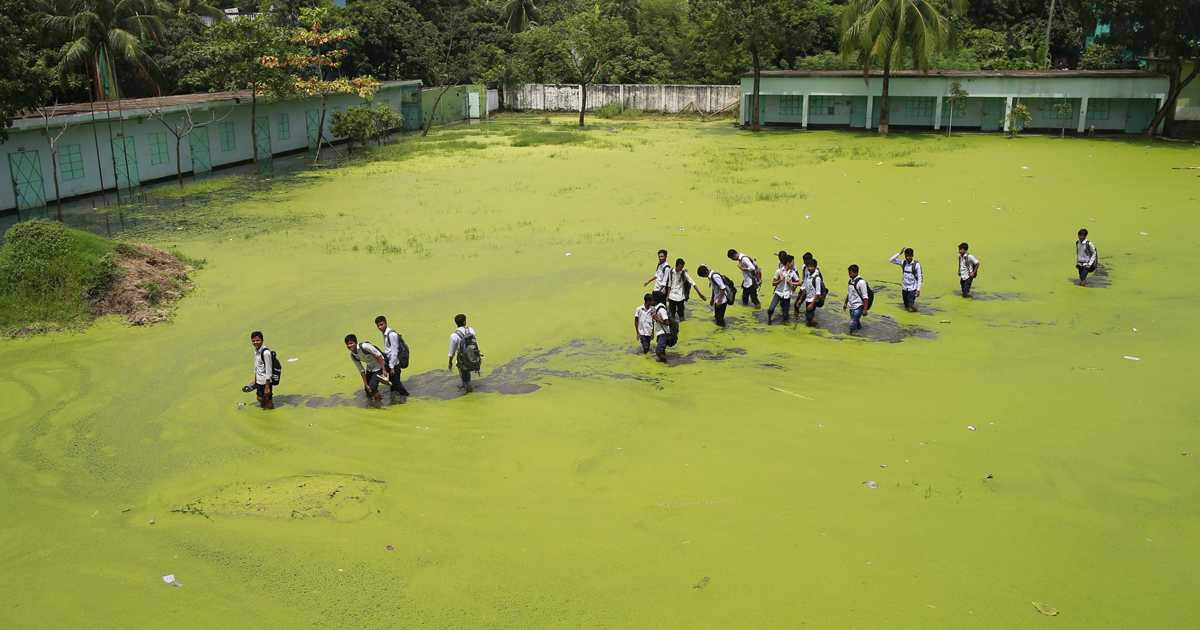
The images from the floods were difficult to look at because they showed how completely water can erase the normal rules of daily life. Streets were no longer streets. Fields were no longer fields. Homes appeared half-swallowed. People moved through water carrying children, food, bags, and whatever could be saved. In some areas, the only visible landmarks were treetops, roofs, and the occasional electric pole standing around like it had missed an important meeting.
But the most haunting part of flood photography is often not the dramatic waterline. It is the quiet detail: a family waiting beside a road, a child sitting in a temporary shelter, a school turned into an evacuation center, a farmer staring at land that will not produce food this season. Disaster photos are not “horrifying” because they are cinematic. They are horrifying because they show real people trying to survive something that arrived without asking permission.
There is also an ethical point worth making: people in disaster zones are not props for online shock. Photos can raise awareness, but they should not turn suffering into a scrollable spectacle. The goal is not to gasp, click, and move on. The goal is to understand the scale of the crisis and remember that every image represents someone’s home, neighborhood, or future.
Why So Few People Outside the Region Paid Attention
One reason the South Asia floods received limited global attention was timing. In late August 2017, Hurricane Harvey dominated U.S. and international headlines after causing catastrophic flooding in Texas. Harvey deserved serious coverage. But global attention is not supposed to be a one-seat lifeboat. A major disaster in one part of the world should not make another major disaster invisible.
Newsrooms have limits. Audiences have limits. Social media algorithms definitely have limits, and some of them appear to have been designed by a raccoon with a caffeine problem. Stories that involve Western cities, familiar landmarks, and large advertising markets often travel faster. Disasters in poorer regions, especially when they happen repeatedly, can be treated as “expected,” even when the scale is extraordinary.
That word “monsoon” also does strange work in people’s minds. Because monsoons are seasonal, some readers assume the damage is routine. But routine weather can still become a historic disaster. Snow happens every winter in many countries; that does not mean every blizzard is harmless. Rain is normal in South Asia; mass displacement and more than 1,200 deaths are not normal background weather.
The Countries Hit Hardest
India
India saw some of the worst impacts, especially in eastern and northern regions. Bihar was among the hardest-hit states, with millions affected. Floodwaters damaged homes, roads, crops, and public infrastructure. Mumbai, India’s financial capital, also faced severe flooding that disrupted transport, closed schools, delayed flights, and exposed the vulnerability of aging drainage systems in a rapidly growing megacity.
Urban flooding in India is often made worse by blocked drains, construction on floodplains, shrinking wetlands, and plastic waste clogging waterways. That does not mean rain is innocentheavy rain is the triggerbut poor planning can turn a dangerous storm into a full-blown urban mess. Think of it as nature throwing a punch and bad infrastructure holding the door open.
Bangladesh
Bangladesh is one of the most flood-exposed countries in the world. Much of the country lies in a vast delta shaped by major rivers, including the Ganges, Brahmaputra, and Meghna systems. That geography supports agriculture and life, but it also creates enormous flood risk when monsoon rains and upstream flows combine.
During the 2017 floods, millions of people in Bangladesh were affected. Homes were damaged, farmland was submerged, and clean water became a major concern. For rural families, flooded fields can mean more than a lost harvest. They can mean debt, food insecurity, interrupted education, and migration pressure. Water does not just wash through a village; it can rearrange an entire year.
Nepal
Nepal faced deadly flooding and landslides, especially in lowland and hill regions. Landslides are particularly dangerous because they can strike quickly, block roads, isolate communities, and make rescue work painfully slow. Flooding in Nepal also affected families still rebuilding from the devastating 2015 earthquake, meaning many communities were dealing with disaster layered on top of disaster.
In Nepal, geography can make emergency response difficult. Mountain roads, fragile slopes, and remote settlements mean help may not arrive quickly. When bridges fail or roads vanish, distance becomes more than miles on a map. It becomes hunger, untreated illness, and uncertainty.
Children Paid a Heavy Price
One of the most alarming parts of the disaster was its impact on children. Humanitarian organizations warned that millions of children needed urgent support. Many schools were damaged, destroyed, or used as temporary shelters. Reports at the time warned that around 1.8 million children were unable to attend classes because of the floods.
That matters because education is one of the first things disrupted in a disaster and one of the hardest things to restore for poor families. A child who misses school for a few days can catch up. A child who misses months may never return, especially if the family loses income and needs help at home. In crisis zones, a classroom is not just a place for math worksheets and suspiciously squeaky markers. It is structure, safety, meals, routine, and hope.
Floods also increase health risks for children. Contaminated water can spread diarrheal diseases. Standing water can increase mosquito-borne disease risk. Crowded shelters can make infections spread more easily. Malnutrition can worsen when crops are destroyed and food prices rise. The flood itself may be the headline, but the public-health aftermath is often where the quiet suffering continues.
The Agricultural Damage Was a Long-Term Crisis
South Asia’s monsoon season is deeply tied to farming. Rain supports crops, fills rivers, and sustains millions of livelihoods. But too much rain at the wrong time can destroy the very harvest it is supposed to help. During the 2017 floods, large areas of farmland were submerged, including rice fields and other staple crops.
For farmers, crop loss is not just a sad season. It can mean debt, hunger, selling livestock, pulling children from school, delaying medical care, or leaving home to look for work. A flooded field can become a family financial crisis. A damaged rural economy can ripple into cities through food prices and migration.
This is why flood recovery cannot stop at emergency food packages. Communities need seeds, tools, livestock support, safe water systems, repaired roads, and access to credit that does not trap them in impossible repayment cycles. Otherwise, the flood ends on the news but continues in household budgets.
Climate Change Is Making the Risk Harder to Ignore
No single flood can be explained by climate change alone. Weather is complicated, and anyone who says otherwise should be asked to explain humidity at a family dinner. But climate scientists have warned for years that a warming atmosphere can hold more moisture, increasing the risk of heavier rainfall events in many regions. South Asia is especially vulnerable because of its dense populations, river systems, low-lying deltas, poverty, and rapid urbanization.
The World Bank has warned that South Asia faces serious climate risks, including floods, heat, cyclones, and droughts. Hundreds of millions of people in the region have already been affected by natural disasters over recent decades. That does not mean every monsoon will become a catastrophe. It does mean that preparedness, planning, and investment are no longer optional extras. They are survival tools.
Flood defenses, better drainage, early warning systems, climate-resilient housing, protected wetlands, and smarter land-use planning can save lives. These are not glamorous solutions. Nobody makes a superhero movie called “Drainage Maintenance Man.” But in flood-prone regions, boring infrastructure can be heroic.
Why Floods Hurt Poor Communities First
Floodwater does not check bank accounts before entering a neighborhood, but poverty determines who can escape, who can rebuild, and who remains at risk. Wealthier families may have stronger homes, insurance, savings, vehicles, and relatives in safer places. Poor families often live in low-lying areas, informal settlements, or fragile housing because safer land is expensive.
That inequality turns natural hazards into human disasters. A storm may be natural. A lack of safe housing is not. Heavy rain may be unavoidable. A school collapsing because it was poorly built is not. A river may flood. But whether people receive warnings, evacuation routes, clean water, and medical care depends on decisions made long before the clouds arrive.
In South Asia, millions of people live close to rivers because rivers support farming, transport, fishing, and trade. Moving everyone away is not realistic. The goal should be safer living: elevated shelters, stronger homes, reliable warnings, flood-resilient crops, community evacuation plans, and public services that reach people before disaster turns into desperation.
The Media Problem: When Familiar Disasters Get More Attention
The 2017 South Asia floods raised an uncomfortable question: Why do some disasters dominate the news while others struggle for airtime? Part of the answer is geography. U.S. media naturally covers U.S. disasters heavily because its audience is directly affected. That makes sense. But it becomes a problem when a disaster affecting tens of millions elsewhere receives only scattered attention.
There is also disaster fatigue. South Asia experiences flooding often, so international audiences may wrongly treat each flood as “just another monsoon.” But repetition should not make suffering invisible. If anything, repeated disasters should raise louder questions about climate adaptation, infrastructure, poverty, and global responsibility.
Editors, platforms, and readers all play a role. News organizations decide what to cover. Algorithms decide what to amplify. Readers decide what to click, share, and discuss. The internet likes to pretend it is a neutral window to the world, but sometimes it is more like a funhouse mirror with notifications.
What Meaningful Help Looks Like
After major floods, useful help usually falls into two categories: immediate relief and long-term resilience. Immediate relief includes clean water, food, shelter, medical care, hygiene kits, cash support, and temporary learning spaces for children. These needs are urgent because flood-affected families cannot wait for policy papers while standing in dirty water.
Long-term resilience is slower but just as important. It includes rebuilding safer homes, repairing schools and clinics, improving drainage, restoring livelihoods, strengthening early warning systems, and protecting natural buffers such as wetlands. It also means funding local organizations that understand the language, roads, customs, and realities of the communities they serve.
One lesson from the South Asia floods is that disaster response should not be treated like a one-week charity sprint. Recovery can take months or years. The cameras leave early. Debt, disease risk, damaged schools, and lost crops stay behind like unwanted houseguests.
Lessons From the 2017 South Asia Floods
The first lesson is simple: attention saves lives. When disasters are visible, aid can move faster, political pressure grows, and international support becomes easier to mobilize. When disasters are ignored, affected communities are forced to carry more of the burden alone.
The second lesson is that infrastructure matters. Drainage, roads, bridges, shelters, weather alerts, and health systems may sound boring until the day they are the difference between survival and tragedy. Governments do not get applause for a culvert that works, but they should.
The third lesson is that climate adaptation must focus on the people most at risk. Poor households, children, elderly people, people with disabilities, and remote communities need more than generic warnings. They need practical support that reaches them in time.
The final lesson is that we should stop treating disasters in poorer countries as distant background events. A flood affecting 40 million people is not small because it happens far away. It is enormous. The map is not a moral ranking system.
Personal Reflections and Real-Life Experiences Connected to This Topic
Anyone who has lived through heavy seasonal rain, even far from South Asia, knows how quickly water changes the mood of a place. A sunny street feels permanent until one storm turns it into a channel. A familiar route home becomes a guessing game. The little things suddenly matter: whether the phone is charged, whether the road is passable, whether the power stays on, whether drinking water is safe.
Floods are frightening because they make ordinary life feel negotiable. You may wake up expecting errands, school, work, and dinner, only to spend the day moving furniture, checking neighbors, lifting bags onto tables, or listening for emergency updates. Water does not need to be dramatic to be disruptive. A few inches in the wrong room can destroy documents, furniture, electronics, medicine, photographs, and school supplies. A few feet can erase a home.
In many flood-prone communities, people develop a kind of practical wisdom that outsiders rarely appreciate. They know which road floods first. They know where the elderly neighbor lives. They know which wall is weak, which bridge is risky, which school becomes a shelter, and which relative has a second floor. This local knowledge is incredibly valuable, but it is not a substitute for proper infrastructure and government preparedness. Community courage should not be used as an excuse for official neglect.
The South Asia floods also remind us how unequal recovery can be. After a storm, one family may replace damaged items within a week. Another may spend years trying to recover from the same water level. A lost mattress, a ruined motorbike, a dead cow, or a destroyed sewing machine can be a small inconvenience for one household and a financial disaster for another. That is why conversations about floods must include poverty, housing, insurance, farming, public health, and education.
There is also an emotional side that is easy to miss. Flood survivors often describe the stress of waiting: waiting for water to recede, waiting for relatives to call, waiting for aid, waiting to know whether school will reopen, waiting to see whether crops can be saved. Waiting can feel endless when the future smells like mud and wet clothes. Humor may still appearbecause people are wonderfully stubborn that waybut it sits beside exhaustion.
For readers far away, the most useful experience may be learning to notice. Notice when a huge disaster receives little attention. Notice when headlines reduce millions of people to a number. Notice when “monsoon” is used as if it explains everything. Notice when photos shock you, then ask what action should follow the shock. Awareness is not the same as help, but it is often the first doorway to help.
The 2017 South Asia floods were not just a regional tragedy. They were a warning about climate vulnerability, media attention, fragile infrastructure, and the uneven value the world places on suffering. If we only care when disaster looks familiar, we have misunderstood what humanity is supposed to mean. The water may have receded, but the lesson should not.
Conclusion
The South Asia floods that killed more than 1,200 people deserved far more attention than they received. They were not just another seasonal weather event. They were a massive humanitarian disaster that affected tens of millions across India, Bangladesh, and Nepal, damaged homes and schools, destroyed farmland, disrupted health systems, and exposed the painful gap between disaster scale and global attention.
Yes, the photos were horrifying. But the deeper horror was not only what the images showed. It was how easily the world looked elsewhere. Remembering this disaster matters because future floods will come, and the question is not whether rain will fall. The question is whether communities will be better protected, whether children will return to school, whether families will rebuild safely, and whether the rest of us will pay attention before the water reaches the roof.