Note: This article is written for web publication in standard American English, based on synthesized insights from SaaS operator playbooks, venture capital guidance, SaaS benchmark reports, leadership research, and founder-focused scaling advice.
Every scale-up founder eventually discovers a cruel little joke hidden inside growth: the company gets bigger, but the founder’s calendar somehow becomes smaller. At $1 million ARR, the founder can still heroically jump into sales calls, calm down angry customers, approve product decisions, interview engineers, write a board update, and remember to eat something that is not coffee. By $10 million, that same behavior starts looking less like hustle and more like a fire alarm with a laptop.
So, dear SaaStr: what is the number one challenge for scale-up stage founders?
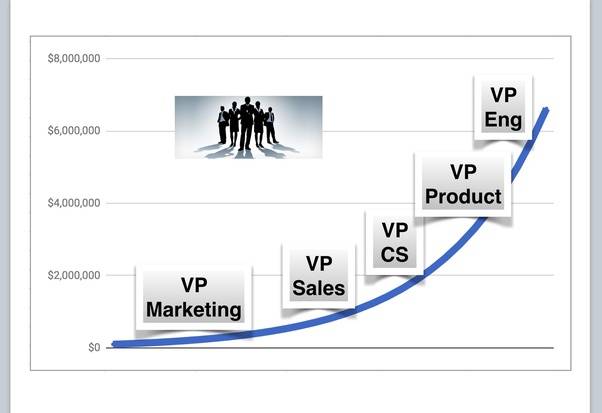
The answer is not fundraising. It is not product-market fit. It is not even competitors with suspiciously similar landing pages and slightly shinier gradients. The number one challenge is building the leadership team: finding, hiring, empowering, and retaining the right executives and functional leaders who can scale the company beyond founder-led everything.
In plain English: the founder must stop being the smartest person in every room and start hiring people who can run rooms the founder does not need to be in. That sounds simple. It is not. It is emotionally awkward, operationally risky, and often expensive enough to make the CFO blink in Morse code.
The Real Bottleneck: The Founder Becomes the System
Early-stage startups survive because founders are intense, adaptable, and unreasonably willing to do ten jobs badly before breakfast. That is useful in the beginning. In the messy early days, founder-led sales can create the first revenue. Founder-led product can keep the roadmap close to the customer. Founder-led hiring can protect the culture from becoming a corporate beige carpet.
But scale-up stage companies need repeatability. They need managers who can hire managers. They need sales leaders who can build pipeline without requiring the founder to personally bless every deal. They need customer success leaders who can reduce churn before churn walks into the board meeting wearing a name tag. They need finance leaders who can turn “we think this is working” into “here is the gross margin, CAC payback, runway, forecast accuracy, and why your favorite project should probably be paused.”
The founder’s superpower becomes the company’s ceiling when every important decision still flows through one person. At scale, the goal is no longer to prove the founder can do everything. The goal is to build an organization that performs even when the founder is not in the room, not in the Slack thread, and ideally not reviewing a button color at 11:47 p.m.
Why Executive Hiring Is So Hard at the Scale-Up Stage
Hiring senior leaders is different from hiring early employees. Early employees often join for the mission, the chaos, the equity lottery ticket, and the thrill of building something from scratch. Senior executives need all of that plus a much clearer view of the business model, market opportunity, board dynamics, team quality, compensation package, and whether the founder is actually ready to delegate or just wants an expensive assistant with a VP title.
The scale-up founder is usually hiring for functions they have personally owned. That creates a strange emotional trap. The founder wants a “world-class VP of Sales,” but also wants that VP to sell exactly like the founder, care exactly like the founder, forecast exactly like the founder, and somehow read the founder’s mind during pricing debates. This is how companies accidentally hire senior leaders and then slowly suffocate them with founder nostalgia.
Great executives do not simply execute the founder’s old habits at a larger volume. They bring systems, judgment, discipline, and a point of view. Sometimes they tell the founder, “This process does not scale.” The founder’s first instinct may be to hear, “Your beautiful startup baby is ugly.” The mature response is to listen anyway.
The “Big Company Executive” Trap
One classic mistake is hiring someone from a famous company and assuming brand-name experience will magically transfer. A VP from a $2 billion software company may be brilliant, but if they need a 40-person operations team, six enablement specialists, enterprise brand recognition, and a procurement department that already knows the product category, they may struggle inside a $12 million ARR company where the sales deck still has three fonts and a mysterious slide named “final-final-real-version.”
Scale-up founders need leaders who match the company’s stage. The best executive for a 50-person SaaS company is often not the same person who would run the same function at Salesforce, Microsoft, or Adobe. The right leader must be senior enough to build the future, but hands-on enough to survive the present.
The “Player-Coach Forever” Trap
The opposite mistake is promoting a loyal early employee into a senior role without asking whether the role has outgrown them. The first sales rep who helped the company reach $1 million ARR may not be the right CRO to build a multi-segment sales organization. The early marketer who wrote clever blog posts and ran webinars may not be ready to manage demand generation, brand, product marketing, lifecycle marketing, analyst relations, and a budget that suddenly has commas.
Loyalty matters. Context matters. But scale demands role clarity. Sometimes the right move is coaching an early leader into a bigger job. Sometimes the right move is bringing in an experienced executive above them. And sometimes the right move is having the hard conversation before the company quietly pays the price in missed quarters, confused teams, and “alignment meetings” that produce no alignment and many snacks.
The Leadership Roles That Usually Matter Most
The exact leadership sequence depends on the business model, sales motion, customer profile, and product complexity. Still, most B2B SaaS scale-ups eventually need strong leaders across revenue, product, engineering, customer success, finance, people operations, and marketing.
VP of Sales or CRO
For many SaaS companies, the first painful executive gap appears in sales. Founder-led sales can be magical because customers believe the founder. The founder knows the product vision, the roadmap, the origin story, the objections, and the exact moment to say, “Yes, we can probably build that.” But founder-led sales is not a scalable go-to-market motion. It is a very charismatic bottleneck.
A strong sales leader brings qualification discipline, pipeline hygiene, sales stages, hiring scorecards, coaching rhythm, territory planning, compensation design, and forecast accountability. In other words, they turn “we have some exciting conversations” into “we have a measurable revenue engine.” Less romantic, much more useful.
VP of Customer Success
Scale-up founders often obsess over new ARR while existing customers quietly decide whether the product is still worth paying for. In SaaS, retention is not a back-office metric. It is the business model breathing. Strong customer success leadership helps the company understand onboarding friction, product adoption, renewal risk, expansion opportunity, and customer health before the renewal date becomes a horror movie trailer.
A great customer success leader also prevents the company from confusing “customers are not complaining” with “customers are successful.” Silence is not always satisfaction. Sometimes it is churn wearing noise-canceling headphones.
VP of Product and Engineering Leadership
At the early stage, the product roadmap often lives in the founder’s head. At scale, this becomes dangerous. Customers want enterprise features. Sales wants competitive parity. Support wants fewer bugs. Engineering wants technical debt addressed before the codebase becomes a haunted mansion. The founder wants innovation. Everyone wants everything yesterday.
Strong product and engineering leaders translate chaos into priorities. They create decision frameworks, roadmap discipline, delivery expectations, and feedback loops between customers, sales, success, and engineering. They also protect the company from building whatever the loudest customer requested on a Tuesday.
Finance and People Leaders
Finance leadership becomes essential when the business can no longer be managed from a spreadsheet named “plan_v9_really_final.” Scale-ups need sharper forecasting, budget ownership, hiring plans, pricing analysis, board reporting, cash management, and metrics that reveal whether growth is efficient or just expensive.
People leadership matters because hiring more people does not automatically create a better company. It often creates more meetings, more confusion, and more opportunities for someone to say “cross-functional” while meaning “nobody owns this.” A strong people leader helps build hiring systems, performance management, compensation philosophy, manager training, and culture practices that hold up under pressure.
The Metrics Make the People Problem More Urgent
The modern SaaS market is less forgiving than the grow-at-all-costs era. Investors, boards, and buyers increasingly care about efficient growth, retention, gross margin, ARR per employee, CAC payback, and the Rule of 40. That changes the founder’s job. It is not enough to grow. A scale-up must grow with discipline.
This is where executive quality becomes obvious. A mediocre leader can hide in a booming market. A strong leader shows up when customer budgets tighten, sales cycles stretch, AI changes workflows, competitors compress pricing, and the board asks why net revenue retention is not moving in the right direction.
Scale-up founders are not just hiring leaders to “take things off their plate.” They are hiring leaders to improve the company’s operating system. The best executives bring leverage. They make teams sharper, decisions faster, customers happier, and forecasts less fictional. The wrong executives bring theatre. They produce decks, frameworks, jargon, and the faint smell of a future severance package.
How Founders Can Hire Better Scale-Up Leaders
Define the Mission Before the Job Description
Before writing a job description, founders should define the mission of the role. “Hire a VP of Marketing” is not a mission. “Build a repeatable pipeline engine for mid-market customers while clarifying positioning against three major competitors” is closer. The clearer the mission, the easier it becomes to identify the right profile.
Founders should ask: What must this leader accomplish in the first 12 months? What broken systems must they repair? What team must they build? What decisions will they own? What will the founder stop owning after this hire? That last question is the spicy one. If the answer is “nothing,” the company may not be ready for the hire.
Interview for Stage Fit, Not Just Resume Shine
A useful executive interview digs into stage-relevant experience. Has this person built from $5 million to $20 million ARR? Have they hired first-line managers? Have they inherited a messy team? Have they operated without perfect data? Have they missed a quarter and recovered? Have they worked with founder-led cultures before?
Founders should beware of candidates who speak only in polished outcomes. The best interviews often include scars. A leader who can explain what they got wrong, what they learned, and how they changed their operating system is usually more valuable than one who presents every past company as a flawless parade of excellence.
Use Backchannel References Carefully
Reference checks should go beyond “Were they good?” Better questions include: What stage were they best suited for? How did they handle conflict with the CEO? Did strong people want to work for them again? What kind of team did they build? Where did they struggle? Would you hire them into a chaotic environment?
The goal is not to find a perfect executive. Perfect executives live in pitch decks and LinkedIn announcements. The goal is to understand the trade-offs clearly enough to decide whether those trade-offs fit the company’s needs.
Empowering Executives Is Harder Than Hiring Them
Many founders think the hard part is getting the executive to sign the offer. That is only the opening scene. The real challenge begins when the new leader starts making decisions differently than the founder would.
Empowerment requires more than a welcome email and an org chart. It requires decision rights. It requires access to information. It requires public support from the CEO. It requires the founder to resist the urge to reverse decisions casually in side conversations. Nothing destroys an executive faster than a team learning that the real process is “ask the VP, then ask the founder if you want a different answer.”
Founders should align with new executives on goals, communication cadence, cultural expectations, and what decisions need CEO involvement. Then they should let the leader lead. This does not mean disappearing. It means managing through clear expectations instead of drive-by opinions.
Retention: The Part Founders Underestimate
Retaining strong executives is its own challenge. Great leaders have options. They will not stay long if they are under-leveled, second-guessed, misaligned with the board, buried in politics, or asked to own outcomes without authority.
Executive retention is not just about compensation, though compensation matters. It is about trust, clarity, impact, and whether the company is still a place where ambitious people can do meaningful work. A scale-up founder who attracts great leaders but cannot retain them has not solved the people problem. They have built an executive revolving door with premium pricing.
The Founder’s Job Changes, Too
The hardest promotion in a scale-up is often the founder promoting themselves from heroic operator to organizational architect. That means fewer direct decisions and more system design. Fewer emergency rescues and more leadership coaching. Fewer instinctive answers and more questions that help the team think better.
This transition can feel uncomfortable because the founder’s identity is often tied to being useful everywhere. But a founder who must personally approve every campaign, deal strategy, roadmap decision, and senior hire is not leading a scale-up. They are hosting a very expensive dependency festival.
The best founders learn to measure their value differently. Instead of asking, “Did I solve the problem?” they ask, “Did I build the team that can solve this category of problem repeatedly?” That is the difference between effort and leverage.
Specific Example: From Founder-Led Sales to Revenue Leadership
Imagine a SaaS company selling workflow software to mid-market finance teams. The founder closed the first 40 customers personally. Revenue reaches $4 million ARR. The product has fans, churn is manageable, and the board is excited. Then growth slows.
The founder blames lead quality. Sales blames product gaps. Customer success blames onboarding. Marketing blames unclear positioning. Finance blames everyone, but politely.
The real issue is that the company never built a revenue system. There is no consistent qualification framework. Sales reps sell to different buyer personas. Demos vary wildly. Pricing exceptions are common. Expansion is accidental. Forecasting is optimistic in the way a dog is optimistic near a dinner table.
A strong revenue leader enters and creates structure. They define the ideal customer profile. They segment sales motions. They rebuild the pipeline stages. They coach managers. They work with product marketing on messaging. They partner with customer success on expansion signals. They make forecasting uncomfortable but useful.
At first, the team complains that things feel more corporate. Then win rates improve. Sales cycles become clearer. Customer handoffs get cleaner. The founder is no longer required on every important call. That is scaling. Not more chaos with better dashboards, but repeatable performance with fewer heroic rescues.
AI Makes the Leadership Challenge More Interesting
AI has changed the conversation around SaaS efficiency, hiring, support, sales development, product velocity, and internal operations. Many scale-ups are now asking which tasks should be handled by people, which should be automated, and which should be redesigned entirely.
But AI does not eliminate the need for leadership. It increases the need for judgment. Someone must decide where automation improves customer experience and where it creates shiny nonsense. Someone must define data governance, security expectations, customer communication, and the new shape of teams. Someone must ensure AI adoption improves the business instead of becoming a very expensive way to generate more mediocre emails.
In the AI era, the best scale-up leaders will not simply manage people. They will manage systems of people, software, data, and automated workflows. That makes executive hiring even more important, not less.
So, What Should Scale-Up Founders Do Now?
First, accept that people are not a “soft” issue. Leadership quality is strategy. Executive hiring is product velocity, revenue quality, customer retention, culture, and valuation all wearing one hat.
Second, identify the company’s true bottleneck. Is growth limited by sales execution, product delivery, customer retention, marketing positioning, financial planning, or management depth? The next executive hire should match the most painful constraint, not the board’s favorite org chart template.
Third, build a leadership hiring process before desperation arrives. Desperate hiring creates magical thinking. Magical thinking creates bad hires. Bad hires create six months of organizational fog followed by a very expensive lesson.
Fourth, prepare the company for the leader. A great VP cannot succeed if the founder refuses to delegate, the board has hidden expectations, the team lacks trust, or the role is secretly impossible. Hiring the right person matters. Creating the conditions for that person to win matters just as much.
Additional Founder Experiences: Lessons From the Scale-Up Trenches
One common experience among scale-up founders is the shock of discovering that what worked yesterday becomes the exact thing breaking tomorrow. The founder who was praised for being deeply involved in every customer conversation may later be criticized for slowing down the sales team. The founder who protected product quality by reviewing every release may later become the reason engineering cannot ship quickly. The founder who personally interviewed every candidate may later create a hiring queue so long that top candidates disappear into the arms of competitors with faster calendars.
This is not because the founder suddenly became bad at the job. It is because the job changed. Scale is not a bigger version of startup mode. It is a different operating environment. A canoe and a cargo ship both float, but you probably should not steer them the same way unless you enjoy maritime disasters.
Another hard-earned lesson is that leadership gaps rarely announce themselves politely. They show up as symptoms. Sales misses the quarter, but the real issue is weak enablement. Churn rises, but the real issue is poor onboarding and unclear customer ownership. Product velocity slows, but the real issue is too many priorities and no decision framework. Employee engagement drops, but the real issue is managers who were promoted without training.
Experienced founders learn to diagnose the system, not just the symptom. They ask, “What capability is missing?” instead of “Who made the mistake?” That mindset turns firefighting into company building.
A third lesson: the first senior hire is often not the forever senior hire. This is emotionally difficult because founders want every important hire to be perfect. But scale-up leadership evolves. The leader who builds the first sales motion may not be the leader who manages global enterprise expansion. The product leader who brings order to the roadmap may not be the same person who runs a multi-product platform strategy. This does not make early leaders failures. It means the company moved into a new chapter.
The healthiest scale-ups handle this with honesty and respect. They define roles clearly, give leaders support, and make changes when the business requires it. The unhealthy ones avoid the conversation until everyone knows the truth except the person with the title.
Founders also learn that culture changes whether they manage it or not. At 20 people, culture is mostly behavior by proximity. Everyone sees how decisions get made. Everyone hears the customer stories. Everyone knows why the company exists. At 200 people, culture needs systems. Onboarding, rituals, performance reviews, internal communication, and manager behavior become the carriers of culture. If founders do not intentionally design those carriers, culture gets crowdsourced. That usually produces a confusing blend of old habits, new politics, and whatever the loudest department prefers.
Finally, scale-up founders learn that delegation is not abdication. Delegation does not mean throwing a problem over the fence and hoping a VP catches it gracefully. Good delegation includes context, goals, boundaries, decision rights, and feedback. The founder remains accountable for the quality of the leadership system. But the founder no longer needs to personally turn every gear.
The number one challenge for scale-up founders, then, is not merely hiring executives. It is becoming the kind of CEO who can attract, empower, challenge, and retain executives who are better than the founder at their functions. That is a humbling transition. It is also the gateway to real scale.
Conclusion
The number one challenge for scale-up stage founders is building the leadership team that can carry the company beyond founder-led execution. Products matter. Markets matter. Capital matters. But once a SaaS company enters the scale-up phase, leadership quality becomes the multiplier behind everything else.
Founders who get this right create leverage. They hire leaders who build systems, coach teams, improve retention, sharpen go-to-market execution, and turn growth into an operating model rather than a weekly miracle. Founders who get it wrong remain trapped in every decision, every escalation, and every meeting that starts with “quick question” and ends 47 minutes later.
Scale does not reward founders for doing more. It rewards founders for building a company that can do more without depending on them for everything. The best scale-up founders eventually realize that leadership hiring is not a side quest. It is the main game.