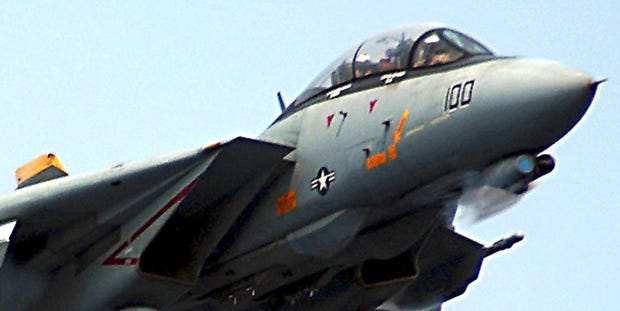
The F-14 Tomcat did not become a legend by accident. It had the profile of a movie star, the attitude of a street fighter, and the engineering résumé of a Cold War problem-solver with very expensive hobbies. With its twin tails, two-seat cockpit, variable-sweep wings, and unmistakable “don’t mess with the carrier” presence, the Tomcat looked fast even when parked. And when it moved, it made every aviation fan suddenly understand why people use words like iconic, thunderous, and yes, badass.
Built by Grumman for the U.S. Navy, the F-14 Tomcat was designed as a carrier-based fighter that could defend aircraft carrier groups at long range, operate in challenging weather, and adapt to different mission demands. It first flew in 1970, entered Navy service in the 1970s, became a cultural rocket ship after Top Gun in 1986, and retired from U.S. Navy service in 2006. Yet nearly two decades after its American farewell, the Tomcat still refuses to leave the public imagination. Some aircraft retire. The F-14 lounges in aviator sunglasses and lets history admire it.
The Birth of the F-14 Tomcat: A Fighter Built for a Serious Job
The Tomcat came from a very specific Cold War need. The U.S. Navy wanted a fighter that could protect carrier battle groups from long-range threats while also being capable enough to fight other aircraft. Earlier plans for the F-111B did not satisfy the Navy’s carrier requirements, so Grumman stepped in with a new design that became the F-14. The result was not a small, polite airplane. It was a big, powerful, two-seat fighter created to see far, fly fast, and operate from the demanding environment of an aircraft carrier.
That last part matters. Carrier aircraft are not just regular airplanes with dramatic parking spots. They must launch from a short deck, survive arrested landings, fold or fit into tight spaces, and endure salt air, hard impacts, and constant maintenance pressure. The F-14 was built for that world. Its landing gear looked rugged because it had to be. Its wings moved because the mission demanded flexibility. Its cockpit had two crew members because flying, navigating, scanning, and managing complex systems at high speed is not exactly a relaxing Sunday drive.
Why the Variable-Sweep Wings Made the Tomcat Special
The F-14’s most famous engineering feature was its variable-sweep wing. At lower speeds, the wings extended outward to provide lift and control, especially useful during takeoff and landing. At higher speeds, they swept back to reduce drag and help the aircraft perform efficiently in supersonic flight. In simple terms, the Tomcat could change its shape depending on what the moment required. That is the aviation equivalent of wearing running shoes that turn into mountain boots and then into roller skates.
This design gave the F-14 a visual drama that few aircraft can match. Watching the wings sweep back makes the jet look alive, almost predatory. But it was not just for show. The system helped the Tomcat balance carrier approach handling with high-speed performance. That combination was one reason the aircraft could be both a fleet-defense interceptor and a capable air-superiority fighter. It was large, but not clumsy; powerful, but not one-dimensional.
F-14 Tomcat Specs: The Numbers Behind the Legend
The F-14’s specifications help explain why it earned such a fierce reputation. Different variants had different engines and upgrades, but the broad Tomcat formula stayed recognizable: two crew members, two engines, twin tails, variable-sweep wings, and a large airframe built for carrier operations.
Key F-14 Tomcat specifications
- Manufacturer: Grumman Aircraft Corporation
- Role: Carrier-based fighter, fleet-defense aircraft, air-superiority fighter, later adapted for strike and reconnaissance missions
- Crew: Two pilot and Radar Intercept Officer, often called the RIO
- Length: About 62 feet 7–9 inches, depending on variant reference
- Height: About 16 feet
- Wingspan: About 64 feet with wings extended; much narrower when swept
- Engines: Twin turbofan engines, originally Pratt & Whitney TF30s in early F-14A models, later General Electric F110s in improved versions
- Speed: Capable of exceeding Mach 2 at altitude
- U.S. Navy retirement: 2006
Specs alone never tell the full story, but they do show the Tomcat’s personality. It was not designed to be tiny, cheap, or invisible. It was designed to carry powerful sensors, travel fast, manage long-range threats, and defend naval aviation assets over wide areas. The F-14 was the bouncer at the carrier’s front door, except the bouncer could fly faster than sound and had better hair.
The Pilot and RIO: A Two-Person Flying Brain
One of the most interesting parts of the F-14 Tomcat was its two-seat layout. Up front sat the pilot, responsible for flying the aircraft. Behind the pilot sat the Radar Intercept Officer, who managed radar, navigation support, communications, and mission systems. Popular culture made the RIO famous through Goose in Top Gun, but the real job was more than witty banter and looking worried during inverted moments.
The RIO helped transform the Tomcat from a fast machine into a coordinated weapons and sensor platform. The F-14 carried advanced radar for its time and was designed to monitor large areas around a carrier group. This division of labor mattered because the aircraft’s mission environment could be complicated: fast speeds, multiple contacts, changing weather, radio traffic, and the physical demands of carrier aviation. A good Tomcat crew was not two people sitting in one aircraft; it was one team operating a very expensive flying chessboard.
The Radar, Avionics, and Hidden Computer Story
The Tomcat’s reputation often centers on speed and style, but its brain deserves equal respect. The aircraft used advanced avionics for its era, including systems that helped manage flight data and wing sweep. One fascinating chapter is the Central Air Data Computer, which calculated important flight information and helped control the aircraft’s automatic wing movement. Its development is often discussed in the history of early microprocessor technology, making the F-14 not only an aviation icon but also an underappreciated computing milestone.
That is part of what makes the Tomcat so fascinating. It was not merely a loud jet with a sharp silhouette. It was a machine full of advanced thinking: aerodynamics, radar, carrier engineering, cockpit teamwork, and electronics all packed into one dramatic airframe. The result was a fighter that looked analog and muscular from the outside, yet depended on sophisticated systems underneath. Basically, it was a leather jacket with a computer science degree.
From Fleet Defender to Multi-Mission Workhorse
The F-14 began life primarily as a fleet-defense fighter, but over time it took on additional roles. Later in its career, especially with upgraded versions, the Tomcat became valuable for precision strike and reconnaissance missions. This evolution helped keep the aircraft relevant even as technology and military needs changed. The nickname “Bombcat” emerged as the F-14 gained air-to-ground capability, proving that the big fighter could do more than patrol the sky looking intimidating.
This adaptability is one reason the Tomcat remained important for more than three decades. Aircraft that survive that long usually do so because they can evolve. The F-14’s original mission was shaped by Cold War naval defense, but its later service included operations over Iraq, Afghanistan, and other regions where reconnaissance and strike support mattered. By the end of its U.S. Navy career, the Tomcat had become both a symbol of old-school fighter glamour and a practical combat aircraft that continued to serve while newer jets arrived.
Top Gun and the F-14: When a Fighter Became a Movie Star
No discussion of the F-14 Tomcat can ignore Top Gun. The 1986 film did not invent the Tomcat’s cool factor, but it packaged it for the entire planet. The movie gave audiences roaring carrier launches, sunlit flight decks, helmeted pilots, dramatic training scenes, and enough 1980s energy to power a small neon city. The F-14 became the face of cinematic naval aviation.
In the movie, the Tomcat looked like the perfect aircraft for Maverick: fast, bold, slightly dangerous, and allergic to being boring. But its role in Top Gun was not just visual decoration. The film used real Navy cooperation, real aircraft imagery, and the real aura of naval aviation to create something audiences had not seen in quite the same way before. The F-14’s twin-tail shape became instantly recognizable, even to people who could not tell a stabilizer from a sandwich toaster.
The film also boosted public awareness of TOPGUN, the Navy Fighter Weapons School. The real school was established in 1969 to improve fighter tactics and training after lessons from Vietnam. By the time the movie arrived, TOPGUN already had serious military credibility. Hollywood simply added dramatic lighting, volleyball, and Kenny Loggins. The Tomcat became the perfect bridge between real aviation skill and blockbuster mythmaking.
Why the F-14 Still Looks Cooler Than Almost Everything
Some aircraft age into history. The F-14 aged into legend. Its appearance is a major reason. The long nose, broad shoulders, shoulder-mounted wings, twin vertical tails, and wide engine spacing gave it a unique silhouette. When parked on a carrier deck with wings overswept, it looked compact and muscular. In flight, with wings spread or swept, it looked cinematic from nearly every angle.
There is also something emotionally satisfying about visible mechanics. Modern aircraft can be incredibly advanced, but stealth shaping often makes them look smooth, secretive, and sealed. The Tomcat shows its drama. The wings move. The landing gear is beefy. The cockpit is long. The engines sit apart like they are having an argument. You can see the design solving problems in real time, and that makes the aircraft feel understandable even when the technology is complex.
Combat Reputation Without the Cartoon Myth
The F-14’s real-world service included tense Cold War intercepts, combat air patrols, reconnaissance, and later strike missions. It made headlines during encounters involving Libyan aircraft in the 1980s and remained active in U.S. naval operations until the mid-2000s. But the smartest way to appreciate the Tomcat is not to turn it into a cartoon superhero. It was a military aircraft built for serious missions, flown and maintained by highly trained people under demanding conditions.
That human side matters. Every dramatic carrier launch required deck crews, maintainers, pilots, RIOs, air traffic controllers, planners, and ship personnel. The Tomcat was never just a machine. It was part of an ecosystem of naval aviation, where precision and teamwork mattered as much as speed. Calling it badass should not mean pretending war is simple or glamorous. It means recognizing a remarkable piece of engineering and the people who operated it professionally.
Why the U.S. Navy Retired the F-14
If the F-14 was so legendary, why did it retire? The answer is not that it suddenly stopped being cool. Coolness, sadly, does not pay maintenance bills. The Tomcat was complex, aging, and expensive to sustain. Its variable-sweep wings, older systems, and large airframe required significant upkeep. The Navy eventually moved to the F/A-18E/F Super Hornet, which offered newer technology, lower maintenance demands, and a more standardized carrier air wing.
The Tomcat’s retirement in 2006 marked the end of an era. For many aviation fans, it felt like watching a classic muscle car leave the road because the world had moved on to smarter, more efficient machines. The Super Hornet made practical sense. The Tomcat kept the poster space on bedroom walls. Both facts can be true.
The F-14 Today: Museum Icon and Pop-Culture Immortal
Today, F-14 Tomcats survive mostly as museum aircraft, gate guards, and preserved icons. Some are displayed at major aviation museums, where visitors can stand close enough to appreciate just how large the aircraft really is. Photos do not fully capture that feeling. The Tomcat is big in a way that makes you understand why people called it the “Big Fighter.” It has presence. It does not sit in a museum; it occupies the room.
The aircraft also continues to live through film, video games, flight simulators, model kits, documentaries, aviation forums, and endless social media posts from people who insist, correctly, that the F-14 had one of the greatest silhouettes ever put into the sky. Top Gun: Maverick revived the public’s affection for the Tomcat by reminding a new generation that this jet still has emotional horsepower. Even when newer aircraft dominate real-world operations, the F-14 remains the fighter people remember with a grin.
Experience Section: What It Feels Like to Encounter the F-14 Tomcat
Seeing an F-14 Tomcat in person is a different experience from reading a spec sheet. On paper, “62 feet long” sounds like a number. In front of you, it becomes a physical statement. The nose stretches forward like it is impatient. The cockpit canopy seems to hold stories. The twin tails rise with that unmistakable Tomcat swagger. Even when the aircraft is silent, roped off, and politely behaving in a museum, it still feels as if someone parked thunder indoors.
For many aviation fans, the first emotional connection starts with Top Gun. You watch the movie as a kid, see the F-14 launch from a carrier, and suddenly ordinary transportation feels deeply underqualified. The Tomcat becomes a symbol of speed, teamwork, risk, confidence, and 1980s movie magic. Later, when you learn the real history, the aircraft becomes more interesting, not less. The movie gave it charisma; the engineering gives it depth.
A museum visit adds another layer. Standing beside a Tomcat, you notice details that film cameras speed past: panel lines, intake size, landing gear thickness, weathered surfaces, and the practical toughness of carrier aircraft design. The jet looks glamorous from a distance, but up close it also looks hardworking. It was built to take abuse, not just applause. That contrast is part of the appeal. The F-14 is both celebrity and laborer, red-carpet icon and flight-deck bruiser.
Model builders and flight-sim fans often experience the Tomcat differently. For them, the aircraft becomes a puzzle of shapes and systems. The wing sweep, the two-seat cockpit, the radar displays, the carrier approach, and the coordination between pilot and RIO create a learning curve that feels rewarding. Even simplified simulations can show why the Tomcat required respect. It was not a point-and-go toy. It demanded planning, attention, and teamwork. That complexity makes mastering even a digital version feel satisfying.
The F-14 also has a sound-and-motion memory, even for people who only experience it through archival footage. Carrier launches show the aircraft crouched, connected, tense, and then suddenly gone. Landings show the opposite: a fast-moving fighter slamming back into the small floating world of the ship. That rhythm gives naval aviation its drama. The Tomcat, with its size and shape, made that drama look especially cinematic.
Another experience tied to the F-14 is nostalgia, but not the lazy kind. It is not just “old things were better.” It is the appreciation of a machine designed for a particular era, with solutions you can see. The variable-sweep wings represent a time when engineers attacked aerodynamic compromise with mechanical boldness. Today, designers often solve problems with software, materials, sensors, and stealth shaping. The Tomcat solved many of its problems with moving metal, raw power, and a second crew member in the back. That is not necessarily better, but it is wonderfully memorable.
For writers, photographers, aviation students, and casual fans, the F-14 offers something rare: it is easy to admire at first glance and still rewarding after serious study. You can enjoy it because it looks cool. You can keep enjoying it because the history, technology, and operational story hold up. That is why the Tomcat remains a favorite long after retirement. It delivers the first thrill quickly, then keeps giving you reasons to respect it.
Conclusion: Why the F-14 Tomcat Is Still Badass
The F-14 Tomcat is badass because it combines form, function, history, and myth better than almost any fighter aircraft. It was built for a real strategic purpose, engineered with variable-sweep wings and advanced systems, operated by two-person crews, adapted across decades, and immortalized by Top Gun. It could be technical, cinematic, intimidating, and strangely elegant all at once.
Its retirement did not shrink its reputation. If anything, leaving active U.S. Navy service made the Tomcat feel even more legendary. Modern aircraft may outperform it in many practical ways, but few can match its cultural footprint. The F-14 remains the jet people recognize, quote, build as a model, visit in museums, and argue about online with the emotional intensity normally reserved for sports teams and pizza toppings.
So why is the F-14 Tomcat a badass plane? Because it was more than fast. It was distinctive. More than famous. It was functional. More than a movie star. It was a serious naval aircraft that happened to look like it had been designed by engineers who secretly understood movie posters. The Tomcat did its job, stole scenes, made history, and left behind a silhouette that still makes aviation fans stop scrolling.