Note: This article is fully original and written in standard American English, based on synthesized child-development research, parenting guidance, and real-world family experiences.
Some parenting debates are complicated. Screen time? Complicated. Bedtime? Practically a hostage negotiation. But whether your son should be allowed to play with dolls? That one is much simpler: yes, let the kid play.
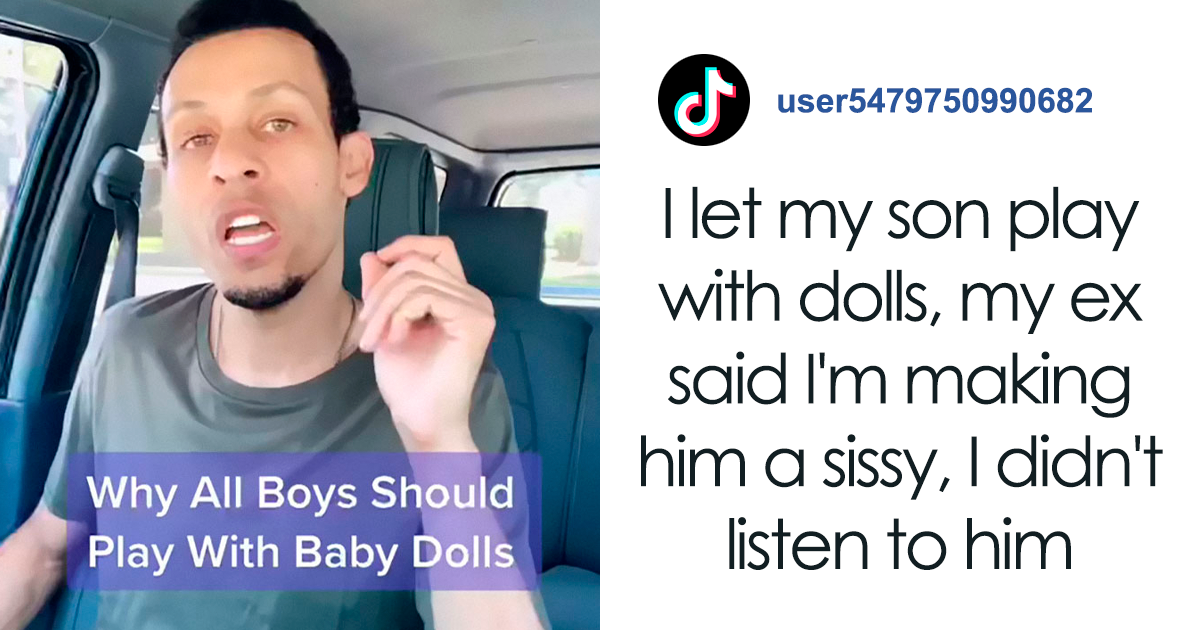
The viral idea behind “Guy perfectly sums up why you should let your son play with dolls” hits a nerve because it challenges one of the silliest rules adults invented and children never asked for: dolls are “for girls,” while trucks, tools, dinosaurs, and tiny plastic weapons are “for boys.” Conveniently, no toddler has ever read the official Toy Constitution. They just see something interesting and think, “Can I put this in a stroller, feed it imaginary soup, or launch it off the couch?” That is childhood. That is learning. That is also why the dog hides during playtime.
Letting boys play with dolls is not about forcing an agenda. It is about giving children access to a full range of human skills: empathy, nurturing, communication, imagination, responsibility, and emotional confidence. A doll is not a threat to masculinity. It is a small plastic or fabric training partner for being a decent human being. And frankly, society could use more of those.
Why Boys Playing With Dolls Makes So Much Sense
When a boy rocks a baby doll, changes its clothes, pretends to feed it, or tucks it into a blanket, he is not “acting like a girl.” He is practicing care. He is copying what he sees adults do. He is learning that smaller, more vulnerable people need gentleness. That is not feminine. That is human.
Child-development experts have long emphasized that play is how children rehearse real life. The American Academy of Pediatrics has described play as important for social bonds, emotional regulation, planning, problem-solving, and healthy brain development. Zero to Three, NAEYC, PBS Parents, Harvard child-development resources, Mayo Clinic guidance, and other reputable parenting and education organizations consistently point to pretend play as a powerful way children build language, imagination, cooperation, and emotional understanding.
In plain parent language: kids learn by pretending. A child who pretends a doll is hungry is practicing observation. A child who says, “Don’t cry, baby,” is experimenting with empathy. A child who puts a doll to bed is processing routine, care, and responsibility. None of these skills come with a pink-only label.
The Big Myth: “Dolls Will Make Boys Less Masculine”
Let us gently place this myth in the recycling bin, preferably next to the broken crayons and mystery Lego piece.
Playing with dolls does not determine a child’s gender identity, sexuality, future hobbies, career, or adult personality. A boy can play with dolls and still love baseball, dirt, superheroes, dump trucks, reptiles, or yelling “watch this!” five seconds before disaster. Children are complex. Their interests are not fragile glass ornaments that shatter because they held a baby doll.
What doll play can do is broaden a boy’s emotional toolkit. If a child is only handed toys that encourage fighting, competition, smashing, racing, or “winning,” he gets a limited menu of play scripts. Those toys can be wonderful tooblocks, trucks, sports gear, and action figures all have developmental value. The issue is not that boys should stop playing with traditionally “boy” toys. The issue is that they should not be blocked from nurturing toys just because adults panic at the sight of a stroller in the wrong aisle.
Doll Play Builds Empathy Without a Lecture
Parents love teaching empathy. Children love ignoring lectures. That is where play saves the day.
When a boy plays with a doll, he naturally steps into caregiving scenes. He may pretend the doll is tired, scared, hungry, sick, excited, or upset. These little stories help children practice perspective-taking: “What does this baby need?” “Why is this character crying?” “How can I help?” That is empathy in motion.
Modern research on doll play has also found that children often use more language about thoughts, feelings, and needs when playing with dolls compared with some forms of screen-based play. Researchers have connected doll play with social processing, emotional language, and opportunities to rehearse real-world interactions. You do not have to turn your living room into a laboratory to see it. Just listen when a child says, “Baby is sad because he misses Mommy,” and then gives the doll a cracker. It may be imaginary caregiving, but the emotional work is real.
It Helps Boys Practice Future Fatherhood and Caregiving
One of the best arguments for letting boys play with dolls is beautifully obvious: many boys grow up to become fathers, uncles, teachers, doctors, nurses, caregivers, coaches, older brothers, neighbors, and friends. Why would we train girls from toddlerhood to nurture babies, then act shocked when grown men treat childcare like an optional side quest?
A boy who feeds a doll with a tiny bottle is learning that feeding babies is normal. A boy who pushes a doll stroller is learning that caring for children is normal. A boy who changes a doll’s outfit, buckles it into a pretend car seat, or says, “Be gentle,” is learning that protection and tenderness can belong together.
That matters. Caregiving should not be coded as a girls-only responsibility. If we want boys to become emotionally available fathers and capable partners, we cannot start by snatching away the toy that lets them practice being gentle.
Dolls Support Language and Storytelling Skills
Doll play is also fantastic for language development. A doll gives a child a character, and a character invites a story. Suddenly your son is narrating a full soap opera starring Baby Max, Dinosaur Doctor, and a stuffed giraffe who “needs a snack because he had a big meeting.” Is it strange? Yes. Is it developmentally rich? Also yes.
Through pretend play, children practice words for actions, feelings, routines, relationships, and problem-solving. They may say, “The baby is sleepy,” “She needs medicine,” “He wants his dad,” or “Don’t worry, I’m here.” These phrases help children connect words with emotions and social situations.
Scholastic, Child Mind Institute, PBS, and early-childhood education organizations all emphasize that pretend play helps children explore roles, communicate ideas, regulate feelings, and make sense of the world. A doll is basically a tiny silent coworker in your child’s language-development department. It does not interrupt, complain, or steal office snacks. Very professional.
Fine Motor Skills Get a Workout Too
Not every benefit is emotional. Doll play can also strengthen fine motor skills. Dressing and undressing dolls, fastening snaps, brushing hair, wrapping blankets, using pretend spoons, or placing tiny shoes on tiny feet can help children practice coordination and hand control.
Any parent who has tried to dress a doll knows the task can be more difficult than assembling furniture with instructions written by a raccoon. But that challenge is exactly why it can be useful. Small movements build patience, persistence, and coordination. Children get to practice practical life skills in a playful setting, without the pressure of real socks, real buttons, or a real baby who has suddenly decided to become a starfish.
Gender-Neutral Toy Choices Give Kids More Skills
The strongest toy box is not pink or blue. It is varied.
Blocks build spatial reasoning. Art supplies encourage creativity. Balls support coordination. Costumes spark imagination. Puzzles encourage problem-solving. Dolls support caregiving, empathy, and social storytelling. Toy kitchens help kids imitate household routines. Trucks teach cause and effect, movement, and construction themes. None of these skills belong to one gender.
NAEYC has highlighted research showing that strongly gender-typed toys can limit the kinds of skills children are encouraged to practice. When girls are pushed only toward appearance and nurturing toys, they may miss out on rough-and-tumble building, engineering, and physical confidence. When boys are pushed only toward aggressive or competitive toys, they may miss out on nurturing, emotional expression, and caregiving scripts.
A balanced toy box says, “You are allowed to be a whole person.” That is a much better message than, “Please consult the color-coded aisle before developing a personality.”
What to Say When Someone Makes a Comment
Sooner or later, someone may say, “Why is he playing with a doll?” Sometimes it is a relative. Sometimes it is another parent. Sometimes it is a stranger in a store who apparently has been appointed Toy Police Chief by absolutely no one.
You do not need a dramatic speech. Try one of these calm responses:
- “He likes caring for it. I think that is sweet.”
- “Dolls help kids practice empathy and pretend play.”
- “We do not divide toys by gender in our house.”
- “He can play with trucks, dolls, blocks, or dinosaurs. It is all learning.”
- “I am raising a kind kid, not a stereotype.”
The goal is not to win an argument. The goal is to protect your child’s freedom to explore without shame. Children are listening, even when they look busy putting a toy spoon in the air vent.
How Parents Can Encourage Healthy Doll Play
You do not need to make doll play a formal lesson. In fact, please do not turn it into a six-week empathy curriculum with laminated worksheets. Just make dolls available and let your child lead.
1. Offer dolls without making a big announcement
Place dolls alongside other toys. Do not present them as a political statement or emotional milestone. They are toys. Let them be toys.
2. Join the play when invited
If your son says the baby is sick, ask, “What do you think would help?” If he says the doll is crying, ask, “How can we comfort him?” These simple questions build emotional vocabulary without sounding like a parenting podcast with a juice box.
3. Include diverse dolls
Dolls with different skin tones, body types, abilities, and family roles can help children see care as something that includes many kinds of people. Representation matters because children notice who gets included in their imaginary worlds.
4. Avoid teasing
Even gentle teasing can teach shame. “Is that your girlfriend?” or “Are you being Mommy?” may sound harmless to adults, but it can make children feel embarrassed. Try: “You are taking good care of the baby.” Simple. Warm. No weird adult baggage.
5. Let the play get silly
Your son may feed the doll soup, then put it in a dump truck, then send it to outer space with a dinosaur doctor. Good. That is imagination doing push-ups.
Why This Topic Gets Such a Strong Reaction
People react strongly to boys playing with dolls because toys carry cultural meaning. Dolls have been marketed as nurturing toys for girls for generations, while boys have often been nudged toward action, speed, construction, and battle. Those patterns can feel “natural” simply because they are familiar.
But familiar does not always mean beneficial. Children are not born embarrassed by dolls. Adults teach embarrassment. Adults also teach acceptance. That means parents have enormous power to either shrink or expand a child’s sense of possibility.
When a father proudly supports his son’s interest in dolls, it resonates because it flips the old script. Instead of saying, “Boys do not do that,” he says, “My son is allowed to be caring.” That is not a small thing. For many families, it is a quiet revolution in the toy aisle.
The Real Question Is Not “Why Dolls?”
The real question is: why not dolls?
If a doll helps a boy become more patient, why not? If it gives him a way to process becoming a big brother, why not? If it helps him practice kindness, why not? If it makes him happy for twenty peaceful minutes while you drink coffee that is only mildly cold, why on earth would anyone interfere?
Childhood is short. The world will give boys plenty of messages telling them to toughen up, hide feelings, and avoid anything labeled soft. Home can offer a better message: strength and tenderness can live in the same person.
Conclusion: Let Him Play, Let Him Care, Let Him Grow
Letting your son play with dolls is not radical. It is reasonable. It gives him room to practice empathy, language, imagination, responsibility, and care. It tells him that nurturing is not embarrassing. It tells him that love is not limited by gender. It tells him that he can be strong enough to be gentle.
A doll will not decide who your son becomes. But your reaction to his interests can shape how safe he feels becoming himself. So if he reaches for the baby doll, the mermaid doll, the superhero, the truck, or all four at once, let him play. Childhood is not a gender performance. It is a laboratory for becoming human.
Experience-Based Reflections: What Parents Often Notice When Boys Play With Dolls
Many parents who allow their sons to play with dolls describe the same kind of surprise: the play starts small, then slowly reveals something meaningful. At first, a little boy may simply carry the doll around by one arm, which is not exactly award-winning infant care. Then he begins copying what he has seen. He gives the doll a blanket. He pats its back. He says, “Shhh, baby sleeping.” He may put the doll in a toy truck and drive it to the “doctor,” because toddlers believe healthcare should include monster wheels. Still, inside that goofy scene is a child practicing care.
One common experience happens when a new baby joins the family. A boy who has his own doll can imitate diaper changes, feeding, rocking, and bedtime routines while parents care for the real baby. Instead of only being told, “Be careful” and “Not now,” he gets a role. He can be a helper. He can change his doll while a parent changes the baby. He can burp his doll while the baby gets burped. This kind of parallel play can reduce jealousy and help an older sibling feel included instead of replaced.
Another familiar experience shows up in preschool classrooms. Children often drift toward dramatic play areas where dolls, kitchens, doctor kits, costumes, and stuffed animals live together in glorious chaos. When adults do not interfere, boys frequently join in. They cook meals, rescue babies, put animals to bed, or become dads taking children to the store. Teachers often observe that these scenes encourage sharing, negotiation, and emotional language. One child wants to be the doctor. Another wants to be the parent. Someone insists the doll has a fever. Someone else prescribes cookies. Is it medically sound? Not exactly. Is it socially rich? Absolutely.
Parents also notice that doll play can soften rough moments. A child who struggles to name his own feelings may find it easier to talk through a doll. Instead of saying, “I am scared,” he might say, “Baby is scared of the dark.” That gives adults a gentle opening: “What helps Baby feel safe?” The answer may reveal what the child needs too: a night-light, a hug, a song, or permission to be afraid without being teased.
Some families report that relatives were skeptical at first. Grandpa raised an eyebrow. An uncle made a joke. A neighbor had opinions, because apparently opinions are free with every porch. But over time, those same adults sometimes soften when they see the child playing naturally, happily, and creatively. The doll does not replace his other interests. It simply becomes one more tool for storytelling. He can care for a baby doll in the morning, build a block tower after lunch, chase bugs in the yard, and become a pirate astronaut by dinner. Children do not see contradiction there. Adults are the ones who overcomplicate the toy box.
The biggest experience parents describe is pride. Pride in seeing a son comfort a pretend baby. Pride in hearing him use gentle words. Pride in watching him include others in play. Pride in realizing that kindness can be practiced early, casually, and joyfully. A doll may look like a simple toy, but in a child’s hands, it can become a lesson in patience, tenderness, responsibility, and imagination. And if that lesson comes with a doll stroller crashing into the couch at full speed, well, childhood was never meant to be quiet anyway.