A great cordless drill is one of those tools that quietly becomes the hero of the house. One minute it is assembling a bookshelf, the next it is hanging curtain rods, fixing a gate, drilling pilot holes, or rescuing you from the mysterious flat-pack furniture manual that appears to have been translated by a tired robot. The best cordless drills make these jobs faster, cleaner, and far less likely to end with a stripped screw and a dramatic sigh.
Bob Vila’s hands-on cordless drill testing is useful because it does not treat every drill like it belongs on the same job site. A compact 12-volt drill can be perfect for furniture, cabinets, shelves, and light repairs, while a heavy-duty 20-volt hammer drill is better suited for lag bolts, masonry anchors, deck framing, and other work that makes a bargain drill wave a tiny white flag. The real winner depends on what you plan to drill, how often you drill, and whether your wrist appreciates mercy.
This guide breaks down the top cordless drills tested by Bob Vila, explains what makes each model stand out, and adds practical buying advice for homeowners, DIYers, remodelers, and weekend warriors who want power without buying a tool that feels like a brick with a trigger.
Why Cordless Drill Testing Matters
Spec sheets are helpful, but they do not tell the whole story. Torque numbers, RPM ratings, voltage, and battery size matter, but the best cordless drill is also about balance, grip comfort, trigger control, chuck strength, battery life, and how confidently the tool handles real materials. A drill that looks impressive online may feel awkward overhead. Another might be lightweight and comfortable but struggle when asked to drive long screws into dense lumber.
Bob Vila’s testing focused on power, torque, quality, ease of use, and overall performance across different drilling and driving tasks. That kind of hands-on comparison is valuable because cordless drills are not just about raw muscle. A well-designed drill should feel controlled when starting a screw, steady when drilling through metal, and secure when the bit bites into tough material. In other words, it should help you finish the jobnot audition for a blooper reel.
Top Picks: Best Cordless Drills Tested by Bob Vila
Best Overall: Bosch GSB18V-65B12 18V 1/2-Inch Hammer Drill/Driver
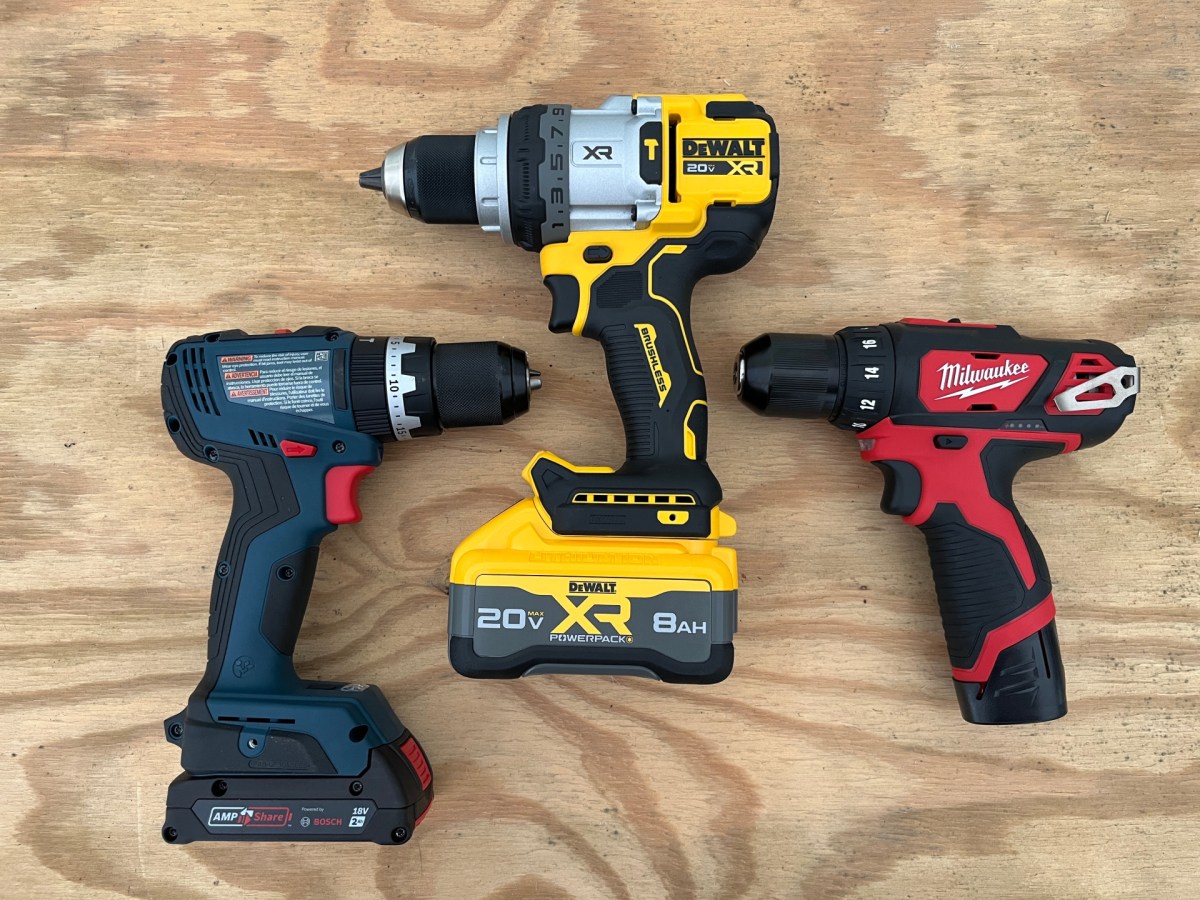
The Bosch GSB18V-65B12 earns the top spot because it delivers the rare combination most DIYers and serious homeowners want: compact size, comfortable handling, strong torque, and enough versatility for wood, metal, brick, and light concrete work. It is not simply powerful; it is manageable. That matters when you are working in a cabinet, under a sink, between studs, or anywhere else your arms start questioning your life choices.
With an 18-volt platform, a 1/2-inch chuck, hammer mode, and a brushless motor, this Bosch drill is built for a wide range of household and improvement projects. It is light enough for extended use but strong enough for demanding jobs such as drilling into masonry or driving heavy fasteners. For many users, this is the sweet spot: more capable than a basic homeowner drill, but not so bulky that every small task feels like bringing a bulldozer to plant tulips.
Best for: DIYers who want one reliable cordless drill for almost everything around the house.
Best Bang for the Buck: Black+Decker LDX120C 20V MAX Cordless Drill/Driver
The Black+Decker LDX120C is the kind of drill that makes sense for apartment dwellers, first-time homeowners, casual DIYers, and anyone who mainly needs to hang shelves, assemble furniture, mount curtain hardware, and tackle light repairs. It is affordable, easy to use, and not intimidating. That last part matters more than tool snobs admit.
This drill is not designed to bully concrete or run all day on a job site. Instead, it is a practical everyday helper with a 3/8-inch chuck, variable speed, clutch settings, and enough power for common household jobs. If your project list mostly includes drywall anchors, softwood, small pilot holes, and screws that are not the size of railroad spikes, this model offers strong value.
Best for: Budget-conscious buyers who need a dependable cordless drill for light-duty home projects.
Best Heavy-Duty: DeWalt DCD1007WW1 20V MAX XR 1/2-Inch Hammer Drill
The DeWalt DCD1007WW1 is built for users who ask more from a cordless drill than “Can you hang this picture?” This is the drill for demanding work: structural screws, dense lumber, masonry drilling, deck repairs, framing, and repeated high-torque tasks. It is bigger and heavier than basic drills, but that extra size brings serious muscle.
DeWalt’s XR line is known for professional-grade performance, and this hammer drill fits that reputation. It offers a 1/2-inch chuck, brushless power, multiple speed settings, and the kind of output that makes it better suited for experienced users. If you already own DeWalt 20V MAX batteries, it becomes even more attractive because staying in one battery platform saves money and charger clutter.
Best for: Remodelers, serious DIYers, and users who need maximum cordless drilling power.
Best Light-Duty: Milwaukee 2407-22 M12 12V 3/8-Inch Drill/Driver
Not every job needs an 18-volt or 20-volt beast. Sometimes the best cordless drill is the one you actually want to pick up for quick tasks. The Milwaukee 2407-22 M12 drill/driver is compact, light, and easy to maneuver, especially in tight spaces or overhead positions. It is a strong choice for cabinet work, light repairs, hardware installation, and everyday fastening.
The 12-volt class is often underrated. While it will not replace a heavy-duty hammer drill for concrete and large fasteners, it can handle a surprising amount of normal household work. Its smaller size gives it an advantage in control and comfort. For many homeowners, a compact 12-volt drill is the tool that gets used most often because it is not exhausting to hold.
Best for: Light-duty repairs, cabinet work, assembly jobs, and users who value compact handling.
Best for Home Use: Ryobi One+ PCL206K2 18V 1/2-Inch Drill/Driver
Ryobi has built a loyal following among homeowners for one very good reason: the One+ battery platform is huge. If you own one Ryobi 18V battery, you can power drills, saws, sanders, inflators, lights, yard tools, and enough weekend gadgets to make your garage feel like a friendly green spaceship.
The Ryobi PCL206K2 is a strong home-use pick because it blends respectable speed and torque with approachable pricing. It includes a 1/2-inch chuck, multiple clutch settings, and enough power for most household projects. It is not the fanciest drill on the shelf, but it is practical, affordable, and backed by a battery ecosystem that makes sense for DIYers who plan to add more cordless tools over time.
Best for: Homeowners who want good performance, fair pricing, and a broad battery platform.
Best Right-Angle Drill: Makita XAD05T 18V LXT 1/2-Inch Right Angle Drill
The Makita XAD05T is a specialty tool, but when you need it, nothing else feels quite right. A right-angle drill is designed for tight spaces where a standard drill cannot fit, such as between joists, inside cabinets, around plumbing, or in awkward framing situations. It is not the first drill most homeowners should buy, but it can be a lifesaver for remodelers and advanced DIYers.
This Makita model belongs to the 18V LXT platform, one of the most respected cordless systems in the power-tool world. It is especially useful for drilling larger holes in confined spaces. The tradeoff is weight and size; right-angle drills are not featherweight tools. But for electricians, plumbers, carpenters, and renovators, that awkward-looking shape is exactly the point.
Best for: Tight-space drilling, remodeling, plumbing, electrical work, and advanced DIY projects.
Most Versatile: Bosch GSR12V-300FCB22 12V MAX Chameleon Drill/Driver
The Bosch Chameleon is the Swiss Army knife of cordless drills. Its interchangeable attachments allow it to work as a standard drill/driver, offset driver, right-angle driver, and more. That makes it extremely useful for cabinetry, furniture assembly, finish work, and tight-space fastening where a regular drill body gets in the way.
Because it is a 12-volt tool, it is not intended for heavy masonry or large structural fasteners. But for precision work, it shines. The ability to change attachments gives it a level of flexibility that ordinary drills cannot match. If your projects involve awkward angles, small spaces, and delicate materials, the Chameleon name is well earned.
Best for: Precision work, furniture assembly, cabinet installation, and tight-angle fastening.
How to Choose the Best Cordless Drill
Voltage: 12V vs. 18V vs. 20V MAX
Voltage is one of the first numbers shoppers notice, but bigger is not always better. A 12-volt drill is lighter, smaller, and easier to control. It is excellent for light repairs, hardware installation, furniture assembly, and pilot holes. An 18-volt or 20V MAX drill offers more power for larger bits, tougher materials, and longer screws.
One important detail: 18V and 20V MAX tools are often closer than they appear. Many brands use different labeling conventions for nominal and maximum battery voltage. Instead of shopping by voltage alone, compare the drill’s torque, speed range, battery amp-hours, chuck size, and real-world performance.
Brushless Motors Are Worth Considering
Brushless drills are generally more efficient than brushed models. They can run cooler, use battery power more effectively, and often last longer under regular use. If you only need a drill a few times a year, a brushed budget model may be perfectly fine. But if you drill often or want better performance, brushless is usually worth the upgrade.
Chuck Size: 3/8-Inch or 1/2-Inch?
A 3/8-inch chuck is common on compact and light-duty drills. It works well for everyday bits and driver accessories. A 1/2-inch chuck accepts larger bits and is better for heavier drilling. Most serious 18V and 20V drills use 1/2-inch chucks because they are more versatile for demanding work.
Clutch Settings Help Prevent Mistakes
The clutch controls how much torque the drill applies when driving screws. Lower settings help prevent overdriving screws into softwood, drywall, or cabinet material. Higher settings deliver more power for tougher fasteners. If you have ever buried a screw too deep and stared at it like it personally betrayed you, the clutch is your friend.
Battery Platform Matters More Than You Think
Buying a cordless drill often means choosing a battery family. DeWalt, Milwaukee, Bosch, Makita, Ryobi, and other brands all offer ecosystems of compatible tools. If you already own batteries from one brand, staying in that platform can save money. If you are starting fresh, think about future tools you might buy: circular saw, impact driver, sander, shop light, leaf blower, or oscillating multi-tool.
Which Cordless Drill Is Best for You?
If you want one well-rounded drill for most household and DIY projects, the Bosch GSB18V-65B12 is the strongest all-around pick from Bob Vila’s testing. It balances power, comfort, compactness, and versatility in a way that fits most users.
If price is the priority, the Black+Decker LDX120C is a smart entry-level option for light home tasks. If you need serious muscle, the DeWalt DCD1007WW1 is the heavy-duty choice. If you prefer a compact drill for frequent small jobs, the Milwaukee M12 is easy to love. For homeowners building a cordless tool collection, the Ryobi One+ model makes excellent sense. And for specialized tight-space work, the Makita right-angle drill or Bosch Chameleon can save the day.
Common Cordless Drill Mistakes to Avoid
Buying Too Much Drill
A massive hammer drill looks impressive, but it may be overkill for hanging shelves and assembling furniture. Heavy drills cause fatigue faster, especially overhead. Buy enough power for your projects, not for your ego.
Ignoring Battery Amp-Hours
A higher amp-hour battery usually provides longer runtime, but it also adds weight. A compact 2.0Ah battery is great for quick household jobs. A 5.0Ah or larger battery is better for long drilling sessions, deck projects, or repeated heavy fastening.
Using the Wrong Bit
Even the best cordless drill performs poorly with dull or incorrect bits. Use wood bits for wood, masonry bits for brick or concrete, metal bits for steel, and driver bits that properly match the screw head. A premium drill with a cheap worn-out bit is like putting bicycle tires on a pickup truck.
Forgetting Pilot Holes
Pilot holes reduce splitting, improve screw accuracy, and make driving easier. They are especially important near board edges, in hardwood, and when using large screws. Your drill will work better, your project will look cleaner, and your lumber will be less dramatic.
Real-World Experience: What It Feels Like to Use a Good Cordless Drill
After using different cordless drills for home repairs, furniture projects, and light remodeling tasks, one lesson becomes obvious: comfort matters almost as much as power. A drill can have impressive torque, but if it feels nose-heavy or awkward, you notice it quickly. This is especially true when installing curtain rods, hanging cabinets, or working above shoulder height. A balanced drill lets you focus on the screw or hole instead of wrestling the tool like it owes you money.
For basic home use, a compact drill often gets more action than the biggest one in the toolbox. When tightening hinges, installing drawer pulls, mounting shelves, or assembling a storage rack, a lightweight drill is simply easier to grab. It is also less likely to overdrive screws in delicate material. That is why 12-volt drills remain popular even though larger 18V and 20V models dominate the power conversation. Sometimes finesse beats horsepower.
That said, there are moments when a heavy-duty drill earns its keep. Driving long structural screws into pressure-treated lumber is not the time to rely on a tiny drill that was happiest assembling a nightstand. A strong 18V or 20V hammer drill keeps speed under load, handles larger bits, and feels less strained when the material gets stubborn. If you build decks, repair fences, install anchors, or drill into masonry, the extra power is not a luxuryit is the difference between progress and muttering in the garage.
Battery choice also changes the experience. A small battery keeps the drill nimble, which is great for quick tasks. A larger battery improves runtime but can make the tool feel bottom-heavy. For most homeowners, owning two batteries is more useful than owning one giant battery. Keep one charging while the other works, and you avoid the classic DIY pause where the project stops because the battery died at exactly the worst possible moment.
The clutch is another feature that quietly separates clean work from chaos. On soft pine, drywall anchors, cabinet screws, and small hardware, lower clutch settings prevent damage. On tougher jobs, higher settings provide the power needed to sink fasteners properly. Learning to adjust the clutch takes a little practice, but it pays off quickly. Your screws sit cleaner, your material survives, and you look like someone who knows what they are doingeven if you just watched three videos and hoped for the best.
One more practical observation: LED lights are not a gimmick. When working inside closets, under sinks, behind appliances, or in poorly lit corners, a built-in light makes bit placement easier. It will not replace a work light, but it helps more than expected. The same goes for belt clips, battery gauges, and good cases. Small conveniences make a drill easier to use, store, and trust.
In the end, the best cordless drill is the one that matches your real projects. If you mostly handle light repairs, choose comfort and control. If you tackle framing, masonry, and large fasteners, choose torque and durability. If you are building a whole cordless tool collection, choose the battery platform carefully. A drill is not just a tool purchase; it is often the first step into an ecosystem. Choose wisely, and future you will be very pleasedpossibly even smug, but in a charming way.
Final Verdict
The best cordless drill tested by Bob Vila for most users is the Bosch GSB18V-65B12 because it offers the strongest blend of comfort, capability, compact design, and all-around performance. It can handle everyday DIY jobs without feeling oversized, yet it has enough power for tougher drilling and driving tasks.
For tight budgets, the Black+Decker LDX120C is a sensible starter drill. For heavy-duty work, the DeWalt DCD1007WW1 brings serious job-site energy. For small tasks and tight spaces, Milwaukee’s M12 drill is easy to recommend. For homeowners who want value and battery compatibility across many tools, Ryobi One+ remains a practical favorite. The right drill is not always the most expensive oneit is the one that fits your hand, your projects, and your patience level.