Note: This article is written from publicly reported information available as of May 25, 2026. It summarizes the controversy in a balanced, publish-ready style without source links.
Emma Watson has never been the kind of celebrity who treats every public controversy like a red carpet microphone moment. She speaks carefully, chooses her words like someone assembling IKEA furniture without wanting to start a family argument, and often lets long silences do the talking. But when she finally addressed her strained relationship with J.K. Rowling, the internet did what the internet does best: put on a tiny judge wig and held court.
The headline version is dramatic enough: Emma Watson broke her silence on her trans feud with J.K. Rowling, said she could still value the author despite deep disagreement, and some fans were not happy. The longer version is far more complicated. It involves the legacy of Harry Potter, public support for transgender rights, Rowling’s gender-critical views, online backlash, celebrity responsibility, and the tricky question of whether gratitude and criticism can sit at the same table without throwing pumpkin juice at each other.
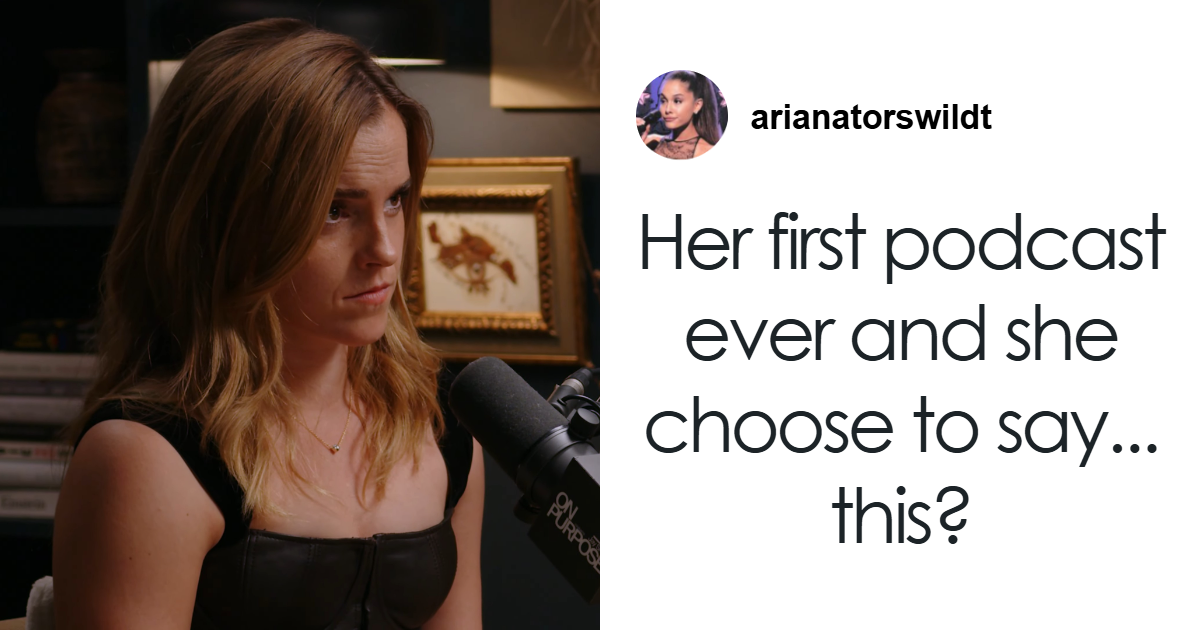
Watson’s comments came during a September 2025 appearance on On Purpose with Jay Shetty. Asked about Rowling, the actor reflected on the emotional complexity of loving parts of her past while strongly disagreeing with views that have caused pain to many trans fans and allies. Watson said there was no world in which she could simply cancel Rowling out of her life. She also emphasized that she remains open to conversation and believes people should not be treated as disposable.
That may sound like a calm, grown-up answer. Unfortunately, the internet is not always a calm, grown-up place. It is more like a group chat with caffeine, receipts, and no designated driver. Some listeners praised Watson for nuance. Others felt her tone was too forgiving toward a figure they believe has done real harm to transgender people. Meanwhile, Rowling responded sharply, making it clear that she was not moved by Watson’s attempt at compassion.
How the Emma Watson and J.K. Rowling Rift Began
To understand why Watson’s comments sparked such a strong reaction, we need to rewind to 2020. Rowling had already been criticized for remarks many readers, activists, and public figures viewed as dismissive of transgender identities. In June of that year, she published a long essay explaining her views on sex and gender. Rowling has framed her position as a defense of women’s sex-based rights and single-sex spaces. Critics, however, have repeatedly described her comments as anti-trans because they see them as undermining the dignity, safety, and recognition of transgender people.
Several Harry Potter actors publicly distanced themselves from Rowling’s position. Daniel Radcliffe wrote in support of trans people through The Trevor Project. Emma Watson also posted a message affirming that trans people deserve to live without being constantly questioned about who they are. Rupert Grint, Eddie Redmayne, Bonnie Wright, Katie Leung, and others also expressed support for the trans community.
For longtime fans, the divide was emotionally messy. Harry Potter had sold itself not just as a fantasy series, but as a moral universe about outsiders, courage, chosen family, and resisting cruelty. So when Rowling’s views became central to public debate, many fans felt as if the staircase at Hogwarts had moved under their feet. The books remained beloved, but the author became a lightning rod.
What Emma Watson Actually Said
Watson did not reverse her support for transgender rights. That detail matters. Her recent comments were not a dramatic “I was wrong” speech, nor were they a public apology to Rowling. Instead, Watson tried to explain how she holds two truths at once: she disagrees with Rowling’s views, and she still values the personal experiences she had with the author during her youth.
Watson spoke about Rowling’s kindness to her when she was young and about the gift of playing Hermione Granger, one of modern literature’s most recognizable female characters. She described feeling upset that a real conversation between them had never happened. She also suggested that public debate often becomes toxic not only because of what people believe, but because of how they speak about one another.
Her most discussed message was simple: people should not be treated as disposable. In Watson’s framing, rejecting someone’s view does not always require erasing every human memory connected to that person. That idea landed beautifully for some people and terribly for others. The same sentence became, depending on the listener, either a mature plea for compassion or an uncomfortable softening of a painful issue.
Why Fans Weren’t Happy
The backlash did not come from one single group with one single argument. Some fans felt Watson’s comments were too gentle toward Rowling, especially given how many transgender readers and viewers say Rowling’s public remarks have made them feel rejected by a world that once comforted them. For those fans, this is not a polite disagreement about tea temperature. It is about identity, rights, safety, and belonging.
Others took issue with the language of “canceling.” To them, the conversation is not about throwing Rowling away as a person, but about accountability. They argued that a wealthy, powerful author is not being erased when people criticize her public statements. Rowling still publishes, speaks, influences debate, and remains attached to major entertainment projects. From that angle, “no one is disposable” sounded like a line that could shift sympathy away from affected communities and toward the celebrity at the center of the backlash.
Some fans also expected Watson, long associated with feminism and social advocacy, to speak more directly about the trans community in that moment. They wanted a firmer restatement of support, not only a meditation on kindness and complicated personal history. In online spaces, nuance often arrives wearing the wrong shoes. It may be thoughtful, but if it fails to step clearly where people expect it to, it gets roasted by lunchtime.
Why Other Fans Defended Watson
Not everyone was angry. Many people defended Watson’s response as emotionally honest. They argued that real relationships are rarely as tidy as hashtags. Watson was a child when she entered the Harry Potter universe. Rowling’s work changed her life, shaped her career, and introduced her to a character that millions of young girls saw as brilliant, brave, and gloriously bookish. It is not surprising that Watson would struggle to compress that history into a simple thumbs-up or thumbs-down.
Supporters also pointed out that Watson has already made her position on trans rights clear. In their view, she should not be required to restage the same statement every time Rowling’s name appears. They saw her interview as an attempt to model disagreement without dehumanization, a rare skill in an era when every controversy becomes a digital dodgeball match.
There is also a generational aspect to the reaction. Younger audiences often expect public figures to take clear moral positions, especially when marginalized communities are involved. Older or more conflict-averse audiences may see Watson’s approach as a healthier alternative to permanent public warfare. Both instincts come from understandable places. One prioritizes protection and accountability. The other prioritizes dialogue and human complexity.
J.K. Rowling’s Response Made the Rift Even Louder
If Watson was hoping for a gentle opening, Rowling did not walk through it with flowers. Rowling responded publicly and sharply, criticizing Watson as privileged and suggesting that she did not understand the consequences of the movement she supports. Rowling also referenced earlier tensions, including Watson’s public remarks and a private note Watson reportedly sent during a period when Rowling said she was receiving threats.
Rowling’s response made the story bigger. Instead of ending as “Emma Watson gives reflective podcast answer,” it became “Rowling rejects Watson’s olive branch.” That shift matters because it hardened the debate. Fans who already felt protective of Watson saw Rowling’s reply as unnecessarily harsh. Rowling’s supporters, meanwhile, saw it as a justified response from someone who believes former cast members used their fame to criticize her unfairly.
The result was not reconciliation. It was another round of public sorting. People chose sides, quoted snippets, posted reactions, and treated a long personal history like a boxing scorecard. Somewhere in the middle, the actual human complexity became easy to miss.
The Bigger Issue: Harry Potter’s Legacy in a Divided Fandom
The Watson-Rowling rift is not just celebrity gossip. It is a case study in what happens when a beloved fictional universe becomes inseparable from a real-world political and cultural dispute. For many fans, Harry Potter was a childhood home. The controversy has made that home feel haunted. The wallpaper is still familiar, but now the floorboards creak in uncomfortable places.
Some fans have separated the art from the artist. They still read the books, watch the movies, and wear house scarves without feeling personally aligned with Rowling’s current views. Others have stepped away from the franchise entirely, arguing that continued support keeps cultural and financial power flowing toward Rowling. A third group lives in the awkward middle: still emotionally attached, still critical, still unsure what to do with the box set on the shelf.
Watson’s comments landed directly in that middle zone. She did not offer a clean answer because there may not be one. She described a relationship shaped by gratitude, hurt, disagreement, and unfinished conversation. That may be emotionally accurate, but it is not always satisfying to audiences who want public clarity.
Celebrity Activism Has a No-Win Problem
One reason this story exploded is that celebrity activism now comes with impossible expectations. Say too little, and people accuse you of cowardice. Say too much, and people accuse you of grandstanding. Say something nuanced, and both sides may accuse you of trying to win a yoga retreat scholarship in the middle of a house fire.
Watson has long been associated with feminist advocacy, including her work with the United Nations and the HeForShe campaign. That history makes her words carry extra weight. People do not hear her as just an actor from a fantasy franchise. They hear her as someone who has publicly built part of her identity around equality and social responsibility.
That is why some fans expected more directness. A celebrity with a history of activism is often judged by a higher standard than one who has never claimed that lane. Whether that is fair depends on whom you ask. But it is undeniably how the modern attention economy works. Once a public figure becomes a symbol, every sentence is treated like a policy document.
What the Controversy Says About Online Forgiveness
The phrase “no one is disposable” sounds kind, but online culture often hears kindness through a courtroom microphone. People immediately ask: Who is being forgiven? Who is being harmed? Who has power? Who is being asked to move on? Those are fair questions, especially when the subject involves a marginalized community.
Forgiveness is not the same as lack of accountability. Compassion is not the same as endorsement. But public conversations often flatten these distinctions. Watson seemed to be speaking about her personal relationship with Rowling. Many fans heard her comments as a public statement about how society should respond to harmful views. That gap between intention and reception is where most celebrity controversies go to build a vacation home.
There is also a difference between private reconciliation and public accountability. Watson can choose to hold gratitude for Rowling. Trans fans can choose to feel hurt by Rowling’s remarks. Critics can choose to continue challenging Rowling’s public influence. These positions may overlap, clash, or coexist. The hard part is admitting that one person’s emotional closure cannot be demanded from everyone else.
Experience Section: What This Story Feels Like for Fans Who Grew Up With Harry Potter
For many readers and viewers, the Emma Watson and J.K. Rowling feud feels personal in a way celebrity arguments usually do not. Nobody expects to care deeply when two famous people disagree over dinner reservations, movie deals, or who got the bigger trailer. But Harry Potter was not just a franchise for a lot of people. It was a childhood language. It taught kids to say “muggle” before they understood taxes, to wait for letters that never arrived, and to believe that bravery could look like friendship, homework, or standing up to the most terrifying adult in the room.
That is why this controversy feels like opening an old photo album and discovering someone has written a difficult footnote under every picture. Fans remember Hermione as the girl who raised her hand, broke rules for the right reasons, and made intelligence look heroic. Emma Watson became attached to that image, not just as an actor, but as a symbol. When she speaks about Rowling now, people hear Hermione, feminism, childhood nostalgia, and real-world trans rights all crashing into one another like a very stressed Quidditch match.
The experience is especially complicated for fans who are transgender, nonbinary, or LGBTQ+. For some, the wizarding world once offered escape from bullying, isolation, or feeling different. Seeing the creator of that world become associated with views they experience as hostile can feel like being locked out of a castle that once felt like home. Watson’s gentle tone may therefore feel painful, even if she intended compassion. When someone has been hurt, hearing others emphasize the humanity of the person they believe caused harm can sound like being asked to make room before they have even been fully heard.
At the same time, other fans understand Watson’s emotional conflict. People can be grateful to someone who changed their life and still disagree with them profoundly. Many ordinary people know this feeling from family dinners, old friendships, teachers, mentors, or relatives whose views have become painful to hear. The Watson-Rowling story is famous, but the emotional pattern is familiar: What do you do when someone who helped shape you later says things you cannot accept?
The most useful lesson may be that public figures do not owe us perfectly simple emotions. Watson’s answer was not a press-release sword swing. It was an attempt to describe grief, gratitude, disagreement, and hope all at once. Fans are allowed to critique it. Trans people and allies are allowed to want stronger language. Rowling is responsible for her own statements. And Watson is allowed to acknowledge that her personal history cannot be edited into a clean moral cartoon.
In the end, the controversy shows how hard it is to grow up with a story after the storyteller becomes part of the conflict. The magic does not vanish for everyone. For some, it changes shape. For others, it becomes impossible to enjoy. And for many, it remains complicated, which is not as catchy as a viral headline, but far more honest.
Conclusion
Emma Watson’s comments about J.K. Rowling did not close the book on their rift. If anything, they added a new chapter with extra margin notes, emotional underlining, and several angry sticky tabs. Watson tried to express that she can disagree with Rowling while still valuing the role Rowling played in her life. Some fans saw grace. Others saw avoidance. Rowling’s response made clear that reconciliation, at least publicly, is nowhere near the platform.
The real story is not simply that fans are unhappy. It is that the Harry Potter generation is still negotiating what to do when a beloved cultural world collides with a deeply personal human rights debate. Watson’s approach asks whether compassion can survive disagreement. Critics ask whether compassion without accountability can become another form of silence. Both questions matter.
And perhaps that is why this feud refuses to disappear. It is not just about Emma Watson, J.K. Rowling, or one podcast interview. It is about nostalgia, identity, power, pain, and the uncomfortable truth that growing up sometimes means realizing the stories that raised us were never as simple as we thought.