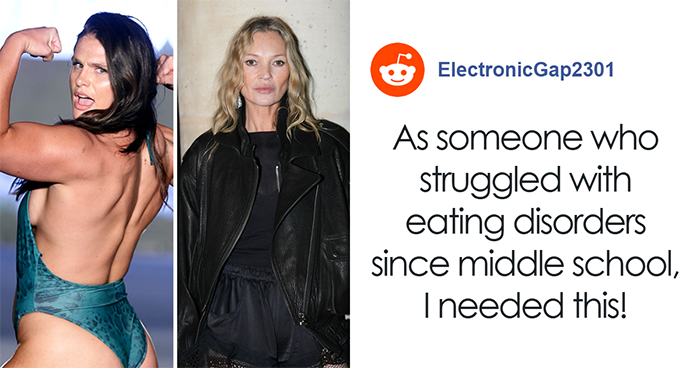
Somewhere in the great, chaotic food court of the internet, a dusty old diet-culture slogan was minding its own businessuntil Ilona Maher walked up,
flexed, and politely (but unmistakably) shoved it into the recycling bin.
You’ve heard the quote. Maybe on a throwback Tumblr graphic. Maybe whispered by the ghost of a 2009 magazine spread. Maybe on TikTokbecause of course
TikTok dug it up like a cursed artifact in an abandoned mall. Kate Moss’ infamous “Nothing tastes as good as skinny feels” has been haunting women’s
brains for years, popping up whenever someone dares to enjoy pasta without performing guilt like it’s a community theater monologue.
Then MaherOlympic rugby star, professional hype-woman for strong bodies, and the internet’s favorite “please stop measuring women like produce”
spokespersonresponded with a line so simple it felt like turning on the lights in a room you didn’t realize was dim: “Uh, y’all tried being strong?”
The crowd? Immediately obsessed.
The Quote That Refuses to Retire
Let’s set the scene. The phrase “Nothing tastes as good as skinny feels” became widely associated with Kate Moss after she mentioned it as a motto in a
2009 fashion interview. It didn’t take long for critics to point out the obvious: the quote isn’t just “a little edgy,” it’s a neat one-liner that can
glamorize restriction and feed the worst parts of diet culture.
Over time, the quote took on a life of its ownshowing up on merch, floating around celebrity quote lists, and echoing through corners of the internet
where thinness gets treated like a personality trait. Years later, Moss publicly expressed regret about the line, which matters, but doesn’t erase the
fact that the phrase has already done laps around the cultural track.
Why This One Line Hits a Nerve
The power of that quote was never about “taste.” It was about trading pleasure for approval. It packaged a complicated, painful set of pressures into a
bumper-sticker sentenceeasy to remember, hard to unlearn.
And lately, that pressure has been feeling extra loud. Between the algorithm’s love affair with transformation content, the rise of “SkinnyTok” trends,
and the broader chatter around weight-loss drugs and “getting back to” old bodies, the culture has been flirting with thinness as a trend again. That’s
the kind of environment where an old quote can suddenly feel newand dangerous.
Enter Ilona Maher: Built Different (Literally)
Ilona Maher isn’t coming at this conversation from a runway. She’s coming from a rugby pitchwhere bodies aren’t decorative, they’re functional. Maher is
known for pairing elite-athlete credibility with the kind of humor that makes hard truths easier to swallow (unlike, say, dry chicken breast and sadness).
She’s also been consistently outspoken about body image. Her content regularly pushes back on the idea that there’s only one “healthy” or “beautiful”
shapeespecially for women, and especially for athletes whose muscle mass makes outdated measurements like BMI a questionable scoreboard.
What Maher Represents to Fans
For a lot of people, Maher is the antidote to a very specific type of online despair: scrolling through “before and after” posts where the “before” is a
perfectly normal body and the “after” is… also a perfectly normal body, but now marketed as morally superior.
Maher’s whole vibe is: your body is not a problem to solve. It’s a vehicle. Treat it like one.
The Moment: “Y’all Tried Being Strong?”
In a viral TikTok posted in mid-July 2025, Maher addressed the quote head-on. She repeats the infamous line, pauses like she’s just tasted it and realized
it’s expired, and then counters with her now-iconic question: “Uh, y’all tried being strong?”
She doesn’t deliver it like a lecture. She delivers it like a friend interrupting your spiral with the truth and a snack. She talks about feeling good,
feeling well-fed, and feeling ready to take on anybodybecause strength is not just a look, it’s a sensation. It’s energy. It’s capability.
And thenbecause she’s Ilona Mahershe seals it with dessert. A quick shoutout to tiramisu that doubles as a cultural reset:
maybe the point of living isn’t to “earn” food; maybe it’s to enjoy it and still feel powerful in your body.
Why It Landed Like a Mic Drop
Maher didn’t just disagree with the quote. She replaced the entire value system behind it.
Skinny isn’t a feeling. It’s a measurement. Strength, on the other hand, is a lived experience.
Her response also works because it’s not pretending everyone has the same body or the same goals. She isn’t saying, “You must look like me.”
She’s saying, “Try valuing what your body can do.”
Fans Are Loving Itand Not Quietly
The reaction was immediate: comments praising her confidence, parents calling her the role model they want their daughters to have, and longtime diet-culture
survivors essentially saying, “Finally, someone said it out loud.”
And it wasn’t just random internet applause. The conversation spilled into broader lifestyle and wellness coverage, with people connecting Maher’s message to
the larger backlash against guilt-based fitness talklike the idea that you have to “work off” food or “earn” dessert.
The Relief of a New Script
A lot of fans weren’t just amusedthey sounded relieved. Because many of us grew up with a whole dictionary of phrases designed to make eating feel like a
negotiation: “Nothing tastes as good as skinny feels,” “a moment on the lips…,” “I’m being bad,” “I’ll make up for it tomorrow.”
Maher’s response offers a different scriptone where the goal isn’t punishment or shrinking, but nourishment and strength. You don’t “make up” for tiramisu.
You live your life, and your body carries you through it.
Strength Over Skinny: The Deeper Point (And the One Caveat)
It’s tempting to frame this as a simple showdownstrong vs. skinny, athlete vs. supermodel, modern body positivity vs. old-school fashion thinness.
But the deeper point is about values: what we reward, what we praise, and what we treat as “success.”
Maher’s message lands because it shifts the reward from appearance to experience. From being looked at to feeling capable.
From restriction to fuel.
Don’t Make “Strong” the New “Skinny”
Here’s the caveat worth stating clearly: “strong” shouldn’t become another beauty requirement with a different outfit.
The goal isn’t swapping one rigid ideal for anothergoing from “be thin” to “be shredded” like it’s just a software update.
Strength can look like lifting heavy. It can also look like walking without pain, carrying groceries without strain, recovering from an illness, setting a
boundary, or simply eating enough to think clearly. The real win is expanding what we allow bodies to be.
Why This Hit in 2025: The Culture Is Noisy Again
Maher’s clapback didn’t go viral in a vacuum. It hit during a moment when “thin” content was surgingweight-loss ads showing up in feeds, “what I eat in a day”
videos turning into stealth restriction, and the sense that the culture was drifting back toward a narrower beauty standard.
Maher has spoken about that pressure directlyabout opening social media and being hit with messaging that suggests thinner is always better, even when the
“before” body was already worthy. Her point is blunt and compassionate at the same time: a lot of people are not meant to be small, and that’s not a failure.
Representation That Actually Feels Real
Part of why Maher resonates is that she shows up visibly, consistently, and unapologetically. That includes big momentslike awards-season visibility and
major media featuresand everyday ones, like sweating through workouts, joking about food, and refusing to act like confidence is something you have to “deserve.”
When a strong, muscular woman is celebrated in mainstream spaces, it chips away at the idea that only one silhouette counts as “feminine” or “aspirational.”
And when she’s funny about it, the message spreads fasterbecause the internet will share a laugh before it shares a lecture.
What to Take From It (Besides the Tiramisu Craving)
If Maher’s response made you cheer, that’s great. But the more interesting question is: what do we do with that energy when the video ends and the algorithm
tries to feed us another “summer body” checklist?
1) Audit your “body talk” like it’s a group chat leak
Pay attention to the phrases you toss out casuallyespecially around kids, teens, and friends who are quietly struggling. If your language makes food sound
like sin and exercise sound like punishment, it might be time for an upgrade.
2) Follow people who make your brain feel calmer
Your feed is not neutral. If scrolling makes you feel like you need to shrink, curate harder. Add athletes, dietitians with non-diet approaches, recovery voices,
and creators who celebrate function, not just aesthetics.
3) Make “well-fed” a flex
Maher saying “I feel well fed” is sneakily revolutionary. Being fueled means you can concentrate, perform, laugh, sleep, and actually live your life.
“Well-fed” is not a confession. It’s a status.
Conclusion: A New Motto for the Group Chat
Kate Moss’ quote survived for years because it was short, sharp, and culturally convenientespecially in a world that profits when women feel perpetually
unfinished. Ilona Maher didn’t just “clap back.” She offered a replacement that’s healthier, funnier, and honestly more useful in real life.
Nothing tastes as good as skinny feels? Maybe. But Maher’s point is better: nothing feels as good as being strong, well-fed, and unbothered.
And judging by how loudly fans are cheering, a lot of people were waiting for permission to believe that.
Real-World Experiences: What “Try Being Strong” Looks Like Off TikTok
Maher’s viral moment is funny, but the reason it sticks is because it mirrors real lifethe stuff that happens nowhere near a ring light.
Plenty of people have a “Kate Moss quote era,” even if they never said the words out loud. It shows up as skipping lunch before a beach day. It shows up as
ordering a salad you don’t want because you’re eating with someone who treats fries like a moral failing. It shows up as that split-second calculation:
If I eat this, will I hate myself later?
One of the most common experiences people describe is how diet culture turns ordinary moments into tiny negotiations. Birthday cake becomes a test of willpower.
Vacation becomes “damage control.” A late-night snack becomes a promise to “be good” tomorrow. Maher’s “I feel well fed” cuts straight through that
because it reframes eating as support instead of sabotage. The experience of being nourishedsteady energy, better mood, fewer cravings that feel like a
bank heistoften gets lost when the only “win” is shrinking.
The strength-first mindset also changes how people experience movement. In diet culture, exercise can feel like paying a fine. In a strength mindset,
movement becomes practice for life: carrying a suitcase, climbing stairs without feeling punished by your own lungs, picking up a toddler, recovering from a
stressful week with a walk that clears your head. People who shift toward performance goalslifting a little more, running a little easier, feeling more stable
often describe a surprising side effect: their body becomes less of a daily obsession. Not because they stop caring, but because they start trusting it.
There’s also a social experience here that doesn’t get talked about enough: the relief of not performing “smallness.” Some women describe spending years
trying to take up less spaceliterally and emotionally. Don’t eat too much. Don’t order dessert first. Don’t be “high maintenance.” Don’t look like you’re trying.
In that context, Maher’s confidence is contagious. It gives people permission to exist without apologizing for having a body that’s visible, hungry, athletic,
soft, muscular, or changing.
For parents and coaches, the experience can be even more intensebecause you’re not just unlearning this stuff for yourself. You’re trying to interrupt it
for the next generation. That might look like banning “I’ll work it off later” talk at home. It might look like praising effort and energy instead of weight.
It might look like making dessert normal so it loses its forbidden glow. The people who resonate most with Maher often say the same thing in different words:
I wish I’d heard this sooner.
And finally, there’s a quieter experience: the moment you realize the quote never made you happier. Even when it “worked,” it didn’t give you peace.
It just moved the goalpost. Maher’s humor helps because it exposes the trade as absurd. Imagine giving up tiramisu, joy, spontaneity, and mental bandwidth
for a “feeling” that can disappear the second a photo is taken in bad lighting. Strengthreal strengthtends to be more loyal than that.
It shows up when you need it. It supports you when life gets heavy. And it doesn’t require you to hate yourself as an entry fee.
If the internet insists on slogans, Maher basically handed us one that’s actually worth keeping:
be fed, be capable, and don’t let a dusty quote from another era rent space in your head.