Cyanuric acid sounds like something that escaped from a high school chemistry closet, but in pool care, it is simply your chlorine’s sunscreen. Also called CYA, pool stabilizer, or pool conditioner, cyanuric acid helps protect chlorine from being destroyed too quickly by sunlight. In the right amount, it is useful. In the wrong amount, it turns into the overprotective bodyguard that will not let chlorine do its actual job.
If your pool is cloudy, algae keeps returning, chlorine disappears from your test results, or your pool store keeps giving you that “we need to talk” look, high cyanuric acid may be part of the problem. The challenge is that CYA does not evaporate, burn off, or magically leave because you stared at the water with disappointment. Once it is dissolved in pool water, it usually stays there until water is removed, filtered professionally, or treated under very specific conditions.
This guide explains three practical ways to lower cyanuric acid in a pool, when each method makes sense, and how to prevent the problem from coming back. The goal is not to scare you away from stabilizer. The goal is to help you use it like a smart pool owner instead of accidentally turning your backyard oasis into a chemistry soup.
What Is Cyanuric Acid and Why Does It Get Too High?
Cyanuric acid is a stabilizer that protects free chlorine from ultraviolet sunlight. Without stabilizer, outdoor pool chlorine can disappear quickly on a bright summer day. That is why many chlorine tablets and some granular shock products contain stabilized chlorine, usually listed as trichlor or dichlor on the label.
The problem is accumulation. Every time you use stabilized chlorine, you add more CYA along with sanitizer. Chlorine gets used up as it kills contaminants, but cyanuric acid mostly remains in the water. Over weeks or months, especially in hot climates or heavily used pools, CYA can climb from helpful to troublesome.
Ideal Cyanuric Acid Range
For many outdoor residential chlorine pools, a common target range is about 30 to 50 parts per million. Some saltwater chlorine generator pools may operate slightly higher depending on manufacturer recommendations, sunlight exposure, and local conditions. Once CYA rises too far above the recommended range, chlorine becomes less efficient, which means you may need a higher free chlorine level to maintain the same sanitizing power.
That is why a pool can test as having chlorine and still look tired, hazy, or algae-prone. The chlorine is present, but too much of it is bound up with stabilizer. Think of CYA as a leash: a short leash helps keep chlorine from running away in sunlight; a very long, tangled leash makes it hard for chlorine to chase anything.
Signs Your Pool Has Too Much Cyanuric Acid
High CYA is not always obvious at first. The water may look fine for a while, especially if you are adding plenty of chlorine. Eventually, though, the pool starts acting needy. Common signs include recurring algae, cloudy water, difficulty maintaining free chlorine, and the need to shock more often than usual.
You may also notice that chlorine tablets are no longer “keeping up,” even though the feeder is full. That is often because the same tablets that add chlorine also add more stabilizer. In other words, the cure keeps feeding the problem. It is like trying to clean a spill with a mop that is also leaking grape juice.
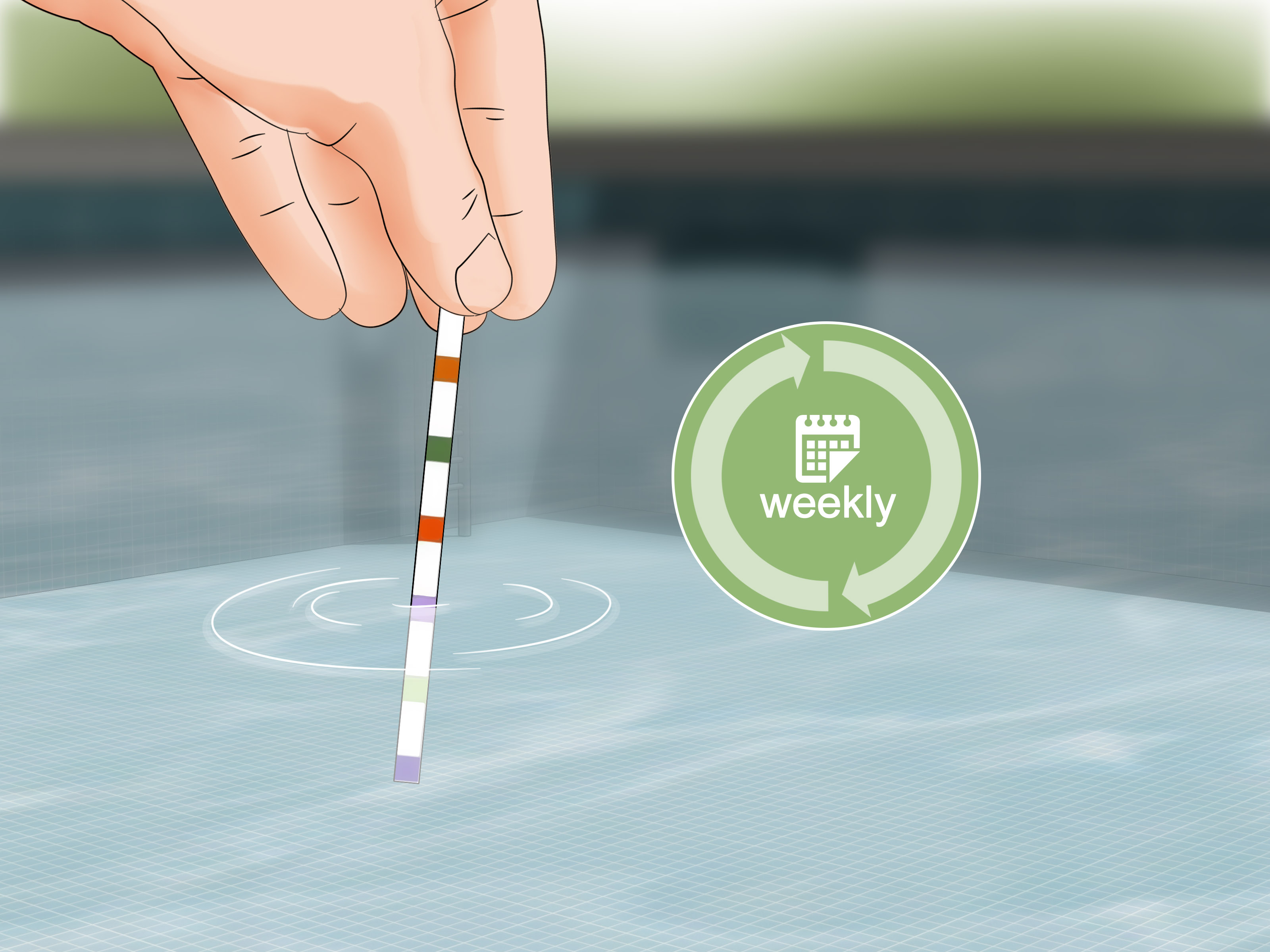
Before taking action, test your CYA level carefully. Use a reliable test kit, fresh reagent, or a trusted pool store test. If your test maxes out at 100 ppm, your actual level may be much higher. In that case, a diluted test can help estimate the real number. Accurate testing matters because lowering CYA is mostly a math problem, and math does not enjoy guessing games.
Way 1: Lower Cyanuric Acid by Partially Draining and Refilling
The most reliable way to lower cyanuric acid in a pool is dilution: remove some pool water and replace it with fresh water. Since CYA is dissolved in the water, removing water removes a matching portion of the stabilizer. This is the classic method because it works, it is predictable, and it does not require believing in pool-care unicorns.
How Much Water Should You Replace?
Use this simple formula when your fill water has no cyanuric acid:
Percentage of water to replace = (Current CYA – Target CYA) ÷ Current CYA
For example, suppose your pool tests at 100 ppm CYA and your target is 50 ppm:
(100 – 50) ÷ 100 = 0.50
That means you need to replace about 50% of the pool water. In a 15,000-gallon pool, that is about 7,500 gallons. If your CYA is 80 ppm and you want 40 ppm, the math is the same: replace about half the water.
If your CYA is extremely high, multiple partial drains may be safer than one large drain. For example, lowering CYA from 160 ppm to 50 ppm requires replacing a large percentage of water. Depending on your pool type, soil conditions, groundwater level, and local drainage rules, doing that all at once may not be wise.
How to Do a Partial Drain Safely
First, turn off pool equipment if the water level will drop below the skimmer. Running a pump dry is a fast way to turn a maintenance chore into an expensive vocabulary lesson. Use a submersible pump or the waste setting on a multiport valve if your system allows it. Drain only the amount you planned, then refill with fresh water.
After refilling, circulate the water for several hours, then retest CYA, free chlorine, pH, total alkalinity, and calcium hardness. Dilution changes more than just stabilizer. It can also reduce salt, calcium, borates, and other dissolved materials, so rebalance the water before declaring victory and cannonballing into the deep end.
Important Drainage Warnings
Never fully drain an inground pool without knowing the risks. High groundwater can cause a pool shell to shift or pop. Vinyl liners can wrinkle or shrink. Fiberglass pools can bow or move. Plaster surfaces can dry too quickly in hot weather. If you are not sure, call a pool professional before removing a large amount of water.
Also check local rules before draining. Some cities restrict where pool water can go, especially if it contains chlorine, salt, or other chemicals. Draining into a storm drain, street, or neighbor’s yard may be illegal or deeply unpopular. Nobody wants to become “that pool person” on the neighborhood group chat.
Way 2: Use a Professional Water Exchange or Reverse Osmosis Service
If you live in an area where water is expensive, drought restrictions are tight, or draining is risky, a professional water exchange or mobile reverse osmosis service may be an option. These services can lower cyanuric acid, calcium hardness, and total dissolved solids while preserving much of the pool water.
Reverse osmosis works by forcing pool water through specialized membranes that remove dissolved materials. The cleaned water returns to the pool, while the concentrated waste stream is discarded. It is not available everywhere, but in regions with high water costs or strict conservation rules, it can be a smart alternative.
When This Method Makes Sense
Professional filtration or water exchange may be worth considering when your CYA is high, your calcium hardness is also high, or your pool is in an area where a large drain could damage the structure. It may also be useful when you want to avoid dumping thousands of gallons of water.
The tradeoff is cost and availability. A partial drain and refill is usually cheaper for many homeowners, but it uses more water and may not be safe in every situation. A professional service costs more upfront, but it can solve multiple water-balance issues at once and reduce the need for a large drain.
What to Ask Before Hiring a Service
Ask whether the company specifically removes cyanuric acid, what reduction you can realistically expect, whether calcium hardness and salt will also be reduced, and how long the process will take. You should also ask what water chemistry levels they recommend after treatment.
After the service, test your pool again. Do not assume the water is perfectly balanced just because it looks clear. Clear water can still be chemically grumpy. Verify CYA, free chlorine, pH, alkalinity, calcium hardness, and salt if you have a saltwater system.
Way 3: Stop Adding Stabilized Chlorine and Let Dilution Work Over Time
This method is not an instant fix, but it is essential. If your CYA is too high, stop adding products that contain cyanuric acid. That usually means pausing trichlor tablets, dichlor shock, and any product labeled as stabilized chlorine until the level is back in range.
Instead, use unstabilized chlorine options such as liquid chlorine, sodium hypochlorite, or calcium hypochlorite if appropriate for your pool’s calcium level. Liquid chlorine adds sanitizer without adding CYA. Calcium hypochlorite also avoids CYA, but it adds calcium, so it may not be ideal if your calcium hardness is already high.
How This Lowers CYA Over Time
Simply switching chlorine types does not remove existing CYA overnight. However, it prevents the level from climbing higher while normal water loss slowly helps dilute the pool. Splash-out, backwashing, vacuuming to waste, rain overflow, and small water replacements can gradually reduce CYA over time.
This approach works best when CYA is only slightly high. For example, if your target is 50 ppm and your pool is at 60 or 70 ppm, you may not need a dramatic drain. Stop using stabilized chlorine, maintain the correct free chlorine level for your CYA, and allow routine water replacement to bring the number down gradually.
If your CYA is 100 ppm or higher, waiting may be frustrating. At that point, algae can become more likely if chlorine is not managed carefully. A partial drain or professional water treatment is usually more practical.
What About Cyanuric Acid Reducers?
Some products are marketed as cyanuric acid reducers. They may use biological or enzyme-based processes intended to break down CYA. These products can be attractive because nobody wakes up excited to drain water. However, results can be inconsistent and often depend on water temperature, chlorine level, pH, circulation, and careful instructions.
If you try a CYA reducer, read the label closely and keep expectations realistic. It may help in certain situations, but it should not be treated as the guaranteed solution. For a very high CYA level, dilution remains the most dependable method.
How to Prevent Cyanuric Acid from Getting High Again
After you lower cyanuric acid, prevention is the part that saves money, water, and weekend sanity. The first step is knowing what is in your chlorine. Trichlor tablets are convenient, but they add CYA every time they dissolve. Dichlor shock also adds stabilizer. If you use these products as your main sanitizer all season, CYA will rise.
Read Chlorine Labels
Look for active ingredients. Trichloro-s-triazinetrione and sodium dichloro-s-triazinetrione are stabilized chlorine products. Sodium hypochlorite and calcium hypochlorite are unstabilized chlorine products. This label-reading habit takes 15 seconds and can save you from a surprise water replacement later.
Test CYA Monthly During Swim Season
Many pool owners test chlorine and pH often but forget CYA until there is a problem. Test cyanuric acid at opening, after major water replacement, and monthly during the season if you use stabilized chlorine. In hot, sunny areas, or pools with heavy tablet use, testing more often may be useful.
Use Tablets Strategically
Chlorine tablets are not evil. They are handy for vacations, steady chlorination, and certain maintenance routines. The issue is using them nonstop without tracking stabilizer. Think of tablets as a tool, not a lifestyle. When CYA reaches the desired range, switch to unstabilized chlorine or a saltwater chlorine generator strategy that does not keep adding stabilizer.
Common Mistakes When Lowering Cyanuric Acid
The first mistake is shocking the pool repeatedly without testing CYA. If the shock is dichlor-based, it adds more stabilizer and may worsen the issue. The second mistake is draining too much water too quickly without considering pool type and groundwater. The third mistake is replacing water, then immediately going back to heavy tablet use.
Another common mistake is trusting a single questionable test. CYA testing can be affected by lighting, reagent age, and technique. If your result seems surprising, retest. If the test reads over the maximum range, use a proper dilution test or ask a professional to confirm it.
Example: Lowering CYA in a Real Backyard Pool
Imagine a 20,000-gallon outdoor pool using trichlor tablets all summer. The water starts getting cloudy, and algae appears even though the chlorinator is full. A test shows CYA at 120 ppm. The owner wants to lower it to 50 ppm.
Using the formula:
(120 – 50) ÷ 120 = 0.58
That means about 58% of the water would need replacement if the fill water contains no CYA. For a 20,000-gallon pool, that is about 11,600 gallons. Because that is a lot, the owner might choose two partial drains, a professional water exchange, or a carefully supervised larger drain depending on pool type and local conditions.
After refilling, the owner switches from tablets to liquid chlorine, retests weekly, and uses tablets only when away for a short trip. The pool becomes easier to maintain, chlorine readings make more sense, and algae stops treating the shallow end like a rental property.
of Practical Experience: What Pool Owners Learn the Hard Way
One of the most common experiences with high cyanuric acid is confusion. A pool owner keeps adding chlorine, the test strip shows some chlorine, yet the water looks dull or green. The first instinct is usually to add more shock. Then more tablets. Then a clarifier. Then maybe a prayer. But if CYA is already high, adding more stabilized products can push the pool further out of balance.
A practical lesson is that pool water rarely needs more random chemicals. It needs better information. A good test result can save hundreds of dollars in unnecessary products. When CYA is high, the pool is not being stubborn for entertainment purposes. It is following chemistry. Chlorine effectiveness depends partly on how much stabilizer is in the water, so the same free chlorine level that works at 40 ppm CYA may be too low at 100 ppm CYA.
Another real-world lesson is that small drains are less scary but sometimes less efficient. Replacing 10% of the water five times is not the same as replacing 50% once, because each small drain removes some newly diluted water too. That does not mean small drains are bad. They may be safer for certain pools. But it does mean homeowners should plan the process instead of guessing with a garden hose and optimism.
Many pool owners also discover that “clear” does not always mean “balanced.” After a partial refill, the pool may look beautiful, but pH, alkalinity, calcium hardness, and chlorine still need attention. Fresh fill water can be high in minerals or alkalinity depending on the region. That is why testing after circulation is important. The refill is not the finish line; it is the reset button.
People with automatic tablet feeders often learn the biggest lesson: convenience has chemistry attached. Tablets are easy, slow-dissolving, and great in the right context. But used as the only sanitizer for months, they can quietly raise CYA until the pool becomes hard to manage. A better routine is to use tablets selectively and rely on liquid chlorine, a saltwater chlorine generator, or another unstabilized approach when CYA is already in range.
Finally, lowering cyanuric acid teaches patience. You may need to drain, refill, circulate, test, and adjust in stages. It can feel annoying, but the reward is a pool that responds normally again. Chlorine holds properly, algae becomes easier to control, and maintenance stops feeling like a weekly mystery novel. The best pool owners are not the ones who buy the most chemicals. They are the ones who test accurately, make measured corrections, and know when to stop adding things.
Conclusion
Lowering cyanuric acid in a pool comes down to three realistic strategies: dilute the water through partial draining and refilling, use a professional water exchange or reverse osmosis service where available, and stop adding stabilized chlorine so CYA does not keep climbing. For most homeowners, partial water replacement is the most predictable fix. For pools where draining is risky or water is costly, professional treatment may be worth exploring. For slightly high CYA, switching to unstabilized chlorine and letting routine water replacement work slowly may be enough.
The most important step is testing accurately before acting. Once you know your actual CYA level, you can calculate the correction instead of guessing. After the level is back in range, prevent future buildup by reading chlorine labels, testing CYA regularly, and using stabilized products strategically. Your pool does not need heroic chemical drama. It needs balance, patience, and maybe a little less tablet dependency.