Grocery store flowers are the unsung heroes of last-minute beauty. They sit there between the avocados and the freezer aisle pizzas, quietly waiting to become something much more glamorous than their plastic sleeve suggests. The good news? You do not need a flower shop budget or a florist certificate to turn them into a bouquet that looks thoughtful, polished, and honestly a little expensive. You just need a better plan than “leave them in the supermarket wrap and hope for the best.”
If you have ever grabbed a bunch of tulips, roses, carnations, eucalyptus, or baby’s breath on your way home and thought, These should look prettier than this, you are in the right place. Learning how to wrap grocery store flowers for a beautiful bouquet is really about three things: choosing the right stems, prepping them like a florist, and wrapping them in a way that feels intentional instead of accidental. Once you know those basics, even a modest bundle can look gift-worthy.
Why Grocery Store Flowers Are Better Than People Give Them Credit For
Let’s defend the humble supermarket bouquet for a moment. Grocery store flowers are affordable, easy to find, and often surprisingly fresh if you know what to look for. They are also ideal for casual gifting, dinner tables, birthdays, teacher thank-yous, hostess gifts, and “I saw these and thought of you” moments. In other words, they are perfect real-life flowers.
The catch is that store-bought bouquets are usually packaged for speed, not style. Many stems are cut to the same length. Colors may feel random. Filler flowers can be doing a little too much. And the plastic wrap often screams, “I was purchased next to a rotisserie chicken.” None of that is a problem. It just means your bouquet needs a quick glow-up.
Start at the Store: Buy Flowers Like You Have Standards
Look for freshness first
Before you even think about wrapping, choose better stems. Look for blooms that feel firm, petals that are not browning, and greenery that still looks crisp instead of limp and sad. If the bouquet contains roses or tulips, slightly closed buds are often a smart pick because they will continue opening at home. If everything already looks fully blown open in the store, your bouquet may be living on borrowed time.
Choose a simple “flower recipe”
The easiest bouquets usually combine a few different roles instead of a dozen competing stars. A beginner-friendly approach is:
- Focal flowers: the bigger, attention-grabbing blooms like roses, hydrangeas, sunflowers, or lilies
- Secondary flowers: the supportive middle layer, such as spray roses, tulips, mums, or carnations
- Filler flowers and greenery: eucalyptus, baby’s breath, wax flower, fern, or ruscus to add softness and shape
If you want an easy rule of thumb, think in groups: a few focal stems, a handful of textural or secondary flowers, and a larger amount of lighter filler. This keeps the bouquet balanced without making it look stiff. Odd numbers also tend to look more natural than perfectly symmetrical bunches, which is great news if math is not why you came here.
Pick a color palette, not a flower riot
A beautiful bouquet usually feels edited. Try one of these easy combinations:
- Soft and romantic: blush, cream, and pale green
- Bright and cheerful: yellow, coral, and orange
- Classic and clean: white, green, and one accent color
- Wildflower-inspired: purple, blue, pink, and airy greenery
If the mixed bouquet in front of you looks like every crayon in the box filed a complaint, break it up and combine it with simpler stems. A little restraint goes a long way.
Prep Your Flowers Before You Wrap Them
This is the step people skip when they are in a hurry, and it is exactly why their bouquets look tired before the ribbon is even tied. Wrapping flowers beautifully starts with conditioning them properly.
1. Unwrap everything
Take off the plastic sleeve, rubber bands, and any tight ties. Separate the flowers by type and spread them out on the table. This helps you actually see what you bought, which is useful if one stem is secretly bent like it had a rough commute.
2. Remove leaves below the future waterline
Strip off any leaves that would sit below the water or be trapped inside the wrapped stem area. Those submerged leaves break down quickly and can encourage bacteria, which shortens vase life. Also, they make the bouquet look messier. We are aiming for “effortless,” not “leaf salad.”
3. Recut the stems
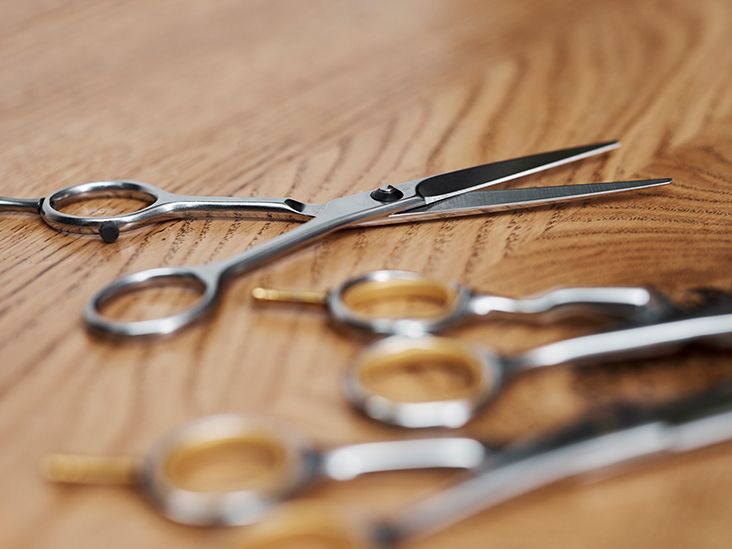
Use sharp scissors or floral snips to trim the stems at an angle. A fresh diagonal cut helps the flowers take up water more easily. You do not need to remove half the stem. Usually trimming about an inch is enough to freshen the ends and clean up the bundle.
4. Hydrate before styling
Place the freshly cut stems into clean water with flower food for at least a little while before final wrapping. Even a short drink helps perk them up. If your bouquet came with a flower food packet, use it. Tiny packet, huge ego, but it earns it. Floral food helps nourish the flowers and slows bacterial growth.
How to Arrange the Bouquet in Your Hand
Before the paper comes out, build the bouquet itself. This is where grocery store flowers start looking less like a random purchase and more like a gift with main-character energy.
Start with greenery
Create a loose base using eucalyptus, fern, ruscus, or other greenery. This frame gives your bouquet shape and adds volume without needing a mountain of expensive flowers. Think of greenery as the good lighting of floral design: subtle, flattering, and doing more work than anyone notices.
Add focal flowers next
Place your largest or prettiest blooms into the center and slightly off-center areas of the bouquet. Avoid making one tight clump in the middle unless you want the arrangement to resemble a flower meatball. Let the blooms face slightly different directions so the bouquet looks airy and alive.
Layer in the secondary flowers
Now add the medium-size stems around the focal blooms. These help bridge the big flowers and the delicate filler. Vary the heights a little. When every stem is exactly the same length, the bouquet can look flat and store-bought. When the heights shift gently, it starts to feel hand-tied and natural.
Finish with filler flowers
Tuck smaller stems into gaps. Filler flowers should soften the outline, add texture, and hide awkward empty spaces. They are not supposed to swallow the bouquet whole. Baby’s breath, for example, is charming when it whispers and chaotic when it shouts.
Check the shape
Rotate the bouquet as you work. From the side, the shape should feel rounded or softly domed, not pancake-flat. Trim any stems that shoot way above the rest unless that taller line is deliberate. A little asymmetry is lovely. Total confusion is not.
How to Wrap Grocery Store Flowers So They Look Beautiful
Once your bouquet is arranged, wrapping is the finishing touch that makes it look thoughtful and gift-ready. You do not need elaborate floral paper or professional supplies. A few basic materials work beautifully.
What you need
- Kraft paper, tissue paper, parchment-style paper, or cellophane
- Ribbon, twine, raffia, or a simple satin bow
- Scissors
- A damp paper towel
- A small piece of plastic wrap or a produce bag to cover the damp towel
- Optional: floral tape or a rubber band to hold the bouquet together first
Step-by-step wrapping method
Step 1: Secure the stems. Once you are happy with the bouquet shape, tie the stems loosely with twine or a rubber band a few inches above the cut ends. This keeps everything from sliding around while you wrap.
Step 2: Protect the cut ends. If the bouquet will be carried, gifted, or displayed out of water for a while, wrap the stem ends in a damp paper towel. Then cover that with plastic wrap so the moisture stays put and does not soak the paper. This small trick makes the bouquet look professional and helps keep the flowers fresher.
Step 3: Lay out your paper on a diagonal. Place one or two sheets of wrapping paper on the table so they look like diamonds instead of squares. Layer tissue over kraft paper if you want a softer, fuller look. Put the bouquet across the paper at a diagonal, with the blooms above one side and the stems toward the opposite corner.
Step 4: Fold one side over. Bring one corner or side of the paper over the stems and toward the front of the bouquet. Then fold the other side over it so the flowers are cradled rather than tightly mummified.
Step 5: Tuck the bottom. Fold the bottom corner up around the stems. Keep it neat, but do not obsess over perfection. A slightly relaxed wrap often feels more charming than a hyper-precise one.
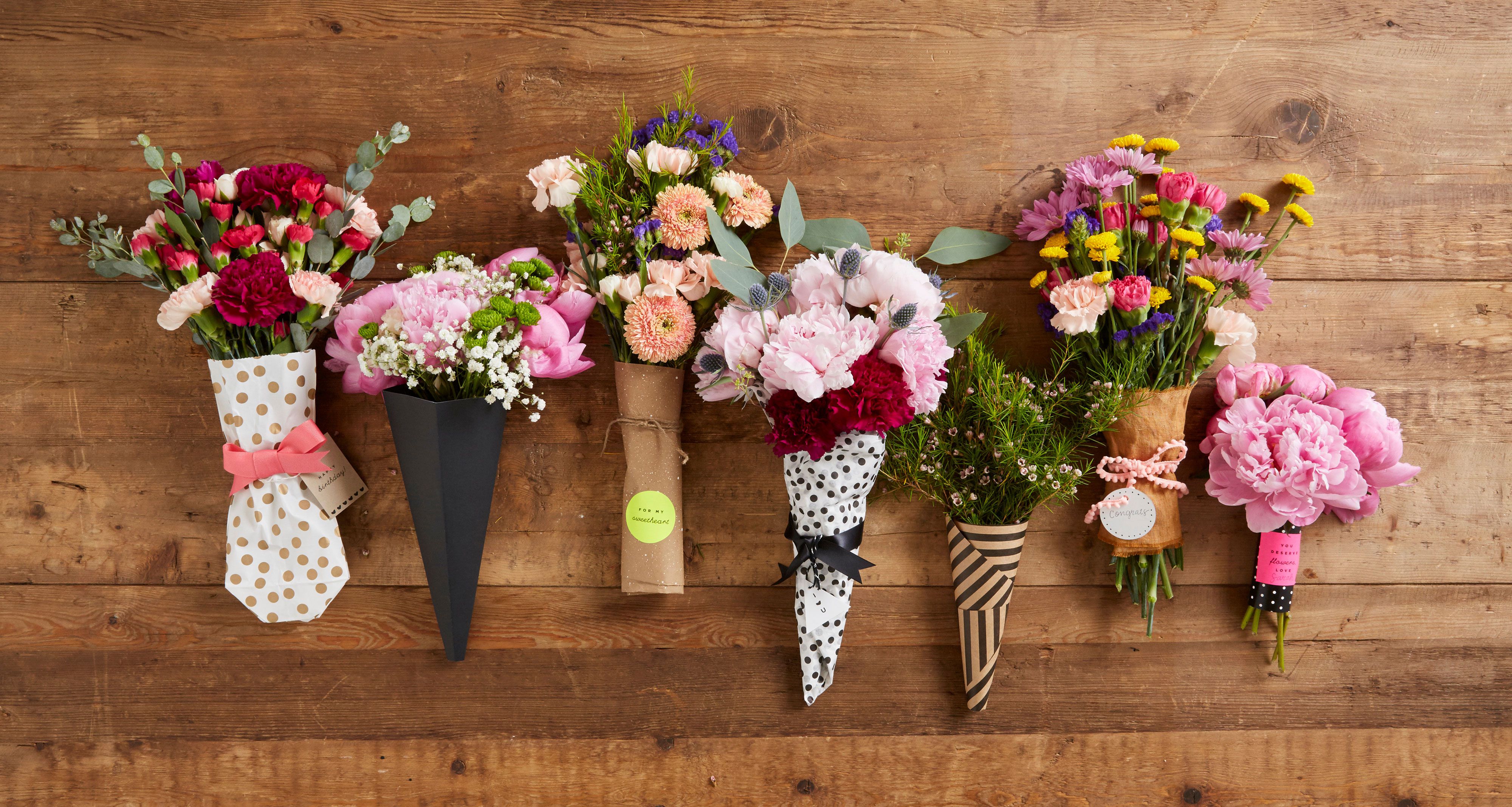
Step 6: Tie it off. Secure everything with ribbon, twine, raffia, or a bow. If your bouquet is rustic, kraft paper and twine look lovely. If it is romantic, tissue and ribbon feel softer. If it is bright and playful, colorful paper can lean fun without looking juvenile.
Easy wrap styles that always work
- Classic kraft paper wrap: timeless, clean, and ideal for almost any bouquet
- Tissue over kraft: softer and more gift-like, especially for birthdays
- Clear cellophane plus ribbon: good for transport, but best when used lightly so it does not look overpackaged
- Single-sheet minimalist wrap: simple and elegant for modern bouquets
Common Mistakes That Make a Bouquet Look Cheap
- Leaving flowers in the original sleeve: convenient, yes; beautiful, not really
- Keeping every stem the same height: that usually flattens the bouquet
- Using too many competing colors: chaos is not a color story
- Skipping hydration: thirsty flowers do not become less thirsty because you added a bow
- Wrapping too tightly: crushed blooms are not a design choice
- Ignoring the back of the bouquet: if it is hand-tied, it should look good from more than one angle
How to Keep the Bouquet Looking Good After It Is Wrapped
If you are gifting the bouquet immediately, you are done. If not, keep the bouquet cool and out of direct sunlight, heating vents, or a hot car. Once the recipient gets home, the flowers should go into a clean vase with fresh water and flower food. Recutting the stems again before they go into the vase is smart. Changing the water regularly will help the bouquet last longer.
And yes, the vase matters. A narrow vase supports a smaller bouquet nicely, while wider or heavier bouquets often need a broader, more stable vessel. A gorgeous hand-wrapped bouquet can still look awkward if it lands in a vase that seems emotionally unprepared for the assignment.
The Real-Life Experience of Wrapping Grocery Store Flowers
There is something oddly satisfying about turning grocery store flowers into a beautiful bouquet with your own hands. It feels a little like cheating the system in the best possible way. You walk in planning to buy salad greens and coffee, then you spot a bucket of roses or tulips near the front of the store, and suddenly you are making creative decisions like a person who definitely owns linen napkins and says things such as “tone-on-tone.” Even if you do not, the flowers make you feel like you could.
The first real experience most people have with wrapping supermarket flowers is that they look much better the second they come out of the original plastic sleeve. It is almost shocking. A bouquet that looked generic under fluorescent lights starts to feel personal once the stems are separated, the bruised leaves are removed, and the flowers get a proper drink of water. You begin to notice details you missed in the store: one rose is a little more open, one tulip has that perfect graceful bend, the eucalyptus smells amazing, and the filler flowers are either charmingly delicate or trying way too hard. Usually both.
Then comes the arranging part, which is where confidence and chaos tend to meet in the middle. At first the stems slide around, the greenery sticks out in suspicious directions, and the bouquet may briefly resemble a well-dressed accident. But once you keep turning it in your hand and adjusting heights, something clicks. You start seeing balance. You learn that one stem can change the whole shape. You realize fewer flowers can actually look more elegant than more flowers. You also learn that baby’s breath has a strong personality and should be managed accordingly.
Wrapping adds another layer of experience because it changes the mood of the bouquet instantly. Brown kraft paper makes it feel thoughtful and a little rustic. Tissue paper softens everything. A ribbon makes the bouquet look intentional, like you planned this all along and did not grab the supplies while still holding your shopping basket. The damp paper towel around the stems may not sound glamorous, but it is one of those behind-the-scenes details that makes the whole thing feel polished.
What people often enjoy most is the reaction. A hand-wrapped grocery store bouquet does not feel impersonal. It feels noticed. It feels like someone took a few extra minutes to make an ordinary purchase into a genuine gesture. That is true whether the flowers go to a friend, a parent, a teacher, a host, or your own kitchen counter after a long week. There is a quiet pleasure in looking at a bouquet and knowing you did not just buy flowers. You finished them.
And that may be the best part of this whole process. Wrapping grocery store flowers is simple, but it never feels insignificant. It turns convenience into beauty. It makes everyday blooms feel curated. And once you do it a couple of times, you stop seeing the floral section as a last-minute option. You start seeing it as raw material for something lovely.
Final Thoughts
Learning how to wrap grocery store flowers for a beautiful bouquet is one of those small skills that pays off over and over again. It makes affordable flowers look elevated, gives gifts a more personal touch, and helps you create something pretty without needing a florist shop, fancy tools, or a dramatic budget. Pick fresher blooms, trim and hydrate them, build the bouquet with a little structure, and wrap it in a way that suits the mood. That is the whole secret.
So the next time you pass the floral display while shopping for bread, pasta, and dish soap, do not underestimate it. A beautiful bouquet might be hiding in there. It just needs a little editing, a little wrapping, and perhaps less plastic than the grocery store originally had in mind.