The internet can survive almost anything except a holiday parenting debate. Tax reform? Meh. Global uncertainty? Sigh. But the second someone mentions Santa, stockings, stepkids, and the phrase “little kids,” the comment section transforms into a competitive figure-skating routine performed entirely on thin emotional ice.
That is exactly what happened when a mom found herself under fire after explaining that Santa still visits her younger children, but not her adult stepson. What may have sounded, in her mind, like a harmless family tradition quickly landed online as a possible case of holiday favoritism. And because this was the internet, nobody showed up carrying calm nuance and cocoa. They arrived with opinions, side-eyes, and the spiritual energy of a thousand jingling sleigh bells.
Still, the backlash says something bigger than “people online love arguing in December.” This story hit a nerve because it sits at the intersection of several loaded topics: blended family dynamics, fairness between siblings and stepsiblings, how long Santa “counts,” and whether parents realize how much meaning children attach to small holiday rituals. In other words, this was never just about a stocking. It was about belonging, language, and the very delicate politics of who gets included in the magic.
What Actually Happened
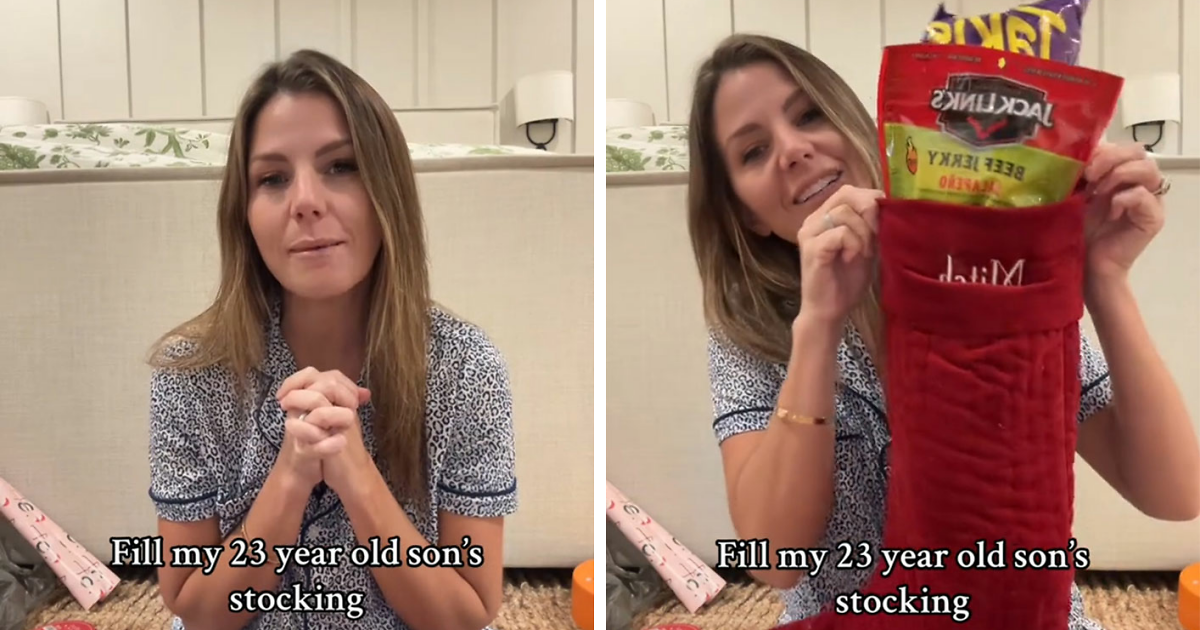
As reported by People, Jennifer Gardner shared a TikTok about filling her 23-year-old stepson’s stocking. In the video, she explained that while Santa no longer visits him, she still wanted him to have a stocking so he could enjoy the moment while his younger sisters received theirs from Santa. That wording immediately sparked criticism, with many viewers assuming the stepson was being singled out or emotionally sidelined during Christmas.
Gardner later clarified that in her family, Santa stops after college, but parents still give their older children Christmas gifts. She also said her stepson was not receiving only a stocking; he was getting presents as well. In other words, the internet heard, “Santa has cut this poor man off,” while Gardner meant, “We have an age-based Santa policy, but everybody still gets loved on.” Those are not the same message, but social media is not exactly famous for rewarding context.
And that is where the situation gets interesting. Because once you strip away the sparkly wrapping paper, the real question is not whether a 23-year-old “deserves” Santa. The real question is why so many people instantly read the situation as unfair. That reaction tells us a lot.
Why The Backlash Was So Strong
The phrase “little kids” did a lot of accidental heavy lifting
Let’s start with the phrase that likely lit the tree on fire: “little kids.” In many families, that sounds harmless. It is a common way to describe younger children, especially when there is a big age gap. But in a blended family, labels matter. A lot. When one child is described as part of the Santa group and another is described as outside it, people naturally wonder whether age is the only dividing line or whether family role is quietly doing some work too.
That is why the wording made viewers squint. Was the stepson excluded because he is older? Or because he is the stepson? Even if the answer was genuinely “because he is older,” the public did not hear it that way. Holiday language can be tiny on paper and huge in a family system.
Blended families come with built-in sensitivity around fairness
Experts on blended families have been saying for years that these households require extra care, not because they are doomed, but because they are layered. Kids in stepfamilies are often especially alert to signs of bias, even subtle ones. If one child seems favored, heard more, included first, or treated as “the real little one,” that feeling can linger far longer than the actual event.
That does not mean a parent can never treat children differently. Of course they can. A 5-year-old and a 23-year-old should not receive identical holiday experiences. But differences have to make emotional sense, not just logistical sense. “You’re older, so the tradition changes” feels very different from “the little ones get magic and you get leftovers.” Parents may intend the first message and accidentally send the second one.
Santa is symbolic, even when everyone knows the score
Another reason this debate got legs is that Santa is not really about gift inventory. He is a symbol. In many families, Santa stands for wonder, inclusion, ritual, and continuity. Plenty of people keep “Santa” going long after kids know the truth, not because anyone thinks a man in boots is doing rooftop cardio, but because the ritual is part of the family identity.
That helps explain why commenters pushed back so hard. For many adults, Santa still “visits” them in some playful form. A stocking appears. A gift is tagged from Santa. A joke survives another year. It is not childish. It is tradition wearing a fake beard and doing excellent brand management.
What This Story Really Reveals About Modern Family Life
The most useful way to read this story is not as “villain mom versus noble commenters.” That is too simple and, frankly, too online. A better reading is this: modern families are trying to balance childhood magic, changing ages, blended household structures, co-parenting logistics, and wildly different holiday expectations. Sometimes a cheerful TikTok gets crushed under the weight of all that meaning.
Research and expert guidance on family rituals suggest that traditions matter precisely because they create predictability, closeness, and memory. Kids may not remember every toy under the tree, but they do remember how holidays felt. They remember whether they felt anticipated, included, and secure. They remember whether the adults seemed calm or tense. They remember whether the rules made sense or felt personal.
That is especially true in blended families, where rituals can help children feel anchored during change. New family structures often need new traditions, or at least clear explanations for old ones. If one household does Santa until age 18, another until college, and another until people qualify for AARP discounts, that is all fine. The key is not uniformity. The key is clarity and emotional fairness.
Was The Mom Actually Wrong?
The honest answer is: not necessarily, but she did step on a conversational rake.
If the family rule really is that Santa stops after college for all older kids, and if the stepson is still getting thoughtful gifts, then this is not automatically cruel. Families are allowed to have age-based traditions. They are also allowed to retire Santa when kids get older. There is no federal Santa statute. No elf is showing up with legal paperwork.
But fairness is not judged only by what a parent means. It is also judged by how an experience lands. And publicly describing a stepson as someone Santa no longer visits, while younger sisters still get the full sparkle package, was always going to sound a little rough. The fact that she had to clarify afterward tells you everything you need to know. Her intent may have been ordinary. Her framing was combustible.
So no, this does not automatically make her heart three sizes too small. But it does make the whole episode a useful reminder that in family life, wording matters almost as much as policy. Sometimes more.
Lessons Parents Can Take From The Holiday Drama
1. Explain changes before emotions fill in the blanks
If Santa traditions shift with age, say so clearly and early. Do not wait until one kid is standing there wondering why the North Pole apparently changed its delivery map. A simple, loving explanation can prevent a lot of confusion.
2. Make age-based rules truly age-based
If older children age out of Santa, that rule should apply consistently. If exceptions exist for one group but not another, kids will notice. They always do. Children can hear favoritism in a whisper and smell it through wrapping paper.
3. Separate “Santa” from “love”
Parents sometimes think, “Well, Santa stops, but we still buy gifts, so what is the big deal?” The big deal is symbolism. If one ritual disappears, replace it with another meaningful one. Maybe older kids get a special breakfast, a bigger stocking, a family joke gift, or a late-night exchange after the younger kids go to sleep. The point is to say, “Your role changed, but your place did not.”
4. Watch the emotional labor load
Holiday magic often does not appear by miracle. It appears because one adult is shopping, wrapping, planning, remembering traditions, baking cookies, managing expectations, and trying not to cry in the Target parking lot. In many homes, that invisible labor falls unevenly on one parent. That stress can make communication sloppy and tempers shorter. Families do better when the work of making Christmas feel warm is shared, not silently assigned.
5. In blended families, communicate like it is your sport
Stepfamily experts consistently emphasize routine, collaboration, and ongoing conversations about roles, rules, and expectations. That applies doubly during the holidays. Kids do better when adults are transparent, predictable, and united. Mystery is great for Santa. It is terrible for family policy.
Why Stories Like This Go Viral Every December
Holiday stories spread because they are never really about the stated topic. A stocking debate is secretly about fairness. A Santa debate is secretly about childhood, nostalgia, and inclusion. A blended-family debate is secretly about whether love feels equal when life is not symmetrical.
And the holidays amplify all of it. Traditions carry memory. Memory carries emotion. Emotion carries a suitcase full of old grievances and rides directly into December. That is why one offhand sentence can produce a national debate among people who were, two minutes earlier, just trying to scroll in peace.
It is also why so many readers sided with the stepson without knowing much more. They were reacting not just to this family, but to every moment they or someone they knew felt like the extra person in a family photo, the older sibling who got less magic, the stepchild who had to “be understanding,” or the grown kid who suddenly got treated like a visiting consultant instead of a core member of the team.
Conclusion
In the end, the most important takeaway from this “Santa visits the little kids” controversy is not whether a 23-year-old should still get gifts from a mythical man in red. It is that family traditions carry emotional meaning, especially in blended households where everyone is already paying close attention to who belongs where.
Jennifer Gardner may have intended to share a light holiday moment, not launch the Great Santa Summit of the Internet. But the reaction to her video reveals something true: kids, stepkids, adult children, and even fully grown people with jobs and lower back pain still care deeply about symbolic inclusion. Not because they need more stuff, but because rituals are how families say, “You are one of us.”
So if Santa is retiring in your home, great. Give him a pension, a beach chair, and a nice union package. Just make sure the love, the belonging, and the holiday warmth do not retire with him.
Additional Experiences Related To This Topic
One reason this story resonated so widely is that many families have lived some version of it. Maybe not the exact TikTok script, but the emotional subplot? Absolutely. In one household, the oldest child comes home from college and finds out Santa now “focuses on the younger ones.” The parents mean it as a practical shift. The college kid hears, “Congratulations, you have been downgraded from magic to observer status.” Nobody intended harm, but the room still gets awkward enough to curdle the eggnog.
In another family, divorced parents manage the holidays across two homes. One parent keeps Santa alive with stockings, tiny wrapped gifts, and reindeer footprints. The other parent is more minimalist and treats Santa as a short-term childhood phase. The child ends up doing emotional math: Does Santa visit both houses? Did I age out at Mom’s but not at Dad’s? Is the real rule about age, money, effort, or just vibes? Adults often underestimate how carefully children study these patterns.
Then there is the stepfamily version, which is often the most delicate of all. A stepchild may already feel like they are moving between systems, traditions, and expectations that were built before they arrived. So when a new holiday rule appears, even a reasonable one, it can feel personal. A smaller stocking, a different gift pile, a changed bedtime tradition, a family photo arranged a certain way, or a joke about who is still a “little kid” can all land harder than expected. It is rarely about the object itself. It is about whether the child feels central or peripheral.
There are also families who handle this transition beautifully. Some keep Santa as a wink rather than a literal belief system. Older kids help wrap gifts for younger siblings, stuff stockings, or play along in a way that makes them feel promoted instead of excluded. That shift works because the message is not, “You are too old for this.” The message is, “You are now part of making the magic.” Same holiday. Very different emotional outcome.
And, of course, many adults privately admit they still enjoy a stocking from “Santa” because it is silly, affectionate, and comforting. It is not about believing in reindeer aviation. It is about the ritual. A favorite candy. A pair of socks nobody asked for but everybody somehow appreciates. A goofy tag in familiar handwriting. Those tiny traditions often matter more than expensive presents because they say, “We still know you. We still thought of you. You still belong here.”
That is why this topic keeps coming back every holiday season. Families are constantly renegotiating tradition as kids grow up, new partners enter the picture, siblings are born, and households blend or split. There is no universal Santa cutoff, no perfect stocking formula, and no one-size-fits-all map for fairness. But there is one rule that almost always helps: when in doubt, make the ritual less about category and more about connection. Kids can handle change. What hurts is feeling like the change says something painful about their place in the family.