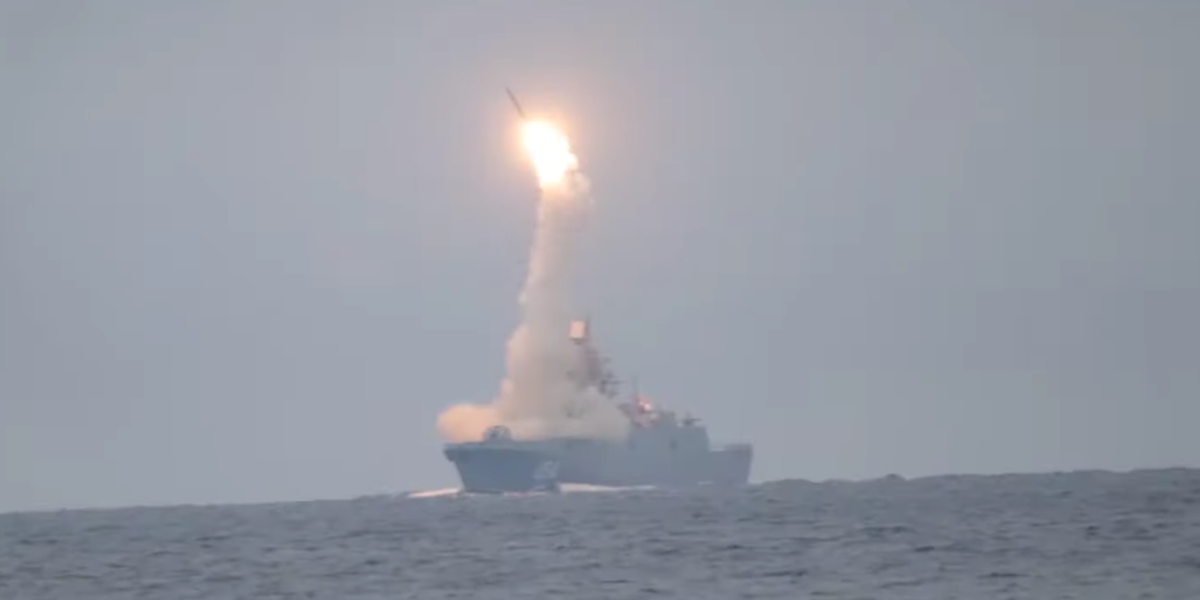
Russia’s Zircon missile videos tend to arrive with the same visual recipe: a gray warship, a vertical flash, a violent bloom of smoke, and then a missile vanishing into the sky faster than your coffee can cool. The clip is usually short, dramatic, and carefully edited. But behind the spectacle is a serious question: what does the Russia Zircon missile video actually show, and why has this hypersonic weapon become such a headline magnet?
The Zircon, also spelled Tsirkon and known as the 3M22 Zircon or SS-N-33, is presented by Moscow as a sea-launched hypersonic cruise missile designed to strike ships and land targets. Russian officials have repeatedly claimed it can travel at around Mach 9 and reach targets roughly 1,000 kilometers away. Those claims should be treated carefully, because military performance data released by governments is not the same thing as an independent lab report. Still, even the public record shows that Zircon has become a major symbol in Russia’s effort to project advanced military power.
For readers searching for “Russia Zircon missile video,” the important thing is not just watching the launch. It is understanding the context: where the test happened, what platform fired it, what “hypersonic” means, and why NATO, Ukraine, and defense analysts pay close attention whenever Moscow releases another polished launch clip.
What Is the Zircon Hypersonic Missile?
The Zircon is described as a Russian hypersonic cruise missile. In simple terms, “hypersonic” usually means a weapon that travels faster than Mach 5, or five times the speed of sound. That definition alone, however, does not explain the full challenge. Speed matters, but so do flight path, maneuverability, detection, guidance, launch platform, and whether the target is moving or fixed.
Unlike a classic ballistic missile, which follows a high arcing path, a hypersonic cruise missile is generally discussed as a powered, air-breathing weapon that flies through the atmosphere. Public analyses often describe Zircon as a two-stage system, with an initial booster and a high-speed propulsion phase. Russia has linked the missile to ships, submarines, and potentially land-based launch systems.
The missile’s strategic value comes from compressed reaction time. A defender has less time to detect, track, classify, decide, and intercept. That is why hypersonic missile defense is not just a “shoot it down” problem. It is a chain-of-events problem, and every link in the chain has to work quickly.
What Happens in the Russia Zircon Missile Video?
In the most widely circulated Zircon test videos, viewers see a Russian naval vessel firing a missile vertically from a launch cell. The missile rises sharply, ignites, and then angles away toward the horizon. The footage usually does not show the full flight, telemetry, target impact, or independent verification. In other words, it shows the launch, not the entire story.
That does not make the video meaningless. A launch video can confirm that a missile left a platform, that the platform is compatible with the weapon, and that Russia wants the world to notice. But it does not prove every claimed speed, range, or interception challenge. Think of it like a movie trailer: exciting, loud, and designed to make a point, but not the same as watching the entire film with the director’s notes, raw footage, and box-office receipts.
The 2022 Admiral Gorshkov Test
One of the best-known Zircon clips came from a 2022 test involving the Admiral Gorshkov frigate. According to public reports, Russia said the missile was launched from the Barents Sea and hit a target roughly 1,000 kilometers away in the White Sea area. The Admiral Gorshkov had already become closely associated with Zircon testing, making it the naval star of Russia’s hypersonic publicity campaign.
The 2022 test mattered because it helped Russia present Zircon as moving beyond laboratory promise into military readiness. At the time, Russian officials framed the missile as a future boost to naval strike power. For audiences outside Russia, the test also raised questions about how much of the missile’s claimed performance could be independently verified.
Submarine Launches and Naval Flexibility
Russia has also reported Zircon launches from submarine platforms, including tests from the Severodvinsk nuclear-powered submarine. Submarine launch capability matters because it suggests a more flexible and less predictable deployment model. A missile fired from a surface ship can be watched, tracked, and politically signaled. A submarine, by design, complicates the picture.
This is why defense analysts often focus on platforms as much as missiles. A hypersonic weapon sitting in a warehouse is one thing. A hypersonic weapon that can be carried by frigates, cruisers, and submarines is a more complicated operational problem.
Why Russia Releases Zircon Missile Videos
Military test videos are not released by accident. They are strategic communication. Russia’s Zircon videos speak to several audiences at once: domestic viewers, NATO governments, Ukraine, arms-control analysts, and defense industries around the world.
For domestic audiences, the message is pride and technological confidence. The footage says, “Our navy is modern, our scientists are brilliant, and our adversaries should worry.” For foreign audiences, the message is deterrence. Russia wants the missile to be seen as fast, hard to stop, and capable of striking high-value targets at sea or on land.
For analysts, however, the videos also raise technical questions. How fast was the missile during each phase? Was the target stationary? How realistic was the scenario? Was the launch part of a scripted demonstration or an operationally demanding trial? Good analysis begins where the dramatic soundtrack ends.
Zircon in Russia’s Wider Hypersonic Arsenal
Zircon is not the only hypersonic system Russia has promoted. Moscow has also highlighted the Avangard hypersonic glide vehicle and the air-launched Kinzhal missile. Together, these systems support a broader Russian narrative: that Moscow has developed advanced strike weapons able to challenge Western missile defenses.
Zircon’s niche is naval and potentially coastal strike. It is often discussed as a weapon for Russian frigates, submarines, and upgraded major surface combatants. That maritime role matters because many modern military crises are shaped by sea control, chokepoints, carrier groups, ports, and long-range standoff weapons.
Why the Admiral Gorshkov Deployment Was Important
In January 2023, Russia sent the Admiral Gorshkov on a long-range deployment while saying it was armed with Zircon missiles. The ship was expected to sail through the Atlantic and Indian oceans and the Mediterranean Sea. The announcement was part naval mission, part geopolitical billboard.
Russia did not need to fire a missile to make a point. The message was in the deployment itself: a modern frigate carrying a heavily promoted hypersonic weapon could travel beyond Russia’s home waters. For NATO and the United States, that kind of patrol is watched closely, even when officials avoid panic and emphasize that they can monitor the ship.
Has Zircon Been Used in Ukraine?
Public reporting in 2024 added another layer to the Zircon story. Ukrainian researchers said they found evidence that Russia had used a Zircon missile in an attack on Kyiv. Later, Kyiv officials said Russia had fired several Zircon missiles at the capital during the first months of 2024. Russia has confirmed the combat use of Zircon in broad terms, though details about launch platform, target, and performance remain contested.
This matters because a weapon advertised as a naval anti-ship missile may also be used against land targets. If Zircon can be adapted for land attack, the defense problem changes. Urban air defense is already crowded with drones, cruise missiles, ballistic missiles, decoys, and electronic warfare. Adding another fast and maneuverable missile type makes the air-defense puzzle even more exhausting.
At the same time, public debris analysis has generated debate about whether the missile fully meets Russian claims. That is a useful reminder: battlefield use can reveal strengths, weaknesses, and surprises that test-range videos do not show.
The 2025 Zapad Exercise Video
Another major Zircon video emerged during the Zapad 2025 military exercises with Belarus. Russia said the Admiral Golovko frigate fired a Zircon at a target in the Barents Sea and that the target was destroyed by a direct hit. The footage reportedly showed a vertical launch followed by the missile powering away at an angle.
The timing made the video more than routine military theater. The exercise occurred during a period of high tension between Russia and NATO, including concerns about Russian drone incursions near NATO territory. As a result, the Zircon launch footage was interpreted not only as a weapons demonstration, but also as political signaling near Europe’s northern flank.
What Makes Hypersonic Missiles Hard to Defend Against?
Hypersonic missiles create problems because they reduce time. A fast incoming weapon gives commanders fewer minutes, sometimes fewer seconds, to identify the threat and respond. If the missile also maneuvers, defenders cannot simply calculate a predictable arc and wait politely for the geometry to behave. Spoiler: missiles are not known for politeness.
Detection is another challenge. Some hypersonic weapons may fly lower than traditional ballistic missiles, which can reduce early-warning time from ground-based radar. Tracking from space may help, but that requires resilient satellites, fast data processing, and command systems that can turn warning into action.
Interception is the final hurdle. A defense system must put an interceptor in the right place at the right time against a target moving extremely fast. Even if a missile slows during its terminal phase, the engagement window may still be narrow. That is why hypersonic defense is often discussed as an ecosystem: sensors, satellites, radars, command networks, interceptors, electronic warfare, and layered defenses working together.
What the Video Does Not Prove
Any article about the Russia Zircon missile video should include a dose of healthy skepticism. Video alone does not prove top speed. It does not prove maximum range. It does not prove that the missile can defeat every defense system. It does not prove mass production numbers. And it definitely does not prove that every future launch would perform exactly like a carefully selected public clip.
Russia’s claims may include real capability, political messaging, and exaggeration all at once. That mixture is common in military technology. The challenge for viewers is to avoid two mistakes: dismissing the weapon as pure propaganda or accepting every claim as gospel. The wiser approach is to separate what is visible, what is reported, what is claimed, and what remains unknown.
How to Watch a Zircon Missile Test Video Like an Analyst
When watching a Zircon test video, start with the basics. Identify the launch platform. Is it the Admiral Gorshkov, Admiral Golovko, a submarine, or another system? Then look at the launch method. Is the missile fired vertically from a naval launch cell? Does it turn after launch? How much of the flight is shown?
Next, listen to the claim attached to the video. Does the statement mention range, target type, sea area, launch platform, or hit confirmation? Words like “direct hit” sound impressive, but without independent evidence they remain official claims. A serious viewer should ask what is missing as much as what is shown.
Finally, consider the timing. Was the video released during a war, a military exercise, a NATO crisis, a weapons expo, or a domestic political moment? Missile videos often function like exclamation points in a larger sentence. The sentence is usually about deterrence, pressure, or prestige.
Strategic Impact: Why Zircon Gets So Much Attention
Zircon attracts attention because it sits at the intersection of technology, naval power, and nuclear-era signaling. Russia portrays it as a weapon that can threaten ships and land targets at long distance. Western analysts view it as part of a broader hypersonic competition involving Russia, China, and the United States.
The missile also raises arms-control concerns. Hypersonic weapons can blur the line between conventional and nuclear signaling. If a fast missile is launched in a crisis, the target state may not immediately know whether it carries a conventional or nuclear payload. That uncertainty can increase pressure on leaders during already dangerous moments.
That is why the Zircon story is not only about engineering. It is about decision time, deterrence, escalation, and the psychology of modern conflict. The launch video is the flashy part. The strategic anxiety is the real plot.
Viewer Experience: What It Feels Like to Watch the Russia Zircon Missile Video
Watching a Russia Zircon missile video is a strange experience because the clip is both spectacular and incomplete. The first impression is usually visual: the cold gray deck of a Russian frigate, the launch cell opening, the sudden burst of flame, and a missile punching upward like someone pressed the “skip intro” button on gravity. It is dramatic, compact, and almost too clean. The camera knows where to look. The edit knows when to cut. The viewer is left with a sense of speed, even though the most important part of the flight happens offscreen.
That is where the experience becomes more analytical. After the first “whoa,” the questions arrive. Was this a recent launch or older footage recirculated online? Which ship fired it? Was the target a floating practice object, a fixed land target, or something else? Did the clip show impact, or only launch? Was the phrase “hypersonic” supported by data, or was it part of the official caption? The video invites awe, but it also demands caution.
For casual viewers, the biggest challenge is separating the image from the implication. A missile launch always looks powerful. Even a failed missile can look impressive for the first few seconds. Fire and smoke are persuasive little devils. But military significance depends on repeatability, accuracy, production capacity, survivable launch platforms, targeting networks, and real-world performance under pressure. A single launch clip cannot answer all of that.
For editors, bloggers, and SEO writers covering the video, the best experience is to treat it as a doorway, not the whole house. The article should explain what viewers see, then widen the frame: Russia’s history of Zircon tests, the Admiral Gorshkov and Admiral Golovko launches, the reported use in Ukraine, and the larger hypersonic race. This gives readers both the immediate drama and the useful context.
There is also an emotional side. Hypersonic missile videos can make modern warfare feel like science fiction, but the consequences are not fictional. When these weapons are discussed in relation to Ukraine, NATO, or nuclear deterrence, the topic becomes painfully real. The responsible viewing experience is therefore a balance: appreciate the technology, question the claims, avoid panic, and remember that every missile video is also a political message.
In the end, the Russia Zircon missile video is worth watching because it reveals how military power is displayed in the digital age. It is not just a test. It is a performance, a warning, a recruiting poster, a diplomatic signal, and a puzzle for analysts. The missile disappears in seconds; the debate it creates lasts much longer.
Conclusion
The Russia Zircon missile video shows more than a dramatic launch. It shows how modern weapons are marketed, how governments communicate strength, and how hypersonic technology is reshaping defense debates. Zircon may be a real and concerning capability, but the smartest interpretation avoids both hype and dismissal. Public videos can show a launch; they cannot independently confirm every performance claim.
For readers, the key takeaway is simple: watch the footage, but read the context. The Zircon missile matters because of its claimed speed, range, naval deployment, possible land-attack role, and place in a wider hypersonic arms race. The video is the spark. The strategic questions are the fire.