Safety note: This article is for public education only. It does not provide instructions, procedures, diagrams, bypass methods, or technical steps for handling, disabling, opening, or tampering with any explosive, radiological, or nuclear device. In any real emergency, the correct response is to move away, warn others if safe, call emergency authorities, and follow official instructions.
Introduction: The Movie Scene We All Know
The timer is counting down. The hero is sweating. A calm expert on the phone says, “Cut the blue wire.” The hero stares at six wires, one of which is somehow both blue and emotionally complicated. Dramatic music swells. Humanity depends on one person, one pair of pliers, and the director’s fondness for slow motion.
It is a thrilling scene. It is also a wildly misleading one, especially when the device in question is described as a nuclear bomb. So, could the average person be talked through disarming a nuclear bomb? The honest answer is: almost certainly not. More importantly, they should never try. A nuclear weapon or nuclear threat device is not a household appliance with a reset button, a car battery with attitude, or a puzzle box waiting for a clever amateur. It is a highly dangerous system involving physics, engineering, security controls, hazardous materials, and emergency response protocols that exist for a reason.
The better question is not, “Could an average person disarm it?” The better question is, “What role could an average person safely play in a nuclear or radiological emergency?” That answer is far more useful: stay away, report clearly, help others avoid danger, follow official alerts, shelter when instructed, and leave technical response to trained specialists.
The Short Answer: No, Not in Any Realistic or Safe Way
The average person cannot realistically be talked through disarming a nuclear bomb. Even a skilled electrician, mechanic, engineer, or science teacher would not be qualified simply because they are handy or good under pressure. Modern nuclear weapons and nuclear response scenarios involve systems designed, maintained, secured, and assessed by deeply specialized teams. The knowledge required is not merely “technical.” It is classified, compartmented, practiced, and supported by specialized equipment, intelligence, command structures, radiation monitoring, explosive safety procedures, and legal authority.
In other words, this is not like calling tech support because your printer refuses to believe in paper. A nuclear device is not “fixed” by following a checklist from a stranger over a phone. The real world does not reward improvised heroics around explosives and radioactive materials. It rewards distance, discipline, communication, evacuation, sheltering, and trained response.
Why the Hollywood Version Gets It Wrong
1. Real Devices Are Not Built Like Simple Timed Gadgets
Movie bombs often look like alarm clocks glued to spaghetti. Real nuclear weapons, by contrast, are complex engineered systems. Public information from U.S. national laboratories describes nuclear stockpile work as involving advanced science, systems engineering, surveillance, certification, and safety assessment. Sandia National Laboratories, for example, emphasizes that nuclear weapons must be safe, secure, reliable, and able to operate only under properly authorized conditions.
That last point matters. A nuclear weapon is not supposed to be a fragile machine that any random person can accidentally “solve” or “unsolve.” U.S. nuclear surety philosophy has long focused on preventing unauthorized detonation while maintaining reliability under authorized command. That involves many layers of design, procedure, security, and control. Public descriptions can discuss the existence of safety and security concepts, but not operational detailsand that is exactly how it should be.
2. Disarmament Is Not Just a Technical Problem
Even when people say “disarm,” they may be imagining one simple goal: stop the explosion. In reality, a nuclear or radiological incident could involve many simultaneous priorities: protecting the public, assessing radiation, identifying the device or material, preserving evidence, preventing panic, coordinating federal and local agencies, managing hospitals, controlling traffic, monitoring weather, and communicating clear instructions.
That is why U.S. response planning involves organizations such as the National Nuclear Security Administration’s Nuclear Emergency Support Team, the FBI, the Department of Defense, the Department of Homeland Security, state and local agencies, public health officials, and specialized technical teams. This is not a one-person job. It is not even a one-agency job. It is a national-level, multi-disciplinary response problem.
3. Radiation Changes the Whole Situation
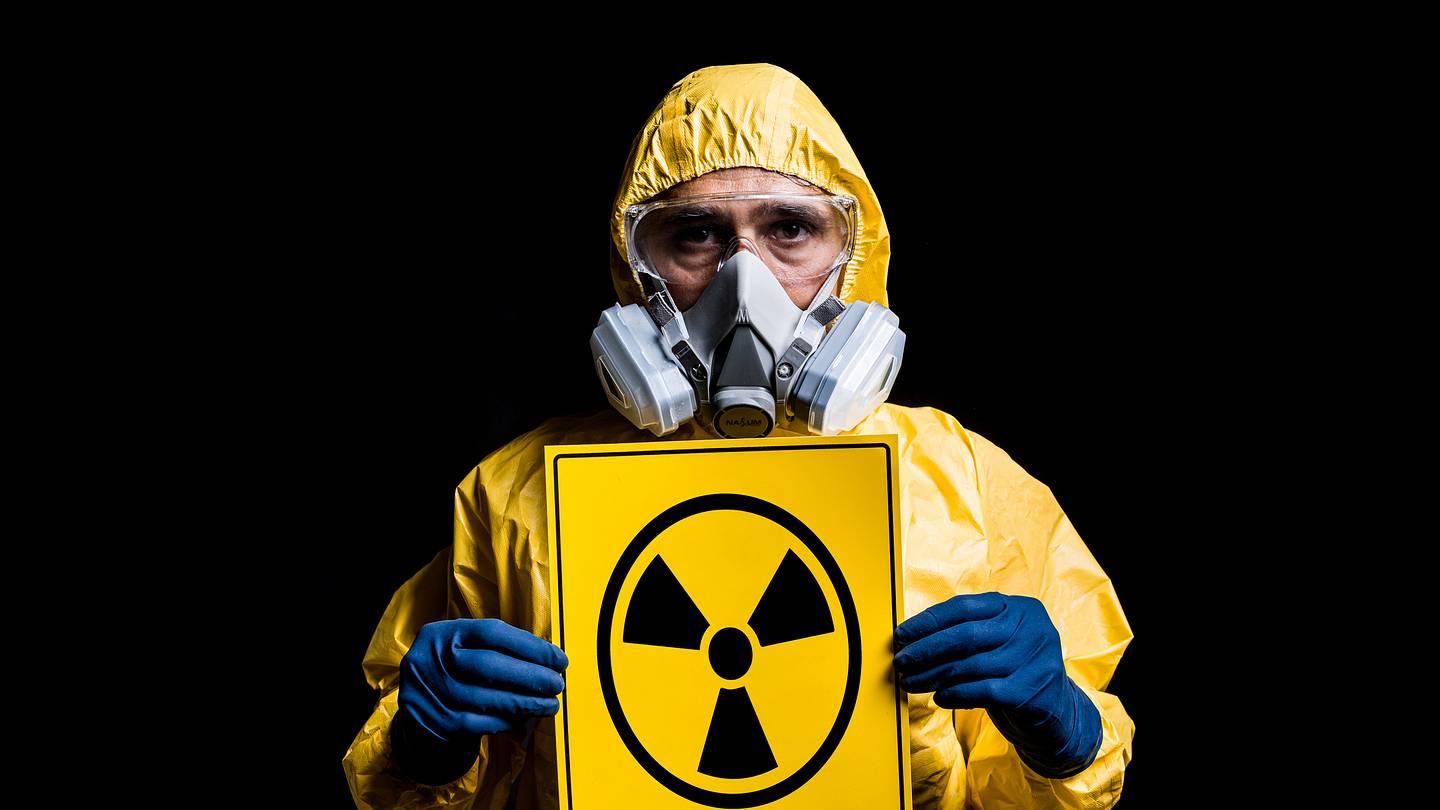
A regular explosive threat is already dangerous enough. Add radioactive material or nuclear yield potential, and the emergency becomes far more complex. Radiation may not be visible. Contamination can spread. Protective actions depend on time, distance, shielding, building type, weather, local geography, and official measurements. That is why public guidance from emergency authorities usually emphasizes simple protective actions: get inside, stay inside, stay tuned, and wait for verified instructions.
The average person’s safest contribution is not touching the device. It is reducing exposure, preventing others from approaching, and giving emergency responders accurate information from a safe distance.
What Experts Actually Do in Nuclear and Radiological Response
Public sources show that nuclear and radiological response is handled by trained specialists with very specific roles. The National Nuclear Security Administration’s Nuclear Emergency Support Team brings together capabilities related to nuclear incident response, nuclear forensics, radiological monitoring, device assessment, consequence management, and technical support. Its teams coordinate with federal, state, local, tribal, and territorial partners during crises.
The FBI’s Weapons of Mass Destruction Directorate focuses on preventing, investigating, and coordinating responses to WMD threats. In exercises such as Titan Shield, multiple agencies practice how they would work together during a fictional WMD terrorist attack. That kind of exercise exists because the problem is too large and too consequential for improvisation.
Other capabilities include aerial radiation measurement, emergency medical radiation expertise, atmospheric modeling, field monitoring, and forensic analysis. These are not luxuries. They are the reason trained responders can make informed decisions while protecting the public. A person with a phone, a flashlight, and a heroic soundtrack does not have those capabilities.
Could an Expert Talk Someone Through Anything Useful?
Yesbut not disarming the device. An expert or dispatcher might talk an average person through safe actions such as moving away, identifying the nearest safe shelter, avoiding contaminated areas, relaying what they saw without going closer, helping others evacuate if it is safe to do so, or following official shelter-in-place instructions. Those actions may sound less cinematic, but they are much more realistic and much more valuable.
In emergency management, “useful” does not always mean “dramatic.” Sometimes the most useful thing a person can do is not become a second casualty. Sometimes the bravest move is to stop filming, stop guessing, and get behind a wall.
The Biggest Risk: Amateur Confidence
The most dangerous character in a crisis is not always the villain. Sometimes it is the confident amateur who says, “I saw a video about this.” Nuclear and radiological hazards punish curiosity. They also punish assumptions. A suspicious package, unknown device, or radioactive material source should never be approached, opened, moved, photographed up close, or “checked out” by an untrained person.
There is a huge difference between public preparedness and technical intervention. Public preparedness means knowing how to receive alerts, where to shelter, how to communicate, and how to keep a basic emergency kit. Technical intervention means entering a hazard zone with specialized training, protective equipment, detection tools, command authorization, and a team behind you. Confusing those two categories is how people get hurt.
What the Average Person Should Actually Do
Move Away From the Threat
If you encounter a suspicious device or credible warning, distance is your friend. Do not inspect it. Do not touch it. Do not attempt to move it. Do not use your phone right next to it. Leave the area calmly and quickly, encouraging others to move away if you can do so without increasing your own risk.
Call Emergency Authorities
Once you are safe, contact emergency services. Provide clear information: location, what you observed, when you saw it, whether there are injuries, whether there are unusual sounds, smells, smoke, visible damage, or people acting suspiciously. Do not exaggerate. Do not guess. Good information helps responders; dramatic storytelling belongs in group chats later.
Follow Official Instructions
In a radiological or nuclear emergency, official instructions may tell you to evacuate or to shelter in place. Which one is safer depends on the situation. For fallout and radiation concerns, authorities often emphasize getting inside a sturdy building, moving toward the center or basement, staying tuned to updates, and waiting until officials say it is safe to leave.
Help Without Becoming a Hazard
Helping others may mean guiding them away from danger, sharing official alerts, assisting children or older adults, or staying off overloaded phone networks unless you need emergency help. It does not mean entering the danger zone to “take a closer look.” Nobody needs a volunteer mystery inspector in a nuclear emergency.
Why “Talked Through” Works for CPR but Not Nuclear Devices
There are emergencies where ordinary people can be talked through life-saving actions. Dispatchers can guide someone through CPR. A poison control specialist can advise what to do after accidental exposure to household chemicals. A mechanic can explain how to jump-start a car. These tasks are designed, taught, or simplified for public action.
Nuclear device response is the opposite. The public is not expected to manipulate the hazard. The public is expected to reduce exposure and create space for trained responders. That difference is important. CPR instructions are meant to be shared widely because chest compressions by bystanders save lives. Nuclear disarmament procedures are not shared because unauthorized handling can increase danger, compromise response, and potentially cause catastrophic consequences.
The Role of Secrecy and Classification
Another reason the average person could not be talked through the process is that detailed nuclear weapon design, use-control information, vulnerabilities, and disablement methods are not public knowledge. They are protected because releasing them could help hostile actors. Public education can discuss preparedness, safety culture, response agencies, radiation basics, and historical policy. It should notand legally cannotturn nuclear surety into a downloadable weekend project.
This is not gatekeeping in the annoying “you would not understand the secret club” sense. It is risk management. Some information is dangerous precisely because it could be misused. When the stakes are nuclear, “better safe than sorry” is not a cliché; it is the whole operating system.
Specific Examples That Show the Real Lesson
Interagency Exercises
Federal exercises involving radiological or WMD scenarios often bring together law enforcement, public health, technical experts, emergency management, and national security personnel. The purpose is to practice coordination before a crisis happens. If dozens of specialists and agencies rehearse these scenarios for months, that tells us something: the correct response is not a single phone call to an average person with wire cutters.
Stockpile Stewardship
The U.S. stockpile stewardship system relies on laboratories, simulations, experiments, surveillance, and annual assessments to maintain confidence in nuclear weapons without underground nuclear testing. That work is performed by experts across institutions such as Sandia, Lawrence Livermore, and Los Alamos. The existence of this massive scientific enterprise is another clue that nuclear weapons are not simple machines waiting for casual troubleshooting.
Public Radiation Guidance
Public health guidance for radiation emergencies focuses on actions ordinary people can safely perform: get inside, stay inside, reduce contamination if instructed, and stay tuned for official updates. That guidance is intentionally simple because emergencies are stressful. The goal is not to make every citizen a nuclear technician. The goal is to keep people alive until trained responders can assess the situation.
So What Is the Real Answer?
Could the average person be talked through disarming a nuclear bomb? No, not realistically, not safely, and not responsibly. But the average person can be talked through survival-focused actions that matter: move away, report clearly, shelter properly, avoid contamination, help others follow official guidance, and resist the urge to become the main character in a disaster movie.
The fantasy version says courage means touching the device. The real version says courage means making smart decisions under pressure. It means trusting trained responders, protecting your family, and not confusing curiosity with heroism.
Experience Section: What This Topic Teaches Us About Real-Life Crisis Behavior
Most people will never encounter a nuclear bomb, and that is a delightful sentence to be able to write. Still, the question teaches useful lessons about how ordinary people behave in extreme situations. The first lesson is that people often overestimate what they can do when instructions sound simple. If someone says, “Just follow my directions,” we imagine the problem has become manageable. That may be true for assembling a bookshelf, although even then the bookshelf sometimes wins. But in a high-risk technical emergency, simple language does not make the task simple.
Think about a time you tried to troubleshoot something unfamiliar over the phone. Maybe a router stopped working. Maybe a relative asked you to fix their laptop while describing every icon as “the little thingy.” Even harmless remote troubleshooting can become confusing because the person giving instructions cannot fully see the scene, and the person receiving instructions may not know the names of parts, the condition of the equipment, or the consequences of a mistake. Now replace the router with a catastrophic hazard. The limits of remote guidance become obvious very quickly.
The second lesson is that stress changes people. In a crisis, hands shake, memory narrows, hearing gets selective, and time feels strange. People may miss obvious signs or fixate on irrelevant details. This is why emergency instructions for the public are usually short and repetitive. “Get inside, stay inside, stay tuned” works because it is memorable. Nobody wants a 47-step technical flowchart while alarms are blaring and the dog is hiding under the couch.
The third lesson is that real preparedness is boring in the best possible way. It is not dramatic to know your emergency contacts, keep a flashlight, understand local alerts, save important documents, or talk with your family about where to meet. But those ordinary habits are far more likely to help than fantasy disarmament skills. Preparedness is basically adulthood wearing comfortable shoes.
The fourth lesson is about humility. The modern world is full of systems that are too specialized for casual intervention: aircraft, chemical plants, power grids, medical devices, and nuclear security systems. A smart person knows when not to touch something. That restraint is not weakness. It is wisdom. In an emergency, “I do not know enough to handle this” may be the most life-saving sentence in the room.
Finally, this topic reminds us that heroism is often cooperative. We like stories about one person saving the day, but real safety comes from teams: dispatchers, police, firefighters, emergency managers, scientists, doctors, pilots, radiation specialists, public health communicators, and community members who follow instructions. The average person’s role is not meaningless. It is just different from the movie version. You may not disarm the device, but you can avoid spreading rumors, keep roads clear, help someone shelter, share verified alerts, and make calm decisions. That is not cinematic, but it is powerful.
Conclusion
The average person cannot be safely talked through disarming a nuclear bomb. The idea belongs to fiction, where countdown clocks are stylish and every wire has excellent lighting. In real life, nuclear and radiological response belongs to trained specialists operating within coordinated systems. The public’s job is not to perform technical intervention; it is to survive, communicate, and cooperate.
If there is one takeaway, make it this: do not touch, do not investigate, do not improvise. Move away, alert authorities, follow official instructions, and help others do the same. When the stakes are nuclear, the safest hero is the one who gives experts room to work.