There are many ways to make a decision. You can debate, negotiate, flip a coin, consult a spreadsheet, ask a group chat, or dramatically stare out a window like the hero of a legal thriller. But when life presents a tiny, urgent, low-stakes conflict, one method rises above the noise with three heroic hand gestures: rock-paper-scissors.
That is the everyday magic behind #956 Using Rock-Paper-Scissors to settle anything – 1000 Awesome Things. It celebrates a simple truth: sometimes the fairest decision-making tool is not the smartest, loudest, richest, oldest, or most persuasive person in the room. Sometimes it is a fist, a flat hand, and two fingers shaped like tiny victory scissors.
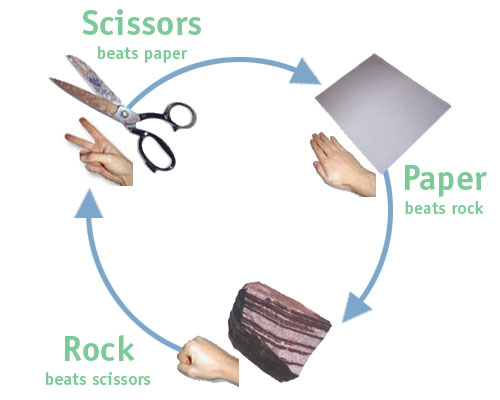
Rock-paper-scissors works because everyone understands it instantly. Rock crushes scissors. Scissors cut paper. Paper covers rock. That last one still feels suspicious if you think about it too literally, but society has agreed to move on. The game is fast, democratic, portable, free, and wonderfully final. No batteries. No Wi-Fi. No login screen asking whether you forgot your password. Just two people, one count, and a result that ends the argument before it grows a mustache and becomes a family feud.
Why Rock-Paper-Scissors Feels So Satisfying
The charm of rock-paper-scissors is not just that it solves things. It solves them without turning everyone into a courtroom attorney. Who gets the last slice of pizza? Who takes the middle seat? Who chooses the movie? Who has to answer the door when the delivery driver arrives three seconds after everyone has become suspiciously “busy”? A quick round gives the decision a clean ending.
In a world full of complicated choices, rock-paper-scissors is refreshingly small. It does not ask for your values, budget, long-term goals, or childhood attachment style. It simply says, “Ready? One, two, three.” Then fate and psychology shake hands.
Part of the fun is that the game feels fair even when it is secretly not as random as people think. Humans are pattern machines. We repeat moves, overthink moves, panic-switch after losing, and believe with heroic confidence that our opponent will “definitely go rock this time.” That tiny bit of strategy makes the game feel alive. It is luck wearing a fake mustache and calling itself skill.
The Tiny Rules That Make It Work
Before rock-paper-scissors can settle anything, the players need one sacred agreement: when to throw. Some people shoot on “scissors.” Others say “rock, paper, scissors, shoot.” A few mysterious regional rule-makers add extra beats like they are composing a national anthem. None of these systems is wrong, but mixing them is chaos. If one person throws on “scissors” and the other throws on “shoot,” the whole game becomes performance art.
Basic rules everyone should agree on
First, decide whether the match is one round, best of three, or best of seven. One round is fast and savage. Best of three feels civilized. Best of seven is for hotel rooms, road trips, serious snacks, and emotional people who need time to develop a comeback story.
Second, no late throws. A delayed hand is not strategy; it is hand-based fraud. If someone hesitates, twitches, or reshapes their fingers after seeing your move, they are not playing rock-paper-scissors. They are playing “small-scale villain origin story.”
Third, accept the result. This is the entire point. The loser may sigh, groan, or whisper “unbelievable” into the carpet, but the decision stands. Rock-paper-scissors only works when both players agree that the game is bigger than their feelings about the pull-out couch.
Why It Beats Arguing
Arguments are expensive. They cost time, mood, snacks, and sometimes years of group-chat peace. Rock-paper-scissors is cheap. It removes the need to prove who deserves what. Instead of building a case for why you should get the good seat because you “called it emotionally,” you let the game decide.
This is especially useful for decisions that are too small for serious debate but too annoying to ignore. Nobody wants to spend twenty minutes deciding who makes the coffee run. Nobody wants a PowerPoint presentation on why one sibling should not have to unload the dishwasher. Rock-paper-scissors compresses all that drama into three seconds.
It also protects relationships. When a friend loses fair and square, they may be disappointed, but they are less likely to feel personally attacked. The decision came from the game, not from your smug little face. That matters. The game creates emotional distance between the people and the outcome. In plain English: it lets everybody blame the scissors.
A Surprisingly Deep Little Game
Rock-paper-scissors looks simple, but game theorists love it because no single move is always best. If you always throw rock, someone will punish you with paper. If you always throw paper, scissors will arrive like a tiny metal tax bill. If you always throw scissors, rock will flatten your dreams.
The best pure strategy is no pure strategy at all. In theory, the safest long-term approach is to mix your choices unpredictably, giving rock, paper, and scissors equal chances. That is what makes the game elegant. Every move wins against one option, loses against one option, and ties against itself.
But humans are not perfect random-number generators. We carry habits into the game. Some people open with rock because it feels strong. Some avoid paper because it feels flimsy. Some switch after a loss because their brain screams, “Never again!” Others repeat a winning move because success feels warm and reliable, like a hoodie fresh from the dryer.
This is where rock-paper-scissors becomes more than a coin flip. It becomes a miniature study of prediction, confidence, fear, and bluffing. The actual hand signs are simple. The human brain behind them is the messy part.
The Psychology of the First Throw
The first throw is the great mystery. You have no prior pattern to read, so you read the person. Are they aggressive? Maybe rock. Are they clever? Maybe paper because they think you think they will choose rock. Are they too clever? Maybe scissors because they think you think they think you thinkat which point everyone should drink water and calm down.
Many casual players believe rock is the most popular first move. It has the emotional advantage of sounding powerful. Nobody yells “Paper!” before charging into battle, unless the battle is at an office supply convention. Rock feels bold. Rock feels safe. Rock feels like a fist with a marketing department.
That is why some players start with paper. It quietly defeats rock while looking harmless. Paper is the librarian of the game: calm, flat, and surprisingly dangerous. Scissors, meanwhile, attracts the theatrical crowd. It has flair. It has angles. It says, “I came here to cut things and cause problems.”
Everyday Problems Rock-Paper-Scissors Can Solve
Rock-paper-scissors is perfect for domestic disputes that do not deserve emotional excavation. Who gets the bigger blanket? Who picks the playlist? Who sits in the front passenger seat? Who checks whether the weird sound downstairs is a burglar, the cat, or the washing machine entering its percussion era?
It also works at school, at work, on trips, during game night, and in any friend group where fairness matters but patience is running on fumes. Need to divide chores? Play for first pick. Need to choose teams? Let captains settle first choice. Need to decide who makes the awkward phone call? Best of three, no appeals.
The game shines during travel. Road trips create endless tiny conflicts: who drives next, who chooses lunch, who sleeps on the sketchy sofa bed, who asks the hotel front desk for more towels. These are not life-defining decisions, but they can feel enormous when everyone is tired, hungry, and carrying luggage that somehow gained weight overnight.
Why Best of Three Feels Better Than One and Done
A single round is clean, but brutal. It can feel too sudden, like losing a trial because your lawyer sneezed. Best of three gives the loser a comeback path. It introduces narrative. The first round sets the tone. The second round creates pressure. The third round, if needed, turns a basic decision into a tiny championship event.
Best of seven is a different animal. That is when the game becomes psychological theater. Players begin studying each other’s eyebrows. Every throw feels loaded. A tied score at three-three can make two adults behave like Olympic athletes competing for the last decent mattress in North America.
Longer matches can be hilarious because they expose patterns. Someone who starts confidently may become predictable after a loss. Someone who claims to have “a system” may reveal that the system is just throwing rock whenever nervous. Someone else may try to be random and accidentally create the most obvious pattern in the room.
Rock-Paper-Scissors as Conflict Resolution
At its best, rock-paper-scissors is not about winning. It is about consent. Both players agree to the rules, accept the risk, and honor the outcome. That is why it feels different from being overruled. You did not lose because someone outranked you. You lost because paper covered rock, and civilization requires you to respect that.
This makes the game a useful model for healthy small-scale conflict resolution. The rules are transparent. The process is quick. The stakes are clear. The result is immediate. There is no secret committee. No mysterious algorithm. No “we reviewed your request and regret to inform you.” Just a hand sign and a decision.
Of course, rock-paper-scissors should not decide everything. Do not use it for surgery, legal contracts, wedding vows, mortgage rates, or whether your roommate may adopt six raccoons. But for everyday choices, it is a beautiful little fairness machine.
The Awesome Thing About Letting Go
The deeper reason rock-paper-scissors feels awesome is that it helps us let go. Many daily arguments are not really about the thing. They are about wanting control, being tired, or feeling like we always get stuck with the bad option. A game interrupts that cycle. It says, “Let’s stop defending our tiny kingdoms and let chance do the paperwork.”
That moment can be oddly freeing. You throw your move, watch the result, and suddenly the decision exists outside you. If you win, great. If you lose, at least you lost in a way that made sense to everyone. There is dignity in the ritual, even if the ritual ends with you sleeping on a couch that sounds like it was assembled by angry spoons.
Personal Experiences: When Three Hand Signs Save the Day
Almost everyone has a rock-paper-scissors memory. Mine usually involves food, seating, or avoiding some minor responsibility that suddenly feels as dramatic as climbing Mount Everest in flip-flops. The beauty of the game is that it gives ordinary moments a little ceremony.
Picture a group of friends staring at one remaining slice of pizza. Nobody wants to be rude. Everyone says, “No, you take it,” while making eye contact with the slice like it owes them money. The politeness grows uncomfortable. Then someone says, “Rock-paper-scissors for it?” The room exhales. Finally, there is a system. Three seconds later, someone wins, someone loses, and the pizza achieves its destiny.
Or think about a road trip. The car is full. The good seat is open. The middle seat waits in the back like a punishment designed by a folding-chair company. Instead of ranking passengers by height, age, friendship level, or bladder reliability, two people play. The winner gets legroom. The loser gets character development.
Families use it constantly, even when they pretend they do not. Kids use it to decide who goes first. Parents use it to settle who handles bedtime when both adults have reached the “I cannot read this dinosaur book again” stage. Siblings use it for turns with the remote, last popsicle rights, and who has to tell Mom that something made of glass is no longer living its best life.
At work, it can rescue teams from decision fatigue. Nobody needs a fifteen-message Slack thread about who presents first during a casual internal meeting. Play a round. Done. Nobody needs a committee vote on who takes the last donut half. Play a round. Done. The game adds playfulness to places that often have too many forms and not enough joy.
Even losing can be funny. There is a special kind of laughter that comes after you confidently throw scissors and watch your opponent’s rock appear like a brick wall with fingers. You knew the risks. You made your choice. The universe responded with a fist. Somehow, that is easier to accept than a long explanation.
The best experiences happen when everyone respects the result. No begging for “two out of three” after agreeing to one throw. No sudden rule changes. No claiming your hand was “still loading.” The game only stays magical when the players protect its fairness.
That is why rock-paper-scissors deserves a spot on any list of awesome things. It is small, silly, and strangely noble. It turns conflict into play. It turns indecision into motion. It turns “I want the good bed” into a tiny championship with no paperwork. And when the final throw lands, everyone knows what happens next.
Conclusion
#956 Using Rock-Paper-Scissors to settle anything – 1000 Awesome Things celebrates one of life’s simplest tools for peace. Rock-paper-scissors is not just a children’s game. It is a quick decision-maker, a social equalizer, a pocket-sized lesson in probability, and a reminder that not every disagreement needs a debate stage.
Whether you are choosing the last slice, the best seat, the first turn, or the least terrible sleeping arrangement, rock-paper-scissors brings fairness with a wink. It lets us compete without becoming enemies. It lets us lose without feeling cheated. Most importantly, it keeps small problems small.
So the next time a tiny argument starts inflating like a parade balloon, raise your fist, count it out, and let the ancient hand triangle do its work. Rock. Paper. Scissors. Decision made. Awesome.
Note: This article is an original, fully rewritten SEO-style feature created for web publication. It is based on real information about rock-paper-scissors, everyday decision-making, game theory, and the 1000 Awesome Things topic, without inserting source links into the article body.