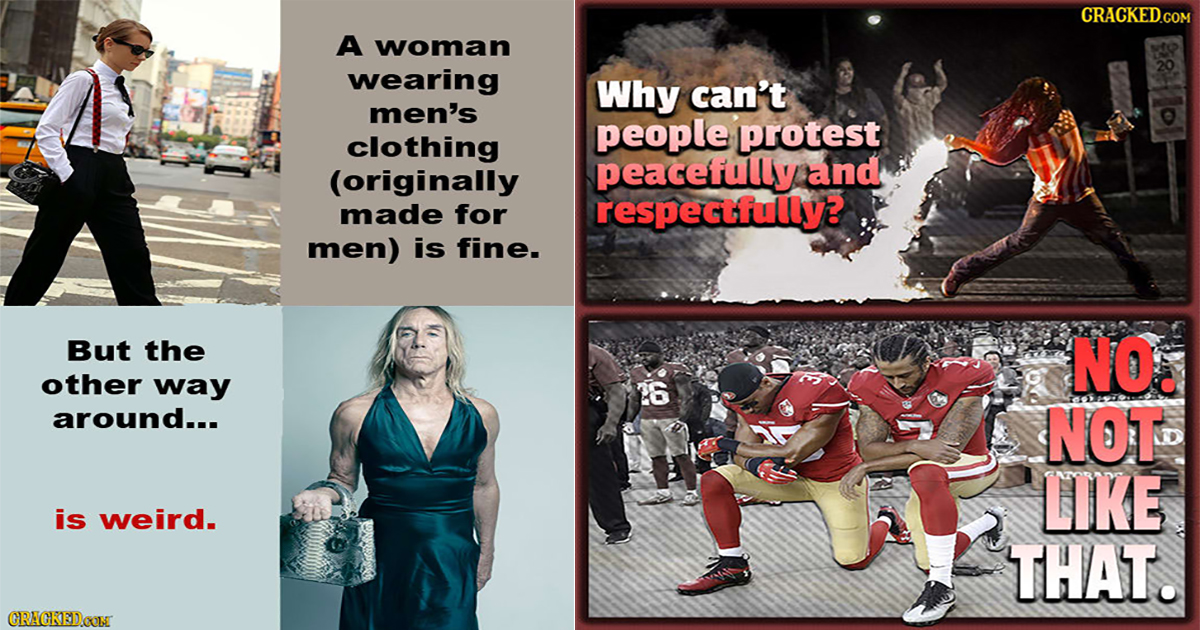
Double standards are the junk drawer of human behavior. We all have them, we all pretend ours are “different,” and we all get weirdly offended when someone points them out. We say we value honesty, but not the kind that ruins brunch. We praise confidence, until it arrives in a person we already find annoying. We demand people “be themselves,” then quietly hand out social penalties when their true selves are inconvenient, loud, messy, ambitious, awkward, emotional, or just plain unfashionable.
That is what makes double standards so fascinating: they are not just signs of hypocrisy in the cartoon-villain sense. They are often signs of something more ordinary and more uncomfortable. They reveal how people protect their egos, excuse their own behavior, reward people they like, punish people they do not, and apply rules based on status, gender, familiarity, or mood rather than fairness. In other words, double standards are not glitches in the system. They are the system, running exactly as our biased little brains designed it.
And yes, this includes all of us. Not just politicians. Not just influencers. Not just your cousin who posts “good vibes only” and then starts family feuds in the comments. All of us.
Why double standards happen in the first place
People like to imagine themselves as consistent, rational, and morally impressive. Reality is less elegant. We bend rules for ourselves because we know our motives. We judge others more harshly because we only see their behavior. We give extra grace to people we love, extra suspicion to people we distrust, and extra applause to behavior that fits our expectations. When actions clash with values, we do not always change our behavior. Sometimes we simply change the story.
That is why double standards show up everywhere: at work, in dating, in parenting, in politics, on social media, and in the grocery store aisle where we buy one eco-friendly item and suddenly feel like Captain Planet. The examples below are funny because they are true, but they are also useful because they expose the hidden rules people live by every day.
24 Double Standards That Prove We’re All Hypocrites
-
We say work-life balance matters, then worship whoever answers emails at 11:48 p.m.
Everyone claims burnout is bad. Nobody wants “toxic hustle culture.” Yet the employee who logs off on time is called balanced, while the one who never stops working is often treated like a hero. We say health matters, then build status around exhaustion.
-
We admire confidence in men and call it “a lot” in women
A confident man is decisive. A confident woman is sometimes described as difficult, intimidating, or “not warm enough.” Same behavior, different review. It is one of the oldest double standards in the book, and somehow the book keeps getting reprinted.
-
We tell people to speak up, then punish them for being blunt
Honesty is supposed to be a virtue until it lands too close to our feelings. Then suddenly the issue is not what was said, but the “tone.” We claim to want transparency, but what we often want is flattery dressed as feedback.
-
We preach body positivity, then rank everyone in our heads like confused judges at a pageant
Culturally, we know better. Privately, many people still reward certain looks and mock others. We say appearance should not matter, but beauty standards continue to shape dating, hiring, popularity, and even assumptions about discipline and worth.
-
We tell kids to be unique, then reward them most when they fit in
Parents and teachers love creativity in theory. In practice, the child who is imaginative in the approved amount gets praise, while the one who is truly unusual often gets “corrected.” Society loves individuality as long as it is neat, photogenic, and easy to manage.
-
We say social media is fake, then use it to measure who is winning at life
Everybody mocks curated online lives. Everybody knows highlight reels are not reality. Still, people scroll, compare, envy, and absorb those images as if they were sworn testimony. We call the stage fake while still believing the costumes.
-
We hate gossip, unless it is “concern” or “just context”
No one wants to be known as a gossip. That sounds petty. So we rename it. We are “processing.” We are “checking in.” We are “not judging, but…” Meanwhile, the tea is piping hot and somehow always lands in a group chat.
-
We insist on privacy, but expect total access to other people’s lives
We want our boundaries respected. We also want to know why someone is single, why they quit their job, why they have not had children, why they do not drink, and why they looked “off” at dinner. Our privacy is sacred. Other people’s privacy is apparently a scavenger hunt.
-
We say parenting should be equal, then judge mothers and celebrate fathers for the same thing
A mother handling basic care is often treated as expected. A father doing the same thing may get praise for being unusually involved. That gap reveals how stubborn our ideas about caregiving still are, even when people swear they believe in equal parenting.
-
We say money does not buy happiness, then assume rich people are doing something right
People love quoting that old line about happiness not coming with a luxury trim package. Yet wealth still gets confused with discipline, intelligence, and moral superiority. If a rich person gives advice, it is “wisdom.” If a broke person says the same thing, it is “coping.”
-
We say personality matters more than looks, but first impressions still cash the biggest checks
Everyone loves to sound deep. Character matters. Kindness matters. Compatibility matters. All true. But visual judgment still gets the first vote in dating, media, and social status. Personality may win the long game, but looks often get the opening round.
-
We celebrate authenticity, then get nervous when people stop performing niceness
We say, “Just be real.” But often what we mean is, “Be real in a way that keeps me comfortable.” The moment someone becomes more direct, less smiley, or less agreeable, authenticity mysteriously becomes a “bad attitude.”
-
We want leaders to be tough, except when toughness arrives in the wrong package
People claim they want strong leadership. Then they complain when leaders set firm boundaries, make unpopular decisions, or refuse to soften every message. Often the reaction depends less on the behavior itself and more on who is doing it.
-
We say everyone deserves grace, unless we already disliked them
When a favorite public figure messes up, people talk about growth, nuance, and second chances. When an unpopular person does the same thing, people suddenly rediscover the concept of permanent moral exile. Grace is often distributed like VIP bottle service.
-
We mock “performative activism,” but still reward performance
People roll their eyes at empty slogans and trendy outrage, yet public displays of virtue still earn attention, social approval, and cultural points. We dislike fake moral performance in principle while continuing to build platforms that run on it.
-
We say cancel culture is out of control, then quietly enjoy the spectacle
Most people claim to hate dogpiles. But outrage is entertaining, and moral certainty is addictive. We denounce public shaming while refreshing the feed to see whether the apology was messy enough to keep the chaos going.
-
We tell people not to judge books by their covers, then do it with résumés, accents, and zip codes
Bias does not always look dramatic. Sometimes it sounds like “not the right fit,” “not polished,” or “not leadership material.” We insist merit should win, while quietly filtering people through a thousand class and culture signals.
-
We want partners who are honest, but not too honest about their past
In dating, people demand openness, maturity, and emotional transparency. Then certain answers become disqualifying, even when the same behavior would feel understandable in themselves or a friend. We say the past is the past right up until it gets specific.
-
We tell friends to leave bad relationships, then write novels of excuses for our own
Other people’s relationship problems look obvious from the outside. Red flags seem bright enough to guide planes home. But when it is our relationship, the flags become “stress,” “timing,” “miscommunication,” and “they have just been through a lot lately.”
-
We praise frugality, unless it looks inconvenient
People admire saving money in theory. In reality, the person who skips overpriced extras or refuses lifestyle inflation can get labeled cheap. We encourage financial responsibility right up until it interferes with the vibe.
-
We criticize consumerism, then use shopping as therapy with better packaging
Minimalism gets applause. Mindful spending sounds noble. Yet many people still chase identity through purchases, then act surprised when the tenth “little treat” becomes an expensive personality. We condemn excess while romanticizing our own version of it.
-
We say rules matter, unless breaking them helps our side
Nothing exposes hypocrisy faster than politics, sports, or office drama. People become passionate defenders of principles until those principles inconvenience the team they support. Suddenly the exact same behavior becomes justified, strategic, or “different in this case.”
-
We say everyone should mind their own business, then build opinions on strangers in ten seconds
A person walks in late, dresses differently, speaks awkwardly, or makes one odd comment, and a whole character profile gets drafted in our heads. We hate being misunderstood, yet we are Olympic-level jumpers when it comes to conclusions.
-
We say people can change, but we keep old versions of them on file forever
This may be the grand champion of double standards. We want others to recognize our growth, forgive our awkward phases, and respect our evolution. Yet we often keep other people trapped in outdated identities because it makes the social map easier to read.
What all these double standards actually reveal
The point is not that human beings are uniquely terrible. The point is that fairness is harder than it sounds. Double standards survive because they are useful. They protect self-image. They preserve status. They help groups maintain invisible hierarchies. They save us from the discomfort of admitting that our judgments are often inconsistent, emotional, and self-serving.
They also reveal how much context shapes morality. We do not judge behavior in a vacuum. We judge it through stories: who did it, why they did it, whether we like them, whether they seem similar to us, whether their behavior confirms what we already believe. That is why hypocrisy is not always loud. Sometimes it is subtle, polite, and socially rewarded.
The good news is that noticing double standards is the first step toward reducing them. The bad news is that the first person we have to notice is usually ourselves, and frankly that is terrible for morale.
Experience: What This Looks Like in Real Life
If you want to understand double standards, do not start with a philosophy book. Start with a workplace meeting, a family holiday, a school pickup line, a comment section, or a group chat at 10 p.m. That is where the real show happens. The contradictions are not abstract there. They are social, emotional, and painfully familiar.
Picture a team meeting where one employee gives a direct opinion and gets praised for being strategic, while another gives the same level of directness and gets described later as abrasive. Nobody in the room says, “I am now applying a double standard.” Instead, everyone wraps the judgment in professional language. One person is “confident.” The other is “hard to work with.” Same volume, same clarity, wildly different label.
Or think about family life. A mother forgets one school form, and suddenly it becomes evidence that she is overwhelmed or not organized enough. A father shows up with snacks and remembers half the schedule, and people treat him like he deserves a tiny parade. Most families do not announce these expectations out loud, but they act them out constantly. That is what makes the experience so frustrating. The standard is invisible until you fail it.
Dating is a gold mine of contradictions too. People say they want honesty, but often only the flattering kind. They ask for vulnerability, then recoil when someone is messy, uncertain, or imperfect in a non-cinematic way. They claim to hate games while rewarding mystery, mixed signals, and carefully rationed attention. Then everyone acts shocked that modern dating feels like a psychological obstacle course designed by raccoons.
Social media makes everything louder. We say the internet is shallow, but many people still use it as a scoreboard for worth. A person posts about rest, boundaries, and mental health, then apologizes for taking too long to answer messages. Another person criticizes consumerism while filming an expensive “haul.” Someone condemns judgmental culture while making a career out of reaction videos. It would be hilarious if it were not so normal.
Even ordinary shopping reveals the same pattern. People talk about sustainability, ethics, and conscious consumption, then excuse their own convenience purchases because they were tired, busy, stressed, celebrating, grieving, or simply “deserving a treat.” That does not make them monsters. It makes them human. But it does show how quickly values become flexible when real life gets involved.
The strangest part is that most hypocrisy does not feel like hypocrisy from the inside. It feels reasonable. Necessary, even. That is why these experiences matter. They remind us that double standards do not survive because people are always malicious. They survive because people are skilled narrators. We can turn almost any inconsistency into a story that lets us keep our self-respect intact.
And that is exactly why this topic hits a nerve. We recognize ourselves in it. We remember the time we wanted understanding but gave judgment, asked for nuance but offered certainty, demanded grace but extended none. The article title says “we’re all hypocrites,” and while that sounds rude, it is also oddly democratic. No one gets out clean. The perfectionist, the activist, the office favorite, the family peacemaker, the rebel, the overachiever, the guy who says he “doesn’t do drama” but somehow knows all the details every one of us has a private list of exceptions that magically makes our own behavior make sense.
That recognition can either make us defensive or make us better. The smarter option is obvious. The easier option is to pretend this entire article is about somebody else.
Conclusion
Double standards thrive because they flatter us, protect us, and make life feel easier in the short term. But they also distort relationships, workplaces, politics, parenting, and culture. The more honestly we examine them, the more clearly we see that hypocrisy is not just a public scandal. It is an everyday habit.
So the next time you catch yourself demanding patience, fairness, nuance, or grace, it may be worth asking one uncomfortable question: would I apply this exact same standard if the person in front of me were not me, my favorite person, or someone on my “team”? If the answer is no, congratulations. You are human. Also, mildly busted.
Note: Clean HTML body only, in English, ready for web publishing. Remove any editor-specific artifacts before posting.