In Hollywood, every now and then, history stops being a straight line and starts behaving like a boomerang. A prop from one movie flies out, vanishes for decades, and then smacks another franchise squarely in the forehead. That is basically what happened when Star Wars brought Grand Moff Tarkin back in Rogue One. The strange twist is that this feat of digital necromancy did not begin in a galaxy far, far away. It began with an absurd 1980s comedy that treated logic like a chew toy and thought a giant fake eyeball was a perfectly reasonable afternoon at work.
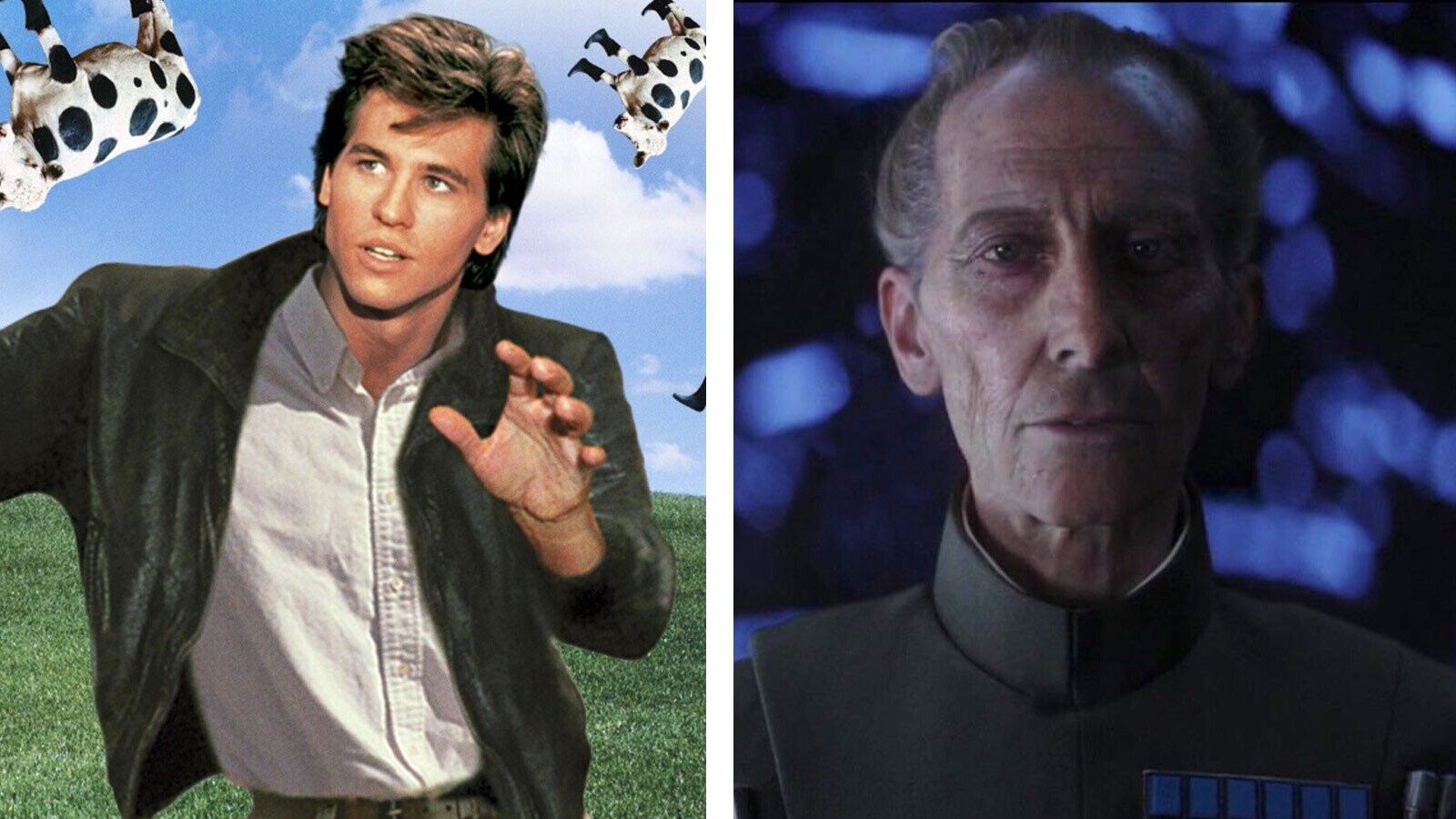
The movie was Top Secret!, the wonderfully deranged 1984 spoof from Jim Abrahams, David Zucker, and Jerry Zucker. It starred Val Kilmer in his feature debut, gleefully mashed together Elvis musicals and Cold War spy stories, and included a brief Peter Cushing gag that seemed destined for trivia-night obscurity. Instead, that tiny visual joke ended up helping Lucasfilm resurrect one of the most chilling Imperial officers in the saga. It is the kind of behind-the-scenes story that sounds made up by a sleep-deprived fan at 2 a.m. on a message board. And somehow, it is real.
Even better, it reveals something important about modern blockbuster filmmaking: giant franchises are not just built on budgets and technology. They are also built on archives, accidents, craft traditions, and the weird afterlife of old practical effects. In this case, a comedy that delighted in nonsense quietly preserved a piece of Peter Cushing’s face that would one day help Star Wars make audiences do a double take in dark theaters everywhere.
The Weird Connection Started With a Joke
Top Secret! is the kind of movie that does not merely tell jokes; it tackles them to the floor. Roger Ebert praised it for chasing laughs in every possible direction, and one of the film’s most famous stretches is the Swedish bookstore sequence, which was shot and played backward for extra comic chaos. In that scene, Peter Cushing appears as a bookseller, and one gag makes his eye look absurdly enlarged when he lowers a magnifying glass. It lasts only a moment, but like many great sight gags, it sticks in your brain because it is so gloriously ridiculous.
Pulling off that effect was not as simple as telling Cushing to “look more enormous, Peter.” Makeup artists had to create a prosthetic effect for the gag, and that required making a lifecast of Cushing’s face. At the time, this was just part of the practical, hands-on craft of movie makeup. No one on that set was likely thinking, “Excellent, this will be extremely useful for digital facial reconstruction thirty years from now.” People were busy making a spoof, not planning for the future of visual effects.
But movie history loves a good stash of forgotten treasure. That face cast was made by Stuart Freeborn, the legendary makeup and creature artist whose resume is basically a hall of fame plaque with more latex. Freeborn helped create Chewbacca, Yoda, and Jabba the Hutt for the original Star Wars trilogy. So even before this story loops back to Lucasfilm, there was already an invisible thread connecting the comedy and the space opera through one craftsman’s hands.
Why Tarkin Had to Be in Rogue One
To understand why Lucasfilm went to such lengths, you have to understand Tarkin’s place in the story. Rogue One leads directly into A New Hope, and Grand Moff Tarkin is not some random Imperial lurking near the coffee machine. He is a central architect of the Death Star era, a ruthless believer in rule through terror, and one of the Empire’s clearest human faces of cruelty. In official Star Wars canon, he oversees the Death Star project and sees its superlaser as the perfect tool to keep whole systems obedient through fear.
That means a prequel about the Death Star plans without Tarkin would feel suspiciously like a Batman movie where nobody mentions Gotham. Director Gareth Edwards later explained that as Rogue One developed, Tarkin moved from a possible cameo to a necessary character. Lucasfilm could have hidden him in shadows, shown him from behind, or tossed him into a hologram and hoped fans were too busy clutching their popcorn to complain. Instead, the filmmakers decided the story worked best if Tarkin fully participated in it.
That was the bold choice. Also the dangerous one. Because Peter Cushing, the actor who defined Tarkin in 1977, had died in 1994. Recasting the role in heavy makeup was one option, and Star Wars had used a stand-in version of Tarkin before. But Rogue One required more than a passing resemblance. It needed the sharp cheekbones, the clipped authority, the dry menace, and that peculiar sense that Tarkin could destroy a planet without wrinkling his uniform. Lucasfilm wanted the character back, but the performance was inseparable from Cushing’s screen identity.
How Lucasfilm and ILM Pulled It Off
The actual resurrection was a hybrid of old and new movie magic. Actor Guy Henry performed Tarkin on set, giving the role body language, voice, timing, and presence. Then Industrial Light & Magic layered Peter Cushing’s likeness over Henry’s performance through an incredibly labor-intensive digital process. One outlet described it as a high-tech version of makeup, which is a perfect phrase because that is exactly what it was: not magic, not simple CGI, but an elaborate extension of performance and prosthetic traditions into the digital era.
ILM also had to solve a problem every digital-human attempt runs into sooner or later: the uncanny valley. If a face looks almost real but not fully real, audiences do not relax. They squint. They start mentally investigating the eyebrow spacing. They become accidental forensic analysts. Critics at the time were divided. Some viewers were impressed that Tarkin could hold a conversation and feel like a real participant in the movie. Others found the result eerie, distracting, or a little too close to “haunted wax figure in a nice uniform.”
That split reaction is part of what makes the whole thing so fascinating. Rogue One did not just bring back a character. It forced audiences to think about the line between performance, likeness, memory, and simulation. Is it still Peter Cushing? Is it Guy Henry channeling Peter Cushing? Is it a new performance wearing an old face? The movie did not exactly pause for a seminar, but it certainly invited one.
And this is where the Top Secret! connection becomes more than a cute anecdote. ILM used a resin duplicate made from that older Cushing lifecast as a physical reference point. According to Tom Spina, who had acquired the original plaster lifecast from Stuart Freeborn’s collection, Lucasfilm came looking for a cast of Cushing’s face and was connected to him through Lucasfilm’s Pablo Hidalgo and ILM’s John Knoll. Spina’s studio produced a duplicate that ILM could scan and study. That gave the artists a strong anatomical foundation for proportions, pores, wrinkles, and the overall structure of Cushing’s face.
Why an ‘80s Spoof Mattered So Much
This is what makes the story so deliciously weird. A joke in an anarchic parody wound up supplying material support to one of the most technologically ambitious effects challenges in modern franchise filmmaking. If you had pitched that in a studio meeting, someone would have escorted you to a chair and asked whether you had recently fallen off one.
But the connection makes perfect sense once you think about how film history actually works. Movies are built by departments. Departments build objects. Objects get stored, traded, preserved, forgotten, rediscovered, and reinterpreted. Practical effects, especially, leave behind relics: molds, maquettes, casts, tests, puppets, and weird little monsters that look like they should not legally exist outside a dream. Sometimes those leftovers become museum pieces. Sometimes they become collector items. And sometimes, if cinema is in a playful mood, they become essential tools in a future movie nobody on the original production could have predicted.
There is also something beautifully fitting about Stuart Freeborn standing at the center of both stories. He was part of the old-school craft tradition that gave the original Star Wars trilogy so much tactile personality. Freeborn’s creatures and makeup work helped make the galaxy feel inhabited, grubby, strange, and alive. Decades later, a cast he made for a comedy helped Lucasfilm preserve continuity with that earlier era. In a funny way, the franchise did not just bring back Tarkin. It reached back to the hands that helped shape the physical look of Star Wars in the first place.
The Return of Tarkin Was About More Than Nostalgia
It would be easy to write this off as a fancy Easter egg for fans who can identify Imperial officers by their cheekbones. But Tarkin’s return in Rogue One does more than trigger nostalgia. He sharpens the movie’s political texture. Director Orson Krennic thinks he is the hotshot manager of the Empire’s deadliest real-estate project, yet Tarkin glides in, takes control, and reminds everyone that the Empire rewards ambition only until someone more powerful decides to step on it.
That relationship helps Rogue One feel less like a side quest and more like a true bridge into the original trilogy. Tarkin is not there to wave at the audience. He is there to embody the cold logic of the Empire at the exact moment the rebellion is preparing to challenge it. His presence ties the film to A New Hope in a way that is dramatic, not decorative.
It also proves that Star Wars has always been good at treating its villains like institutions as much as individuals. Darth Vader is terror with a cape. Palpatine is corruption in a chair. Tarkin is bureaucratic violence in polished boots. Bring him into Rogue One, and suddenly the movie is not just about stealing plans. It is about the machinery of authoritarian power and the smug people who believe fear is a perfectly reasonable management style.
What This Says About the Franchise
Star Wars has a long history of pulling material from the past and giving it a new job. Sometimes that means using old designs, old sounds, old uniforms, or even old footage. Sometimes it means revisiting characters in animation, books, or live action. And sometimes it means going further than audiences expected, using digital tools to put a long-dead performer’s likeness back on the screen.
That can be thrilling, unsettling, impressive, awkward, or all four at once. But it also feels very Star Wars. This is a franchise obsessed with legacy, lineage, echoes, and circular storytelling. Fathers become myths. Empires fall and reappear in new shapes. Old voices guide new heroes. Ancient religions become political problems. So of course its filmmaking methods have started to resemble its storytelling instincts. The franchise itself now behaves like a memory machine.
That does not mean every resurrection is automatically a good idea. It does mean the Tarkin case remains a landmark because it sits at the intersection of art, technology, ethics, performance, and fandom. It is a cautionary tale and a technical milestone, but it is also a reminder that cinema’s future keeps tripping over cinema’s past. In this case, it tripped over a comedy prop and somehow landed on its feet.
The Fan Experience: Why This Story Still Feels So Wild
There is a special kind of movie experience that happens when you realize a film is doing something you have never quite seen before, and your brain cannot decide whether to applaud, laugh nervously, or whisper, “Wait, are they really doing this?” That was the Tarkin effect for a lot of people watching Rogue One. The first reaction was often surprise. Then curiosity. Then a tiny internal committee meeting about whether the illusion was brilliant or deeply weird.
That emotional wobble is part of why the story has lasted. If Tarkin’s appearance had been perfect, the conversation might have vanished into ordinary praise for visual effects. If it had been terrible, audiences would have written it off as a failed experiment and moved on. Instead, it landed in the far more interesting middle ground: compelling enough to admire, imperfect enough to debate, and eerie enough to burn itself into pop-culture memory.
For longtime Star Wars fans, the experience also carried a layer of timeline pleasure. Rogue One is already a movie built to click into place beside A New Hope like a puzzle piece with trust issues. Seeing Tarkin there gave the film a jolt of authenticity. He belongs in that corridor world of gray walls, Imperial ambition, and looming catastrophe. His presence makes the galaxy feel continuous, as though the same machinery of oppression is grinding away from one film to the next without ever taking a lunch break.
Then comes the second wave of delight: discovering that an old comedy helped make it happen. That revelation changes the mood entirely. Suddenly the story is not just about digital effects or franchise engineering. It becomes a classic Hollywood oddity, one of those tales that reminds fans why movie history is fun. The image of Peter Cushing doing a goofy sight gag in Top Secret! quietly feeding into one of the biggest franchises on Earth is absurd in the best possible way. It makes the whole enterprise feel less corporate and more accidental, less like a master plan and more like cinema’s version of finding out your history teacher used to drum in a garage band.
There is also a strangely moving side to it. Movie fans often talk about performances as if they survive beyond the people who gave them, and in a sense they do. Faces, gestures, voices, and expressions become part of a shared visual memory. Tarkin’s return is not the same as Peter Cushing literally returning, of course. But it does show how film preserves traces of people in ways that can be reactivated decades later, sometimes by technology and sometimes by pure archival luck.
And maybe that is the biggest reason this story sticks. It is creepy, yes. It is funny, definitely. It is technically fascinating, absolutely. But it is also about continuity in the broadest sense: continuity between practical and digital effects, between parody and blockbuster, between old craftsmen and new artists, between a 1984 joke and a 2016 spectacle. Fans love finding hidden corridors between movies, and this one is a beauty. Somewhere between a giant eyeball gag and the Death Star, film history winked.
Conclusion
The return of Grand Moff Tarkin in Rogue One remains one of the strangest and most revealing moments in modern franchise filmmaking. On the surface, it is a story about digital effects and a controversial attempt to revive a familiar face. Underneath, it is a story about preservation, craft, and the chaotic way cinema recycles its own past. A face cast made for a joke in Top Secret! helped give Star Wars the anatomical reference it needed to bring Peter Cushing’s most famous sci-fi role back to the screen.
That is not just a fun bit of trivia. It is a perfect example of how movie history works when nobody is looking: practical effects become archival artifacts, artifacts become tools, and tools become the bridge between generations of storytelling. The result was a Tarkin performance that audiences still argue about, still remember, and still use as shorthand for the possibilities and limits of digital resurrection.
So yes, an ‘80s comedy helped Star Wars bring a famous character back from the dead. Which is exactly the kind of sentence that sounds fake until you remember that movies are built by magicians, collectors, obsessives, and people who apparently never throw anything away. Thank goodness for that.