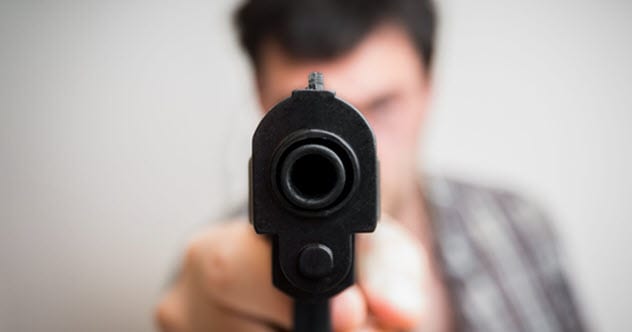
Note: This article discusses real service-dispute incidents reported by U.S. news outlets. It does not glorify gun violence. The point is simple: a wrong order, long wait, missing sauce, or rude exchange is never worth a life, a prison sentence, or a lifetime of trauma.
When Customer Complaints Turned Into Criminal Cases
Customer service has always had its dramatic moments. Someone gets cold fries, a sandwich has too much mayo, a drive-thru line moves like it is being powered by a sleepy hamster, and suddenly everyone in the building is having a very bad day. Usually, these stories end with a refund, a remake, or a one-star review written with the fury of a Shakespeare villain.
But in several disturbing cases across the United States, ordinary service complaints escalated into gun threats, shootings, arrests, and deaths. These incidents are not “wild customer stories” in the funny sense. They are warnings about anger, entitlement, poor conflict control, and the dangerous moment when a minor inconvenience meets a weapon.
The phrase “used guns to complain about service” sounds absurd because it is absurd. A firearm is not a feedback form. It is not a manager button. It is not a shortcut to fresher fries. Yet the following real examples show how quickly everyday disputes in restaurants and drive-thrus can become life-changing events.
1. The Brooklyn McDonald’s Cold Fries Shooting
One of the most widely reported cases happened in Brooklyn, New York, in 2022. A McDonald’s worker, Matthew Webb, was shot after a dispute that reportedly began when a customer complained that her French fries were cold. According to reports, the customer called her son during the disagreement, and the son later came to the restaurant. The confrontation moved outside, where Webb was shot. He later died from his injuries.
The detail that makes this case so haunting is the starting point: cold fries. Not a major financial loss. Not a life-threatening emergency. Fries. The kind of problem that can usually be solved with a receipt, a polite request, and maybe three minutes of patience.
Instead, a young worker lost his life while doing a job that millions of people depend on to pay rent, tuition, or family bills. For readers searching for real examples of fast food gun violence, this case often appears because it captures the terrible imbalance between the complaint and the consequence.
2. The Atlanta Subway “Too Much Mayo” Shooting
In Atlanta, Georgia, a Subway dispute in 2022 reportedly began over mayonnaise on a sandwich. Police said a man complained that there was too much mayonnaise, argued with workers, and opened fire. One employee was killed, and another was injured.
There is no polite way to dress up the madness of that sentence. A sandwich became the center of a deadly confrontation. In any normal customer-service universe, “too much mayo” should lead to a remake, not a homicide investigation.
The Atlanta case also highlighted another painful reality: service workers often absorb anger from strangers over things they did not design, price, staff, or control. They are the visible faces of a system, so they become the targets. That does not excuse anyone’s behavior, but it helps explain why training, security, and de-escalation policies matter in food service.
3. The Orlando Burger King Long-Wait Dispute
In Orange County, Florida, a Burger King worker named Desmond Armond Joshua Jr. was fatally shot in 2020 after a dispute connected to a long drive-thru wait. Reports said a customer became angry about the wait, was refunded, and left. She later returned with a man. A physical confrontation followed, and Joshua was shot.
Drive-thru delays are frustrating. Nobody enjoys sitting in a line long enough to start questioning the meaning of time. But restaurant delays often come from understaffing, equipment problems, mobile-order backlogs, or simple rush-hour chaos. The worker at the window is rarely the mastermind behind the delay. Most of the time, they are just trying to keep the fries from burning while the headset beeps like a tiny panic alarm.
This case shows how a small service failure can become dangerous when anger gets reinforced instead of cooled down. Bringing another person back into a conflict can escalate it, especially when that person arrives ready to fight rather than resolve.
4. The Spring Lake Subway Wrong-Order Shooting
In Spring Lake, North Carolina, a 15-year-old Subway employee was shot in 2025 after a customer allegedly argued with employees over a wrong order. Police said the customer became upset, began leaving, and then fired into the restaurant, hitting the teen worker.
This incident is especially upsetting because the victim was a teenager. Many young people take fast-food jobs as a first step into the working world. They learn how to show up on time, deal with customers, manage stress, and earn money. They should not have to learn how to survive gunfire over a sandwich order.
Wrong orders happen. They are annoying, but they are also fixable. What cannot be fixed easily is the trauma left behind for the victim, coworkers, customers, family members, and first responders. A service mistake may last five minutes. A violent reaction can echo for years.
5. The Houston McDonald’s Refund Dispute
In Houston, Texas, attorney Jeffrey Limmer was killed in 2024 after trying to calm an angry McDonald’s customer who was upset with employees over an order and demanded a refund. Reports said the customer then focused on Limmer, the confrontation moved outside, and the customer went to a vehicle, retrieved a gun, and shot him.
This case adds another tragic layer: the person killed was not the worker who made or served the food. He was a bystander trying to de-escalate. That is what makes public conflict so risky. Once anger spills into a shared space, anyone nearby can become part of the story, even if their only intention is to help.
There is a hard lesson here for businesses and customers alike. De-escalation should not depend on a random good Samaritan stepping in. Restaurants need clear safety policies, workers need permission to disengage from threatening customers, and customers need to understand that a refund dispute is not a moral crusade. It is a customer-service issue. Use the receipt, not rage.
6. The Houston Restaurant Denied-Service Shooting
In another Houston case, police said an angry customer at a restaurant was denied service, went to a car, got a gun, and started shooting toward the restaurant. A bystander was struck and taken to the hospital. Reports indicated that the dispute may have involved a canceled order.
Denied service can feel embarrassing, especially if someone is already angry, hungry, intoxicated, exhausted, or convinced they are being disrespected. But embarrassment is not an emergency. Being told “we cannot serve you” or “your order was canceled” is not permission to terrorize a building.
For restaurant owners, this kind of incident reinforces the importance of safe refusal procedures. Employees should know when to stop engaging, where to move, who calls law enforcement, and how to protect customers nearby. For customers, the advice is much shorter: leave. Cooling off in the parking lot is better than turning the parking lot into a crime scene.
7. The Lakeland McDonald’s Wrong-Order Shooting Allegation
In Lakeland, Florida, a McDonald’s employee was arrested in 2024 after police said a dispute over an incorrect order escalated at the drive-thru. Reports said the employee threw a drink, customers threw items back, and the employee later fired shots at the customers’ vehicle. No one was reported injured.
This case is important because it shows that dangerous escalation does not come only from customers. Workers can also lose control, especially in high-pressure environments where late-night shifts, angry guests, low staffing, and constant verbal abuse collide.
That does not excuse violence. It does mean prevention has to be broader than “the customer is always wrong” or “the employee should just take it.” Businesses need policies that protect staff from abuse while also setting firm rules about weapons, retaliation, and leaving a confrontation instead of chasing it.
8. The Florida McDonald’s Wait-Time “McMess”
In Davenport, Florida, a 2025 McDonald’s dispute reportedly began when two late-night customers became angry over wait times and the restaurant’s inability to take more orders during an online-order rush. Authorities said the situation moved inside the restaurant, threats were made, and a struggle involving a gun ended with one customer shot in the neck. The injury was reported as minor, and multiple people faced charges connected to the incident.
This case is a modern fast-food pressure cooker: online orders, drive-thru expectations, overnight staffing, impatient customers, and workers trying to manage a system that can overwhelm them. It also shows how quickly words like “I’ll wait for you after your shift” can raise the danger level.
People often treat fast food as instant food, but restaurants are still staffed by humans, not magic burger printers. When demand exceeds capacity, delays happen. The grown-up response is to wait, cancel, or go somewhere else. The disastrous response is to make threats that turn a service complaint into a criminal investigation.
Why Do Service Complaints Escalate So Fast?
These cases are extreme, but they point to common patterns. First, many incidents begin with a feeling of disrespect. The food is wrong, the wait is long, the refund is denied, or the employee’s tone feels dismissive. The complaint becomes less about the product and more about pride.
Second, fast-food and late-night service settings can be stressful. Workers are rushed. Customers are tired or hungry. Lines build. Mistakes multiply. Communication happens through windows, headsets, masks, receipts, and rushed exchanges. It is not exactly a spa retreat with dipping sauce.
Third, weapons change everything. An argument that might have ended with shouting can become fatal in seconds when a gun is introduced. That is why workplace-safety experts emphasize prevention, training, clear reporting, lighting, security procedures, and employee involvement in violence-prevention plans.
Lessons for Customers: How to Complain Without Becoming the Headline
The safest complaint is boring. That may not sound exciting, but boring is underrated. Boring gets you a refund. Boring gets you a replacement sandwich. Boring lets you go home without a police report.
Keep the Complaint Specific
Say what is wrong: “I ordered no onions,” “the fries are cold,” or “I was charged twice.” Do not make it personal. The worker did not wake up hoping to sabotage your lunch.
Use the Chain of Resolution
Ask for a remake, refund, manager, receipt review, customer-service number, or app support. That is the proper escalation ladder. A weapon is not on the ladder. It is not even in the building.
Leave Before You Lose Control
If you feel yourself getting too angry, step away. Sit in the car. Cancel the order. Eat somewhere else. Pride says, “I must win this argument.” Wisdom says, “This sandwich is not worth my future.”
Lessons for Restaurants: Protect the People Behind the Counter
Restaurants cannot control every customer, but they can reduce risk. Staff should know when a complaint has crossed from annoying to threatening. A raised voice is one thing. Threats, stalking, blocking exits, reaching into drive-thru windows, or saying someone will return with help are red flags.
Managers should train workers to disengage early, call for support, and avoid following angry customers outside. Businesses should also review lighting, camera coverage, panic procedures, cash-handling rules, and late-night staffing. The best conflict plan is not heroic. It is simple, practiced, and designed to get people away from danger.
Experience Section: What These Incidents Teach Us About Real-Life Service Encounters
Anyone who has worked in customer service knows that the job is part labor, part communication, and part emotional weather forecasting. You learn to spot the customer who is merely disappointed, the one who wants to vent, and the one who is building toward something worse. The hardest part is that workers are often expected to stay polite while absorbing frustration that has been collecting in the customer all day.
Imagine a teenager on a first job, standing behind a counter, trying to remember which sauce goes with which order while a line grows behind the register. A customer snaps. The headset crackles. A delivery driver asks where order 184 is. Someone in the lobby says their drink is flat. The worker may be wearing a uniform, but they are still a person, not a complaint sponge with shoes.
Now imagine being the customer. You waited twenty minutes. Your order is wrong. You are tired. Maybe money is tight, and paying for food that is not right feels like one more insult in a long week. The frustration is real. But frustration is not a blank check. The moment a person turns a service mistake into a threat, they stop being a wronged customer and become the danger everyone else has to survive.
The most useful real-world habit is to separate the problem from the person. The problem is the missing burger, the cold fries, the canceled order, or the slow line. The person in front of you may not have caused it. They may be the only one available to fix it. Treating them like an enemy makes the fix harder, not faster.
Another practical lesson is that public arguments attract audiences, and audiences raise the emotional temperature. People perform when they feel watched. A customer may double down because backing off feels humiliating. An employee may snap because coworkers are watching. A bystander may step in and unintentionally become part of the conflict. That is why the best move is often to reduce the stage: lower the voice, move aside, call a manager, or end the interaction.
For businesses, the experience lesson is clear: do not make workers improvise safety. A teenager, cashier, or overnight drive-thru employee should not have to invent a crisis plan while someone is threatening them. Clear rules matter. “If a customer threatens you, stop the transaction.” “If someone reaches inside the window, move away.” “If a person says they are coming back with someone, notify a manager and call authorities if needed.” These rules may sound basic, but basic is beautiful when panic arrives.
For customers, the experience lesson is even simpler: the exit is always an option. You can dispute the charge later. You can contact corporate. You can post a review. You can cook eggs at home and declare yourself the mayor of breakfast. What you cannot do is rewind a violent decision after it destroys lives. A complaint should end with a solution, not a siren.
Conclusion: A Bad Order Is Not a Battle
The eight cases above are memorable for all the wrong reasons. They show how cold fries, mayonnaise, missing items, long waits, denied service, and refund disputes can become tragedies when anger takes the wheel and a gun enters the scene.
Customer service will never be perfect. Orders will be wrong. Lines will be slow. Employees will have bad days. Customers will have worse ones. But civilization depends on a small shared agreement: we solve ordinary problems with ordinary tools. Words. Receipts. Refunds. Remakes. Apologies. Walking away.
A gun is not a complaint. It is a catastrophe waiting for a headline. And no sandwich, sauce packet, burger, or basket of fries is worth that.