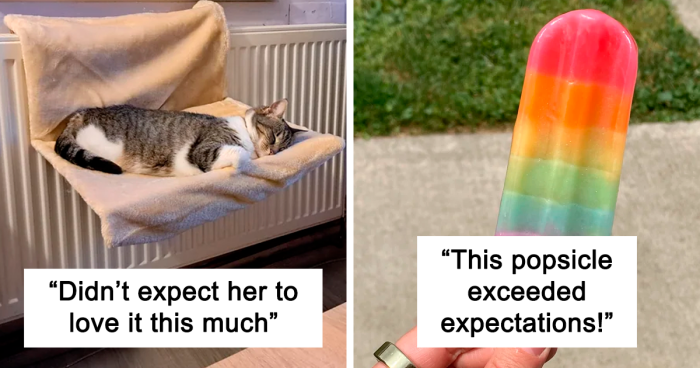
Most of the internet has been trained to expect disaster. A cake ordered online arrives looking like it was decorated during an earthquake. A “luxury” dress shows up with the emotional structure of a plastic grocery bag. A frozen pizza promises a gourmet Italian evening and delivers a sad tomato frisbee. That is the classic rhythm of expectation vs. reality posts: the promise is shiny, the result is chaos, and the comments section becomes a group therapy session with better jokes.
But every now and then, the universe decides to be charming. The “reality” photo is not worse than the expectationit is better. The restaurant dish looks more delicious than the menu picture. The birthday cake copied from a sketch looks like it belongs in a bakery window. The second embroidery project turns out neat enough to make veteran crafters nod in respect. The budget item, the homemade attempt, the online order, the thrift-store makeover, the DIY projectagainst all oddsactually wins.
That is why ‘Expectation Vs. Reality’ posts where the results surprisingly exceeded expectations are so satisfying. They flip a familiar meme format upside down. Instead of laughing at failure, we get to enjoy competence, luck, creativity, honesty, and the tiny miracle of something turning out better than advertised. In a digital world overflowing with disappointment, a pleasant surprise feels like finding an extra fry at the bottom of the bag. Small? Yes. Powerful? Absolutely.
Why Expectation Vs. Reality Posts Became Internet Gold
The phrase “expectation vs. reality” works because everybody understands it instantly. We all carry a mental preview of how something should turn out. Then real life walks in wearing mismatched socks and says, “Let’s improvise.” The gap between what we imagined and what actually happened creates the joke, the drama, or the delight.
Social media made the format irresistible because it is visual, fast, and emotionally clear. One side shows the promise: a product photo, a recipe image, a Pinterest craft, a hotel brochure, a salon reference picture, or a glossy menu shot. The other side shows what happened. No long explanation required. The audience compares, reacts, laughs, gasps, or saves the post for later. That instant comparison is perfect for platforms built around quick attention.
Traditionally, the funniest posts are disasters. A cat bed looks like a napkin. A “romantic cabin” is actually a shed with commitment issues. A haircut meant to say “effortless waves” says “I lost a fight with a ceiling fan.” But the posts that exceed expectations have a different emotional flavor. They are not just funny; they are oddly comforting. They remind us that not every order is a scam, not every DIY project ends in tears, and not every low-budget attempt looks low-budget.
When Reality Wins: The Best Types of Expectation-Exceeding Posts
1. Food That Looks Better Than the Menu Photo
Food is the undefeated champion of expectation vs. reality content. We have all seen burgers in ads that look like they have personal trainers, while the real burger arrives flattened like it just heard bad news. That is why people get so excited when a meal looks exactly like the pictureor better.
Some of the most satisfying examples involve restaurant dishes with generous portions, bright colors, crisp presentation, and actual care. A Thai menu photo might show noodles, vegetables, sauce, and garnish; then the plate arrives looking even more abundant and vibrant than promised. A bakery photo might suggest a cute themed cupcake, only for the customer to receive a tiny edible masterpiece. These posts work because they restore faith in the sacred social contract between menu and mouth.
Frozen food can also surprise people. Usually, the box image is a dream sequence and the oven result is a negotiation. But sometimes the pizza comes out with more toppings than expected, the microwave meal keeps its shape, or the supermarket dessert looks party-ready. In those moments, the comment section reacts as if a national holiday has been declared.
2. Cakes That Actually Match the Inspiration Photo
Cake posts are high-risk internet theater. The expectation image often features flawless fondant, clean piping, perfect characters, and colors mixed by someone who appears to have graduated from Dessert Hogwarts. The reality version, unfortunately, can look like the character melted in a sauna.
That is what makes a successful cake post so delightful. When someone asks a friend or local baker to recreate a cartoon cake, a Doctor Who cupcake set, a themed birthday design, or even a hand-drawn sketchand the result looks polished, charming, and deliciousthe post becomes more than a comparison. It becomes a celebration of skill.
These wins also show why handmade work deserves respect. A good cake is not just sugar stacked vertically. It takes structure, timing, color control, patience, and the emotional strength to continue after buttercream chooses violence. When reality exceeds the expectation photo, the baker is not merely “good.” The baker has defeated gravity, heat, and customer anxiety in one frosting-covered battle.
3. DIY Projects That Do Not Become Cautionary Tales
DIY culture is built on optimism. We see a tutorial and think, “That looks easy.” Three hours later, we are holding a glue gun, surrounded by wood scraps, wondering whether the tutorial skipped several chapters and possibly a wizard.
But sometimes the beginner project lands beautifully. A first attempt at furniture restoration looks boutique. A painted wall mural has clean lines. A handmade shelf sits level, which is basically a spiritual experience. A second embroidery project looks almost identical to the reference. A thrifted table becomes a statement piece. These are the expectation vs. reality posts that make people say, “Okay, maybe I could try that too.”
The secret is not always natural talent. Often it is preparation: watching multiple tutorials, testing materials, measuring twice, sanding properly, and accepting that “quick and easy” online usually means “quick and easy for someone who has done this 800 times.” When the final result exceeds expectations, it proves that patience can be more powerful than expensive tools.
4. Online Shopping Wins That Feel Like Plot Twists
Online shopping has given the world many joys and several pants that should be investigated by science. Product photos can be misleading, sizing can be mysterious, and fabric descriptions sometimes read like poetry written by a liar. So when an online order arrives exactly as picturedor betterit deserves applause.
Expectation-exceeding shopping posts often include dresses that fit beautifully, furniture that looks sturdier than advertised, home decor that arrives intact, or budget gadgets that perform like premium items. The joy comes from relief. The buyer expected disappointment and received value instead. That emotional reversal is powerful.
These posts also act as informal reviews. A real customer photo carries a different kind of credibility than a studio image. People want to know how fabric falls on an actual body, how a rug looks in normal lighting, how big the lamp really is, or whether the “gold finish” looks elegant or like a school project. When reality wins, the post becomes a tiny recommendation engine powered by trust.
5. Travel Photos Where the Real View Beats the Brochure
Travel marketing is famous for perfect timing. The brochure shows a beach at sunrise, no crowds, no trash, no one’s uncle standing in the corner wearing socks with sandals. Real travel, meanwhile, includes weather, lines, delays, and the occasional meal purchased out of desperation.
Still, there are moments when reality outshines the advertisement. The hotel balcony view is wider than expected. The hike ends in a sunset that looks edited but is not. The roadside diner has better food than the famous restaurant. A small-town inn turns out cleaner, friendlier, and more charming than its website suggested. These posts are powerful because travel is expensive, emotional, and packed with anticipation. When the trip exceeds expectations, the relief is enormous.
Why We Love It When Reality Exceeds Expectations
The psychology is simple: we enjoy positive surprise. When expectations are low or moderate, and the outcome is better than predicted, the brain treats the difference as a reward. It is not just satisfaction; it is satisfaction with a confetti cannon.
That is why a $12 meal that tastes amazing can feel more memorable than a $90 dinner that is merely fine. The expensive dinner was supposed to be good. The cheap meal had room to surprise us. The same pattern appears in viral expectation vs. reality posts. The less confident we are about the outcome, the more exciting it feels when reality delivers.
There is also a social reason these posts spread. People enjoy sharing proof that life is not always a letdown. Negative content travels fast online, but positive surprise has its own charm. A post where a customer gets more toppings, a crafter nails the design, or a local baker overdelivers gives viewers a quick emotional lift. It says, “Look, something went right today.” On the modern internet, that is practically a public service.
What Brands, Creators, and Small Businesses Can Learn
For businesses, expectation vs. reality posts are a free honesty test. If customers share photos showing that the real product is better than the marketing image, that is a reputation jackpot. It means the product is not hiding behind lighting tricks, Photoshop, or suspiciously perfect angles. It means the real experience can survive daylight.
Small businesses should pay close attention here. Many customers no longer trust polished claims by themselves. They want real photos, real reviews, real comments, and real examples from people who have already tried the product. A customer showing that a cake, dress, meal, plant delivery, or handmade item exceeded expectations can be more persuasive than a beautifully written ad.
The lesson is not to undersell everything. It is to promise clearly and deliver generously. Accurate photos, honest descriptions, reliable sizing, realistic delivery timelines, and thoughtful packaging all help create positive disconfirmationthe happy gap between what customers expected and what they received.
Creators can learn something too. Not every post has to be dramatic failure content. A wholesome win can perform well because it gives people a reason to smile, save, comment, and share. The key is specificity. Instead of simply saying, “This turned out great,” show the reference, the process, the obstacles, and the final result. The more visible the gap between doubt and success, the more satisfying the post becomes.
How to Spot a Truly Great Expectation Vs. Reality Win
A strong expectation-exceeding post usually has three ingredients: a clear reference, a believable final result, and an emotional reaction. The reference sets the expectation. The final photo proves the outcome. The caption adds personality.
The best posts do not feel overly staged. They look like someone genuinely expected one thing and got something better. A baker says, “I was nervous about this design, but look how it turned out.” A customer says, “I expected the usual sad fast-food situation, but this sandwich came dressed for success.” A crafter says, “My first attempt was not perfect, but it came out way better than I thought.” That honesty makes the post relatable.
There is also a difference between “better than expected” and “suspiciously perfect.” Audiences are smart. If a post looks too polished, they may assume it is an ad. Real wins often include tiny imperfections: a slightly uneven edge, a messy table in the background, a caption admitting surprise. Those details make the success more believable.
Specific Examples That Capture the Trend
Some viral-style examples are especially memorable because they reverse familiar disappointments. A frozen pizza with extra toppings beats the usual freezer-aisle sadness. A restaurant dish in Thailand looking better than the menu image challenges the old joke that menus lie. A cake recreated from a sketch shows what happens when skill meets trust. A second embroidery project that closely matches the reference reminds viewers that beginners can surprise themselves. A themed cupcake set with detailed decoration proves that small desserts can carry big personality.
These examples matter because they are not about luxury. They are about delight in ordinary places: dinner, birthdays, crafts, online orders, local restaurants, home projects, and personal attempts. That is the beauty of the format. Anyone can participate. You do not need a film crew, a huge budget, or a celebrity endorsement. You need a before, an after, and a result good enough to make strangers on the internet say, “Honestly? Respect.”
Experience Section: What These Posts Teach Us About Real-Life Expectations
After spending enough time with expectation vs. reality posts, you start to notice that they are not really about cakes, pizzas, dresses, or DIY shelves. They are about the emotional math we do every day. We predict, we compare, we judge, and then we decide whether the outcome disappointed us, satisfied us, or made us weirdly happy. The posts are funny because they compress that whole human process into two pictures.
One relatable experience is ordering food when you are already hungry enough to become a different person. You look at the menu photo and try not to get your hopes up. You have been hurt before. The burger in the picture is tall, glossy, and confident. The last burger you received looked like it had been assembled during a fire drill. Then the order arrives, and somehow the real burger is huge, fresh, well-stacked, and photogenic. Suddenly, you are not just eating lunch. You are witnessing justice.
Another common experience is attempting a craft after seeing a tutorial. The tutorial host smiles calmly while making everything look effortless. You, on the other hand, are fighting tape, fabric, paint, and your own optimism. At first, the project looks questionable. Then something clicks. The final piece turns out charming. Maybe it is not museum-level, but it is better than you expectedand that matters. A surprisingly good result can build confidence faster than a perfect one, because you remember the doubt you had at the beginning.
Home improvement offers the same lesson. Painting a room, upgrading a rental kitchen, restoring a chair, or organizing a tiny pantry can feel intimidating. The expectation is often based on professional photos with perfect lighting and no visible extension cords. Real homes have weird corners, uneven walls, and budgets that do not enjoy being challenged. But when a realistic project turns out beautiful, it feels more meaningful than a showroom image. It proves that improvement is possible without perfection.
Online shopping creates perhaps the strongest emotional swing. Before opening a package, many buyers prepare for betrayal. Will the color match? Will the size make sense? Will the item look like the photo or like its distant cousin? When the product is actually better than expected, the relief is almost dramatic. People post because they want others to share the surprise. It is not bragging; it is a public announcement that the internet behaved for once.
The deeper experience behind all these examples is learning to leave room for pleasant surprises. Low expectations can protect us from disappointment, but they can also make good outcomes feel brighter. Expectation vs. reality posts remind us that life does not always follow the disaster script. Sometimes the local baker is brilliant. Sometimes the budget hotel is spotless. Sometimes the beginner makes something beautiful. Sometimes the real thing has extra cheese.
That is why these posts continue to attract attention. They offer humor, proof, and hope in one simple format. They show that reality can be messy, but it can also be generous. And when reality exceeds expectations, even in a small way, it gives us a story worth sharing.
Conclusion
‘Expectation Vs. Reality’ posts where the results surprisingly exceeded expectations succeed because they deliver something rare online: a happy twist. Instead of another tale of disappointment, they show food that looks better than advertised, cakes that match the dream, DIY projects that actually work, online purchases that feel like wins, and ordinary people surprising themselves with skill and luck.
These posts are more than quick entertainment. They reveal how strongly people respond to authenticity, real customer experiences, and positive surprise. In a world where polished promises are everywhere, the real result matters most. When that result is better than expected, the internet notices.
So the next time you order the cake, try the recipe, open the package, or attempt the project, take a before photo. Reality might disappoint you. It might behave exactly as expected. Or, if the stars align and the frosting cooperates, it might exceed expectationsand give everyone online a reason to cheer.