Changing your hair color can transform your entire look faster than buying a new wardrobeand with considerably fewer awkward fitting-room mirrors. But after the compliments fade, you may notice dryness, frizz, split ends, or strands snapping during brushing. That raises two important questions: Does dyeing hair damage it, and can damaged hair truly be repaired?
The short answer is yes, hair dye can cause damage, especially when bleach or permanent color is used repeatedly. Existing structural damage cannot be biologically healed because the visible hair shaft is made of nonliving cells. However, the hair can often be conditioned, strengthened, protected, and made significantly healthier-looking while new, undamaged hair grows.
How hair dye damages the hair shaft
To understand color damage, picture each hair strand as a tiny cable. The cortex forms its strong inner core, while overlapping cuticle cells protect the outside like roof shingles. Natural lipids help keep those shingles smooth, reduce friction, and give healthy hair its shine.
Hair coloring works by changing either the surface or the internal chemistry of that cable. Temporary color mostly coats the outside. More permanent formulas must open or swell the cuticle so coloring agents can reach the cortex. That access creates longer-lasting color, but it can also make the strand more porous and vulnerable.
What permanent dye does
Permanent hair color commonly combines an alkalizing ingredient, such as ammonia or monoethanolamine, with a developer containing hydrogen peroxide. The alkalizer helps swell the cuticle, while peroxide lightens natural pigment and allows new color molecules to develop inside the hair.
This oxidative process can alter keratin proteins and remove some of the lipids that protect the strand. After repeated applications, the cuticle may become uneven, chipped, or partially detached. Hair then loses moisture more easily, tangles faster, and breaks under less force.
Why bleach is usually more damaging
Bleach does not simply place a fashionable blonde sticker over dark hair. It oxidizes the melanin that gives hair its natural color. Significant lightening may require stronger developer, longer processing, or multiple sessions.
Unfortunately, the chemicals do not always stop politely after dealing with melanin. They can also affect structural proteins and protective fatty materials. That is why heavily bleached hair may become rough, highly porous, less elastic, or strangely gummy when wet. If a strand stretches like melted mozzarella and refuses to spring back, it is not displaying a charming new personalityit is severely compromised.
Which type of hair color causes the most damage?
The amount of damage depends on the formula, developer strength, processing time, desired color change, application technique, and starting condition of the hair.
- Temporary color: Usually coats the surface and washes out quickly. It generally causes the least structural change, although drying ingredients or rough removal can still create problems.
- Semi-permanent color: Deposits color with limited penetration and typically does not use a strong developer. It is usually gentler than permanent color.
- Demi-permanent color: Uses a low-volume developer and produces some oxidative change. It can cause cumulative dryness but is generally less aggressive than permanent lightening.
- Permanent color: Penetrates more deeply and permanently changes the hair’s pigment. Repeatedly pulling permanent dye through previously colored lengths increases damage.
- Bleach and high-lift color: Usually cause the greatest structural stress, particularly when lifting dark hair several levels or overlapping previously lightened sections.
Going darker or staying within about three shades of your natural color is normally less demanding than making a dramatic move from deep brown to platinum. The laws of chemistry are stubborn that way; they do not accept inspiration photos as a substitute for several careful appointments.
Signs that hair has been damaged by dye
Color-treated hair does not need to look like an abandoned broom before it qualifies as damaged. Early changes can be subtle and are easier to manage when recognized promptly.
- Persistent dryness or a straw-like texture
- Increased frizz and loss of shine
- Hair that tangles unusually quickly
- Split ends or small broken pieces around the sink
- Uneven texture, including brittle and overly soft areas
- Excessive stretching, gumminess, or weakness when wet
- Color that fades rapidly because porous hair cannot retain pigment well
- Difficulty holding a style
Breakage is not always hair loss
Chemically weakened hair often snaps somewhere along the shaft. This can create shorter pieces, thinning-looking ends, or a halo of flyaways. True shedding occurs when an entire strand leaves the follicle. Dye mainly affects the exposed shaft, but severe scalp inflammation, chemical burns, or intense breakage near the roots can make the overall loss look much more dramatic.
If you notice bald patches, scalp sores, sudden widespread shedding, or continued thinning after stopping chemical services, consult a board-certified dermatologist. An underlying medical condition may be involved rather than hair color alone.
Can color-damaged hair really be repaired?
It depends on what “repair” means. The visible hair shaft is not living tissue, so it cannot heal itself the way skin closes a cut. Once a cuticle cell is destroyed or a strand splits, no mask can persuade it to grow back together permanently.
That does not make hair-care products useless. Conditioners, oils, silicones, hydrolyzed proteins, and certain bond-building treatments can reduce friction, fill irregularities, improve flexibility, and temporarily reinforce weakened areas. Hair may become smoother, shinier, easier to detangle, and less likely to break. That is meaningful improvement, even though it is not a return to untouched “virgin” hair.
The only complete replacement for a severely damaged shaft is healthy new growth followed by gradual trimming. Fortunately, dye damage to the lengths does not automatically mean the follicle is permanently harmed. If the scalp and follicle remain healthy, new hair can grow normally.
What bond-building products can and cannot do
Bond-building products are designed to support chemical bonds or reinforce weakened areas within the strand. Some people see better elasticity and less breakage, particularly after lightening. Results depend on the formula and the degree of damage.
These products should be viewed as structural support, not time travel in a bottle. They cannot replace missing cuticle layers, permanently fuse split ends, or make severely overprocessed hair identical to new growth. Overusing protein-heavy treatments can also leave some hair feeling stiff, so balance them with appropriate conditioning.
How to improve and protect damaged dyed hair
Pause additional chemical processing
If hair is breaking, gummy, or extremely porous, postpone bleach, permanent color, relaxers, and perms. Applying another chemical service to “fix” the first one often turns a manageable problem into an emergency haircut. Ask an experienced colorist to evaluate the elasticity and perform a strand test before processing resumes.
Condition after every shampoo
A rinse-out conditioner lubricates the cuticle and reduces friction during detangling. Apply it mainly to the mid-lengths and ends, where hair is older and usually more damaged. A weekly deep-conditioning treatment may improve softness, although fine hair may need a lighter formula to avoid becoming flat.
Handle wet hair carefully
Wet, porous hair is vulnerable to stretching and breakage. Detangle gently with your fingers or a wide-tooth comb, beginning at the ends and working upward. Blot with a soft towel or cotton T-shirt instead of rubbing vigorously. If your towel-drying routine resembles polishing a bowling ball, enthusiasm may be working against you.
Reduce heat exposure
Frequent blow-drying, curling, and flat ironing can intensify chemical damage. Let hair partially air-dry, use the lowest effective temperature, and apply a heat-protectant product. Avoid repeatedly passing a flat iron over the same section, especially when the hair is not completely dry.
Use oils strategically
Oils can lubricate strands, reduce friction, and improve the appearance of dry ends. Coconut oil has evidence supporting its ability to penetrate hair and reduce protein loss for some people. Apply a small amount before washing or to the ends as needed. Fine hair may require only a drop or two, while coarse or tightly curled hair may tolerate more.
Oil does not add water to hair or reconstruct a destroyed cuticle. It is a useful supporting actor, not the entire repair department.
Trim split and transparent ends
Split ends cannot be permanently sealed. Serums can temporarily smooth them, but trimming prevents splits from traveling farther up the shaft. Hair that looks thin and see-through at the bottom may appear fuller after a modest cut, even though the tape measure delivers disappointing news.
Protect color-treated hair from the environment
Ultraviolet exposure can weaken hair and accelerate fading. Wear a hat during prolonged sun exposure or use a product intended to provide UV protection. Before swimming, wet the hair with clean water and apply conditioner if appropriate. A swim cap offers additional protection from chlorine and repeated swelling of the hair shaft.
How to reduce damage during future coloring
- Perform a strand test. This reveals how the hair handles the formula and whether the expected color is realistic.
- Patch-test every application. Follow the product instructions, generally testing 48 hours before use. A previous reaction-free experience does not guarantee future safety.
- Do not color an irritated scalp. Wait if the skin is scratched, sunburned, inflamed, or already reacting to another product.
- Follow the processing time exactly. Leaving dye on longer does not necessarily create a better shade, but it can produce more irritation and damage.
- Avoid overlapping bleach. Apply lightener only where it is needed, especially during root touch-ups.
- Space appointments apart. Longer intervals give you time to assess breakage and reduce repeated chemical exposure. Eight to ten weeks may be practical for many color routines, although the appropriate schedule varies.
- Choose a realistic transformation. A gradual lightening plan is safer than forcing a dramatic change into one marathon appointment.
- Use a qualified professional for major corrections. Corrective color requires knowledge of porosity, underlying pigments, developer strength, and chemical history.
Hair dye reactions require a different kind of repair
Dry strands and an inflamed scalp are not the same problem. Hair dyesparticularly dark permanent formulas containing para-phenylenediamine, commonly called PPDcan trigger allergic contact dermatitis. Warning signs include itching, redness, swelling, burning, scaling, or blisters around the scalp, ears, eyelids, face, or neck.
Stop using the product and rinse thoroughly if a reaction occurs. Seek prompt medical advice for significant symptoms. Facial swelling, difficulty breathing, severe blistering, eye exposure, or rapidly worsening symptoms require urgent care. Never use regular hair dye on eyebrows or eyelashes because accidental eye exposure can cause serious injury.
Practical experiences: what different color-damage journeys can look like
The following are illustrative composite experiences based on common coloring patterns rather than individual medical cases.
Experience one: the repeated box-dye overlap
Imagine someone who uses permanent brown box dye every four weeks. Instead of applying it only to new gray roots, she distributes the mixture from roots to ends because the instructions make it feel satisfyingly thorough. For the first few months, the result looks glossy. The included conditioner deserves some applause.
After a year, however, the ends fade quickly, feel rough, and catch on her sweater. She assumes the fading means the lengths need even more dye. In reality, repeated oxidation has increased porosity, so those ends cannot hold color efficiently.
Her recovery plan begins with root-only applications, a longer interval between sessions, conditioner after every wash, less flat-ironing, and a trim. The old ends never become chemically untouched again, but they become easier to manage and stop breaking as quickly. New growth gradually replaces the compromised sections.
Experience two: the one-day platinum attempt
A naturally dark-haired person decides to become icy blonde before a weekend event. The first bleaching session produces orange hair, so another round follows immediately. The shade becomes lighter, but wet strands now stretch, tangle, and snap.
The most useful response is not a third application accompanied by optimism. It is to stop processing. Over the following weeks, the person uses gentle shampoo, consistent conditioning, limited heat, careful detangling, and occasional strengthening treatment. A stylist removes the weakest ends and creates a temporary toner plan that does not require aggressive lifting.
The hair looks considerably better after several weeks because friction and breakage are under control. Still, the most severely damaged areas must eventually be cut away. This experience illustrates the difference between improving hair and completely reversing structural damage.
Experience three: maintaining vivid color without constant bleach
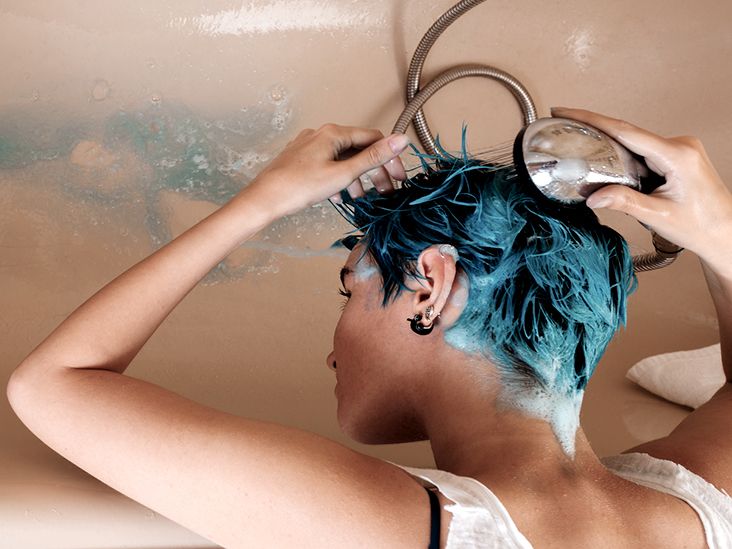
Another person loves bright blue hair. Initially, the color is refreshed by bleaching the entire head whenever the blue fades. The result is vibrant, but the texture becomes increasingly fragile.
A colorist changes the strategy. New growth is lightened only when necessary, while a semi-permanent blue is deposited over the previously lightened lengths. Cooler washing, color-safe shampoo, UV protection, and fewer weekly washes slow fading. Because the person no longer bleaches the same areas repeatedly, breakage decreases without requiring a return to natural color.
This is often the most realistic lesson from long-term hair-color experience: healthy-looking color depends less on finding a miraculous repair mask and more on preventing unnecessary damage. Good technique, restrained processing, and ordinary conditioning usually outperform panic-buying twelve products after the hair has already begun waving a tiny white flag.
Conclusion: color can be beautiful without sacrificing all your hair
Dyeing hair can damage it, but the severity varies enormously. Temporary and deposit-only colors are generally gentler, while permanent dye, high-volume developer, and repeated bleaching cause more structural change. Previously damaged, fine, long, relaxed, or frequently heat-styled hair has less room for chemical adventure.
Existing hair cannot biologically heal, yet thoughtful care can improve its strength, texture, shine, and resistance to breakage. Condition consistently, limit heat, avoid overlapping chemicals, trim irreparable ends, and allow healthy new hair to grow. If your scalp burns, swells, blisters, or develops a persistent rashor if you experience unusual hair lossseek professional medical advice rather than asking another box of dye to negotiate a peace treaty.