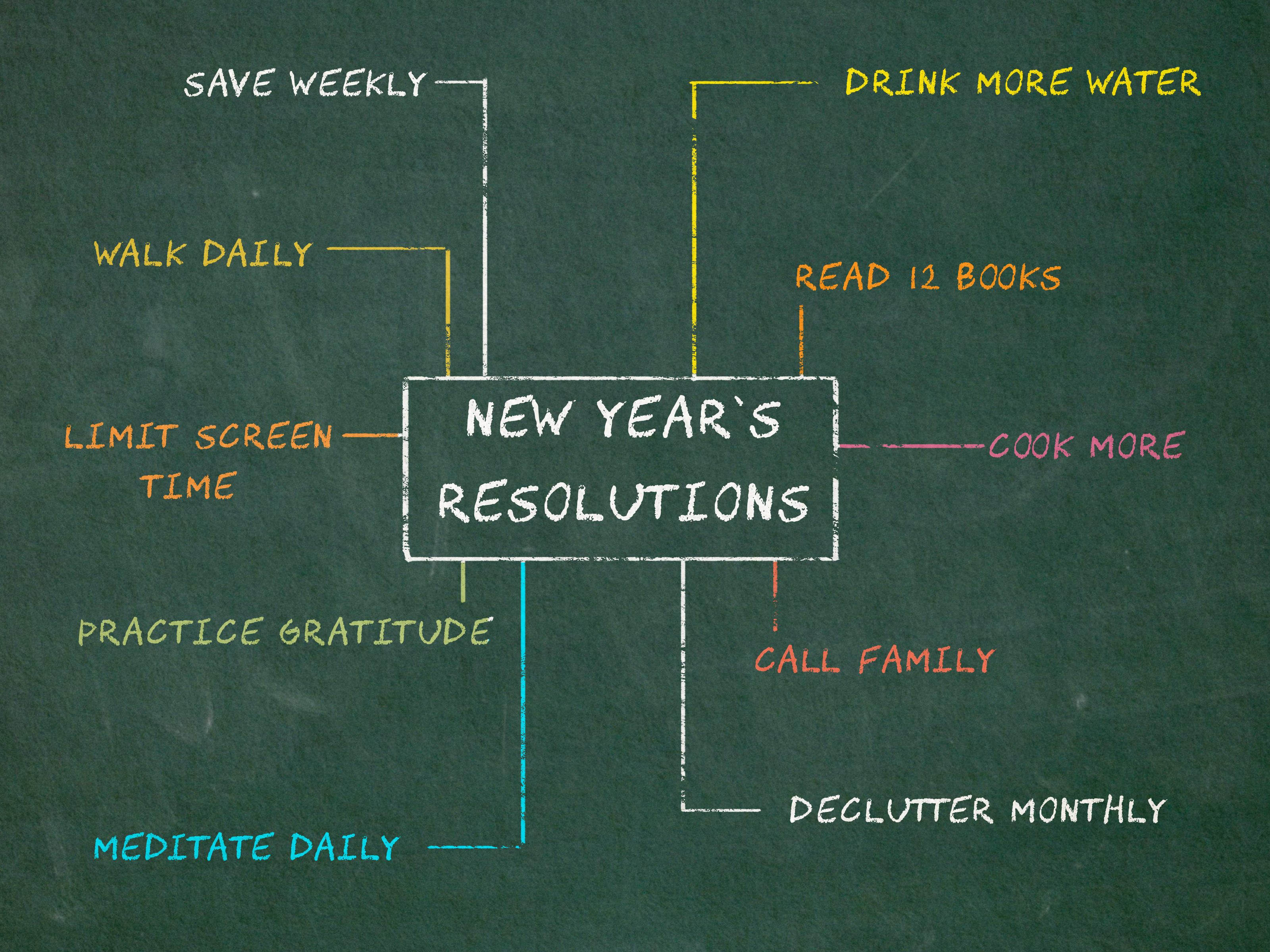
January optimism has the energy of a golden retriever carrying a brand-new plannerng is about to change. That enthusiasm is usefulbut it is not a strategy.
A successful New Year’s resolution needs more than a dramatic promise made while confetti is still stuck to the furniture. It needs a clear purpose, a realistic action plan, supportive surroundings, and a way to recover when life inevitably throws a banana peel onto the sidewalk.
This New Year’s Resolution Builder turns a vague intention such as “get healthier,” “save money,” or “be more organized” into specific behaviors you can repeat. Rather than demanding a total personality renovation by January 2, it helps you build sustainable goals one practical step at a time.
What Is a New Year’s Resolution Builder?
A New Year’s Resolution Builder is a structured process for designing a goal that can survive beyond the first burst of motivation. It connects the result you want with the small actions, schedules, cues, resources, and backup plans needed to reach it.
The start of a year can genuinely increase motivation. Research on the “fresh start effect” found that people become more likely to pursue goals after meaningful time markers, including a new week, month, semester, birthday, or year. These landmarks help people mentally separate their future behavior from past disappointments. r, a fresh start is an opening, not a magic spell. The calendar can encourage you to begin, but your system determines whether you continue.
Step 1: Review Before You Resolve
Before choosing a resolution, look backward for a few minutes. This is not an invitation to host a three-hour documentary about everything that went wrong. It is a practical review.
Ask Yourself Four Questions
- What went well during the past year?
- What repeatedly caused stress, frustration, or wasted time?
- Which change would make several areas of my life easier?
- What goal do I personally value, even if nobody applauds it online?
Your answers may reveal that the most useful resolution is not the most glamorous one. Improving sleep could help your energy, eating habits, patience, and work performance. Creating a weekly spending review might reduce financial anxiety more effectively than declaring that you will “become rich.”
Behavior-change guidance generally works best when goals fit a person’s readiness, environment, resources, and genuine priorities. A plan copied from an influencer with a private gym, personal chef, and suspiciously empty calendar may not fit your Tuesday.
Step 2: Choose One Meaningful Direction
Trying to transform your health, career, finances, home, relationships, wardrobe, sleep schedule, and sourdough skills at the same time is a reliable way to become exhausted while accomplishing very little.
Select one primary area for your resolution:
- Health and physical activity
- Money and financial organization
- Career or education
- Relationships and social connection
- Home and personal organization
- Creativity, hobbies, or personal growth
- Stress management and emotional well-being
You can still maintain other parts of your life, but one priority receives your best planning attention. The Centers for Disease Control and Prevention recommends focusing on a small number of specific, realistic goals rather than chasing a long list of broad ambitions. the Reason Beneath the Resolution
Ask, “Why does this matter to me?” Then ask again.
Perhaps you want to exercise more. Why? To improve your stamina. Why does that matter? Because you want to enjoy active weekends with your children without feeling as though a staircase has personally betrayed you.
A strong personal reason gives the daily behavior emotional meaning. “Walk after dinner” becomes more powerful when it represents mobility, independence, family time, or confidence.
Step 3: Turn the Wish Into a SMART Goal
“Improve my life” is inspiring, but it gives Tuesday morning very few instructions. Your resolution should tell you what action to take and how you will recognize progress.
The SMART framework defines a useful goal as:
- Specific: It names a clear action or result.
- Measurable: Progress can be counted or observed.
- Achievable: It fits your current resources and abilities.
- Relevant: It supports something you genuinely value.
- Time-bound: It includes a schedule or review date.
The framework is designed to make action plans realistic, clear, and measurable. ples of Better Resolutions
Vague: I will read more.
Built: I will read for 15 minutes before bed on Monday through Thursday for the next eight weeks.
Vague: I will save money.
Built: I will automatically transfer $40 to my savings account every payday and review the balance on the first Sunday of each month.
Vague: I will get organized.
Built: I will spend 10 minutes clearing my desk before ending work each weekday.
Harvard Health guidance similarly recommends dividing large annual goals into shorter monthly and weekly steps. A year is difficult to act on; the next seven days are much easier to schedule.
Step 4: Build an Approach Goal
Whenever possible, describe what you will do rather than only what you will stop doing.
“I will not eat junk food” leaves an empty space in your routine. “I will pack fruit and yogurt for my afternoon snack” provides a replacement behavior. “I will stop wasting money” sounds like punishment. “I will cook dinner at home three nights a week” gives you an action.
Research discussed by the University of Pennsylvania indicates that approach-oriented resolutionsgoals framed as doing somethingcan be more successful than avoidance-oriented resolutions focused entirely on not doing something. and Clinic guidance also recommends beginning a useful new behavior instead of relying solely on the difficult task of suppressing an established habit.
Step 5: Create an If-Then Action Plan
A goal explains what you want. An implementation intention explains exactly when you will act.
Use this formula:
If or when [specific cue occurs], then I will [specific behavior].
- When I finish my morning coffee, I will write my three priorities for the day.
- If I want to order takeout on a planned cooking night, I will first check the freezer for a prepared meal.
- When my paycheck arrives, I will transfer money to savings before making optional purchases.
- If rain prevents my outdoor walk, I will complete a 15-minute indoor routine.
Implementation intentions connect a recognizable situation with a planned response, making it easier to translate a goal into behavior when the moment arrives. a Minimum Version
Your minimum version is the smallest form of the habit that still counts on a difficult day.
- Normal plan: Walk for 30 minutes. Minimum version: Walk for five minutes.
- Normal plan: Study for an hour. Minimum version: Review five flashcards.
- Normal plan: Write . Minimum version: Write one paragraph.
The minimum version keeps the behavioral pattern alive without pretending that every day will be ideal. Some days you are a productivity legend. Other days you deserve a medal for locating both shoes.
Step 6: Make the Environment Do Some Work
Willpower is helpful, but it should not be your only employee. Design your surroundings so the desired action becomes visible, convenient, and easy to begin.
Reduce Friction Around Good Habits
- Place walking shoes beside the door.
- Prepare tomorrow’s lunch while cleaning up dinner.
- Keep a book on your pillow instead of across the room.
- Schedule automatic savings transfers.
- Open the document you need before ending the previous work session.
Add Friction Around Unhelpful Habits
- Remove shopping apps from your phone.
- Charge devices outside the bedroom.
- Store distracting snacks somewhere less visible.
- Turn off nonessential notifications.
- Use a website blocker during scheduled focus periods.
Research reviews of digital behavior-change programs commonly identify goal setting, self-monitoring, prompts, and cues as frequently used techniques for supporting new habits.
Step 7: Schedule and Track the Behavior
A resolution that lives only in your head must compete with appointments, work deadlines, laundry, grocery shopping, and whatever mysterious administrative task appeared in your inbox at 4:58 p.m.
Put the behavior on a calendar. Include preparation tasks as well as the final action. A meal-planning resolution may require time for choosing recipes, making a grocery list, shopping, and preparing ingredients. Mayo Clinic guidance recommends scheduling these supporting steps and reviewing completed actions regularly. se a Simple Tracking Method
Your tracker should provide information, not become a second career. Useful options include:
- A check mark on a paper calendar
- A weekly note in your phone
- A habit-tracking application
- A spreadsheet with dates and totals
- A short Sunday review
Track the behavior you control before tracking the distant outcome. Record workouts completed, not only pounds lost. Record applications submitted, not only job offers received. Record deposits made, not only the total investment return.
Do Not Worship the Streak
A streak can be motivating, but missing one day does not erase the work already completed. Habit formation usually takes longer than the famous 21-day promise. A 2024 systematic review found median estimates of approximately 59 to 66 days, while reported mean estimates ranged from 106 to 154 days. The timeline varied considerably depending on the person and behavior. oal is repetition over time, not a flawless calendar suitable for museum display.
Step 8: Build a Recovery Plan Before You Need It
Most resolutions are designed for ideal conditions. Durable resolutions are also designed for travel, illness, deadlines, family emergencies, low-energy days, and ordinary human forgetfulness.
Complete these sentences:
- If I miss one planned session, I will…
- If I miss an entire week, I will restart by…
- If the current plan becomes unrealistic, I will adjust…
- The person I can contact for support is…
- The smallest action that helps me resume is…
A setback should produce information, not a courtroom drama. Ask what made the action difficult. Was the goal too large? Was the cue unclear? Did preparation take too long? Was the schedule unrealistic?
Supportive guidance from the American Heart Association emphasizes manageable changes, enjoyable activities, social support, and the expectation that progress will include peaks and valleys. ompassion also matters. Research summarized by UC Berkeley suggests that responding to setbacks with awareness and kindness can help people regulate negative emotions, maintain belief in their ability to change, and resume goal-directed behavior.
Your Complete New Year’s Resolution Builder Template
Copy the following prompts into a notebook, document, or planning app:
- My priority area: What part of my life am I improving?
- My reason: Why does this change matter personally?
- My annual direction: What would meaningful improvement look like by the end of the year?
- My first milestone: What can I reasonably achieve within 30 days?
- My repeatable behavior: What specific action will move me forward?
- My schedule: On which days, at what time, and where will I act?
- My cue: What existing event will remind me to begin?
- My minimum version: What is the smallest acceptable action?
- My preparation: What must be ready beforehand?
- My tracker: How will I record completion?
- My obstacle plan: What will I do when the usual plan is disrupted?
- My review date: When will I evaluate and adjust the plan?
- My support: Who or what can help me stay accountable?
- My reward: How will I celebrate progress without undermining the goal?
A Practical 30-Day Resolution Launch
Week 1: Make Starting Easy
Complete the smallest realistic version of the behavior. Focus on showing up at the planned time rather than achieving impressive results. You are teaching your schedule where the new action belongs.
Week 2: Improve Preparation
Notice what causes delay. Prepare equipment, clothing, food, documents, or reminders earlier. Remove one obstacle from the environment.
Week 3: Strengthen the Routine
Keep the same cue when possible. Gradually increase the behavior only if the current version feels manageable. Do not double everything because one energetic Monday made you feel invincible.
Week 4: Review the Evidence
Count completed actions and identify patterns. Which days worked best? What interfered? Which part felt rewarding? Adjust the next month’s plan based on evidence rather than guilt.
Recent behavioral-science discussions continue to emphasize that successful goals require detailed plans and sustainable habit strategies, not motivation alone.
Common Resolution-Building Mistakes
Choosing an Outcome Without a Behavior
“Lose 20 pounds” names an outcome. It does not identify the meals, movement, sleep, or professional guidance involved. Build the resolution around controllable actions.
Starting at Maximum Intensity
A plan that requires your best energy every day is fragile. Begin with an amount you can repeat during an ordinary week.
Copying Someone Else’s Goal
A socially impressive goal can be personally irrelevant. Choose a change that improves your actual life rather than your imaginary acceptance speech.
Making the Plan Too Complicated
Seven apps, four journals, a color-coded wall chart, and a custom reward currency may feel productive, but they can become elaborate procrastination. Use the simplest system that tells you whether you acted.
Treating One Miss as Total Failure
Missing a workout does not require missing the next 47 workouts for consistency. Resume at the next reasonable opportunity.
Real-World Experiences With Building Better Resolutions
The following composite scenarios reflect common experiences people encounter when turning broad resolutions into workable routines.
The Fitness Resolution That Started Too Big
Imagine someone who has not exercised consistently in several years deciding to work out for an hour every morning. The first few days feel heroic. New shoes are purchased. Motivational music is selected. A water bottle large enough to irrigate a small garden appears.
Then the soreness arrives. A late work meeting interrupts the schedule. One missed morning becomes three, and the plan begins to feel like evidence of failure.
A better resolution builder changes the target from “one hour every day” to “a 15-minute walk after dinner on Monday, Wednesday, and Friday.” Walking shoes wait beside the door. Rain triggers a short indoor routine. Progress is measured by completed sessions.
The important experience is not that the smaller goal looks more impressive. It is that the person can perform it repeatedly. After several weeks, the walk can become longer or more frequent. Confidence grows from evidence: “I am someone who follows through.”
The Savings Goal That Needed Automation
Another person resolves to save whatever money remains at the end of each month. Unfortunately, money at the end of the month has a habit of becoming invisible. Small purchases accumulate, unexpected expenses appear, and savings receives the financial equivalent of leftover crumbs.
The rebuilt resolution schedules an automatic transfer on payday. The initial amount is deliberately modest. A monthly review helps the person increase, decrease, or pause the transfer when circumstances change.
This experience shows why the timing of an action can matter more than repeated promises. Saving is no longer a decision that must be remade after dozens of other spending decisions. The environment performs part of the work automatically.
The Reading Goal That Lost a Competition With the Phone
A third person wants to read 30 books during the year. Yet each evening, the phone is closer than the bookshelf. A quick message becomes a quick video, which becomes 45 minutes of watching strangers reorganize refrigerators.
The resolution builder focuses on the immediate routine instead of the annual number. The phone charges outside the bedroom. A book sits on the pillow. The cue is brushing teeth, and the minimum version is reading two pages.
Some nights produce two pages; others produce an entire chapter. The annual book total becomes an outcome of the routine rather than a nightly source of pressure.
The Lesson Shared by All Three Experiences
Each original resolution had sincere motivation. None failed because the person secretly preferred exhaustion, financial stress, or unread books. The problem was the gap between intention and daily life.
The rebuilt plans reduced that gap. They specified a cue, lowered the starting difficulty, changed the environment, and included a version that remained possible on imperfect days.
That is the central experience of successful resolution building: the goal usually becomes more durable when it becomes less theatrical. Sustainable change can look almost boring from the outside. It is a walk after dinner, an automatic transfer, a prepared lunch, a two-page reading session, or a five-minute reset repeated often enough to matter.
Conclusion
A useful New Year’s resolution is not a yearly verdict on your character. It is a practical experiment. Choose one meaningful direction, define a repeatable behavior, connect it to a clear cue, make starting easy, track what you control, and prepare for setbacks before they happen.
January can provide the spark, but ordinary days build the result. Your resolution does not need to be dramatic. It needs to be realistic enough to perform, flexible enough to repair, and meaningful enough to return to.
Note: This article provides general planning and self-improvement information. Goals involving medical conditions, addiction, mental health, or major financial decisions may benefit from guidance from an appropriately qualified professional.