Most self-portraits begin with a mirror, a carefully posed expression, and at least three private negotiations with the lighting. This challenge throws all of that out the window. Put on a blindfold, place a marker on the paper, and attempt to draw your own face without seeing a single line.
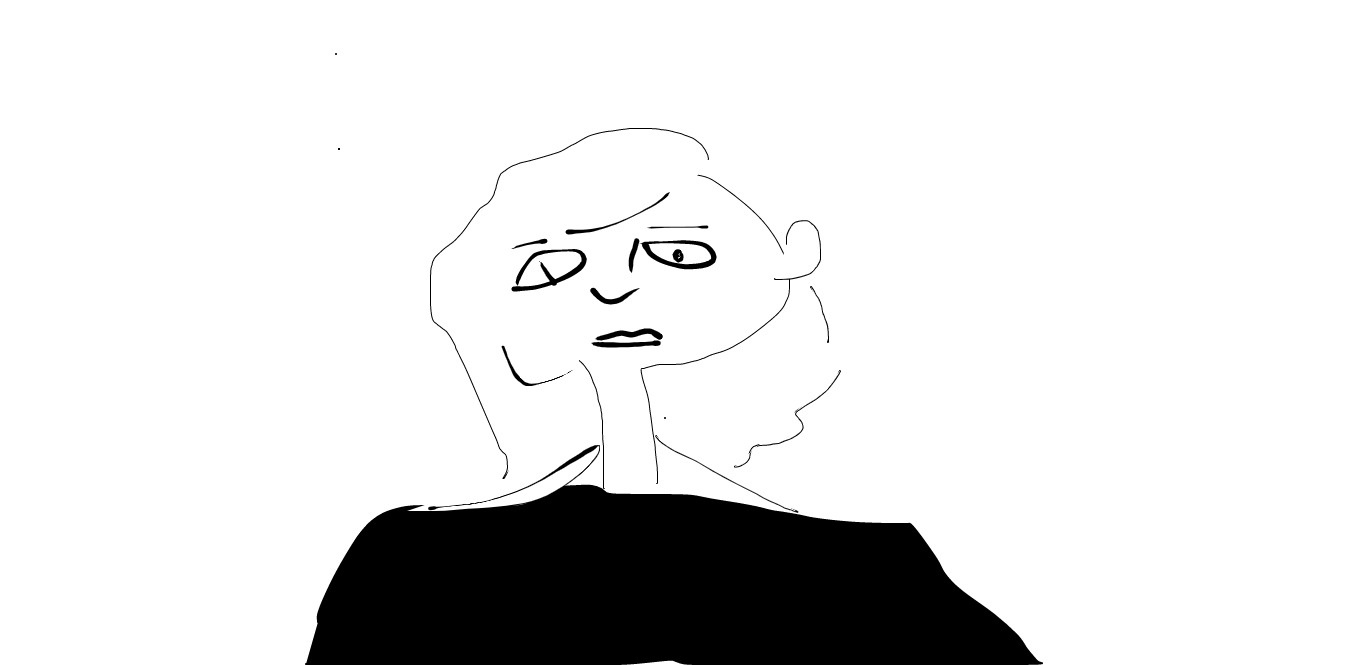
The finished portrait may have one eyebrow living in another ZIP code. Your mouth might resemble a canoe. An ear may appear in the middle of your forehead like it has been promoted to management. That is not failure. That is the entire point.
A blindfold self-portrait challenge replaces technical control with memory, movement, humor, and creative risk. It is easy enough for complete beginners, unpredictable enough for experienced artists, and entertaining enough to wake up a group chat that has been surviving exclusively on reaction emojis.
What Is a Blindfold Self-Portrait?
A blindfold self-portrait is a drawing of your own face made without looking at the paper. Some versions use an actual blindfold. Others ask participants to close their eyes or position the paper where it cannot be seen.
The activity is related to blind contour drawing, a traditional art exercise in which the artist studies a subject while allowing the hand to move across the page without checking the drawing. Common versions encourage a slow, continuous line and discourage lifting the pencil. Art educators use the technique to interrupt habitual symbols and strengthen the connection between observation and hand movement.
The self-portrait version adds another layer: you are not necessarily studying your face while drawing. Instead, you are working from touch, memory, and your internal picture of yourself. You know that your eyes sit above your nose, of course, but translating that knowledge onto invisible paper is where the comedy department opens for business.
Why This Ridiculous-Looking Art Challenge Is Surprisingly Useful
It Temporarily Fires Your Inner Art Critic
Many adults stop drawing because they believe every picture must look realistic. The first crooked line becomes evidence for an imaginary court case titled The People vs. My Complete Lack of Talent.
A blindfold makes accurate control nearly impossible, so perfection is removed from the assignment before you begin. You cannot obsess over symmetry, erase an eyelid 14 times, or compare your work with a filtered photograph. You simply make the next mark.
Modern artists have also experimented with automatic drawing and other methods that surrender conscious control. The Museum of Modern Art describes works made without looking at the paper or while blindfolded as ways of loosening control and allowing unexpected forms to emerge.
It Makes You Think About How You Picture Yourself
A traditional portrait records visible features, but a self-portrait can communicate far more than bone structure and hairstyle. Clothing, gestures, objects, symbols, colors, expressions, and composition can all suggest personality or identity.
Museum education programs frequently use self-portraits to help learners explore questions such as “Who am I?” and “How do I want to be seen?” Some lessons invite students to interpret symbolic portraits, write about personality, or invent nontraditional representations of themselves.
Your blindfolded version may not reveal a hidden psychological truth. A floating nose probably means your hand got lost, not that you have unresolved nasal symbolism. Still, the choices you remember first can be interesting. Do you begin with your hair, glasses, freckles, beard, smile, or dramatic eyebrows? Which features feel most connected to your identity?
It Encourages Play Instead of Performance
There is a difference between making art to impress someone and making art to discover what happens. This challenge belongs firmly in the second category.
Museums and art-learning programs often emphasize experimentation, accessible materials, and creative participation without requiring previous ability. Even formally trained artists use drawing exercises to explore line, movement, composition, and new ways of seeing.
When the result is expected to be strange, participants become more willing to take chances. That playful attitude can carry into later projects where the stakes feel higher.
It Can Offer a Brief Mental Reset
Making art is not automatically art therapy, and a party challenge should never be presented as medical treatment. Art therapy is a mental health profession practiced by trained professionals within a therapeutic relationship.
However, research suggests that ordinary art-making can still be enjoyable and restorative for many people. In one small Drexel University study, 39 adults spent 45 minutes making art, and 75 percent had lower cortisol levels afterward. Broader reviews have also reported reductions in stress or anxiety across several active art interventions, although results vary and should not be treated as a guarantee.
A five-minute blindfold portrait is much shorter than those studied sessions, but it can still interrupt scrolling, worrying, or overthinking long enough to produce a laugh and a page full of mysterious facial geography.
What You Need for the Challenge
The supply list is wonderfully short:
- One sheet of plain or colored paper
- A pencil, crayon, or washable marker
- A comfortable blindfold or sleep mask
- A flat, uncluttered drawing surface
- A timer set for 30 seconds to three minutes
- A camera, if you want to document the reveal
A bold marker usually creates the funniest and most visible result. Pencils are less messy, while crayons add the unmistakable energy of a kindergarten board meeting.
Tape the corners of the paper to the table if it tends to slide. Clear drinks, scissors, candles, hot coffee, craft knives, and other hazardous objects from the area before covering your eyes. Remain seated while blindfolded, and have another person assist if the space is unfamiliar.
How to Create Your Blindfold Self-Portrait
Step 1: Study Your Face
Look in a mirror for about 30 seconds. Notice the overall shape of your head, the position of your eyes, your hairline, and the distance between major features.
Do not attempt to memorize every eyelash. You are drawing a self-portrait, not preparing facial evidence for a detective.
Step 2: Decide on the Rules
Choose whether you will allow yourself to lift the marker. A continuous-line portrait is more challenging because every feature must be connected. A free-lifting version gives you a slightly better chance of placing your second eye somewhere on the same face.
Set a time limit. Thirty seconds creates frantic, energetic drawings. Two or three minutes produces more detail and significantly more opportunities to become lost around the chin.
Step 3: Put on the Blindfold
Sit comfortably and confirm that the paper is directly in front of you. Hold the marker near the middle rather than the tip so your hand can move freely.
Take one breath before starting. This is not because the activity is dangerous. It is because your portrait deserves the same ceremonial respect as the unveiling of a national monument, even if it eventually resembles a potato attending a job interview.
Step 4: Draw the Outer Shape First
Begin with your head or jawline. Move slowly enough to notice the direction of your hand. Add the hair, ears, eyes, eyebrows, nose, and mouth in any order that makes sense to you.
Try not to measure distances with your free hand. The accidental spacing is part of the challenge.
Step 5: Add Personal Details
Include something that makes the portrait specifically yours. Draw your glasses, earrings, favorite hat, mustache, beauty mark, headphones, or the hairstyle that refuses to cooperate whenever photographs are taken.
You can also include symbolic details. A tiny book, gardening glove, game controller, coffee cup, or pet can turn the drawing into a more complete visual introduction.
Step 6: Reveal the Masterpiece
Put down the marker before removing the blindfold. This prevents the classic mistake of reacting dramatically and drawing a surprise line across the table.
Then look at the portrait. Resist apologizing for it. Give it a title instead. Possibilities include Monday at 7:02 A.M., Face Loading, Please Wait, or Self-Portrait After One Email Too Many.
Fun Blindfold Self-Portrait Variations
Use Your Non-Dominant Hand
For additional chaos, draw with the hand you normally do not use. This creates hesitant, unpredictable lines even before the blindfold enters the situation.
Create Two Portraits
Make one drawing while looking in a mirror and another while blindfolded. Display them side by side. The first may show how you appear; the second may look like your face trying to escape through a portal.
Try a Continuous-Line Portrait
Keep the marker touching the paper from beginning to end. Continuous-line exercises force you to connect features and think about pathways rather than isolated shapes.
Turn It Into a Group Guessing Game
Ask everyone to make an unsigned portrait. Place the drawings on a wall and guess who created each one. Distinctive glasses, hairstyles, and accessories may offer clues. The person whose identity is least recognizable should not feel bad; they have simply achieved advanced abstraction.
Add Color After the Reveal
Once you can see the drawing, use colored pencils, paint, collage paper, or digital tools to develop it. Art educators often extend blind contour drawings with pattern, overlapping images, paint, and collage, turning a quick exercise into a more complete composition.
Make an Emotion Portrait
Choose an emotion before drawing and exaggerate it. Create a joyful version with an enormous smile, a suspicious version with raised eyebrows, or a sleepy portrait whose facial features appear to be observing a national holiday.
Expressive and humorous self-portraits have a long place in art. Joseph Ducreux, for example, pushed against formal portrait conventions by painting himself yawning and making other exaggerated expressions.
How to Look at the Finished Portrait
Do not judge the picture only by whether it resembles a photograph. Instead, ask a few playful questions:
- Which feature did you place most accurately?
- Which detail did you remember first?
- Where did your sense of space disappear?
- Does the line feel nervous, confident, delicate, or energetic?
- What title matches the accidental expression?
- Would you change anything, or is the chaos already perfect?
A self-portrait does not have to be realistic to communicate personality. Portraits can be read through pose, expression, context, gesture, and symbolic choices, not merely facial accuracy.
Avoid assigning serious psychological meanings to accidental marks. One giant eye does not prove that you are unusually observant. It may simply prove that you forgot where you drew the first one.
Sharing the Challenge Respectfully
When posting the portraits online, share the rules and invite others to participate. Encourage people to laugh at the unpredictable process, not at someone’s artistic skill or physical ability.
It is also important not to frame the activity as an accurate simulation of blindness. Blindness organizations have cautioned that brief blindfold simulations can create misleading impressions about blind people because a newly blindfolded sighted participant has not learned the skills, tools, or orientation techniques used by blind individuals. Present this as a drawing constraint, not as a lesson about what blindness is like.
Participants who cannot or prefer not to wear a blindfold can place the paper behind a screen, draw with eyes closed, use tactile materials, direct another person’s hand verbally, or create a portrait without looking down.
Experience Notes: What the Challenge Actually Feels Like
The following is a realistic composite of common experiences during this type of art challenge rather than a claim of personal participation.
The first few seconds are usually filled with confidence. You have known your face for years. You have washed it, photographed it, watched it age, and inspected it under the world’s least forgiving bathroom lighting. Surely drawing it from memory cannot be difficult.
Then the blindfold goes on.
The paper immediately seems enormous. You place the marker down and begin the head shape, but without visual feedback, a basic oval feels like a cross-country journey. You are fairly certain you have completed the jaw, although your hand appears to be traveling toward what may be the edge of the table.
The eyes are where confidence begins to wobble. The first eye feels surprisingly good. You draw an almond shape, add a pupil, and even include two eyelashes. It is practically a Renaissance achievement. Moving toward the second eye, however, raises a serious question: How far apart are human eyes?
You make an educated guess. The answer, according to the finished drawing, is apparently 11 inches.
The nose creates another problem. You know where it belongs conceptually, but your hand no longer remembers the location of the face. You draw a line downward and add two nostrils. One nostril may overlap an eye. You decide that perspective is subjective.
By the time you reach the mouth, you are laughing. That laughter changes the movement of your hand, producing a wavy smile that stretches beyond both cheeks. The portrait is no longer something you are trying to control. It has become an event that is happening to you.
When the blindfold comes off, the first reaction is often confusion. The image contains familiar ingredients but an unfamiliar recipe. There are eyes, hair, a mouth, and perhaps three ears. The face may look startled, delighted, mildly haunted, or deeply concerned about local property taxes.
After the initial laughter, smaller discoveries appear. The hairstyle may be surprisingly recognizable. The glasses might tilt wildly but still capture their basic shape. A favorite earring or facial expression may give the drawing more personality than a careful, realistic portrait would have shown.
A second attempt feels different. You are less worried about producing a respectable picture because respectability has already left the building. You slow down. You pay attention to the distance your hand travels and remember that features occupy smaller areas than expected. The result may still be strange, but the lines often feel more deliberate.
In a group, the reveal becomes even better. Everyone has produced a different species of accidental human. One participant creates a tiny face in the corner of a huge page. Another fills the entire sheet with a single eye. Someone who insisted they “cannot draw” produces the most expressive portrait of the evening.
The memorable part is rarely the technical outcome. It is the moment people stop protecting themselves from looking unskilled. Adults who normally avoid art begin comparing mistakes, inventing titles, and asking for another sheet of paper. The wonky portraits turn into evidence that creativity does not always require control, expensive materials, or polished results.
That is the real reward of the blindfold self-portrait challenge. You begin by trying to draw your face and end up practicing something broader: accepting an uncertain process, responding to mistakes with curiosity, and finding humor in the space between intention and outcome.
Conclusion
A blindfold self-portrait will probably not become the centerpiece of a major museum retrospective. Then again, stranger things have happened in contemporary art.
What it can become is a reminder that drawing does not have to be accurate to be meaningful. The activity encourages observation, memory, self-expression, experimentation, and laughter while giving perfectionism very little room to operate.
So grab some paper, cover your eyes safely, and draw the face you think you know. Your nose may end up beside your ear, but your creativity will be exactly where it belongs: moving forward without waiting for permission.