A productive fruit tree is not a decorative plant that occasionally hands out snacks. It is a long-term garden project with roots, nutritional needs, structural quirks, and an impressive ability to attract every hungry bird nearby. Fortunately, successful fruit tree maintenance does not require a commercial orchard crew. It requires timely care, regular observation, and enough restraint to avoid pruning, watering, or fertilizing the tree into trouble.
This guide covers the jobs that matter most: site selection, soil care, irrigation, mulching, pruning, fruit thinning, fertilizing, pest prevention, harvesting, and seasonal cleanup. Apples, pears, peaches, plums, cherries, citrus, and other fruits differ in important ways, but every well-managed tree needs healthy roots, balanced growth, sunlight inside the canopy, and enough energy to ripen a reasonable crop.
Start With the Right Tree and Site
Many maintenance problems begin before planting. Choose a species, cultivar, and rootstock suited to your USDA hardiness zone, summer heat, winter chill, humidity, and regional diseases. Most fruit trees need at least six to eight hours of direct sun for strong flowering, fruit color, and flavor. They also need drainage; roots cannot function well in soil that stays saturated.
Plan for mature size rather than the nursery tree’s current dimensions. Dwarf trees suit small yards and are easier to harvest, but many require permanent support. Larger rootstocks need more space and may take longer to bear. Also check pollination requirements. Apples, many pears, and numerous sweet cherries need or benefit from a compatible cultivar that blooms at the same time. One lonely tree cannot negotiate its way around incompatible pollen.
Build Healthy Soil and Mulch Correctly
Test the soil before planting and every few years afterward. A laboratory test can identify pH problems and actual nutrient shortages. Random fertilizer applications are simply expensive guessing with a bag.
Avoid filling the planting hole with concentrated compost or fertilizer. Plant at the correct depth, keep the root flare visible, and leave the graft union above the soil according to local guidance. Apply two to four inches of wood chips, shredded bark, or composted leaves over a broad root-zone circle. Mulch reduces weeds, conserves moisture, and protects the trunk from lawn equipment.
Keep mulch several inches from the bark. A “mulch volcano” traps moisture and shelters rodents. Think doughnut, not volcano: wide around the tree and open in the middle.
Water Deeply Without Creating a Swamp
Watering fruit trees correctly means managing the full root zone, not following a rigid calendar. Newly planted trees need consistent moisture while roots establish. Mature trees usually benefit from deeper, less frequent irrigation across a wide area under and beyond the canopy. Frequent surface sprinkles encourage shallow roots.
Check moisture several inches down with a trowel, soil probe, or long screwdriver. Sandy soil drains quickly; clay holds water longer and can become waterlogged. Adjust irrigation for rainfall, heat, wind, tree size, crop load, and fruit development. Stress is especially damaging during establishment, flowering, early fruit growth, and the final sizing period before harvest.
Expand drip systems as trees grow. A single emitter beside the trunk may serve a new tree but cannot water the broad root zone of a mature one. Aim for even moisture rather than alternating between desert and swamp.
Prune for Strength, Sunlight, and Size
Pruning fruit trees improves structure, removes damaged wood, opens the canopy to light and air, controls size, and renews fruiting growth. For many deciduous trees, major pruning is best in late winter or early spring after the harshest cold but before active growth. Local timing matters because species, climate, and disease risks differ.
Use the Right Training System
Apples and pears are commonly trained to a central or modified central leader: one main trunk with well-spaced scaffold limbs. Peaches, nectarines, and many plums often use an open-center system, forming a vase-shaped canopy. Whatever the system, favor wide branch angles and remove dead, diseased, broken, crossing, rubbing, inward-growing, and badly crowded wood. Remove root suckers and selected upright water sprouts.
Make Clean, Limited Cuts
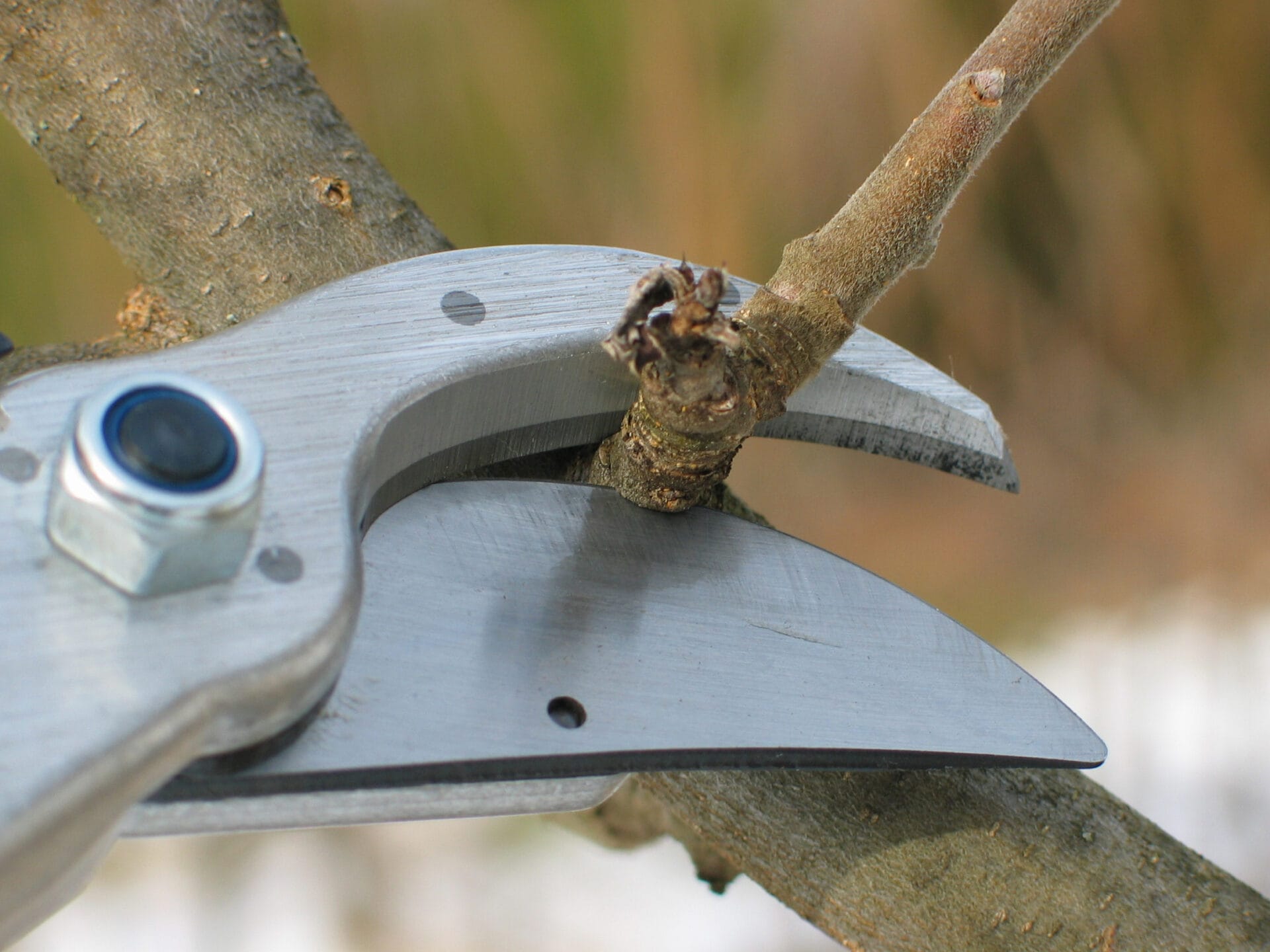
Use sharp bypass pruners, loppers, and a pruning saw. Cut just outside the branch collar rather than leaving stubs or slicing flush against the trunk. Use the three-cut method for heavy limbs so falling wood does not tear bark.
Prune young trees lightly because their leaves power root and framework development. Excessive pruning delays bearing and stimulates vigorous shoots. Renovate an old tree over two or three years instead of removing half the canopy in one heroic weekend. Severe pruning can trigger water sprouts, sunscald, and structural stress.
Thin Excess Fruit Early
A tree may set more fruit than it can mature well. Fruit thinning directs resources into fewer fruits, improving size and often flavor while reducing broken branches and alternate bearing. Apples, pears, peaches, nectarines, plums, and apricots commonly benefit.
Thin after the natural early drop while fruit is still small. Remove damaged, misshapen, crowded, or insect-injured fruit first. Exact spacing varies by species and cultivar, but apples and pears are often reduced to one fruit per cluster, while peaches need generous room because mature fruit becomes heavy. Removing baby fruit feels cruel until harvest proves it was quality control.
Fertilize According to Evidence
Fertilizing fruit trees should support balanced growth, not create a leafy umbrella with six apples hiding inside it. Many established trees in suitable soil need little fertilizer. Excess nitrogen encourages soft shoots, delays fruiting, worsens some diseases, and may reduce color or winter hardiness.
Base feeding on soil tests, annual shoot growth, leaf color, crop performance, and local recommendations. Remember that tree roots may absorb lawn fertilizer. Pale leaves and weak growth can also result from drought, excess water, root injury, incorrect pH, pests, or disease, so diagnose before treating.
Use Integrated Pest Management
Effective orchard pest management begins with identification. Integrated pest management, or IPM, combines prevention, monitoring, sanitation, biological controls, and carefully timed treatments when necessary. Spraying an unidentified insect because it “looked suspicious” is not a strategy.
Scout Weekly
Inspect leaves, shoots, bark, blossoms, and developing fruit. Look under leaves and examine fallen fruit for holes, frass, sticky honeydew, curled foliage, cankers, oozing sap, spots, and dieback. Record dates and photograph symptoms. Common problems include aphids, scale, mites, borers, codling moth, plum curculio, apple scab, fire blight, brown rot, peach leaf curl, and cankers, but importance varies by region.
Practice Sanitation and Careful Treatment
Remove mummified fruit, badly infested drops, diseased debris, and broken branches. Prune for airflow, protect bark from injury, and control weeds around young trees. When treatment is justified, identify the pest and host, read the label, observe preharvest intervals, and protect pollinators. Never apply insecticide to open flowers while bees are active. Traps, exclusion bags, netting, resistant cultivars, dormant oils, and beneficial insects may reduce broad-spectrum spraying.
Protect Fruit From Wildlife and Weather
Birds, squirrels, deer, rabbits, voles, and raccoons see an orchard as a restaurant with slow service. Use fencing, trunk guards, habitat management, or securely installed netting as appropriate. Protect trunks from mowers and string trimmers. In cold areas, follow local guidance for rodent guards, sunscald prevention, and temporary frost cloth; remove or vent covers when temperatures rise.
Harvest at the Right Stage
Some peaches and plums develop their best flavor when ripened substantially on the tree, while many pears are picked mature but firm and finished indoors. Apples vary by cultivar. Judge maturity by flavor, background color, firmness, seed color, ease of separation, and cultivar guidance. Lift and twist rather than yanking fruit downward, and handle it gently because every bruise becomes a storage problem later.
Seasonal Fruit Tree Maintenance Calendar
Late Winter and Spring
Inspect structure, perform most dormant pruning, remove mummified fruit, repair supports, test soil when due, and plan pest monitoring. During bloom, watch pollinator activity, avoid harmful sprays, monitor wet-weather diseases, and maintain even soil moisture.
Summer
Thin excess fruit, adjust irrigation, maintain the mulch ring, remove suckers and selected water sprouts, support heavily loaded limbs, and scout weekly. Install wildlife protection before the crop becomes irresistible.
Fall and Winter
Harvest by cultivar, collect damaged drops, note pest problems for next year, and water during dry fall weather. Avoid late nitrogen that stimulates tender growth. After leaf fall, clean up disease-prone debris when recommended, protect trunks, sharpen tools, and order compatible pollinizers or replacements.
Common Fruit Tree Care Mistakes
- Planting too deeply: Buried root flares and graft unions create long-term trouble.
- Overwatering: Constantly wet soil deprives roots of oxygen.
- Overfertilizing: Too much nitrogen favors shoots over fruit.
- Skipping annual pruning: Small yearly corrections beat a dramatic rescue every decade.
- Removing too much wood: Severe cuts stimulate water sprouts and sun exposure.
- Ignoring crop load: Crowded fruit stays small and can break branches.
- Spraying without identification: The wrong product wastes money and harms beneficial organisms.
- Piling mulch on bark: Mulch belongs over roots, not around the trunk like a damp scarf.
Practical Experiences and Lessons From Home Orchards
The following are composite experiences based on situations commonly reported by home growers and extension educators. They show why observation and restrained action usually outperform frantic intervention.
The Apple Tree That Grew Beautifully but Barely Fruited
A vigorous apple beside a fertilized lawn produced long, dark-green shoots but little fruit. Its owner added more fertilizer, then pruned heavily to control the resulting jungle. The tree answered with even more upright water sprouts. Once nearby lawn feeding was reduced and pruning became lighter and selective, growth gradually balanced and more light reached fruiting wood. The lesson: leafy growth is not always health, and repeated fertilizing plus hard pruning can create a loop that produces work instead of apples.
The Peach Branch That Made Thinning Obvious
A young peach set a thrilling crop, and the grower kept nearly every fruit. By midsummer, a scaffold limb bowed under the weight and split during a windy afternoon. The next season, fruit was thinned early, with damaged pieces removed first and generous spacing left between peaches. The remaining crop grew larger, and the branches stayed attached. Thinning stopped feeling wasteful; it became structural protection and quality control performed in one uncomfortable afternoon.
The Irrigation System That Failed as the Tree Succeeded
A drip emitter installed beside a new tree worked well for several seasons. The canopy expanded, but the irrigation layout did not. During hot weather, leaves wilted even though the timer ran faithfully. Soil inspection revealed one wet patch near the trunk and dry soil across most of the active root zone. Moving and adding emitters corrected the problem. A system can operate exactly as designed and still become inadequate because the living plant has outgrown the design.
The Old Pear Tree That Needed Patience
An inherited pear was tall, tangled, and difficult to pick. Rather than removing half the canopy at once, renovation was spread across three dormant seasons. Dead wood went first; height was gradually reduced to outward laterals; crowded interior branches were selectively thinned. The tree looked unfinished after year one, which was precisely the point. By year three, harvest was safer and sunlight reached more fruiting wood without the explosive regrowth caused by drastic pruning.
The Pest Problem Solved by a Notebook
One grower lost apples to mysterious damage each summer and responded with poorly timed general sprays. A notebook changed the routine. Bloom dates, weather, traps, fallen fruit, symptoms, and photographs were recorded until the pest was identified. The following year, monitoring started earlier, sanitation improved, and control targeted the pest’s vulnerable stage. The crop improved because the problem gained a name, a life cycle, and a calendarnot because the grower found a stronger chemical.
These experiences share one principle: inspect before acting. Correct causes rather than symptoms, make gradual changes, and keep records. A home orchard does not need perfection; it needs a gardener who notices what changed since last week.
Conclusion
Maintaining fruit trees is a year-round process, but it is not a year-round emergency. Choose adapted trees, protect the root zone, water deeply, prune with purpose, thin overloaded crops, fertilize only when evidence supports it, and scout regularly. The best habit is observation: leaves, shoots, bark, soil, blossoms, and fruit all provide clues. Read them before reaching for pruners, fertilizer, or a spray bottle, and each season should become easier to manage.