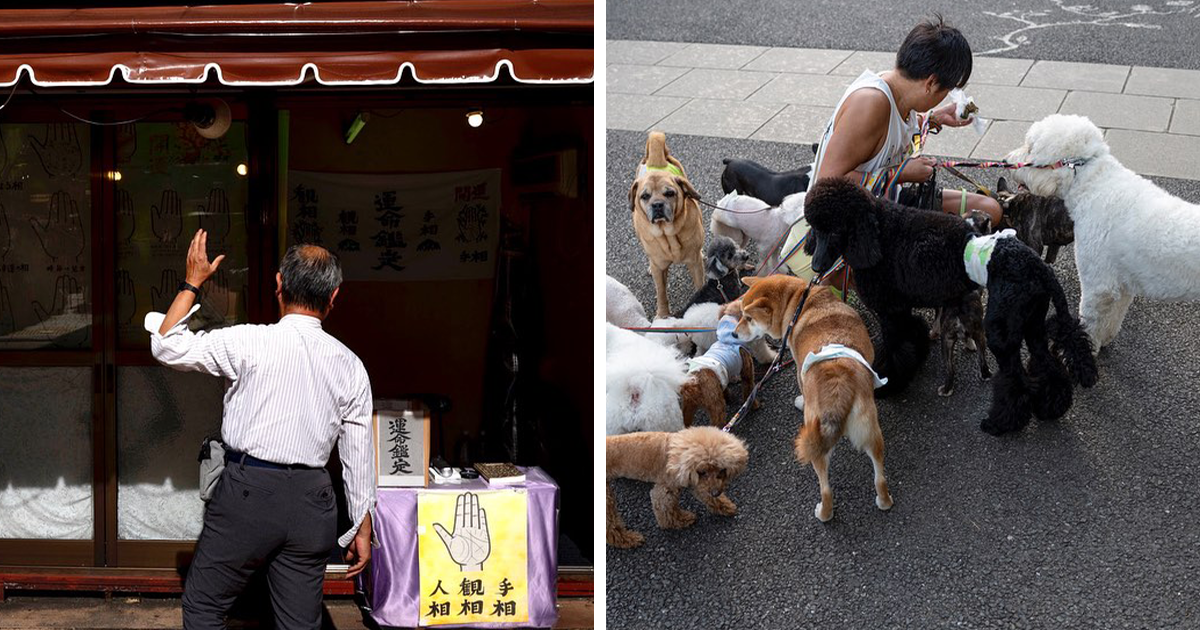
Most of us walk through the world on autopilot. We dodge slow walkers, check our phones at red lights, and occasionally wonder why the person ahead of us is carrying a cactus on the subway. Then a photographer like Jesse Marlow comes along and reminds us that the everyday world is not boring at all. It is simply waiting for someone to pay attention.
In a collection of 30 striking street scenes, Marlow turns ordinary sidewalks, storefronts, shadows, commuters, walls, parking lots, and passing strangers into tiny visual events. His photographs do not rely on celebrity faces, elaborate sets, or a fog machine rolling through downtown at 7 a.m. Instead, they find drama in chance: a bold splash of color, a perfectly timed gesture, an odd pairing of people and objects, or a moment when a city seems to wink directly at the camera.
That is the quiet magic of great street photography. It does not ask the world to become more interesting. It simply proves that it already is.
Who Is Jesse Marlow?
Jesse Marlow is a Melbourne-based Australian photographer widely known for his candid street photography and his ability to turn public spaces into visual puzzles. His work has appeared in exhibitions, books, and public collections, and he has spent years documenting the strange, funny, beautiful rhythms of urban life.
Rather than chasing obvious spectacle, Marlow often looks for the small collision of elements that most people miss. A person may walk through a beam of light at just the right second. A bright red shirt might visually echo a painted wall. A pedestrian might appear to become part of a sign, a shadow, or an architectural pattern. Nothing in the scene has been arranged, yet the final image can feel almost suspiciously perfect.
That is one reason his work stands out. It is not merely about recording what happened. It is about recognizing what almost happened, what briefly lined up, and what vanished one second later. Street photography has always relied on unpredictability, but Marlow brings a particularly playful eye to it. His photographs often feel like visual jokes told with straight faces.
Why These Street Scenes Feel So Special
The 30 images associated with this collection demonstrate that beauty does not need a famous landmark or a postcard-worthy sunset. Sometimes it lives beside a laundromat. Sometimes it is hiding near a traffic light. Sometimes it is wearing sensible shoes and waiting for the bus.
Marlow’s street scenes work because they make viewers slow down. At first glance, an image may seem simple: a person walking past a building, a shadow on concrete, a colorful storefront, or a commuter moving through a crowded street. But then the details begin to click. The angle is unusual. The colors seem to converse. The person’s posture mirrors a graphic shape nearby. A tiny visual coincidence turns a routine moment into something memorable.
That feeling is important. Modern life moves quickly, and our attention is constantly being tugged by notifications, headlines, errands, and the mysterious urgency of checking whether the refrigerator contains enough cheese. Street photography pushes against that pace. It asks us to look carefully at what is already around us.
In Marlow’s work, a city is not merely a collection of buildings and vehicles. It becomes a stage where accidental theater is happening all day long. The performers do not know they are performing. The props are advertisements, shadows, sidewalks, doorways, reflections, and random objects left behind by people who probably had no idea they were contributing to art.
The Visual Language Behind Jesse Marlow’s Street Photography
Great street photography often appears effortless, but the best images usually come from patience, observation, and an instinct for visual structure. Marlow’s photographs show how much can happen when a photographer pays attention to composition before the decisive moment arrives.
Color Becomes Part of the Story
Color is one of the strongest ingredients in Marlow’s visual style. Bright tones can make an otherwise plain urban setting feel theatrical. A yellow wall, blue awning, red jacket, or green sign can become more than background decoration. It can create rhythm, contrast, mood, or humor.
In the street, color is rarely cooperative. You cannot tell a stranger to wear a better shirt or ask a passing bus to return in a more flattering shade. The photographer has to wait for the scene to organize itself. That is part of the challenge and the fun. When the colors finally align, the result can feel less like luck and more like the city briefly arranged itself for a portrait.
Timing Turns Routine Into Comedy
Street photography is often about timing, and Marlow’s work shows how a fraction of a second can transform a normal moment into a visual surprise. A person stepping into a frame at the exact moment their silhouette matches a wall graphic can create an image that feels planned, even when it was completely accidental.
That is why street photographers often return to the same locations. They learn the light, foot traffic, architecture, and patterns of movement. They wait. They watch. They endure the occasional awkward moment of pretending to check their camera settings while secretly hoping a person in a purple coat walks through the frame again.
Architecture Does More Than Sit There
Buildings in Marlow’s images often act like active characters. Walls split the frame. Windows create reflections. Signs add text, irony, and color. Corners hide people until the right moment. A boring concrete structure can become a dramatic backdrop when light, shadow, and human movement enter the scene.
This approach gives his photographs a graphic quality. The city becomes a giant collage made of rectangles, lines, colors, and people who happen to be walking through the composition. Sometimes the human subject is central. Other times, the person is a small but crucial detail that completes the image like the final piece in a puzzle.
Beauty Is Not Always Polished
One of the most appealing things about Marlow’s street scenes is that they do not chase perfection in the conventional sense. They do not need immaculate streets, luxury storefronts, or people dressed as if they are about to attend Fashion Week. Beauty can appear in a cracked wall, an awkward reflection, an empty parking lot, or a person carrying groceries after a long day.
This is a useful reminder for anyone who feels that their own neighborhood is too ordinary to photograph. The ordinary is often where the best visual stories live. Familiar places become interesting when we stop treating them as background scenery.
A street photographer does not necessarily need a dramatic city. A small town intersection can offer funny signs, unusual shadows, worn textures, and everyday rituals. A bus stop can reveal boredom, anticipation, exhaustion, connection, and the universal human experience of wondering whether the bus is ever actually coming.
Marlow’s work suggests that the world is full of visual poetry, but it does not shout. It whispers. You have to be present enough to hear it.
What Aspiring Street Photographers Can Learn From These Images
You do not need an expensive camera, a huge lens, or a scarf that makes you look like you have just returned from an art residency in Paris. What you need first is curiosity.
Look for Relationships, Not Just Subjects
A person alone may be interesting, but a person in relationship to their surroundings can be even more powerful. Watch for connections between people and signs, colors and clothing, shadows and movement, or architecture and body language. The best street photos often contain at least two elements that unexpectedly speak to each other.
Work With Light and Shadow
Light can simplify a chaotic street or create drama in a plain one. Notice how sunlight cuts across a sidewalk, how shadows stretch along a wall, or how reflections appear in glass. Sometimes the scene is not ready until the light changes. Patience is not glamorous, but neither is deleting 300 mediocre photos later.
Return to Interesting Locations
When you find a visually strong location, do not photograph it once and leave. Return at different times of day. Observe how people move through it. A great background may need the right human element to become a great photograph.
Accept That Most Frames Will Not Work
Street photography is full of almost-moments. Someone walks out of frame. A car blocks the view. The perfect stranger appears just as you are adjusting your lens cap. That is normal. The missed images are part of the practice. They teach your eye what to look for next time.
The Ethics of Photographing Everyday Life
Street photography can be joyful, but it also requires judgment. Photographing people in public spaces does not remove the need for respect. A strong image should not depend on humiliating someone, exploiting distress, or treating strangers as props.
The best street photographers remain observant without becoming intrusive. They understand the difference between documenting public life and invading someone’s private pain. Humor can be part of the work, but the humor should come from the situation, not from cruelty.
Marlow’s best images feel celebratory rather than cynical. Even when they are playful or strange, they make ordinary life feel richer. That is a useful standard for anyone carrying a camera in public: make photographs that add curiosity, not harm.
Why Street Photography Still Matters
In an age of carefully edited social media feeds, street photography remains refreshingly unpredictable. It captures real people moving through real spaces in moments that cannot be fully planned, repeated, or manufactured. The imperfect timing is often the point.
Jesse Marlow’s street scenes remind us that life does not only happen during milestones. It happens while people walk to work, wait for a train, carry shopping bags, cross the street, pause beneath a sign, or pass through a patch of afternoon light. Those moments may seem small, but they are the texture of daily life.
The 30 photographs invite viewers to look more carefully at the places they already know. The next time you walk through your neighborhood, resist the urge to stare at your phone for the entire trip. Look at the shadows. Notice the colors. Watch how people move through space. Somewhere nearby, a perfectly strange little scene is probably unfolding without an audience.
And that may be the biggest lesson in Jesse Marlow’s photography: beauty is not rare. Attention is.
Experiences Inspired by Jesse Marlow’s Street Scenes
Looking at street photography can change the way a person experiences an ordinary day. You may leave your home for coffee and return convinced that your neighborhood has secretly been directing a low-budget movie without telling you. The familiar corner store suddenly has color. The crosswalk has rhythm. The person walking a tiny dog in an oversized raincoat becomes an entire short story.
That shift in perception is one of the most rewarding experiences connected to work like Jesse Marlow’s. The photographs encourage us to become more alert, not in an anxious way, but in a curious one. Instead of rushing from one task to another, we begin to notice how much visual information is constantly around us. A reflection in a window can create a second world. A delivery worker’s bright jacket can echo a painted mural. A line of pigeons can behave like they are holding an emergency board meeting.
For people who enjoy photography, this kind of attention can make daily walks more meaningful. You do not need to travel to a famous city or wait for a dramatic event. Start with a familiar route. Walk it at a different hour. Notice when the light hits a certain wall. Watch where people pause. Look for repeating shapes, unusual signs, accidental symmetry, and those strange moments when a person seems to belong perfectly inside the frame.
For people who do not own a camera, the experience can still be powerful. Simply noticing the world more closely can make routine life feel less repetitive. The morning commute may still involve traffic, delayed buses, and someone playing music through their phone speaker at a volume usually reserved for stadium concerts. But it can also reveal moments of humor, kindness, beauty, and connection.
Street scenes also remind us that cities are built from countless small stories. Every passerby is headed somewhere. Every person on a bench has a reason for being there. Every worn doorway, old poster, cracked sidewalk, and neon sign has been part of someone’s day. Photography freezes one fragment of that enormous flow and gives it a second life.
There is something comforting about this. The world can feel overwhelming when viewed through headlines, statistics, and endless scrolling. Street photography brings us back to human scale. It shows a person, a gesture, a shadow, a color, a funny accident of timing. It says: this small moment mattered enough to notice.
That is why Jesse Marlow’s images resonate. They are not only about streets. They are about the pleasure of being awake to your surroundings. They invite us to trade autopilot for observation, boredom for curiosity, and the endless hunt for spectacular experiences for a deeper appreciation of what is already here.
Maybe the next beautiful thing you see will not be a landmark or a sunset. Maybe it will be sunlight bouncing off a grocery store window. Maybe it will be an old couple sharing an umbrella. Maybe it will be a cat sitting beneath a “No Loitering” sign, clearly refusing to negotiate.
Either way, the beauty was there. You just noticed it.
Conclusion
Jesse Marlow’s street photography proves that the world does not need to be redesigned to become beautiful. It only needs to be observed with patience, humor, and an eye for the unexpected. These 30 street scenes celebrate color, timing, architecture, human movement, and the strange little accidents that make daily life memorable.
His work encourages viewers to look beyond the obvious and find visual wonder in the places they pass every day. The street is not simply a route from one destination to another. It is a living gallery, a comedy stage, a collection of small dramas, and sometimes a place where one perfectly timed shadow can make you stop in your tracks.
Note: This article is an original commentary inspired by Jesse Marlow’s street-photography approach and does not reproduce or claim ownership of any of his photographs.