Paris is often described in soft-focus colors: cream stone, gray skies, black coffee, navy coats, and the occasional aggressively red lipstick. Then there is Chez Prune, a Canal Saint-Martin institution that seems to have looked at that restrained palette and replied, “Absolutely not.”
Set near the water in Paris’s 10th arrondissement, Chez Prune is more than a café-bar with a terrace. It is a lively little lesson in how color, clutter, conversation, and controlled chaos can turn an ordinary stop for coffee into a full sensory experience. The place feels less like a carefully designed restaurant and more like a charmingly eccentric friend’s apartmentassuming that friend owns excellent lamps, knows everyone in the neighborhood, and has never met a yellow wall they did not want to make louder.
For travelers drawn to Parisian café culture, colorful interiors, Canal Saint-Martin energy, and people-watching with a side of espresso, Chez Prune offers a memorable detour from the polished perfection of postcard Paris. This is not the city of museum silence and gold-trimmed hotel lounges. This is Paris with its elbows on the table, its coat over the back of a chair, and its opinions turned up to a cheerful volume.
Chez Prune: A Paris Café That Refuses to Whisper
Chez Prune sits at 36 Rue Beaurepaire, close to Canal Saint-Martin, a waterway that has become one of Paris’s most relaxed places for strolling, picnicking, drinking wine, and watching people perform the ancient urban art of looking casually interesting. The canal neighborhood blends old industrial character, apartment-lined streets, design shops, bakeries, bars, and a steady parade of locals who appear to have mastered the art of wearing scarves without looking cold.
The café has long been associated with the Canal Saint-Martin crowd: artists, students, media workers, tourists with tote bags, friends meeting after work, and solo visitors pretending to read while expertly overhearing every conversation within six feet. That mix matters because Chez Prune’s atmosphere is not built around a single audience. It works because the room feels democratic. You can arrive in a vintage jacket, a business shirt, a rain-soaked windbreaker, or the same travel outfit you have worn for three days, and nobody seems especially surprised.
That is part of the charm. Chez Prune does not ask visitors to perform Paris. It lets them sit in it.
Why “Color Cacophony” Fits Chez Prune So Well
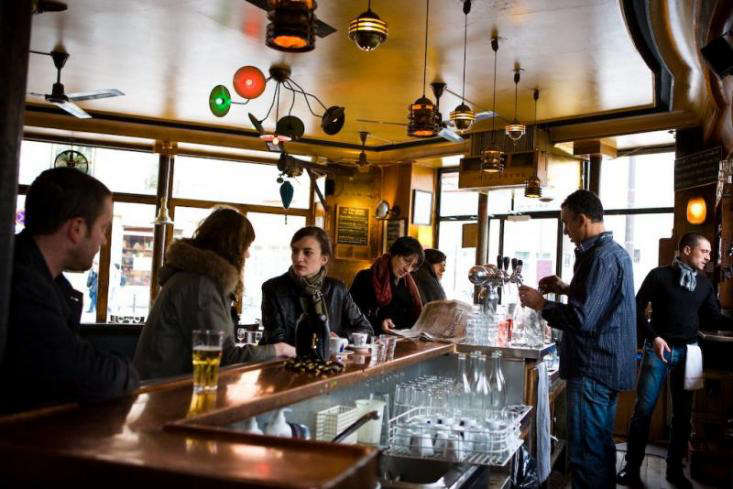
A color cacophony sounds like something an interior designer might say before fainting dramatically onto a chaise lounge. At Chez Prune, though, the phrase makes sense. The visual language is layered rather than minimal: warm yellows, deep reds, earthy browns, tarnished metallic details, painted signage, vintage objects, quirky wall art, chalkboards, lamps, mirrors, bottles, and the occasional visual surprise that makes you look twice.
Instead of using color as a quiet accent, the space lets it act like a character in the room. Bright walls are not there merely to flatter the furniture. They create energy. Red awnings signal the café from the street, while the indoor tones create warmth even when Paris is doing its annual impression of a wet wool blanket.
The effect is a little theatrical, but never stiff. Chez Prune feels assembled over time rather than delivered in one expensive truck labeled “Bistro Starter Pack.” That distinction is important. The most memorable Paris café interiors are not always the cleanest or most symmetrical. They have visual history. They show evidence of accumulation, accidents, affection, and the occasional decorative decision that probably began with someone saying, “Why not?”
A Palette Built for Conversation
Warm color can change the rhythm of a room. A bright yellow wall makes coffee feel sharper. A red awning makes a terrace look more animated against a pale Parisian building. Dark wood gives the room a bit of grounding, while small lamps and mixed furnishings soften the visual noise.
Chez Prune succeeds because its colors are not trying to make the space look larger, quieter, or more luxurious. They are trying to make it feel alive. That is a much more interesting goal.
In a world of café interiors designed around beige foam, pale oak, and one tasteful dried branch in a ceramic vase, Chez Prune feels almost rebellious. It is proof that a colorful restaurant does not need to resemble a children’s birthday party or a paint store explosion. Color can be messy, layered, even contradictoryand still feel deeply inviting.
The Canal Saint-Martin Effect
Chez Prune would be charming almost anywhere, but its location near Canal Saint-Martin gives it an extra current of energy. The canal turns an ordinary meal or drink into a small neighborhood ritual. Outside, the water, footbridges, trees, and slow movement of pedestrians offer a changing backdrop. Inside, the buzz of the room keeps things lively when the weather becomes less cooperative.
There is something wonderfully unhurried about this corner of Paris. Visitors can walk along the canal, stop for coffee, browse nearby shops, pick up pastries, sit by the water, and somehow still feel as though they have accomplished something culturally significant. In reality, they may have only eaten bread and stared at a bridge. But in Paris, that can count as a full afternoon.
Chez Prune fits this rhythm perfectly. It is not a place that demands a grand entrance or a detailed plan. It works best as part of wandering. You notice the terrace, the red façade, the movement inside, and suddenly your walk has become an excuse to order a drink.
People-Watching as a Serious Parisian Activity
Some restaurants are about the menu. Some are about the view. Chez Prune is also about the audience. The terrace and windows place visitors close to the neighborhood’s daily theater: cyclists weaving around pedestrians, friends meeting for aperitifs, dogs being treated as tiny royalty, and fashionable Parisians walking with such purpose that one assumes they are late for something importanteven when they are probably just buying tomatoes.
For travelers, this makes the experience especially useful. Paris can sometimes feel like a city staged behind glass, particularly in the most famous districts. Canal Saint-Martin offers a more casual rhythm. Chez Prune is a good place to pause and watch that rhythm unfold without turning the moment into a checklist item.
What to Expect From the Chez Prune Experience
Chez Prune is best approached as a café-bar-bistro experience rather than a white-tablecloth culinary pilgrimage. The draw is the complete package: coffee in the morning, lunch during the day, drinks in the evening, a terrace when the weather is kind, and an interior with enough personality to keep your eyes busy between bites.
The mood can shift throughout the day. Morning brings coffee and a softer pace. Lunch tends to feel practical but social, with people squeezing in a meal between work, shopping, or neighborhood errands. By aperitif hour, the energy rises. Glasses appear. Conversations grow more animated. The café becomes a kind of informal living room for the canal.
That shifting identity is part of what makes Paris café culture so appealing. You are not required to leave immediately after finishing your drink. A table can become a temporary office, a reunion spot, a journal-writing station, a pre-dinner stop, or a place to rest your feet after an overly ambitious day of sightseeing.
Of course, expectations should remain realistic. A famous neighborhood café can be busy. Service may feel brisk during peak times. Terrace seating can require patience, timing, or a willingness to accept that the best view is currently occupied by a golden retriever wearing a raincoat. But that is not a flaw. It is the nature of an active Paris bistro.
Design Lessons From a Colorful Paris Restaurant
Chez Prune is useful inspiration for anyone interested in restaurant design, café branding, or colorful home interiors. Its appeal does not come from perfection. It comes from contrast.
Lesson One: Let One Bold Color Lead
The red exterior gives the place instant recognition. It works like a visual handshake. You know you have arrived before you even step inside. A bold façade can make a small business feel larger in the memory of passersby, especially on a street full of neutral stone buildings.
Lesson Two: Mix Old and Unpolished Elements
Parisian charm often comes from surfaces that are not overly corrected. Worn wood, aging metal, imperfect signage, vintage lighting, and mismatched decorative pieces can create atmosphere that a showroom cannot manufacture. The key is intention. Eclectic is charming when it feels collected; it becomes exhausting when it feels like someone lost a bet at a flea market.
Lesson Three: Design for Mood, Not Just Photos
Chez Prune photographs well because it has mood, not because it was built around a single camera angle. The lights, colors, crowded details, and terrace all contribute to an environment that feels lived-in. This is a useful reminder for cafés and restaurants everywhere: people may come for the image, but they return for the feeling.
How to Enjoy Chez Prune Without Turning It Into a Tourist Mission
The smartest way to experience Chez Prune is to build it into a relaxed Canal Saint-Martin walk. Start with a slow stroll along the water. Notice the bridges, the shaded edges of the canal, the nearby shops, and the clusters of people sitting along the embankment. Then stop at Chez Prune when the mood feels right.
Try not to treat the visit like a race for proof that you were there. Order something simple. Sit for a while. Let the room happen around you. Watch the colors change as daylight fades and interior lights begin to matter more. The space feels different at noon than it does after sunset, and that changing atmosphere is part of the point.
Visitors should also remember that neighborhood cafés are not movie sets, even when they are visually irresistible. Keep your camera use discreet, respect other guests, and avoid turning every chair into a personal photo prop. The best Paris travel memories are usually the ones you experience before trying to document them.
Editor’s note: Menus, opening hours, prices, and seating availability can change. Confirm current details directly before planning a special visit.
Extended Experience: An Afternoon Inside the Color Cacophony
Imagine arriving at Chez Prune after a slow walk beside Canal Saint-Martin, when the afternoon has reached that indecisive point between lunch and evening. The sky is pale, the canal water looks green-gray, and the breeze has just enough bite to convince you that sitting outdoors is either romantic or a terrible idea. In Paris, these are often the same thing.
From the street, the café appears animated before you even enter. The red awning catches the eye against the muted buildings nearby, while the terrace is filled with half-finished conversations, coffee cups, wine glasses, and people who look as though they have nowhere else they need to be. That may be true. It may also be a very convincing performance. Either way, it works.
You step inside and the color story changes immediately. The outdoor world is washed in stone, water, bicycles, and clouds. The interior is warmer, louder, and more theatrical. Yellow walls glow under the lamps. Dark wood frames the room. Chalkboards, bottles, posters, and scattered decorative details compete for attention like very polite cousins at a family reunion.
At first, it feels busy. Then it begins to make sense. The interior is not asking you to inspect every detail. It is asking you to absorb the total mood. The lamps soften the corners. The walls give the room heat. The tables seem close enough for accidental eavesdropping but far enough apart to preserve the illusion of privacy. Somewhere nearby, cups clink. A chair scrapes. Someone laughs loudly at a story you will never hear in full.
You order a coffee, a glass of wine, or perhaps something small to eat. The choice matters less than the pause. Chez Prune is the kind of place where the experience expands when you stop trying to optimize it. There is no prize for ordering the most Parisian thing. Nobody is going to hand you a beret and announce that you have unlocked Level Two of France.
Instead, you sit. You notice the way the colors make the room feel warmer than it probably is. You watch people come in from the canal and briefly carry the outside weather with them. Coats are removed. Bags are dropped. Greetings happen. The café absorbs each new arrival and keeps moving.
Later, when you step back outside, the canal feels different. Maybe it is darker. Maybe the lamps inside have adjusted your eyes. Maybe you are simply more aware of how Paris changes when you slow down long enough to notice it. The red awning glows against the street. The café hums behind the windows. The water reflects fragments of light.
That is the real appeal of Chez Prune. It is not just a colorful café in Paris. It is a tiny, lively portal into the everyday theater of Canal Saint-Martin: imperfect, crowded, warm, stylish, noisy, and impossible to reduce to one neat photograph.
Conclusion: Chez Prune Turns Paris Into a Palette
Chez Prune is a reminder that Paris is not only elegant in the polished, museum-ready sense. It can also be scruffy, bright, expressive, crowded, and delightfully uncoordinated. Near Canal Saint-Martin, this colorful Paris café creates a setting where coffee, conversation, design, and neighborhood life blend into one memorable scene.
For travelers searching for a Canal Saint-Martin café, a vivid Paris bistro, or a place where people-watching is practically a sport, Chez Prune offers more than a meal. It offers atmosphere with a pulse. The colors may clash a little. The room may buzz. The terrace may be full. But that is exactly why it works.